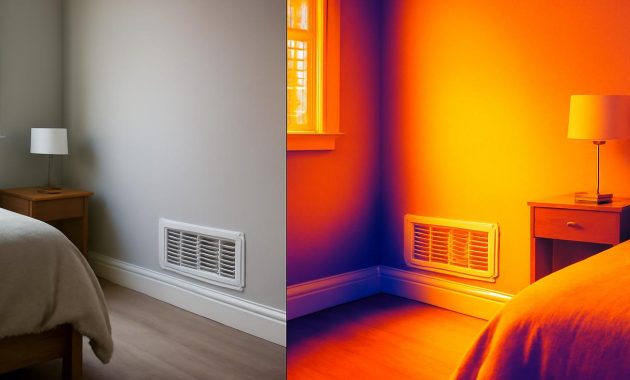
The first time I heard it, I was standing in a friend’s hallway in late January, boots still dusted with snow, warm breath fogging slightly in the cold air. “We just close the vents in the guest room and the office,” she said, nudging a floor register shut with the rubber heel of her slipper. “Why heat rooms we’re not using? It pushes more warmth into the rest of the house.” It sounded so tidy, so logical, like tightening the lid on a jar to keep the goodness from escaping. But as the furnace groaned to life in the basement, and the ducts rattled softly in the walls, I wondered: is that really how this works—or is it one of those cozy winter myths that refuses to die?
Why the “Close the Vents” Trick Feels So Right
There’s a seductive simplicity to the idea. Winter slides in, the wind sharpens, and the heat kicks on. You look around at the rooms barely used—a guest bedroom piled with laundry, a formal dining room that only sees action on holidays, the office you now avoid because the couch is more inviting. You think: why am I paying to keep these spaces toasty?
So you walk through the house, one register at a time, and flip the dampers closed. It feels strangely powerful, like you’ve found a secret lever hidden in plain sight. Fewer open vents must mean more heat for the rooms you actually live in, right? Less space to heat, more comfort for you. Simple math.
But furnaces and ductwork aren’t jars you can just tighten the lid on. They are more like lungs and arteries, designed to move a certain volume of air through a specific network of passageways. When you start closing vents, you’re not just “redirecting warmth.” You’re changing the pressure, resistance, and balance of an entire system engineered to work as a whole.
Behind the drywall and under the floors, things begin to behave in ways you don’t see—until, one day, you do: higher energy bills, rooms that are never quite right, mysterious musty smells, or a furnace that ages faster than it should.
The Hidden Life of Your Ducts and Furnace
If you could shrink down and journey through your home’s ducts on a mid-winter afternoon, you’d see something fascinating. From the furnace, warm air rushes out into metal trunks, then divides into smaller branches that lead to each register. At the same time, return ducts pull cooler air back from the house, completing the loop. Supply and return, out and back, a steady breathing rhythm.
Your heating system is sized and set up by a very particular calculation called “load” and “static pressure.” In plain language, that means your furnace and blower were chosen to move a specific amount of air through a specific amount of duct resistance. Change that resistance too much—by closing off vents—and the balance starts to warp.
HVAC pros talk a lot about static pressure, but you don’t have to know the math to feel its consequences. Imagine trying to blow up a balloon that’s already stretched to its limit. Your cheeks strain, your lungs protest. That’s your furnace’s blower when too many vents are closed: it’s pushing against backpressure, trying to move air through a system that’s suddenly much more constricted than it was designed to be.
Professional technicians, the folks who spend their winters climbing into crawlspaces and unfinished attics, see this story play out again and again. Homeowners think they’re doing their furnace a favor by asking it to heat less space. In reality, they’re asking it to work under unnatural stress. Over time, that stress can turn into repairs, inefficiency, and even safety concerns.
What HVAC Pros Say Really Happens When You Close Vents
Ask a handful of HVAC technicians what they think about closing vents to “save heat,” and you’ll hear a chorus of the same answer: it’s a myth, and often a harmful one. Not because the idea is foolish, but because it misunderstands how air systems behave.
Here’s what pros see behind that simple twist of a register:
- Static pressure rises. The blower is pushing against more resistance. Much like a fan trying to blow through a tightly pinched hose, it strains and often moves less air overall, not more to your favorite rooms.
- Airflow across the heat exchanger can drop. The heat exchanger is the part of your furnace that warms the air. Without enough airflow over it, it can overheat. Many furnaces have safety switches that shut them down when this happens, leading to short cycling, uneven heat, and long-term wear.
- Duct leaks get worse. Most ducts aren’t perfectly sealed. Increase pressure, and more of that warm air gets shoved out through cracks in the system—into attics, wall cavities, or crawlspaces, warming spaces you truly don’t want to heat.
- Comfort actually decreases. Ironically, the rooms you’re trying to keep cozy may feel less consistently warm because the system is struggling to move air the way it was designed to.
Pros will tell you: if you’re trying to outsmart your furnace by closing vents, you’re playing a rigged game. The system knows how it wants to breathe. Fighting that natural design usually means it fights back in your energy bills or repair costs.
The Cost of a Popular Winter Myth
There’s a quieter side effect to this common habit, and it shows up slowly. You might not notice it for a few seasons. The furnace still runs, the house more or less warms, and the closed rooms rest in cool silence. But something subtle is shifting.
Motors working against excess pressure draw more electricity. Short cycling—starting and stopping more often due to overheating—can wear on components. Over time, the heat exchanger, a critical and expensive heart of your furnace, can develop cracks from repeated stress and uneven heating. That’s not just about comfort; it can be a serious safety issue.
Then there’s the uneven temperature swing from room to room. Closed vents don’t just make those rooms cooler; they can create pockets of cold against exterior walls, where condensation can form. In the unseen corners behind dressers or in little-used closets, moisture and chill can invite mold or mildew. And because air never truly stops moving, those smells and spores don’t always stay politely in that one room.
Below is a simple comparison of what homeowners expect versus what often happens in reality when they close vents in low-traffic rooms:
| What Homeowners Expect | What Often Happens in Reality |
|---|---|
| Lower heating bills by heating fewer rooms | Furnace works harder against high pressure, energy use may stay the same or rise |
| More heat redirected to main living areas | Overall airflow can drop; main rooms may not feel noticeably warmer |
| Less wear on furnace because there’s “less house” to heat | Increased strain on blower and heat exchanger, more frequent cycling and potential long-term damage |
| Safer, more controlled heating | Greater risk of hot and cold spots, condensation issues, and duct leakage |
All from that simple, almost instinctive decision to slide a few vents shut.
The Rooms You “Turn Off” Don’t Actually Disappear
There’s another piece HVAC pros like to point out: your house is not a tidy arrangement of separate, sealed boxes. It behaves more like one big, leaky envelope. Air flows under doors, seeps around electrical outlets, drifts along staircases, and sneaks through gaps around trim and baseboards. Pressure differences—from wind, from temperature, from your own mechanical systems—gently tug air from room to room like invisible tides.
When you close the vent in a spare bedroom, the walls don’t magically thicken. That room still shares surfaces with your heated spaces. Heat moves through drywall, framing, cracked plaster, and old insulation. The temperature in that room may drop, but it will rarely match the bitter air outside. Instead of “not heating” the room, you’re just heating it indirectly, less efficiently, through conduction from neighboring rooms and the occasional drift of air under the door.
That can create a temperature gradient: a warm hallway; a half-chilled bedroom; an icy outer wall. Energy flows from warm to cold, always. By allowing some zones to plunge, you encourage constant heat loss from the areas you care most about into the areas you’ve tried to “turn off.” The furnace continues to run, trying to refill a bucket that now leaks in more complicated ways.
And then there’s the stack effect—the tendency of warm air to rise and escape at the top of your house, drawing in cold air at the bottom. Closed vents and uneven room temperatures can make that process more chaotic, with drafts you can feel along floors or under interior doors. That familiar shiver when you cross certain thresholds isn’t always a sign you need more blankets. Sometimes, it’s a symptom of a system struggling to stay balanced.
So How Do You Actually Keep Your House Warmer and Bills Lower?
If closing vents isn’t the quiet winter hack it’s rumored to be, what is? HVAC pros, the ones gently prying this myth from homeowner habits, often suggest a different approach—one that works with your system rather than against it.
First, they’ll often talk about the envelope: your home’s shell. The most sustainable warmth isn’t about micro-managing vents; it’s about stopping heat from slipping away in the first place.
- Seal the obvious leaks. Door sweeps, weatherstripping, and caulk around leaky window frames or trim can make a surprising difference in comfort.
- Look up, not just out. Attic insulation and air sealing around attic hatches, recessed lights, and plumbing penetrations can plug some of the biggest, least visible energy holes.
- Use interior doors wisely. If a room really is mostly unused, you can close the door to reduce drafts without choking the duct system. Leave the vent mostly open so air can still circulate, but don’t encourage the room to participate in every stray breeze.
Then, they’ll turn back to the equipment itself:
- Make sure returns are open and unblocked. Big furniture pressed against return grilles can throttle airflow just as badly as closed vents.
- Change filters regularly. A clogged filter is like putting a thick scarf over your furnace’s mouth. It amps up static pressure and starves the system of air, just like closing registers.
- Consider gentle adjustments, not closures. In some well-designed systems, partially closing a small number of vents near the thermostat can help fine-tune comfort—but the keyword is partial, and only a few, and ideally with a professional’s guidance.
For homes with persistent hot or cold spots, pros might recommend zoning systems (with dedicated controls and dampers designed for this purpose), smarter thermostats, or modest ductwork changes. These are targeted, engineered solutions, not improvised ones.
The Emotional Logic vs. Mechanical Reality
There’s something human, almost tender, about the urge to close vents in unused rooms. It feels like closing the curtains at night or tucking a blanket around the edges of your bed. You’re trying to keep warmth close, to make your lived-in spaces feel more protected from the long, dark season outside.
But furnaces, blowers, and ducts don’t share that intuition. They’re indifferent. They obey physics—pressure, flow, temperature, resistance—regardless of your intentions. When you push against those physical rules with a hopeful shortcut, the results are often the opposite of what you meant.
Talk to enough HVAC technicians, and you’ll notice something: most aren’t trying to sell you bigger systems or fancier gadgets when they talk about this myth. They’re trying to protect the equipment you already have, to keep you comfortable with the least waste and strain. Their advice—leave most vents open, keep air moving smoothly, focus on the building shell—comes not from theory but from long winters spent fixing avoidable problems.
The next time your fingers hover over a vent lever, ready to click it closed in the name of thrift, imagine the system behind the wall. Imagine the blower, already sized for a particular route, now facing barricades where open passages used to be. Imagine air squeezing out through seams in dusty attic ducts, warming forgotten spaces while you huddle on the sofa and wonder why the living room still feels drafty.
It’s not that you’re wrong to want to be clever with your energy use. You’re just negotiating with the wrong part of the system.
Winter Comfort Without the Myths
A warm house in winter is a deeply primal comfort. The smell of the furnace’s first cycle of the season, the faint metallic tick of ducts expanding, the way the air near the register curls around your ankles while snow presses against the windows—these are little domestic miracles. It’s understandable that we reach for any trick that promises to make them cheaper, cozier, more under our control.
But the idea that closing vents in low-traffic rooms will keep the rest of the house warmer—and your bills lower—is one of those persistent stories that doesn’t stand up to what the professionals see in the field. It survives because it feels logical, not because it works.
If you want a house that holds its warmth like a deep breath, the real work looks quieter from the outside: sealing, insulating, maintaining, and sometimes modestly upgrading. It’s in the choice to pull a sofa a few inches away from a return grille, to climb into the attic on a cool autumn day with a tube of foam sealant, to swap filters on schedule, to invite a pro in for a system check before the first real cold snap.
There’s satisfaction in that, too—in understanding your home not as a loose collection of rooms you can switch on and off at will, but as a single living system with a particular way of breathing. Respect that rhythm, and you’ll often find the warmth you were looking for was never hiding behind a closed vent at all.
FAQ
Does closing just one or two vents still cause problems?
Closing a single vent or two in a well-designed, modern system might not cause immediate, noticeable issues, especially if static pressure stays within acceptable limits. However, even small changes add resistance, and in systems that are already borderline on airflow or duct sizing, it can tip things in the wrong direction. If you must, partially close no more than a couple of vents and monitor comfort, noise, and furnace behavior (like short cycling).
Is it okay to close vents in a rarely used basement or bonus room?
It’s generally better to leave vents open and use the door as your main control. You can keep the door mostly closed to reduce drafts without significantly disrupting airflow. If the space is truly unused, talk to an HVAC pro about options like zoning, duct adjustments, or setting up the system so that area legitimately receives less heat without over-pressurizing the rest of the ducts.
Will closing vents damage my furnace?
It can contribute to damage over time. By increasing static pressure and reducing airflow, closed vents can make the furnace run hotter than intended and cycle on and off more frequently. That extra stress can shorten the life of components like the blower motor and heat exchanger. While a few closed vents won’t destroy a furnace overnight, it’s a risk factor that pros see reflected in premature wear.
Why do some people say closing vents works for them?
Sometimes, people feel a local improvement—like a slightly warmer living room—because they’ve changed airflow patterns near the thermostat. Other times the effect is mostly psychological, or their system is oversized enough that the negative impact isn’t immediately obvious. Energy bills and long-term wear don’t always announce themselves right away. HVAC pros rely on measurements and system performance over time, which often tell a different story than short-term impressions.
What’s the best way to control temperatures in different rooms?
The most reliable options are solutions designed for that purpose: properly engineered zoning systems, balancing dampers in the ductwork (adjusted by a pro), ductless mini-splits for trouble spots, and tightening up insulation and air sealing. Simple steps like using curtains, closing doors, sealing drafts, and keeping vents and returns unobstructed can also help smooth out temperature differences without stressing the HVAC system.