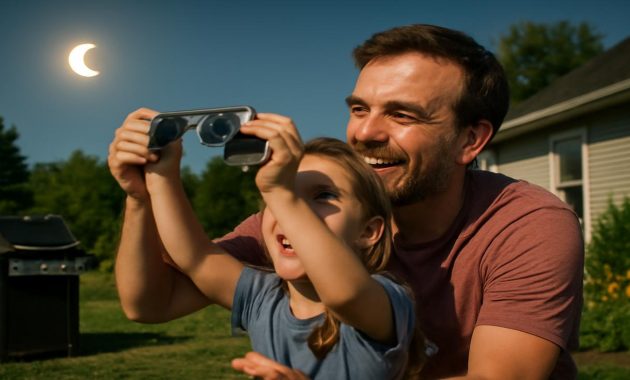
The news broke the way most things do now—quietly at first, as a notification lighting up the dark of someone’s phone at 3:17 a.m. Then, like twilight pouring across a landscape, it spread. Astronomers had done it. They had circled a day on the calendar and said, with unusual confidence: this is when day will become night. Not metaphorically, not poetically, but literally. The longest solar eclipse of the century now had an official date, and suddenly, everyone from seasoned sky-watchers to people who never looked up from their bus stop screens began to ask the same question: where will I be when the Sun disappears?
When the Sky Makes a Promise
In an age when forecasts change by the hour and plans dissolve with the next breaking headline, there is something comforting about the steady certainty of celestial mechanics. The announcement did not come as a surprise to astronomers; they’ve been running the numbers for years. But confirmation—down to the minute, down to the tread of the Moon’s shadow across the spinning Earth—turned a theoretical marvel into a date people could circle in ink.
Somewhere on a future morning or afternoon—the exact clock time will depend on where you stand—sunlight will begin to dim in a way that doesn’t feel quite like a passing cloud. It will feel more like a thought. Colors will flatten. Shadows will sharpen. The air, so familiar, will slip a few degrees cooler. Birds will hesitate in mid-song. Dogs will prickle with a subtle unease. People will look up, hands on brows, cheap eclipse glasses pressed to faces, some laughing, some swearing softly under their breath. It will happen across continents, over cities, oceans, small towns with a single stoplight, and long, unbroken stretches of farmland. The Moon’s shadow will rush over it all in a narrow path, turning noontime into a sudden, impossible dusk.
For a breathless stretch of minutes—more than most living people have ever experienced during such an event—our planet’s blazing, life-giving star will be completely hidden. The day will turn to night, and humanity, for all its noise and urgency, will do something it rarely does together: it will pause.
The Long Shadow: Why This Eclipse Is Different
This is not just another solar eclipse whispered about in science corners and quickly forgotten by the rest of us. This one has already earned a title: the longest total solar eclipse of the century. Not the most dramatic headline, perhaps, until you realize what “longest” means in eclipse terms.
A total solar eclipse happens when the Moon slips perfectly between Earth and the Sun, lining up so precisely that it blocks the Sun’s bright disk. In that window of perfection, the Moon’s shadow sweeps across our planet like a moving spotlight of darkness. Usually, the spectacle of totality—the period when the Sun is completely covered—lasts only a couple of fleeting minutes. You barely have time to catch your breath before the diamond ring effect stabs the sky and daylight returns.
This time, astronomers say, that shadow will linger. Alignments of distance, orbital shape, and geometry will stretch totality to one of the longest durations humanity will see in this hundred-year span. Some locations near the center of the path could experience total darkness for several minutes that will feel, to the human nervous system, like a small eternity. It’s long enough to notice details you might miss in a shorter event: planets glowing like lanterns in the darkened daytime, stars flickering to life near the horizon, a 360-degree sunrise glowing in all directions at once.
Think about that for a moment. You will be able to stand under the noonday Sun, in the familiar world of errands, deadlines, and notifications, and watch it vanish long enough to count your heartbeats, to feel the air change, to listen to people around you fall uncharacteristically silent.
The Playground of Cosmic Coincidence
This rare eclipse is not a generous gift from the cosmos so much as it is a precarious balancing act we happen to live inside. The Sun is 400 times wider than the Moon, yet it sits about 400 times farther away. That ratio, almost too neat to be true, makes both disks appear nearly the same size from Earth’s surface. If the Moon were smaller, or farther, we wouldn’t get total eclipses—only partial ones, where a glaring ring of sunlight always remains. If it were bigger or closer, eclipses would be more common and perhaps less deeply astonishing.
But we sit in a narrow window of cosmic history. The Moon is slowly drifting away from Earth at about the rate your fingernails grow. Millions of years from now, total eclipses will be gone. Right now, in the stretch of time we inhabit, they not only happen—they occasionally line up in such a way that totality lasts and lasts. The upcoming event is one of those precise moments when cosmic geometry seems to pause and hold its breath.
Where Day Will Turn to Night
Maps are already circulating in observatories, classrooms, and living rooms, lines of shadow traced across the globe, arcing over oceans and land. While the exact path and timing depend on final refinements and local geography, astronomers have confirmed a broad swath of regions that will experience totality, and far wider areas that will see a dramatic partial eclipse.
If you imagine the Earth as a spinning ball under a bright lamp, the Moon’s shadow is a slim, dark finger tracing a narrow route. Inside that path, day will truly become night. Beyond its edges, the Sun will be bitten into crescents of varying depths, a celestial grin in the sky.
To capture the essence of what different regions can expect, imagine a simplified snapshot like this (times and specifics will vary by locality, but the contrast in experience will be much like what you see here):
| Region | Eclipse Type | Approx. Duration of Totality / Maximum Coverage | Experience |
|---|---|---|---|
| Central Path Cities | Total | Up to several minutes of full darkness | True day-to-night transformation; stars, planets visible. |
| Near-Path Regions | Deep Partial (90–99%) | Sun appears as a thin crescent | Eerie dimming, unusual shadows, but no full darkness. |
| Wider Surrounding Areas | Moderate Partial (50–80%) | Sun significantly obscured | Noticeable change in light quality, cooler air. |
| Outlying Regions | Subtle Partial (<50%) | Small “bite” in Sun | Best seen with proper filters; daylight mostly unchanged. |
For those lucky enough to live directly in the corridor of totality, the eclipse will come to them. Others will travel—by car caravans, crowded trains, last-minute flights, and overnight buses—converging on small towns suddenly flush with visitors. Campgrounds will sell out. Rooftops will fill. School fields will transform into informal observation grounds. Entire communities will orient themselves around a handful of minutes in the sky.
The Quiet Frenzy of Preparation
Telescope makers are already feeling it: a subtle uptick in orders. Science teachers are starting to scribble plans on the edges of lesson notebooks. Amateur astronomers are checking their gear: solar filters, tripods, carefully labeled camera batteries. Parents are marking the day in calendars, adding a note to buy eclipse glasses before they sell out to the last-minute rush that always comes.
In the months leading up to the event, you’ll begin to notice it even if you’re not looking. A poster at a local library. A mention on the radio. A neighbor asking, unprompted, “Are you going anywhere for the eclipse?” Travel discussions will slip from beaches and cities to small places people have never heard of but that now offer something unusual: front-row seats to the longest shadow of the century.
Under the Darkened Sun: What It Will Feel Like
Facts and figures are one thing. Lived experience is another. Ask anyone who has stood in the path of totality, even for a short eclipse, and their voice will change a little when they describe it. A laugh might creep in. Or a hush. People run out of words faster than they expect.
The first sign will be subtle. You’ll hold up your eclipse glasses and notice the Sun, still too bright to look at with unprotected eyes, shaved into a neat, dark bite. Time will stretch out. Clouds, if there are any, will become objects of collective obsession, every thin wisp suddenly personal. The Moon will continue to slide, slow and deliberate, across the Sun’s face.
The world will dim, not like sunset, but like someone sliding down a dimmer switch on reality. The color of light will shift into tones your brain associates with storms or late afternoon, but the clock and the position of the Sun won’t agree. Shadows cast through tree leaves will turn into hundreds of tiny crescent Suns, a living pattern sprawling across sidewalks and car hoods.
Then, in the final moments before totality, everything tightens. The last sliver of sunlight narrows into a brilliant jewel—the “diamond ring” effect. Baily’s beads, tiny spots of bright light shining through lunar valleys, may flicker along the edge of the Moon for a few heartbeats. And then, without ceremony, the Sun’s surface disappears.
If you’re in the path of totality, this is the moment the rules change. You can remove your eclipse glasses and look directly at the dark disk hanging in the sky, a round impossibility crowned with a ghostly halo of light—the solar corona. It is delicate, feathered, streaming outward in tendrils and loops. Satellites and probes study it from space, but your eyes, unmediated, will see it from the only vantage point that gives it this kind of emotional gravity: the ground, where everything has gone strangely, beautifully wrong.
The World Reacts
During totality, the temperature can drop several degrees in minutes. Wind patterns may shift. Birds will head for roosts, confused. Night-blooming flowers might begin to open, tricked by the sudden darkness. Streetlights may flicker on if they’re controlled by sensors. People will react in ways that would seem strange on any other day: cheering, crying, holding their breath, hugging strangers without quite knowing why.
Look around, if you can pull your eyes away from the sky. You’ll see faces tilted upward, bathed in a kind of reversed moonlight. You’ll see the horizon ringed with a soft orange and pink glow, as if every direction is a sunrise and you’re standing beneath a hole punched in the daytime. Planets like Venus or Jupiter may be visible, shining bravely near the eclipsed Sun.
Those extra minutes—stretched beyond the usual brevity by the mechanics that make this eclipse such a standout—will allow you to really look. To trace the pattern of the corona. To notice how the darkness is not as complete as midnight, yet not at all like any other shade of day you’ve ever known. You might find yourself whispering, even if no one can hear you above the crowd.
And just as your senses fully settle into this new, temporary world, the first bead of sunlight will erupt back into view, another diamond ring flaring at the edge of the Moon. Eclipse glasses will snap back onto faces. Shadows will return to their familiar, unremarkable selves. The world will slowly turn its dimmer switch back up, as if nothing extraordinary had happened—except that you’ll know it has.
How to Watch Safely and Meaningfully
For all its emotional power, a solar eclipse is also, simply, sunlight. And sunlight, concentrated, can be dangerous. Watching this eclipse safely is both brutally simple and absolutely non-negotiable.
Any time even a sliver of the Sun’s bright disk is visible, you must use proper eye protection designed for solar viewing. That means eclipse glasses or handheld solar viewers that meet accepted safety standards, or indirect viewing methods like pinhole projectors. Sunglasses, no matter how dark, are not enough. It’s not about comfort; it’s about damage you won’t feel in the moment.
During the brief period of totality—when the Sun is completely covered—it is safe to look at the eclipse without filters. In fact, you should; solar filters will block the delicate glow of the corona entirely. But timing matters. As soon as the first dazzling bead of sunlight returns, the glasses go back on. If you’re unsure, follow the crowd guided by experienced observers or local organizers; many communities will host public viewing events with astronomers or trained volunteers on hand.
Beyond safety, there is the question of how to actually experience it. You could spend the whole time trying to capture the perfect photo, juggling camera settings while the sky transforms overhead. Or you could take a few test shots beforehand, then intentionally put the camera down when totality begins. Let the memory live in your senses instead of your storage drive. Eclipse veterans often say their most powerful recollections aren’t images but feelings: the chill in the air, the sound of a crowd going suddenly quiet, the wind pressing against them as the shadow raced by.
Making a Day of the Dark
Think of this eclipse not as an isolated event but as a day woven around a brief, dark heart. Plan to arrive early wherever you’re going, to avoid traffic and to give yourself time to settle in. Bring layers; the temperature drop can be surprising, especially if you’re standing still, head tilted back. Pack water, snacks, and patience. If you’re going with children, turn the day into a story they’ll remember: help them make simple pinhole viewers, show them how crescent shadows appear beneath trees, teach them to notice the changing light.
There is also something quietly profound about sharing it. Whether you gather on a rooftop with neighbors, in a park with strangers, or on a hillside with just one other person, the fact that you are all looking in the same direction at the same moment can be unexpectedly moving. You might find yourself talking to people you’ve never met, swapping eclipse glass tips, checking each other’s gear, pointing out the first strange changes in the light.
More Than a Spectacle: What Eclipses Remind Us
Long before astronomers could predict eclipses to the second, people looked up at a darkening Sun and felt something fundamental: fear, awe, wonder, a sense of deep, cosmic significance. Stories sprang up to explain what was happening—dragons devouring the Sun, gods at war, omens of change. Today, we have equations and models and simulation software. We can say, with a clarity that would have stunned our ancestors, exactly when and where this eclipse will happen.
And yet, in the moment when the Sun disappears, knowing the science doesn’t dissolve the awe. If anything, it deepens it. You are standing on a planet spinning through space, lit by a star that fuses hydrogen into light and heat, orbited by a Moon that is just the right size and distance to make this possible. We live in that sliver of history when the alignment is perfect, and on this particular date, in this particular century, the alignment will write its longest, darkest signature across the daytime sky.
For many, the eclipse will be a kind of reset. A reminder that our calendars, our deadlines, our arguments, and our anxieties are all taking place on a speck of rock that occasionally slips into its own shadow. It is an invitation to step outside, to lift your eyes, to feel your life in context—not diminished, but placed gently within something larger.
On that day, across countries and cultures, people will experience a shared strangeness. Office workers will spill into parking lots. Farmers will pause in their fields. City streets will briefly forget their rush. Even in places that see only a partial eclipse, there will be a moment—a few seconds, perhaps—when the light feels off, and someone, somewhere, will look up.
The date is set. The calculations are done. The longest solar eclipse of the century is not waiting for our permission or our readiness. It is coming. All that remains is to decide how you will meet it: with a camera, with a notebook, with your children’s hands in yours, with a crowd of strangers, or alone in a quiet field. However you choose, there will be a moment when the day suddenly isn’t day anymore, and the world holds its breath under a darkened Sun.
Frequently Asked Questions
How long will this eclipse last in totality?
Exact durations depend on your specific location along the path, but astronomers expect several minutes of total darkness at or near the center of the eclipse track, making it the longest total solar eclipse of the century.
Is it safe to look at the eclipse with my eyes?
It is only safe to look at the Sun without eye protection during the brief period of totality, when the Sun’s disk is completely covered. At all other times, you must use proper solar viewing glasses or indirect viewing methods to protect your eyes.
Do I need special equipment to enjoy the eclipse?
You don’t need telescopes or cameras to have a powerful experience. The only essential item is safe solar viewing protection, such as certified eclipse glasses or a handheld solar viewer, for the partial phases before and after totality.
What if I’m not in the path of totality?
Even outside the narrow path where day turns fully to night, many regions will see a partial eclipse, which can still be dramatic. The Sun may appear as a crescent, and the light will dim noticeably, especially in areas with high coverage.
Will weather affect the eclipse?
Clouds and local weather won’t change the eclipse itself, but they can block your view of it. Many people watch weather forecasts in the days before and, if possible, travel to areas with clearer skies along the path.
Can children watch the eclipse safely?
Yes, children can safely enjoy the eclipse with the same precautions as adults. Make sure they understand not to look at the Sun without proper eye protection during the partial phases and supervise them while viewing.
Why is this eclipse considered so special?
While total solar eclipses are already rare for any given location, this one stands out because the alignment of Earth, Moon, and Sun creates one of the longest durations of totality in the entire century, giving observers more time to experience the deep, surreal transformation of day into night.