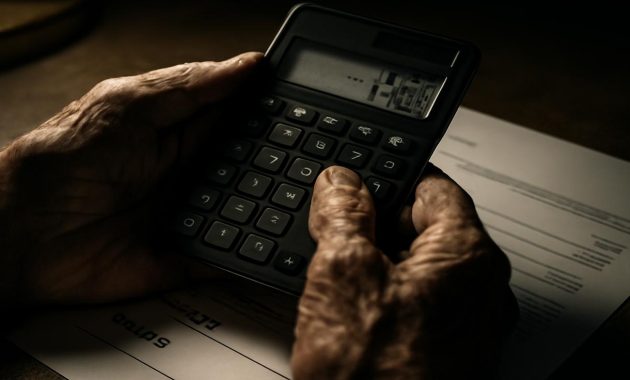
The news landed on a grey Tuesday morning, the sort of morning where the sky hangs low and the kettle feels a fraction heavier in your hand. You might remember exactly where you were when you first heard it: that the state pension was going to be cut, officially approved, with an average reduction of £140 a month starting in March. Maybe it slipped in between the weather report and the sports headlines, almost casual, the way big news sometimes is. But it didn’t sound casual. It sounded like the slow scrape of a chair being pulled away from a table where you’d finally thought you had a seat secured.
When the Numbers Become Real Lives
For a while, it’s just numbers. A line in a government statement. A table in a report. A quote from a minister saying the decision was “necessary but difficult”. You hear phrases like “fiscal responsibility” and “long-term sustainability of the system” and you nod because, in theory, they make sense. Systems must be sustainable; budgets must balance.
But then, at some point, the numbers reach your doorstep. They stop being an abstract £140 and become half your weekly food shop, or the heating bill for the month, or the small cushion you kept aside for the grandchildren’s birthdays. The pension doesn’t feel like a system anymore. It feels like your cupboards, your winter coat, your bus pass, your small rituals of comfort.
Imagine a narrow kitchen with a worn wooden table, two mugs of tea steaming in the cool air. Margaret, seventy-three, sits in her usual chair, the one with the slightly flattened cushion. Across from her, a brown envelope rests like an unwelcome guest. She’s been expecting it ever since the announcement, but still, her fingers hesitate on the flap. When she finally opens it, the words are as plain as they are blunt: from March, her state pension will be reduced. The figure is there, in a neat column: £140 a month less.
She reads it twice, then three times, as if the ink might rearrange itself into something kinder. It doesn’t.
A Cut That Echoes Through Everyday Moments
What does £140 a month feel like when you’re living on a state pension? Not as a statistic, but as a presence — or an absence — in the quiet rhythms of a month. It’s the difference between putting the heating on for a couple of extra hours in the evening and piling on an extra jumper, sitting in the dim glow of a lamp because you’re conscious of the meter ticking.
It’s the bus fares you start to tally in your head before you decide whether you really need to go into town. It’s the brand of tea you buy at the supermarket, the quiet decision to leave the fresh berries on the shelf because the tinned ones will do. It’s looking at the price of your medication supplements and wondering if you can stretch what you already have a little bit longer.
The state pension was never meant to be a luxury. It was meant to be a promise: that after decades of work, of early mornings and late nights, of taxes paid and time traded, there would be at least something steady beneath your feet. Not a fortune, but a foundation. A guarantee that, while you might not have much, you wouldn’t have to hold your breath every time the gas bill came through the door.
And then the ground shifts — not dramatically, not enough for some to notice right away, but enough that every step takes a little more effort, every decision requires a little more calculation.
The Official Line: Why the Cut Was Approved
The explanation from the top is measured, precise, and wrapped in the language of necessity. We’re told the decision to approve a state pension cut, equating on average to £140 per month from March, was driven by the need to keep public finances under control. An ageing population, rising healthcare costs, and years of pressure on the budget form the backdrop to this choice.
There are references to “difficult trade-offs” and “ensuring long-term viability.” You might hear about forecasts: if nothing changed, the pension system would eventually become too heavy to carry, they say. Perhaps you have seen charts showing the ratio of working people to retirees narrowing, a slow, demographic squeeze.
On paper, it may look tidy: adjust one figure, tighten another, redirect funds elsewhere. The arithmetic, after all, doesn’t flinch. But real life does. Every cut has edges, and those edges meet people in very human ways. The story is not just in the policy documents, but in the living rooms and small bungalows and shared flats where people sit at tables and try to redraw their monthly budgets with a little less ink to go around.
Still, to understand the whole picture, it helps to see how the official version of this change compares with the reality that people will carry into their days.
| Aspect | Before March | From March Onward |
|---|---|---|
| Average Monthly State Pension | Baseline amount (varies by individual) | Baseline minus £140 |
| Annual Impact | Full entitlement based on previous rules | £1,680 less per year on average |
| Budget Narrative | Rising costs but benefits maintained | Cost control and long-term system stability |
| Everyday Experience | Tight but predictable monthly income | Heightened pressure on essentials and savings |
Tables like this are tidy; lives are not. And it’s in those untidy corners — the places where numbers meet habits, hopes, and quiet plans — that the real story unfolds.
Kitchen-Table Economics: How People Are Adapting
Walk through any town and you’ll find the quiet choreography of adjustment already beginning. In a small flat above a row of shops, a retired bus driver named Alan sits with a notebook open, columns of figures curling down the page. It’s not the first time he’s done this; retirement has been one long exercise in making numbers stretch. But this time, the gap is wider.
There’s the rent. The gas and electricity, both already higher than they were a couple of winters ago. Food, steadily creeping up. The phone, the internet, the small amount he puts aside for emergencies. He looks at what’s left after the bills and sees the thin line that the £140 a month used to fill.
So he makes decisions. The gym membership — a small luxury that helped his dodgy knee stay manageable — is gone. The weekly takeaway becomes a once-a-month treat, if that. He opts for bulk packs and supermarket home brands, finding a grim sort of satisfaction in shaving pennies from the total at the till.
Others are making different sorts of calculations. Some are revisiting the idea of part-time work, wondering if their health and energy will stretch far enough to stock shelves in the early mornings or staff a charity shop a few days a week. For those in their late sixties or seventies, the question isn’t just whether they can find work — it’s whether their joints, their backs, their hearts are up to it.
There are people who still carry debts into retirement: mortgages not fully paid off, credit cards that did the heavy lifting during lean years, loans taken to help children or grandchildren through tight spots. For them, the cut isn’t simply an inconvenience; it’s another stone added to a pile that was already threatening to topple.
And yet, amidst all this, there is resilience. Neighbours swap tips on the cheapest days to shop, on the best-value bus passes, on local food banks and community fridges that don’t ask too many questions. Community centres put on “warm space” afternoons where people can sit in the heat, share a hot drink, and, for a couple of hours, not worry about what the thermostat at home is set to.
More Than Money: The Emotional Weight of a Broken Promise
There’s another side to this story that can’t be added up in pounds and pence. It lives in a feeling people find hard to describe without their voices tightening: a sense of being quietly pushed to the edges. Many who are now retired grew up with the idea that if they worked hard, contributed steadily, and played by the rules, there would be a safety net waiting for them when they could no longer work.
The state pension was never just income; it was a symbol of that social contract. To see it pulled back, even by £140 a month, can feel less like a financial adjustment and more like a verdict. A sense that, somewhere along the line, those at the end of their working lives have become the easiest place to cut.
It shows up in small, stinging ways. In the embarrassment of saying “no, I can’t make it” to a family meal out because you don’t want your children to feel obliged to pay. In the hesitation before switching the heating on when the cold settles into your bones, because you know each warmer evening now carries a sharper cost.
For some, it stirs old memories of earlier hardships — the three-day weeks, the recessions, the layoffs. They remember queueing at job centres, counting coins in the dark. Many thought they had left that kind of precariousness behind. To feel it creeping back in later life is a particular kind of heartbreak.
And yet, there is also anger. You hear it in the way people talk at bus stops, in the post office queue, in the low murmur of voices at the GP surgery. Not shouting, not dramatic, but a slow-building insistence: that this is not how it was supposed to be, that the people who built, taught, drove, cleaned, cared, and contributed deserve better than to be told that the system can’t quite stretch to keep its side of the bargain.
Finding Your Own Balance in an Unsteady Time
With the cut now approved and the start date looming in March, the question becomes: how do you navigate this new landscape? No one can replace that missing £140 for you, but knowing your options — even the small, imperfect ones — can help you feel less like a passenger and more like a participant in what happens next.
Some will look to check what else they are entitled to: pension credit, housing support, council tax reductions, disability-related help. Others will talk to their families, opening conversations that can be awkward but also surprisingly supportive. There may be local organisations — advice centres, charities, community legal services — that can help untangle the fine print and make sure nothing is left unclaimed.
Then there’s the internal balancing act: the decision about what matters most. For one person, it might be keeping the home warm and cutting back elsewhere. For another, it might be protecting a small fund for travel to see far-flung family, even if it means more modest meals. There is no single right answer; there is only what allows you to move through your days with as much dignity and comfort as possible.
Even in the tightest circumstances, humans find ways to prioritise meaning: the choir subscription that stays, because singing feels like breathing; the gardening club that must be paid for, because the soil and seasons keep the year turning in a way no calendar can replace. These choices are not luxuries in the shallow sense. They are the structures that keep loneliness at bay, that anchor identity when work is no longer the defining rhythm of life.
Looking Ahead: Stories We Will Tell About This Moment
Years from now, people will talk about this period the way they talk about other hard stretches of history. Not in the language of budgets and policies, but in remembered scenes. They’ll recall neighbours who checked in on each other more often. The winter when everyone brought an extra blanket to the community hall so no one would feel they had to stay at home in the cold. The quiet campaigns, the petitions, the meetings in drafty rooms where people tried to push back, or at least to be heard.
They might also remember the unexpected strengths they discovered in themselves: the way they learned to cook cheaper meals that still felt like feasts on particular days, the creativity in stretching clothes and belongings, the courage it took to ask for help or to offer it.
None of this makes the cut right, or easy, or fair. But it does remind us that policy, in the end, is only part of the story. The other part is how people respond — with anger, with resourcefulness, with solidarity, with a stubborn refusal to disappear quietly into the margins.
Standing at a window on a cold March afternoon, letter in hand, you might feel the weight of all of it pressing on your shoulders. The figures, the forecasts, the new reality of your bank balance. But you are not just a line on a budget sheet. You are a whole history of early starts, of late shifts, of taxes paid and lives raised, of care given and communities sustained.
The pension cut may be approved. The £140 a month may indeed vanish from your account when March comes. But your story — and the stories of millions living through this with you — is larger than any policy. It moves in the sound of neighbours’ voices, in the strength of shared cups of tea, in the determination to insist that the worth of a life is not measured only in what it costs the state.
For now, the numbers are what they are. The challenge, and the quiet act of courage, is to keep hold of the things that make life more than just a ledger: the warmth of connection, the dignity of being seen, and the belief that, even when the ground shifts under your feet, you have a right to stand steady.
Frequently Asked Questions
When does the £140 monthly state pension cut take effect?
The reduction is scheduled to begin in March, which means your first payment after that point is likely to show the lower amount. The exact date may depend on your usual payment cycle, so it’s important to check your pension letter or online account.
Is everyone affected by the full £140 reduction?
No. £140 is an approximate average figure. The exact reduction can vary depending on your current state pension entitlement, any additional benefits you receive, and how the changes apply to your specific circumstances.
Will other benefits increase to offset the pension cut?
There is no automatic guarantee that other benefits will rise to fully offset the cut. However, some people may become newly eligible for support such as Pension Credit, housing-related help, or council tax reductions as their income falls. It is worth checking your entitlements.
What can I do if I am struggling after the cut?
You can review your eligibility for means-tested support, speak to local advice centres or charities for guidance, and, if possible, discuss your situation with family members. Community organisations, warm spaces, and food support schemes may also help relieve pressure in the short term.
Can this decision still be reversed or changed?
Once a cut is approved, it usually goes ahead as planned. However, future governments can choose to revise pensions policy, adjust rates, or introduce compensating measures. Public pressure, campaigns, and representation through elected officials can influence how policy evolves over time.
Will the cut affect my private or workplace pension?
No, the approved reduction applies only to the state pension. Any private or workplace pensions you receive are governed by separate rules and agreements. However, the overall impact on your total income may affect your eligibility for certain means-tested benefits.
How can I prepare practically before March?
It can help to create a simple monthly budget based on your expected new income, list your essential expenses, and identify any costs that could be reduced or renegotiated. Checking your benefit entitlements early, booking an appointment with a financial or welfare adviser, and talking through your plans with trusted friends or family can make the transition slightly less abrupt.