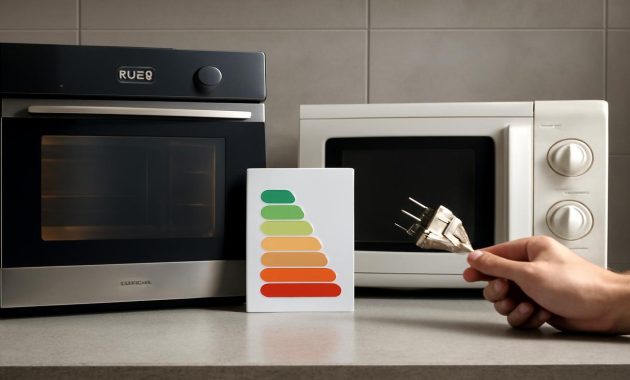
The first time I saw it, it looked nothing like the humming beige box that had ruled my childhood kitchen. No blinking green clock stuck at 12:00, no fogged plastic window. It was a compact, matte rectangle, the color of river rocks after rain, perched by the backsplash like it had always belonged there. When the owner tapped its smooth glass face, it woke up with a soft glow—no beep, no whir, just a quiet awareness. “That,” she said, laying a hand on top of it the way someone might on a favorite dog, “is the thing that’s finally going to let me get rid of my microwave.”
The Day the Microwave Started to Feel Old
The kitchen around us was a gentle clash of eras: a chunky, avocado-green microwave from the late ’90s hulking on one counter, and this sleek newcomer on the other. You could hear the compressor of the refrigerator, the low crackle of something roasting in the oven, but this new device simply sat there, silent and self-contained. No fan noise, no impatient buzzing.
We’ve lived with microwaves for so long they’ve become invisible, like light switches or faucets. Pop in leftovers, slam the door, smash the “30 seconds” button, and wait for the distinct, slightly damp heat that never quite seems to reach the center. It’s convenient, but no one pretends it’s magical anymore. The microwave’s superpower has always been speed, not quality, and certainly not efficiency. For decades, we accepted its flaws—rubbery edges, cold cores, weirdly desiccated bread—because it felt like there was no real alternative.
But what if speed didn’t have to come with compromise? What if the thing humming in the corner, zapping water molecules and leaving plates volcanically hot while the food stayed lukewarm, was actually the clumsiest tool in the kitchen drawer?
The new device on the counter promised something quietly radical: the speed of a microwave, the texture of an oven, and an energy footprint that, according to the early data, makes the old box look like a gas-guzzling SUV idling on the curb.
Meet the Device That Thinks Before It Heats
On paper, it sounds like something out of a speculative issue of a design magazine: a smart countertop oven that uses targeted conduction, focused convection, and AI-based heat mapping to cook food from the inside out—without a single microwave particle in sight.
In conversation, though, the engineer who helped design it just called it “a better way to make heat behave.” He showed me a cross-section of the device: layered heating elements arranged like topographical lines, a snug insulated cavity no bigger than a standing mixing bowl, and a grid of tiny sensors embedded around the interior, each one reading temperature and moisture a dozen times a second.
Instead of blasting food with unfocused microwaves that ricochet inside a metal box, this new device calculates exactly where and how much heat is needed, then pulses it in carefully measured bursts. Think of it like a conductor leading an orchestra of heat—strings, brass, percussion—rather than a garage band blasting the same three chords at max volume.
“A microwave is essentially shouting at your food,” the engineer said, hands describing chaotic arcs in the air. “This is more like a quiet conversation.”
How It Actually Works (Without Putting You to Sleep)
Inside the slim chamber, a combination of electric heating plates, micro fans, and smart software take the guesswork out of heating. You place your food on a small tray or directly on its ceramic base. The door—thicker and more solid than a microwave door—seals with a soft magnetic click.
Then something subtle happens. The device pings your food with harmless infrared light to map its surface temperature and estimates density based on how heat begins to move through it. In a few seconds, it knows whether it’s dealing with a slice of pizza, a bowl of curry, or a frozen salmon fillet. You can tell it what you’re cooking, but often you don’t need to. It recognizes patterns the way your nose recognizes the smell of toast versus coffee.
Instead of filling the chamber with wild, bouncing waves, it directs heat in tight, planned increments. Conduction gently warms the base, convection sweeps heat around the food in a concentrated spiral, and infrared elements target the top for browning. The device constantly checks and adjusts, nudging warmth where it’s needed and easing off where it isn’t—more like a thermostat in a well-insulated house than a bonfire in a metal shed.
What you feel, standing nearby, is startling: almost nothing. No blast of hot air on your face when you open the door, no overheated side panel. Most of the energy that goes in ends up in the food, not bleeding into your kitchen.
The Numbers: Why Experts Are Paying Attention
For energy researchers, this is where things get interesting. The microwave has always been considered relatively efficient compared to stovetops or ovens, because it heats water molecules inside food directly. But it’s far from perfect. A lot of that energy misses the mark, heating the plate, the air in the cavity, even the walls of the device itself. Much of the power you’re paying for literally bounces around.
With this new device, early lab tests tell a tighter, more disciplined story. In controlled trials, it consistently used less electricity to bring the same portion of food to the same temperature—and did it faster. Food scientists measured not just power draw, but also heat loss, surface temperatures, and, crucially, how evenly the food warmed inside.
| Task (Single Serving) | Average Time | Energy Use* | Result Quality |
|---|---|---|---|
| Reheat pasta with sauce | Microwave: 3:00 New device: 2:10 |
Microwave: 100% New device: ~70% |
Microwave: uneven, dry edges New device: even, moist |
| Revive leftover pizza | Microwave: 1:30 New device: 2:00 |
Microwave: 100% New device: ~60% |
Microwave: soggy, floppy New device: crisp crust, soft cheese |
| Defrost chicken breast | Microwave: 6:00 New device: 4:00 |
Microwave: 100% New device: ~65% |
Microwave: partly cooked edges New device: evenly thawed |
| *Energy use expressed as relative comparison to a standard home microwave baseline. | |||
In some cases, the timings were close—within thirty seconds either way—but the energy demand was consistently lower. One sustainability analyst described it like this: “It’s not just about doing it faster. It’s about wasting less effort, less electricity, and less food in the process. Efficiency is not only a number on the meter; it’s also what stays out of the trash.”
Because when food heats more evenly, you’re less likely to toss it after a disappointing reheat. That half-dried, half-frozen tragedy of a leftover lasagna? This device turns it into something you actually want to eat again. And strangely enough, that might be where its most quiet revolution lies.
What It Feels Like to Use One in Real Life
The first time I watched my host use it, she slid in a plate of last night’s roasted vegetables and a wedge of salmon that had gone cold while we talked. The device detected the mixed plate and suggested a “gentle reheat” mode. She tapped once, then turned back to our conversation. There was no sense of a countdown. No frantic “Oh, I have 10 seconds to sprint back to the microwave.” Just a soft, barely audible whisper of tiny fans doing their work.
When it finished, it didn’t shriek. A subtle tone chimed once, more like the polite throat-clearing of a server waiting at your table than the impatient bark of an appliance. When the door opened, a warm wave of roasted garlic and lemon lifted out, but the chamber itself felt surprisingly cool around the edges.
The vegetables had gone glossy again; the salmon flaked instead of shredding. Nothing was scalding hot, but everything was properly warm, as if it had been resting, not resurrected.
“I barely touch the microwave anymore,” she admitted, glancing at the old relic on the far counter. “I feel kind of guilty even having it here, but I’m waiting for the day I realize I haven’t used it in a month. Then it goes.”
The Quiet Ripple Effect on the Kitchen
Once you change how one thing works in a kitchen, everything shifts a little. Family routines adjust. The short, impatient moments—hovering by the microwave, tapping a foot—get replaced with something calmer. There’s no need to punch extra time, open the door, stir, add another 30 seconds, repeat.
Parents talk about the relief of knowing that when their kids reheat leftovers, the food will be evenly warmed and safe in the center. College students, used to eating half-melted noodles from dorm microwaves, suddenly find that reheated food can feel like a second fresh meal rather than a resigned compromise.
One unexpected benefit people mention: the kitchen stays cooler. Because the device holds its heat so precisely in that small, well-insulated chamber, summer dinners don’t leave the room feeling like a sauna. For small apartments, that matters more than you’d think.
Why Experts Believe This Could Actually Replace the Microwave
Kitchen tech is littered with “microwave killers” that never made it past the hype. Convection ovens, multi-cookers, sous-vide gadgets—all useful, all beloved by their fans, but none quite simple enough, fast enough, or universal enough to dethrone the humble zap-box.
So what makes this different?
For one thing, it’s designed to slide into the same role the microwave occupies rather than ask you to reinvent how you cook. It reheats, defrosts, and cooks small portions with minimal input. You don’t have to learn a new language of temperatures and times; most of the time, it just asks: “What is this?” and “How do you want it to feel?” Hot. Warm. Crispy. Tender.
Engineers focused on making it as intuitive as hitting “30 seconds,” but with a brain behind the button. It doesn’t care if your leftovers are in a shallow ceramic bowl or a deeper glass container; its sensors adapt. And because it doesn’t rely on microwaves, it handles a wider range of materials more safely—no more worrying about whether that decorative trim on your plate is secretly metallic.
More Efficient by Design, Not Just by Algorithm
The shell of the device is thick with high-grade insulation. The cavity is deliberately small, hugging the food so there’s less empty space to heat. The heating elements are close, but not so close that they scorch. The air pathways are short and direct. All of this means less wasted effort.
Where a microwave may run at a fairly constant power level regardless of what you put inside, this new device constantly modulates its output. It ramps up quickly, then eases off as the food approaches the target temperature. If one side gets ahead, it shifts the emphasis. In energy nerd terms, it actively manages the curve rather than slamming the gas and hoping for the best.
One home energy auditor who tested a prototype in her own kitchen described the difference bluntly: “On my smart meter, I could see the spikes from the microwave like little mountains. This thing looked more like rolling hills. Same meal, lower peaks, and shorter duration.”
Scale that across millions of households, and you start to understand why some sustainability experts are paying attention. A single reheat doesn’t save the world. But a cultural shift away from blunt-force heating toward precise, measured warmth? That’s a quiet revolution on every block.
The Emotional Goodbye to the Old Humming Box
Still, there’s something almost tender about the idea of unplugging the microwave for the last time. This is the appliance that powered midnight snacks, reheated forgotten coffee, and thawed emergency dinners. Its familiar hum is part of the soundtrack of modern life.
When I asked people what they’d miss, they didn’t talk about performance. They talked about moments: warming baby bottles at 3 a.m.; making instant cocoa on cold mornings; that particular smell of popcorn just before a movie night.
The reassuring thing is that this new device doesn’t erase those rituals—it refines them. It can warm milk to just the right temperature without boiling it over. It can resurrect popcorn without burning half the bowl. It can heat a mug of tea you abandoned an hour ago without giving it that oddly metallic aftertaste some people swear they notice from microwaves.
In a way, saying goodbye to the microwave isn’t about losing convenience. It’s about deciding that the easiest option should also be the one that respects your food, your energy bill, and your living space.
When I left my host’s house that evening, the old microwave sat sullenly in the corner, its digital clock glaring the wrong time as usual. The new device had cooled, its soft display fading back into that stone-like face. It looked like a rock dragged in from a river, an object shaped by patient forces rather than human impatience.
Out on the street, apartment windows glowed with tiny rectangles of blue light—the telltale blink of microwaves everywhere, still going, still humming. For now. But in more and more kitchens, there’s a new kind of quiet rising: a hush where heat moves carefully, decisively, and rarely more than it has to.
We spent decades asking, “How fast can we make this?” The question this new device asks instead is softer, and somehow braver: “How well can we do this, using only what we truly need?” If the answer keeps looking as good as it does now—on the plate, on the power bill, in the gentle rhythms of the home—the old humming box may finally have met its match.
Frequently Asked Questions
Is this new device safe compared to a microwave?
Yes. It uses familiar forms of heating—conduction, convection, and infrared—without emitting microwaves. Its sensors continuously monitor temperature to avoid overheating, and the chamber is well insulated and sealed. For most users, it will feel at least as safe as a microwave, if not more so.
Can it really replace my microwave completely?
For most everyday tasks—reheating leftovers, defrosting, warming drinks, cooking small portions—it can. Very specialized microwave uses, like certain lab tasks or ultra-cheap instant meals designed specifically for microwave instructions, may still favor the old technology, but typical home cooking and reheating needs are well covered.
Does it take longer than a microwave?
For many foods, it’s actually faster or similar in time, because it heats more efficiently and evenly. In a few cases, like crisping pizza or gently reheating delicate foods, it may take a bit longer than a microwave, but the quality of the result is noticeably better.
Is it more energy-efficient in real household use?
Early testing and expert evaluations suggest it uses significantly less energy per task than a standard home microwave, especially for reheating and defrosting. Its tight insulation, smaller cavity, and smart power modulation help reduce wasted energy.
What kinds of containers can I use in it?
Because it doesn’t rely on microwaves, it’s more flexible with container types. Glass, ceramic, many heat-safe plastics, and some metals are compatible, depending on the manufacturer’s guidelines. Users still need to follow the specific safety instructions provided, but the range is broader than with microwaves.
Will it heat my food evenly, even in the center?
Yes. That’s one of its main strengths. The device continuously reads temperature and adjusts heat distribution, which helps avoid the classic microwave problem of hot edges and cold centers. Dense foods and mixed plates benefit the most from its even heating.
Is it difficult to learn how to use?
No. It’s designed to be as simple as a microwave, with options to just press a button and go. More advanced users can dive into specific modes and custom settings, but most people will manage everyday tasks with one or two taps.