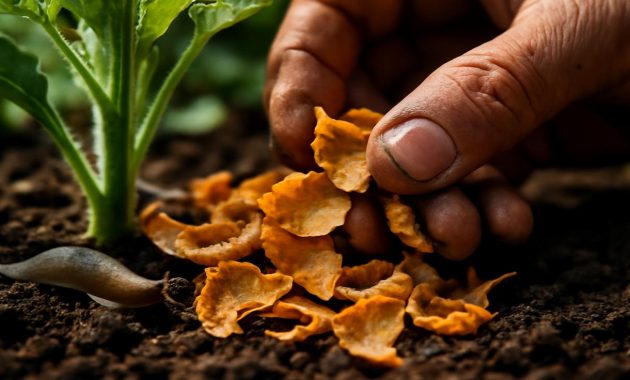
The first time I saw Lila save a heap of orange peels in a sun-faded enamel bowl by her back door, I assumed she was hoarding them for marmalade. Her little garden wrapped around a modest brick house at the edge of town, a place where rosemary hedges leaned over the path and bees drowsed in the lavender. That morning, the air smelled of damp soil and citrus, and the bowl glowed like a small, accidental artwork—twists of peel, some still beaded with juice, piled into a fragrant, curling mountain.
“You’re not throwing those away?” I asked, watching her carry the bowl out towards the vegetable beds.
She laughed, the kind of laugh that says, Oh, you have no idea. “Throw them away? These,” she said, lifting a bright strip between her fingers, “are some of the best things in this whole garden.”
What followed that day was less a gardening lesson and more a quiet revelation. The kind that unfolds slowly, as someone shows you how they’ve been living all along, and you realize you’ve been overlooking treasure every time you dropped an orange peel into the trash. The garden, it turns out, has a particular fondness for what we often discard—and citrus, especially, is one of its most surprising allies.
The Scent of Citrus and the Secret Life of Soil
Walk into Lila’s garden and there’s always a faint, clean brightness in the air. Not the sharp blast of a cleaning product, but the warm, lived-in aroma of peel and earth and sun. She moves between beds like she’s in conversation with each plant, kneeling, listening, adding things to the soil as if whispering small assurances.
“Most people think of orange peels as trash,” she said that first day, her hands already deep in the raised bed by the tomatoes. “But the soil thinks very differently.” She scooped away a thin layer of mulch and tucked a handful of shredded peel underneath, like she was slipping a letter into an envelope.
When you look at an orange peel, you see a bright rind and maybe remember the taste. The soil, however, reads a more complex script: carbon, nitrogen, potassium, phosphorus, calcium, magnesium, and a whole orchestra of minor nutrients. It sees organic matter waiting to be broken down, food for microbes, a future home for earthworms.
Lila talked about soil the way some people talk about old friends. “The garden is only as strong as the life under our feet,” she said, pressing the soil back over the peels. “These little scraps help feed that life.”
Over time, as the peels break down, they become part of the invisible economy beneath the surface. Microorganisms nibble at the rind, fungi thread their way through softened pith, and the result is improved soil structure—crumbly, well-drained, moisture-retentive. The kind of soil that feels velvety when you squeeze it and never clumps into heavy, lifeless lumps.
The Quiet Alchemy: Turning Kitchen Scraps into Garden Gold
One late afternoon, when the sun had softened to honey light, I watched Lila at her kitchen counter, cutting an orange over a chipped white plate. Juice ran in bright lines across her fingers as she slid the segments into a glass bowl. The peel, once again, went to her waiting dish of scraps.
“You don’t just toss them out there whole, do you?” I asked, imagining a flower bed cluttered with curling, leathery skins.
She shook her head. “The trick is in the small things,” she said, reaching for a knife and cutting the peel into thin strips. “The smaller the pieces, the quicker the magic.”
When she composts, orange peels rarely go in as big, jaunty rings. Instead, they enter the pile as slivers or rough shreds, sliced or torn by hand. This simple act speeds up decomposition—more surface area for microbes to cling to, more edges for fungi to grip. Contrary to old gardening myths, a moderate amount of citrus peel doesn’t “kill” a compost pile. What it does is offer a steady, slow-burning meal.
We stepped outside to her compost bin, a big black drum humming quietly with its own hidden life. She lifted the lid and a soft, warm smell rose up—a mixture of earth and grass and the faint shadow of citrus. “Smell that?” she asked. “Not rotting. Transforming.”
She layered the chopped peels between vegetable scraps and leaves, never in great heaps, always balanced. “If you dumped in nothing but citrus, sure, you might have issues,” she said. “But here, they’re part of a choir, not a solo performance.”
In a season or two, what comes out the bottom of that bin is dark, rich compost that holds the ghost of those orange peels but no trace of their original shape. Pour that into a garden bed, and the plants don’t see orange anymore; they see nourishment. They see stability. They see resilience.
How Lila Uses Orange Peels in Different Garden Corners
One of the most striking things about her garden is how seamlessly kitchen waste appears to fold into everything else. A peel never looks out of place, because it’s always in motion—on its way to becoming something else. Here’s how she typically uses orange peels through the season:
| Use | How She Does It | Main Benefit |
|---|---|---|
| Compost ingredient | Chops peels small and mixes lightly with other kitchen scraps and browns. | Feeds microbes, adds nutrients, improves final compost. |
| Soil booster | Buries shredded peel a few centimeters into the soil around heavy feeders. | Slow-release organic matter, better soil texture. |
| Seedling protection | Dries peels, crumbles lightly around young plants. | Mild barrier and scent deterrent for some pests. |
| Natural cleaner for tools | Uses fresh peels to rub down dirty handles and metal, then oils. | Removes grime, leaves light protective sheen and scent. |
| Mulch ingredient (sparingly) | Adds very thin layers of finely cut peel under other mulch. | Extra organic matter, gentle boost for soil life. |
Orange vs. Unwanted Visitors: A Fragrant Line of Defense
One evening, just after rain, we walked out to the lettuce patch with a flashlight. The soil shone dark and slick, and along the edges of the bed, tiny silver trails lit up under the beam. Slugs—those quiet, relentless grazers—had found their way to the feast.
“They’re why I started paying attention to citrus,” Lila admitted, plucking a slug from a leaf and dropping it into a jar. “I tried everything before I realized even the scent of an orange can change the conversation.”
She doesn’t claim orange peels are a miracle cure. Instead, she uses them as part of what she calls “layered encouragement”—a nudge to pests that this particular buffet might be more trouble than it’s worth. The essential oils in orange peels contain compounds that some insects and critters find off-putting. The bright, sharp smell we associate with freshness can announce to certain pests that they’re not entirely welcome.
In early spring, when tender seedlings are at their most vulnerable, she dries strips of orange peel on an old baking tray, then crumbles them and sprinkles the pieces around the base of young plants. Not piles, just a light scattering—like confetti that has a job to do. “It won’t stop every slug or ant or cat,” she said. “But it slows down the highway.”
Sometimes she tucks larger, fresh pieces at the very margins of the beds: a soft, fragrant fence. She’ll move and refresh them every few days as the scent fades, never letting them sit long enough to grow mold on the surface. If a peel begins to turn, it goes straight to the compost, back into the quiet cycle.
“Think of it as a suggestion to the neighborhood wildlife,” she smiled. “You can still come through, but you’re going to have to think twice.”
From Peel to Potion: Simple Citrus Infusions for the Garden
One bright, windy afternoon, the kitchen windows open to the sound of birds bickering in the hedge, I found Lila rinsing a jar in the sink. A large handful of orange peels waited beside it, glistening.
“You can do a lot with just water and patience,” she said, beginning to pack the peels into the jar, “as long as you don’t rush or overdo it.”
Sometimes, she makes a very mild citrus infusion to use as part of her gentle garden routine. She’ll cover a small amount of fresh peel with water, let it sit for a day or so, then strain it. This softly scented water, heavily diluted, becomes part of a broader toolkit: a light wipe for garden furniture, a gentle rinse for pots, a small addition to cleaning the potting bench.
“Outside,” she reminded me, “you never want to blast the living world with anything too intense—even if it comes from a fruit.” She doesn’t spray strong citrus solutions directly on leaves or soil life; she thinks of them more as subtle helpers than weapons. A faint hint of peel here, a soft fragrance there, a supporting actor in the story instead of the star.
When she wipes down old clay pots with a peel before replanting, the rough surface picks up the oils, and the air around us smells like a grove in late winter. “Plants might not care about the scent,” she said, “but I do. The more I love being out here, the more I show up. And that, more than anything, is what makes a garden thrive.”
Orange Peels as a Gentle Invitation to Pollinators
Not everything about citrus in the garden is about defense or decay. Sometimes, it’s about offering something sweet back to the small visitors that make so much abundance possible.
On a warm afternoon when the air seemed thick enough to drink, we set a shallow dish filled with water under a patch of dappled shade. Into the dish, she dropped a few pieces of orange peel, pith-side up, like tiny rafts.
“Bees get thirsty,” she said. “Butterflies too. But they need somewhere to land.” The peels bobbed gently, their bright skins catching the light. Within an hour, a single bee found the dish, then another. They hovered, landed on the stable surface of the peel, and bent towards the thin layer of water.
The peels served two purposes at once: a safe foothold and a faint, sweet call. Not a sugary trap, not a sticky hazard—just a set of floating platforms that turned an ordinary dish of water into a small, supportive station in the pollinators’ daily route.
“The garden listens to small gestures,” Lila said quietly, watching a butterfly settle on the lip of the dish. “You don’t have to do grand things. Just thoughtful ones.”
What the Garden Teaches Us About Waste
Over the months, I started noticing my own habits changing. Without thinking, I’d find myself stacking orange peels on a corner of the counter instead of dropping them into the bin. They’d glow there for a few hours, little crescents of color, waiting for their second life.
It wasn’t only about utility. It was also about attention—about noticing how much passes through our hands each day, how much we’ve been trained to consider “waste.” In the garden, that word starts to feel clumsy, even a bit wrong. Very little is truly wasted here; it’s just waiting for its next job.
Orange peels remind us of that quietly radical idea. They ask us to reconsider the boundaries between inside and outside, kitchen and soil, our lives and the lives humming away beneath the surface of the beds.
“We’re not just feeding plants,” Lila said one evening as the sky went from blue to deep violet. She stood at the edge of her garden, the last of the light catching on the citrus scraps she’d just tucked into the ground. “We’re feeding the story that everything can be used, that nothing living really ends—it just changes shape.”
In her garden, a morning’s breakfast becomes next season’s tomatoes. The bitter pith supports the sweet fruit. The scent that once filled a kitchen after a winter orange now whispers in the soil, in a compost heap, in the subtle curl of a leaf.
And you begin to realize that each small act—each peel saved instead of tossed—pulls you a little closer to that story, until you’re not merely someone who eats oranges and likes flowers. You’re part of a loop, a quiet exchange, a long conversation between your home and the patch of earth that holds it.
Starting Your Own Citrus Ritual
If you were to step into your kitchen right now, you might find a few oranges waiting in a bowl, or the last bright halves of a tangerine in the fridge. Maybe there’s a small pile of peels already in the trash. They’re unremarkable, ordinary—until you decide they’re not.
You don’t need a large garden to begin. A few pots on a balcony, a shared community plot, even a single raised bed is enough space for this small ritual. Here’s how to gently fold orange peels into your own gardening life, the way Lila does, without turning your soil into a citrus graveyard:
- Save peels in a small, open dish near the sink; let them dry slightly instead of piling them into a sealed, soggy container.
- Cut or tear them into smaller pieces before adding them to compost or soil.
- Use them in moderation—think accents, not heaps. Blend them with plenty of other kitchen and garden scraps.
- Tuck small amounts of shredded peel a few centimeters into the soil, rather than leaving thick layers on the surface.
- Watch your plants and soil life; adjust how often and how much you use based on what you see.
In time, you’ll find your own rhythm. Maybe you’ll discover that your tomato bed loves a little citrus boost, or that your compost steams more warmly when you’ve added peels in winter. Maybe you’ll simply come to love the way your garden smells after a fresh scattering—earth and orange, a scent that feels like both home and possibility.
What begins as a way to “use up scraps” may turn into something quieter and deeper: a shift in how you see the everyday things around you. A fruit is no longer just a moment of sweetness; it’s also mulch, compost, nourishment, deterrent, bee raft. The peel is no longer an afterthought, but a promise.
And perhaps, one day, someone will visit your garden, catch the faint, bright trace of citrus in the air, and ask why you’re saving all those peels in a bowl by the back door. You might smile, the way Lila did, and say, “Throw them away? These are some of the best things in this whole garden.”
Frequently Asked Questions
Do orange peels make soil too acidic?
Used in moderation and mixed well with other organic matter, orange peels will not significantly acidify garden soil. As they break down in compost or in the ground, their pH tends to balance out. Problems arise only if you add very large amounts of citrus waste to a small area without mixing.
Can I put orange peels directly around my plants?
Yes, but it’s better to chop or shred them and lightly bury small amounts rather than leaving large pieces on the surface. Whole peels can dry into tough, curled shells or grow mold if they stay wet on top of the soil. Small pieces decompose faster and integrate more gently into the soil.
Will orange peels keep all pests away?
No. Orange peels can help discourage some pests through their scent and texture, but they are not a complete pest-control solution. They work best as one layer in a broader strategy that includes healthy soil, plant diversity, physical barriers, and attentive observation.
Are orange peels safe to use in compost?
Yes, orange peels are safe and beneficial in compost when used in reasonable amounts. Chop them into smaller pieces and combine them with plenty of “browns” like dried leaves, cardboard, or straw. A balanced compost pile with varied ingredients will break citrus down without issues.
Can I use orange peels for indoor plants?
You can, but with more caution. Indoor pots have limited space and slower decomposition. It’s usually better to compost orange peels first, then use the finished compost on your houseplants, rather than burying fresh peels directly in the potting mix.