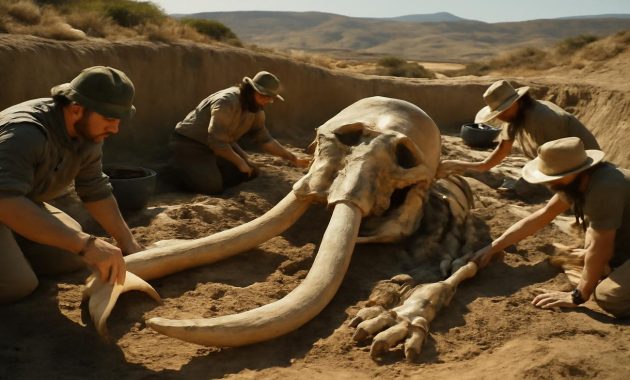
The bone is small enough to fit in a child’s hand, and yet, as the archaeologist lifts it out of the soil, the hillside in eastern Spain suddenly feels crowded—with soldiers, shouting in Punic and Latin, with clattering hooves and the thunder of something much heavier. The late afternoon wind moves across the excavation trench, carrying the distant smell of orange groves, and for a suspended moment everyone around the pit knows: this might be one of those finds that rearranges a story the world thought it already knew.
A ghost in the dust of Iberia
Storytellers have followed Hannibal Barca for more than two thousand years. We have replayed his daring crossing of the Alps, imagined his army of mercenaries, cavalry, and, most hauntingly, elephants marching through snow and blood. Schoolbooks, oil paintings, even old history documentaries love the same image: a Carthaginian general, cloak snapping in the icy wind, silhouetted against white peaks, while a gray bulk looms behind him, tusks gleaming like frozen moons.
And yet, for all that obsession, there has always been a stubborn problem. Where, exactly, were the elephants?
Historians have long argued that ancient writers exaggerated. Maybe there were fewer animals than later legends claimed. Maybe they weren’t African at all, but smaller, more manageable Asian elephants obtained by trade. Some specialists went further, suggesting that many of the elephant stories—especially the more theatrical ones involving battlefield charges and alpine heroics—were literary inventions meant to magnify Hannibal’s myth.
The physical proof was threadbare: scattered depictions on coins, ambiguous carvings, some classical descriptions, and a few bones across the broader Mediterranean that never quite lined up with Hannibal’s routes. It was as if the elephants had marched across history without leaving a clear footprint.
That is, until an excavation in Spain turned up a fragment that refused to stay quiet.
The hillside that wouldn’t stop giving
The site, tucked into a modest slope not far from Spain’s eastern coast, doesn’t look like the sort of place where empires collide. On a spring morning, you’d be forgiven for noticing only the low buzz of insects and the slightly spicy smell of thyme crushed underfoot. The ground is rocky, the soil a dusty ocher that clings to boots and knees. Olive trees stand in gnarled lines nearby, their silvery leaves rattling softly in the breeze.
But if you step closer—to the trenches with their measured string grids, to the plastic buckets filled with soil, to the tables where bone fragments are gently cleaned with soft brushes—you start to feel the layered weight of time. The archaeologists here had been expecting Roman remains: pottery shards, weapon fragments, the usual scattered record of an army on the move.
They did find those things. Yet it was something larger, heavier, and more surprising that began to dominate their days.
The first clue was a strangely massive bone fragment that didn’t match horses, cattle, or any of the usual domestic species known from the region. The team found it in a context already rich with signs of conflict—charred layers that hinted at burning, broken spearheads, the telltale geometry of a hastily fortified encampment. The bone was shaped wrong, too thick and curved, even in its broken state, to belong to any common animal of the ancient Mediterranean.
More pieces followed. A portion of a limb. A section of what might be a rib. Gradually, with each day’s digging, something immense seemed to be taking shape in the mind of the lead zooarchaeologist, who finally said the word aloud to a colleague one evening as the sun slid behind the hills:
“Elephant.”
The science of giants
Declaring that a bone belongs to an elephant is one thing. Proving it to a world of skeptical specialists is another. The team turned not to dramatic storytelling but to the cool, meticulous discipline of zooarchaeology, paleogenetics, and high-resolution scanning.
The fragmentary remains—tusks, limb bones, and smaller pieces—were transported to a lab where they were measured with precise calipers and compared against reference collections. Elephant bones have a particular architecture: a balance between thickness and internal honeycombed structure that reflects the strain of carrying six or seven tons of mass across uneven ground. These bones, even in fragments, carried that signature.
But the real revelation came with microscopic and molecular analysis. Under powerful magnification, the internal structure of the bones lined up not with Asian elephants but with African ones, matching patterns known from North African populations. Collagen fingerprinting (a biochemical method for species identification) further narrowed the origin. In some samples, researchers managed to extract ancient proteins preserved in the dense core of the bones—long-shot work that, in this case, paid off.
Then came dating. Radiocarbon analysis placed the death of the animal—or animals—squarely in the late third century BCE. Right in the chaotic window of the Second Punic War. Right in the time of Hannibal.
Of course, elephants did not wander Iberia freely. Each new test tightened the circle of possibility until only one explanation remained realistically on the table: these were war elephants. Carthaginian. Almost certainly part of the same forces that would help launch one of history’s most audacious military campaigns.
Reconsidering Hannibal’s herd
For decades, a quiet but persistent argument has rippled through history departments and archaeological conferences: what kind of elephants did Hannibal actually use, and how many survived the brutal crossings from North Africa to Iberia, then the Alps, and into Italy?
Some scholars had favored a more modest picture. War elephants, they argued, were logistically nightmarish—enormous appetites, complex care, vulnerability to cold and terrain. Perhaps the Carthaginians experimented with smaller herds, even Asian elephants imported by trade, and the stories grew in the retelling.
The Spanish finds, analyzed alongside newer evidence from North Africa, tilt the scales back toward the traditional narrative—but with intriguing twists. The bones show signs of stress: abnormal wear, healed injuries, and microscopic fractures in the joints consistent with long-distance campaigning rather than quiet parkland living. Some tusk fragments bear marks that might be linked to harnessing or decorative fittings, scars of the metal and leather equipment war elephants carried.
In other words, these were not zoo animals, nor ceremonial curiosities. They were working giants, used hard and maintained just well enough to keep them moving with the army. The discovery suggests Hannibal’s reliance on elephants in Iberia was not a one-off flourish but part of a consistent tactical strategy—and that the famous Alpine crossing was likely the climax of a long, grueling march for both humans and animals.
The landscape as silent witness
Stand on that Spanish hillside today and, if you let your imagination run, the landscape begins to thicken with ghosts. The wind becomes a carrier of smells we can barely tolerate imagining: the sour tang of sweat from thousands of men, the tangling notes of leather and smoke, the sweet-sick smell of animals pushed to the edge of exhaustion.
You can almost hear the muted thump of enormous feet in dusty soil. Elephants move more quietly than we expect; their weight spreads across thick, cushioned pads, made for soft forest floors and riverbanks. On the stony Iberian ground, that softness would have come with a cost: cracked pads, bruised joints, slow, deliberate progress rather than the cinematic charge that battlescenes like to depict.
The new research leans into this realism. Wear patterns on the bones hint not at short, explosive battlefield charges but at long-term strain—prolonged marching, gradual adaptation to harder terrain. Combined with the distribution of finds along probable Carthaginian routes, a rough picture emerges: Hannibal’s elephants were not simply unleashed as living battering rams. They were symbols, moving fortresses, psychological weapons, and perhaps mobile platforms for commanders or archers. Their very presence altered how opposing forces thought and reacted.
The soil itself holds pieces of this puzzle. Around the elephant remains, archaeologists have detected increased phosphate levels—an echo of concentrated animal waste and organic matter. Mixed into these layers are bits of charcoal, shattered ceramics, and metal fragments. Together, they paint the image of a large, semi-permanent encampment where men and animals rested, refitted, and prepared to move again, northward, toward a rendezvous with snow and legend.
A new lens on an old campaign
So what, exactly, does this discovery “revive” in the theory of Hannibal’s elephants?
First, it gives weight—literally—to the claim that Hannibal used African war elephants extensively in Iberia before the Alpine crossing. The animals were not stage props introduced only for the most dramatic act; they were woven into the campaign from an early phase. The Spanish bones lengthen the timeline of their involvement and broaden the geography of their presence.
Second, it suggests that the Carthaginians had a sophisticated logistical system for moving and supporting these animals across both sea and land. To bring elephants from North Africa to Spain, they needed specialized ships or rafts, trained handlers, supply lines for water and fodder, and veterinary knowledge that left no written record but is now suggested by the very survival of the animals deep into hostile territory.
Third, and perhaps most tantalizing, the discovery adds depth to the growing theory that Hannibal’s elephants were a distinctive North African population—possibly the now-extinct North African forest or savanna elephants, smaller than today’s largest African elephants but still enormous and intimidating to Mediterranean foes used to horses and infantry lines.
Here, the lab work intersects with a different kind of story: extinction and memory. If these elephants represented a unique regional population, their bones in Spanish soil are some of the last faint echoes of a vanished lineage, carried into battle and, ultimately, into myth.
Reconstructing the caravan
Archaeologists and historians, armed with the Spanish evidence and allied data, have begun to sketch a more grounded image of Hannibal’s column as it cut across Iberia:
- Elephants marching in small groups, spaced out for safety and ease of control.
- Handlers—mahouts—likely from regions with elephant-handling traditions, speaking languages that swirled around Punic commands.
- Support teams carrying water skins, extra fodder, and repair materials for harnesses and howdahs.
- Scouts searching constantly for river crossings wide and shallow enough to bear the weight of the animals.
The discovery site in Spain, with its mix of military artifacts and elephant remains, may have been one of the places where this caravan paused—a kind of ancient logistics hub, full of anxious recalculations: How many animals are lame? How many can we really take into the mountains? What is the psychological value of keeping them against the cost of their care?
We will never know the exact conversations, but the bones and the burned soil whisper that choices were made here, and that those choices rippled forward into the history we inherited.
Elephants in the mirror of time
Beyond the thrill of connecting a famous general to a newly uncovered bone, there is something more intimate at stake in these discoveries. They challenge the way we imagine the past—too clean, too symbolic, too detached from the messy, breathing reality of animals dragged into human conflicts.
The elephants of Hannibal’s army were not allegories. They were living beings, with temperaments, fears, preferences for certain handlers. They suffered in the cold. They slipped on rock. Some panicked in battle. Others probably developed bonds with their keepers strong enough to pull them through days when every step must have hurt.
The Spanish hillside, in its quiet, unremarkable way, becomes a memorial to that other side of the story. As we uncover more bones and fragments, we expand not only the map of Hannibal’s route but also the emotional range of his campaign—from the cunning of strategic outflanking to the daily grind of keeping enormous, sensitive animals alive in landscapes that did not forgive mistakes.
A snapshot of the evidence
For those who like their stories grounded in data as well as dust, it’s helpful to see how different lines of evidence converge. The Spanish finds now sit at the intersection of multiple disciplines:
| Evidence Type | What It Shows | Link to Hannibal |
|---|---|---|
| Bone morphology | Confirms the remains are elephant, not large cattle or horse. | Supports existence of elephants in a military context in Iberia. |
| Collagen/protein analysis | Indicates African origin rather than Asian. | Aligns with Carthaginian use of North African elephants. |
| Radiocarbon dating | Places death in late 3rd century BCE. | Matches timeframe of the Second Punic War. |
| Site context | Military artifacts, fortifications, signs of burning. | Consistent with Carthaginian-Roman conflicts in the region. |
| Environmental traces | High phosphates, organic buildup from large animals. | Suggests a war camp hosting elephants, not isolated strays. |
Each row in that table is like a voice in a chorus. Alone, it might not be convincing. Together, they sing a clear, steady line: once, on this scrubby hillside in Spain, an army camped with elephants at its heart. And the timing, the origin, the military context all point in a familiar direction—toward the man whose name has become synonymous with impossible marches.
Why the revival matters
Hannibal has never really left the stage of popular history, but his elephants have always occupied a strange place: too iconic to dismiss, too poorly evidenced to fully trust. The Spanish discovery doesn’t suddenly answer every question—it doesn’t give us exact herd numbers, individual names, or a perfect path through the mountains—but it sharpens the outlines of what had become a soft-focus legend.
It tells us that ancient authors, while prone to exaggeration, were not simply fantasizing. It reminds us that Carthage was more than just Rome’s foil; it was a sophisticated maritime and trading power capable of building a complex animal-based military system. It nudges us to think of the ancient Mediterranean not as isolated city-states and empires, but as an interconnected web where even elephants might be shipped, marched, and deployed thousands of kilometers from their native forests and savannas.
And it gives us, above all, a renewed sense of how much of the past still sleeps just below our feet. A hillside that, last century, might have been dismissed as nondescript farmland turns out to hold the silent residue of one of history’s most audacious gambles.
As more work continues at the site and in nearby valleys and river crossings, we can expect refinements, debates, maybe even surprises that complicate today’s confident headlines. That’s how archaeology works: slowly, stubbornly, assembling a mosaic that is always, in some corner, incomplete.
But now, when we picture Hannibal’s line of march through Spain, it will be harder to imagine him without the elephants. We can almost see them again, picking their way over rocky ground, trunks questing for water, eyes flicking toward their handlers for reassurance. The wind moves across the trench, the sun tilts lower, and in the careful hands of the archaeologists, a small, weighty fragment of bone brings a vanished world a little closer.
FAQ
Did this discovery prove beyond doubt that these were Hannibal’s elephants?
It is extremely likely but not absolutely provable in the way a signed inscription would be. The dating, African origin, military context, and geographic location all align strongly with Hannibal’s campaign, making a Carthaginian war-elephant explanation the most reasonable interpretation.
Were Hannibal’s elephants African or Asian?
The Spanish remains, along with other recent analyses, support the view that Hannibal primarily used African elephants, probably from North African populations that are now extinct. Earlier theories about Asian elephants are now considered less likely for his main forces.
How many elephants did Hannibal really have?
Ancient sources vary, often suggesting dozens at the start of his campaign. Many likely died during the long march and Alpine crossing. The new evidence supports the idea of a substantial, actively used herd but does not fix an exact number.
Why are elephant remains so rare along Hannibal’s route?
Elephant bones are large but still vulnerable to erosion, reuse, and later building activity. Many died in harsh environments where organic material decays quickly. Only a tiny fraction of ancient animal remains ever survive, and fewer still are found and correctly identified.
What does this mean for the story of the Alpine crossing?
The find in Spain strengthens the case that elephants were integral to Hannibal’s army well before the Alps, implying that at least some survived to make that crossing. It shifts the image from a sudden, theatrical appearance to the final, brutal leg of a much longer journey.
Could future discoveries change this interpretation?
Yes. Archaeology is always provisional. New sites, better dating methods, or genetic breakthroughs might refine our understanding of how many elephants marched, where they came from, and how long they survived. But the core insight—that African war elephants stood in Hannibal’s ranks in Iberia—is now firmly grounded in physical evidence.