The January light is soft and silvery over London, the kind that makes everything look a little gentler, a little more reflective. Somewhere behind high brick walls and winter-bare trees, a woman who has spent the last decade living at the center of global attention is blowing out candles—perhaps surrounded by children’s giggles, a few close friends, and the quiet hum of a new royal era in motion. This birthday is not just another milestone on a calendar. It belongs to the Princess of Wales: a devoted mother, a future Queen, and, for many, a steady, relatable presence amid a historic royal transition that is reshaping the House of Windsor before our eyes.
A Birthday in the Eye of History
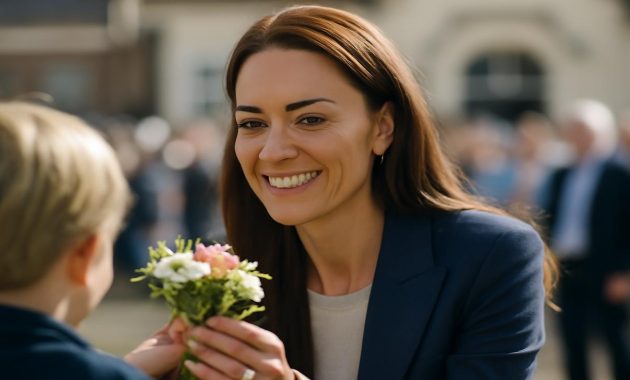
Birthdays in royal families are never entirely private affairs. They come wrapped in expectation and scrutiny—photos pored over in newspapers, outfits dissected on social media, every smile or sidelong glance interpreted as a symbol of something larger. Yet when we think of the Princess of Wales on her birthday, it is not just the pomp and circumstance that come to mind. It is, more often, the quieter images: her leaning in to listen to a child; her hand gently placed on someone’s arm during a difficult conversation; the way she seems to almost disappear into the crowd when she is trying to put someone else at ease.
In a royal landscape that is shifting—an aging monarch, evolving public expectations, a family navigating change, loss, and renewed purpose—the Princess stands at a delicate crossroads. She is both a figure of continuity and a harbinger of the future. Her life is a study in dualities: intensely public and fiercely private, deeply traditional and quietly modern, royal yet oddly accessible. On this birthday, more than any other, those contrasts feel especially vivid.
You can almost imagine the morning unfolding: the clatter of cereal bowls in a Kensington Palace kitchen or behind the red-brick façade of Adelaide Cottage; small feet padding down the hallway; handmade cards scrawled in marker and glitter. Her children—Prince George, Princess Charlotte, and Prince Louis—are old enough now not just to celebrate her, but to recognize the weight of the world that often follows their mother wherever she goes. And yet, for a few sacred hours, she is simply “Mummy,” still in her dressing gown, hair loosely tied back, laughter mingling with the smell of toast and tea.
The Making of a Modern Princess
There was a time when Catherine Middleton was simply a young woman on the edge of adulthood, navigating the same uncertainties that face millions: Who am I going to be? What kind of life will I lead? What will it feel like to grow into myself? The difference, of course, is that her coming-of-age story played out under the brightest spotlight on earth.
The transformation from “Kate Middleton” to “Catherine, Princess of Wales” did not happen overnight. It was a slow, careful evolution—one shaped as much by her quiet determination as by ancient protocol. Over the years, we watched as she learned the choreography of royal life: the measured wave, the perfectly timed smile, the art of listening more than she speaks. Yet beneath the surface of royal training was something more organic—a sense that she was not just learning how to perform the role, but how to inhabit it authentically.
There is a stillness about her at public engagements that can be easy to overlook. Surrounded by cameras and chatter, she often appears to root herself in the moment, eyes focused, body slightly inclined toward the person before her. For those brief exchanges, the whirl of royal life recedes, and her attention is a kind of shelter. It is this grounded presence, perhaps more than the clothes or the titles, that has cemented her as a modern icon of steady grace.
Her path has not been free of criticism or expectation. In the early years of her relationship with Prince William, some called her too cautious, too private, too silent. But time has shifted the narrative. That caution now reads as patience; that privacy, as a refusal to become a spectacle. Instead of racing ahead, she grew into the role at a careful pace, building a foundation of confidence and purpose that feels, today, indispensable to the future of the monarchy.
Between Nursery Runs and National Duties
One of the most striking images of the Princess of Wales is not in a tiara at a state banquet but in a simple coat, hair pulled back, walking her children to school or climbing into the backseat of a car with a booster seat visible through the window. These glimpses of her everyday life have become an essential part of her public story. They remind people that beneath the titles and centuries of tradition, she is also a mother in the thick of it—juggling schedules, worries, and bedtime routines like millions of others.
Balancing this ordinary domestic life with the extraordinary responsibilities of royal duty is a quiet feat of choreography. One day she may be on the school run in the morning and visiting a neonatal unit by midday, listening softly as parents describe the fragile hope that anchors them. Another day, she may slip from helping with homework into preparing for a glittering reception, her gown and diamonds masking the earlier chaos of lost shoes and spilled milk.
There is a particular kind of devotion in this dual life: the devotion of a mother who understands that her children need not just love, but presence; and the devotion of a public figure who knows that her country looks to her as a symbol of stability and empathy. The spaces between those roles can be tight and unforgiving. Yet on her birthday, as the nation and the wider world send their wishes, it is easy to imagine her finding a small pocket of time to catch her breath—to look at her children’s faces and feel, even amid the swirl of duty, that this is the center of her world.
The Future Queen in a Time of Transition
Every royal generation inherits something different. For the Princess of Wales, the inheritance is both heavy and hopeful. She steps into her role as future Queen Consort during a period of profound transition—not just within the royal family but within the culture that has shaped it. Public attitudes toward monarchy are evolving. Younger generations are more questioning, more demanding of authenticity, more attentive to mental health, equality, and transparency. To remain relevant, the crown must not just endure; it must adapt.
In this shifting landscape, the Princess finds herself part of a new royal axis: alongside the Prince of Wales, she is one half of a partnership that is expected to carry the monarchy into the next era. The transition is already visible. There are more prominent roles at state occasions, more frequent solo engagements with substantive themes—early childhood development, maternal health, mental well-being, community resilience.
Her work on early years—often described by her as one of the most critical foundations of a healthy society—reveals the depth of her long-term thinking. It is not glamorous work, in a traditional royal sense. There are no balcony moments, no marching bands, no lavish ceremonies. Instead, there are roundtable discussions, research briefings, visits to nurseries and community centers where she kneels down to meet a child’s eye level and asks gentle questions.
In the context of a historic transition, such work takes on new weight. It suggests a future monarchy that measures its worth less in spectacle and more in impact. The Princess of Wales represents this shift—not as a radical break from tradition, but as a gentle, deliberate reorientation toward service that is more intimate, more evidence-based, more grounded in the everyday lives of families and children.
A Monarch-in-Waiting with a Listener’s Heart
Long before she will ever wear a crown, the Princess is already practicing the craft that may define her reign: the craft of listening. At hospitals, schools, hostels, sporting events, and charitable projects, she repeatedly returns to the same quiet posture—eyes lifted, shoulders relaxed, body leaning in slightly to the person before her.
For those who meet her, the details stay with them. The way she remembered a child’s name. The softness of her voice when a parent spoke about loss. The genuine laughter when something unexpected happened—a toddler tugging at her hair, a gust of wind turning an umbrella inside out. These are not grand state gestures, but moments in which the human behind the title becomes fully visible.
As the monarchy evolves, these small interactions may prove more powerful than any formal speech. They are the building blocks of trust—trust that the people at the heart of the institution understand, at least in part, the struggles and hopes of those they represent. In this sense, the Princess’s birthday arrives not just as a personal celebration, but as a reminder of the kind of leader she is slowly, steadily becoming.
An Inspiration Woven from Imperfect, Everyday Threads
To describe the Princess of Wales as an “inspiration” might sound too polished, too glossy—like a magazine cover word meant to smooth over the complexities of real life. But inspiration, in her case, is not rooted in perfection. It is rooted in the visible effort of someone learning in public how to carry immense responsibility without losing sight of the small, important things.
There is the inspiration found in her visible support of mental health campaigns, where she speaks about the importance of seeking help, of breaking the silence around emotional struggles. There is inspiration in the way she normalizes being a hands-on parent in an environment where it would be easy to outsource everything. There is inspiration in her willingness to show vulnerability—not in dramatic confessions, but in the quiet acknowledgments that parenting is hard, that anxiety is real, that no one has it all together all of the time.
For many women watching her—mothers, working professionals, carers, students, those navigating complicated family dynamics—her story offers a kind of mirror. No, most of us will never wear a tiara or stride down a palace corridor. But we know the feeling of trying to be many things at once: steady partner, present parent, committed worker, kind friend, and still somehow, a person in our own right. The Princess’s life amplifies these universal tensions, placing them on a grand historical stage, but the emotional undercurrent is familiar to anyone who has ever tried to juggle expectations and inner truth.
A Life Measured in Quiet Milestones
Royal life is often described in big chapters: weddings, jubilees, coronations, births, funerals, and official tours. Yet the Princess of Wales’s story is just as powerfully told through the quieter milestones that rarely make global headlines: the first school gate drop-off, the moment she decided to champion early years as her central cause, the countless evenings spent reading briefing papers after the children had gone to bed.
On her birthday, it is worth imagining the tapestry of those quieter moments. The courage it took to step before the press, again and again, when she might have preferred to hide. The resilience required to withstand criticism, to be photographed from every angle on her most vulnerable days. The discipline of returning, day after day, to the patient work of building long-term initiatives instead of chasing quick applause.
This is where inspiration lives—not in the flawless performance of a role, but in the human effort behind it. The Princess of Wales has not tried to reinvent what it means to be royal with a single dramatic gesture. Instead, she is gradually stitching her own pattern into the fabric of the monarchy: a pattern of patience, listening, devotion to children, and a quiet, steady gaze fixed on the future.
Family at the Heart of the Crown
At the center of this day, behind the ceremonies and the public messages, is a family. A husband who has known the weight of expectation since childhood; children growing up in a world where their every appearance sparks global fascination; grandparents whose own lives have been woven through with duty and sacrifice.
For the Princess of Wales, family is not just private sanctuary—it is also her compass. The loss of her own grandmother, the closeness of her parents and siblings, the way she speaks with warmth about her children’s personalities: these threads all feed into the way she understands her role. When she advocates for the early years, you sense that it is not only because it is a policy priority, but because she feels it in her bones as a mother.
This grounding in family is particularly significant during a time of royal transition. As the older generation steps back or passes on, the next chapter of monarchy will be defined by how successfully it can reflect the values of the families it represents—love, resilience, openness about mental health, and a more equal sharing of parental responsibility. The Princess of Wales, with one foot in the traditional world of royal protocol and another in the modern realities of parenthood, stands at that intersection.
A Gentle, Unfolding Legacy
Legacies are not always loud. Sometimes they take shape gradually, like a river slowly carving its path through stone. The Princess of Wales’s legacy is unfolding in this way—an accumulation of moments, initiatives, and relationships that, over time, will define how history remembers her.
When future generations look back at these years of royal transition—the shift between reigns, the redefining of roles, the recalibrating of public trust—they will likely see her as one of the steadying figures who helped guide the institution through uncertainty. Not with grand proclamations, but with the daily, determined work of showing up: visiting schools and shelters, focusing national attention on early childhood, modeling a kind of compassionate leadership that feels less like a performance and more like a promise.
On this birthday, as well-wishes flow from every corner of the globe, it is this slow, gentle legacy that feels worth celebrating. A devoted mother. A future Queen. An inspiration not because she is flawless, but because she keeps leaning toward service, humanity, and hope, even as history swirls around her.
A Glimpse at the Journey So Far
To understand the depth of what this birthday represents, it helps to look at the arc of the Princess of Wales’s public life—the roles she has embraced and the themes that have quietly defined her work.
| Aspect | Highlights |
|---|---|
| Family Role | Hands-on mother to three children; visible involvement in school life, milestone moments, and nurturing a grounded upbringing within royal constraints. |
| Public Duties | Engagements across the UK and abroad; strong focus on community, health, sport, and the arts; increasing leadership role in key national events. |
| Core Causes | Early childhood development, parental support, mental health awareness, and the importance of strong foundations for children and families. |
| Public Image | Known for calm composure, empathy, understated elegance, and a relatable balance between royal duty and family life. |
| Future Role | As future Queen Consort, poised to shape a more people-centered, emotionally aware, and family-focused face of the monarchy. |
This snapshot barely scratches the surface of a life that continues to evolve. Each year adds new threads: new initiatives, new challenges, new moments of joy and vulnerability. And with each birthday, the arc of her story becomes a little clearer—not a fairy tale, but a human journey lived under extraordinary circumstances.
Marking a Birthday, Marking a Moment
As candles are blown out, as cards are opened, as quiet conversations unfold over tea or at the end of a long day, this birthday carries a sense of both pause and motion. A pause to look back at how far she has come—from a student with a camera slung over her shoulder to the Princess of Wales standing at the threshold of queenship. And motion, because the story is far from finished; the coming years will demand even more of her steadiness, empathy, and resolve.
There will be more state occasions, more policy discussions, more moments in which the world looks to her for reassurance in uncertain times. There will be more school drop-offs, more bedtime stories, more gentle reminders that, in the end, the measure of a life—royal or otherwise—is not just what we do in public, but how we love in private.
A devoted mother. A future Queen. An inspiration to many. On this birthday, the Princess of Wales stands not simply as a symbol of continuity, but as a living bridge between the traditions of the past and the possibilities of the future. And in a world that often feels unsettled, that bridge—steady, human, quietly hopeful—is something worth celebrating.
Frequently Asked Questions
Why is the Princess of Wales’s birthday considered especially significant now?
Her birthday comes during a period of historic royal transition, as the monarchy adapts to a new era and evolving public expectations. As future Queen Consort, she is increasingly central to shaping what the next generation of the royal family will represent.
What makes the Princess of Wales an inspiration to many people?
Many admire her blend of composure and relatability—her visible devotion to her children, her commitment to issues like early childhood and mental health, and her willingness to grow steadily into a demanding public role while maintaining a grounded, human presence.
How does she balance being a mother with royal responsibilities?
Public glimpses suggest she prioritizes hands-on parenting—school runs, family routines, and time with her children—while also fulfilling a demanding schedule of engagements. That constant balancing act resonates with many parents who juggle work and family every day.
What are her main focus areas as Princess of Wales?
She has placed particular emphasis on early childhood development, parental support, and mental health, seeing the first years of life as foundational for individuals and communities. She also supports a wide range of charities in health, sport, the arts, and social inclusion.
How might she influence the future of the monarchy?
Through her emphasis on listening, empathy, and family-focused issues, she is helping to shape a monarchy that feels more people-centered and emotionally aware. Her long-term projects and steady public presence are likely to play a major role in how the institution evolves in the decades ahead.