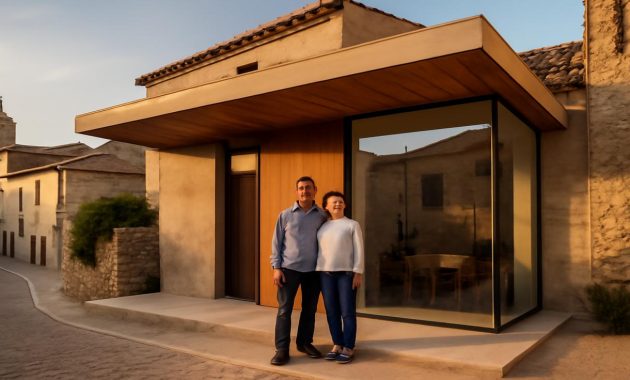
The road out of Madrid unspools like a ribbon of doubt and possibility. On a gray Tuesday in late autumn, with the city still rubbing sleep from its eyes, Lucía checked the side mirror one last time. Behind her, the last twelve years of her life shrank into the rear window: the office towers, the fourth-floor walk-up with the temperamental heater, the tapas bar where she and Dani had first looked at each other and thought, “Maybe.” In the passenger seat, Dani balanced a cardboard box of basil and tomato seedlings on his knees as if they were a compass. The GPS insisted they had three hours and twenty-two minutes left to drive. But distance, they were discovering, isn’t always measured in kilometers.
The Day They Chose “Instead”
It hadn’t started as a grand dream, not really. Just a sentence they whispered across the sofa one Sunday evening while the washing machine hummed in the background, flinging socks against the glass.
“What if we did something else?” Lucía had asked.
Dani knew exactly what she meant. Not more. Not higher salaries or a bigger apartment. Just… instead. Instead of endless commutes on the M-30, instead of Sunday night dread, instead of saving vacation days like lottery tickets for a week of escape each summer. They wanted their everyday lives to feel like the “away” place.
Over months, the sentence turned into a notebook filled with what-ifs: a small rural guesthouse, a vegetable garden, a place where people could come to hear silence and, if they listened carefully, their own thoughts. Friends laughed kindly: “Everyone dreams of opening a guesthouse. No one actually does it.”
On a weekend trip to La Rioja, though, something shifted. They stayed in a crumbling stone inn run by a couple in their seventies. The hallways smelled faintly of old wood and orange peel. At breakfast, the owners moved slowly but with a kind of unhurried precision that felt like a different time zone.
“We started this place when we were about your age,” the woman told them, spooning homemade plum jam into a bowl. “We had no money. Just this house and the stubborn belief that people would want to come.”
That night, back in Madrid, Lucía lay awake listening to scooters buzz under the window. The word “stubborn” echoed in her head. By dawn, she had opened her laptop and started searching for villages with less than 500 residents and more than 300 days of sun a year.
The Village That Didn’t Want to Be Found
The village that eventually chose them—because that’s how they talk about it today—sat in a gentle bend of a forgotten valley in inland Spain, barely a smudge on the map. Officially, there were 379 residents; unofficially, it felt like fewer because many were names on dusty mailboxes, only returning in August for fiestas and family reunions.
They first arrived on a wind-battered February afternoon. The air smelled faintly of wood smoke and damp earth. Two elderly men in flat caps leaned against the stone wall outside the bar, watching their car pull into the square with the quiet alertness of people who haven’t seen a stranger in days.
The village was simple: a church that chimed a few seconds late, terraced fields dozing under winter light, a single narrow main street ribboning between stone houses patched with decades of improvisation. Rusted plows leaned against doorways like forgotten sculptures. A faded sign on the wall of the bar read “Se Vende” with a phone number that looked as old as the paint.
Inside, the bar smelled of coffee, wine, and something fried. Conversations stopped for a second when they walked in. Then cutlery clinked again; the television resumed its low murmur. The bartender, a woman in her thirties with a tired ponytail and a sharp, curious gaze, slid two coffees toward them without being asked.
“You’re not from here,” she said. It wasn’t a question.
They explained—a bit awkwardly—that they were looking for a place to buy, maybe to open a small guesthouse. The word bounced around the room like a ping-pong ball: “Casa rural.” A man at a back table snorted. Another raised an eyebrow. In the corner, someone muttered, “Otros madrileños.” More people from Madrid.
The bartender wiped a non-existent coffee spill, then nodded slowly. “There’s the old Sánchez house,” she said. “Nobody’s lived there in years. It’s half ruins. You’ll hate it.”
As it turned out, they did not hate it at all.
Stone, Dust, and a Broken Roof
The old Sánchez house sat on the edge of the village, half facing the valley and half turning its back to the wind. Ivy clawed up one side. The roof caved in over what had once been the hayloft, exposing a jagged mouth of beams and sky. The gate creaked with the sound of a story that hadn’t been told in a long time.
Dani stepped into the courtyard first, crushing wild thyme under his shoe. The smell rose up in a quick green burst as if the earth were introducing itself. A fig tree leaned over the crumbling wall, thin and stubborn in the cold.
“We’re insane,” Lucía whispered, but her voice had the quiet awe of someone standing in front of a blank canvas.
There were spiderwebs and dust, dead swallows in the rafters, and wallpaper peeling like old bark. In one room, a faded calendar still hung on the wall—a photograph of a bullfighter from 1998 smiling into permanently paused time. A cracked mirror in the hallway reflected them back: two city people with soft hands and nervous eyes staring at a life that did not yet exist.
“We could have six rooms here,” Dani said, moving from space to space, “maybe a small library, a communal table under the fig tree…” He talked faster when he was afraid, turning fear into lists.
Lucía ran her hand over the stone wall. It was cold and rough and weirdly reassuring. This house had seen droughts, full harvests, arguments, love stories, births, and wakes. It had watched the village age and quietly empty out. If they listened carefully, she thought, maybe it would tell them how to bring some of that life back.
They called the number on the “Se Vende” sign and met the owner, a man now living in Zaragoza who remembered summers in the house when there were 600 people in the village and children playing in every alley. “If you fix it up and bring people here again,” he told them, “I’ll give you a good price. My mother would like that.”
Four months later, the papers were signed. They were officially the slightly stunned owners of a half-collapsed stone house in a village of 379 souls. When they told their parents, there was a long, thoughtful silence on both ends of the call.
“Are there at least good doctors nearby?” Lucía’s mother asked finally.
Building a Dream Out of Old Rocks
Renovation began in a swirl of cement dust, busted knuckles, and spreadsheets that bled numbers in alarming red. The architect—a soft-spoken woman who wore hiking boots to meetings—saw what they saw: a way to make something new without erasing what had come before.
“The stone stays,” she said. “It has the memory.”
They agreed: no polished anonymity, no chrome-and-glass pretending to be “minimalist luxury.” If people were going to drive three hours from Madrid or Barcelona to this almost-forgotten village, they wanted them to feel where they had arrived the moment they stepped through the door.
They spent weeks choosing limewash colors that echoed the valley at dusk, sourcing second-hand wooden doors from abandoned farmhouses, sanding old beams until their grain emerged like topographic maps. In the evenings, they sat on overturned paint buckets in the courtyard and imagined breakfasts under the fig tree, yoga mats facing the rising sun over the valley, books left unfinished on armrests because the view from the window was too distracting.
The village watched with the wary curiosity of people who have seen many projects start and few finish. The two men from the bar made a slow ritual of walking past the house each afternoon, hands clasped behind their backs, muttering assessments of the progress.
“They’re changing the roof pitch,” one would say.
“At least they kept the old stones in the arch,” the other would reply.
Eventually, they introduced themselves: Miguel and Joaquín. Retired farmers, lifelong residents, part-time guardians of the village’s memory. They began stopping by with unsolicited yet invaluable advice.
“If you plant tomatoes there, the wind will bully them,” Miguel said one day, pointing downhill. “Put them closer to the wall. It’s warmer.”
Joaquín showed Dani how to stack firewood so it wouldn’t rot, how to read rain from the shape of the clouds, how to respectfully negotiate with the finicky old stone oven they discovered in an annex. In exchange, Dani taught him how to use the coffee grinder they had bought for the future breakfast room.
By the time the walls were insulated with a mix of recycled materials and local cork, and the solar panels glinted shyly on the south-facing roof, the house had started to feel like a conversation between centuries.
The Guesthouse That Breathes with the Valley
The day they put the sign on the door, the village bells chimed noon, slightly late as always. They had spent hours debating the name. It needed to belong here, not sound like a brand that could be anywhere. In the end, they chose one rooted in a local word for the shallow, sunlit dips in the valley where wildflowers gathered each spring. The villagers nodded approval; the name fit in their mouths.
Inside, six rooms waited, each one with its own quiet personality. One had a stone window seat where you could sit with a blanket and watch clouds drag their shadows slowly across the fields. Another smelled faintly of the pine sap used to treat the wooden floor. All of them held small, deliberate details: handwoven baskets from a craftswoman in the next village, headboards made from old barn doors, clay cups thrown by a potter who fired them in a kiln a fifteen-minute drive away.
The heart of the house was the communal table under the fig tree—an old plank of chestnut wood polished by decades of use. This is where breakfasts unfolded slowly, where strangers arriving on Friday as tired colleagues or couples turned into people offering each other bites of tortilla and swapping hiking tips by Sunday.
Their philosophy was simple: every guest should feel the valley, not escape from it. That meant local food, seasonal menus, and the courage to say, “No, we don’t serve strawberries in November.” Mornings smelled of coffee and warm bread. Jars of jam waited in a neat line: peach from Lucía’s experiments, plum from a neighbor’s orchard, fig from the tree overhead.
They created a rhythm that followed the village instead of disrupting it. Check-in times that respected siesta. Quiet hours that aligned with when the church bat’s nightly flight began. Guided walks not for conquering peaks but for meeting wild thyme, listening to the buzzing arithmetic of bees, and learning why the abandoned stone terraces mattered.
Where Guests Sleep, Eat, and Breathe
They never wanted the guesthouse to feel like a hotel. It had to feel like a home you hadn’t realized you were missing. The table below gives a sense of how intentionally they designed each part of the experience.
| Space | What Makes It Special | Feeling for Guests |
|---|---|---|
| Guest Rooms (6) | Stone walls, natural limewash, reclaimed wood, handmade textiles, valley views. | Protected, grounded, like staying in a storybook that smells of pine and clean sheets. |
| Courtyard & Fig Tree Table | Long chestnut table, dappled light through leaves, candles at night, shared meals. | Instant community; strangers become tablemates and sometimes friends. |
| Kitchen & Pantry | Local produce, house sourdough, stone oven revived with help from neighbors. | Taste of the valley in every bite; the quiet thrill of knowing where everything came from. |
| Little Library | Shelves of nature writing, regional history, board games, no TV in sight. | Gentle permission to slow down, read, talk, or simply stare out the window. |
| Garden & Terrace | Herbs, vegetables, native flowers, chairs positioned for sunsets. | Being part of the landscape instead of just looking at it through glass. |
How a Village of 379 Became a Destination
The first booking came from a couple in Valencia who had stumbled across a photo of the courtyard on social media—sunlight tangled in fig leaves, a coffee mug casting a long shadow on the table. Then came a group of friends from Madrid craving something quieter than their WhatsApp notifications. A writer from Bilbao arrived with a suitcase and a promise to finally finish her novel.
Word traveled softly but steadily: there was a new rural guesthouse in a tiny village that somehow made you feel both held and expanded. Travel blogs picked up the story. An editor from a nature magazine visited, planning to stay one night and extending to three because she kept finding excuses to linger after breakfast.
By the time 2025 rolled around, the guesthouse had landed on several “best rural stays in Spain” lists, called things like “a blueprint for sustainable rural tourism” and “the country retreat your nervous system has been begging for.” Awards trickled in, then came in a small flood: recognition for ecological restoration, for local sourcing, for community integration. It was flattering—but also a little surreal—to hear phrases like “Spain’s best rural guesthouse for 2025” applied to something that still, in their minds, smelled like wet cement and basil seedlings.
Success didn’t show up as flash or trendiness; it showed up as small, living changes. The bar that had once been almost empty on winter evenings now hummed a little louder, thanks to guests extending their stay for “just one more night.” A young couple from the village, who had been planning to move to the city, started a small guiding business offering birdwatching and stargazing tours. An old bakery oven was brought back to life. A local grandmother began selling jars of her tomato preserves to guests, earning more in a summer than she once did in a year of sporadic orders.
The village headcount didn’t skyrocket. That wasn’t the point. But something in the air shifted from resignation to curiosity. People began asking, “What could we do, too?”
What “Best” Really Looks Like
From the outside, it would be easy to tell this story as a simple fairy tale: couple escapes city, opens guesthouse, wins awards, lives happily ever after. But Lucía still remembers the winter when the pipes froze and she cried in the laundry room, fingers numb, wondering if they’d made a mistake. Dani remembers sitting at the kitchen table with a calculator, trying to match dreams to invoices, wondering how exactly you quantify the value of birdsong at dawn.
Being “the best” did not mean being the biggest or the most luxurious. It meant something quieter, more demanding: being the most honest to the place they inhabited. It meant:
- Limiting the number of rooms, even when they could have squeezed in more beds.
- Turning down offers to host noisy bachelor parties that would have jarred against the village’s rhythm.
- Choosing local products even when cheaper options arrived in shiny packaging from far away.
- Giving winter discounts to Spaniards who traveled by train and bus to reach them, reducing car traffic on fragile rural roads.
- Closing for two weeks each year to let the land—and themselves—rest.
Guests noticed. They felt it in the way conversations with neighbors at the bar weren’t staged cultural experiences but real exchanges. In the way the stars over the valley remained brilliantly visible because there were no floodlights “for ambiance.” In the way breakfast changed subtly with the seasons, announcing spring or autumn more accurately than any calendar app.
When asked what they were proudest of, Lucía didn’t mention awards or glowing reviews. She talked about a single comment left in their guestbook by a woman who had arrived from Barcelona, exhausted and cynical, certain this would just be another cute countryside escape.
“I didn’t expect to sleep so well,” the woman had written. “Not just in the bed. In myself.”
A New Map for Rural Spain
Standing on the terrace at dusk, the village spreading gently below, you can feel why this place matters far beyond its six rooms. All across Spain, small villages are grappling with the quiet crisis of depopulation, their schools shrinking, their bars closing, their fiestas organized by ever-older hands. Tourism can be a double-edged sword—sometimes arriving like a tidal wave, eroding what it claims to celebrate.
But here, in this stone house that once sheltered hay and now shelters stories, a different model is taking shape. One where visitors don’t arrive to consume a landscape and leave, but to briefly inhabit it with care. Where the success of a guesthouse is measured not only in occupancy rates but in how many young people feel they might, just maybe, have a future in the place where they were born.
On some evenings, the old men from the bar still take their walk past the house. Miguel will occasionally sit at the fig tree table now, drinking a coffee and listening to languages he does not speak. He doesn’t say much. But once, as a group of guests headed out for a walk, he leaned toward Lucía and nodded toward the valley.
“It’s good that people come to look,” he said. “Things that are looked at with love last longer.”
Spain’s “best” rural guesthouse for 2025 is, in the end, not a story about perfection. It is a story about attention. To stone and wind and fig leaves. To the quiet wishes of a village of under 400 residents. To the lives of two people who decided that instead of escaping to the countryside once a year, they would build a life that felt like a permanent, grounded kind of getaway—and then invite the rest of us to visit for a while and remember what enough can feel like.
Frequently Asked Questions
Why did the couple choose such a small village?
They were looking for a place where their guesthouse wouldn’t just blend into an existing tourism circuit, but actually make a meaningful difference. A village under 400 residents offered quiet, authenticity, and the chance to contribute to local life rather than compete with it.
How did they make the guesthouse environmentally friendly?
They renovated the existing stone structure instead of building new, used natural and recycled insulation, installed solar panels, prioritized local materials and suppliers, and kept room numbers low to reduce water and energy use. Their menus follow the seasons, cutting down on long-distance food transport.
What makes this guesthouse stand out from other rural stays in Spain?
Its strength lies in integration: with the landscape, with the village rhythm, and with local people. The experience is built around slowness, genuine connection, and place-specific details rather than generic “rustic chic” design.
How did the project impact the local community?
It created direct and indirect jobs, increased off-season activity in the village, revived local crafts and food traditions, and inspired other small businesses and initiatives. Most importantly, it shifted local perception from resignation to cautious optimism about the future.
Can a project like this be replicated in other rural areas?
Yes—but not as a copy-paste template. The principles (respect for place, small scale, community involvement, environmental care) can travel. The actual design, activities, and even the name have to grow from each specific village’s history, landscape, and people.