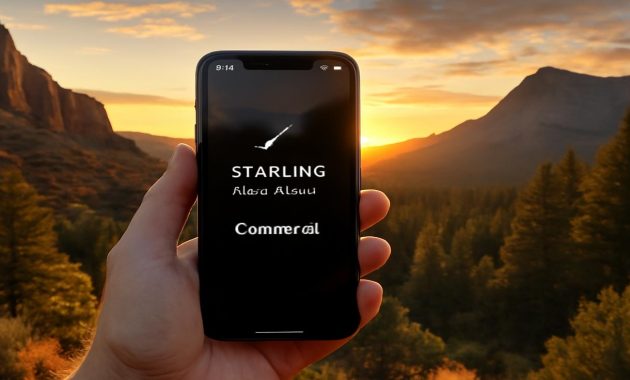
The first time you notice it, you’re standing somewhere you were always told the internet could never reach. Maybe it’s a wind‑scrubbed ridge in the Rockies, or a beach at the end of a half‑remembered dirt road, or the quiet shoulder of a highway where your car has just decided it’s had enough. Your phone should be a useless slab of glass out here—no bars, no network, nothing but your own thoughts and the wind. But tonight, a tiny symbol flickers at the top of your screen, and a message pops up: “Connected via satellite.” No dish on the roof. No bulky modem in the truck. No SIM swap. Just your phone, the sky, and a new kind of connection humming somewhere in between.
The Night the Sky Turned Into a Network
Picture this: you’re camping miles from the nearest town. The fire has burned down to embers, the trees are tall silhouettes, and the stars are doing their slow, ancient dance overhead. You pull out your phone mostly out of habit, already expecting the familiar “No Service” message. For years, that’s been the quiet rule of wild places: if the landscape is big and empty, your signal is small and absent.
But tonight, there’s something different. A new icon, a whisper of connection where there should be none. Your thumb hesitates, then taps open a browser. A page loads—slowly at first, then steadily. You send a photo to a friend in another time zone: the glow of the fire, the blur of constellations, your tent framed like a tiny outpost at the edge of nowhere. The message goes through.
You’re not on a mountain‑top tower. You’re not tethered to a portable router or a clunky satellite phone with an antenna like a metal insect. It’s your same everyday device, the same smooth rectangle that usually lives in your pocket, now talking to a river of machines sliding silently through low Earth orbit. The boundary between “on the grid” and “off it” just shifted a little under your feet.
From Dishes and Trucks to Just a Phone in Your Hand
For years, “satellite internet” meant something physical and obvious. It looked like metal—dishes bolted to roofs, brackets screwed into siding, cables snaking into living rooms. In more remote work camps and mountain cabins, it meant generators rumbling in the background and bulky terminals that required careful alignment to the sky.
Early Starlink users know the drill: unbox the dish, find a patch of sky with minimal obstruction, wait for it to orient itself. Suddenly you’re pulling down respectable broadband from space. It has always felt a bit like sci‑fi, but it still needed gear, installation, planning. The wild remained wild, at least until you decided to bring your suitcase of tech along.
The idea that this same system could evaporate into your phone—no external hardware, no technician, no new plastic device—is almost disorienting. You’re still using Starlink, but now the “dish” is virtual, dissolved into software and signal standards, woven into the way your phone already knows how to talk.
Underneath that feeling of magic is a whole orchestration of engineering: satellites reshaped into cell towers in the sky, a global constellation refitted to speak the familiar language of mobile networks instead of only the language of home routers and ground terminals. It’s not that the metal has disappeared; it’s that you no longer have to see it. The hardware lives off‑stage, above the clouds.
How a Sky Full of Satellites Finds a Phone in Your Pocket
A Global Web You Can’t See But Now Can Feel
To understand what’s quietly changed, imagine the Earth wrapped in invisible rings of movement. Thousands of Starlink satellites sweep across the planet in carefully tuned orbits, like a murmuration of metallic starlings, each one a node in a planet‑size mesh network. They talk to one another with laser links, sending data across oceans in the dark while you sleep, shrinking the planet one beam at a time.
For home internet, these satellites have been beaming signals down to pizza‑box‑sized dishes, trading speed for the freedom to live where fiber lines never will. But now the choreography has evolved. The network has learned a new dance: one that lets satellites behave more like floating cell towers, listening for the quiet handshake of ordinary phones. When your device reaches upward, it no longer has to shout through a specialized modem. It whispers in a language the sky has finally learned to understand.
Your Phone, Unchanged, Meeting a New Kind of Signal
The surprising part is what you don’t have to do. No one asks you to change your handset. No rugged, special “satellite phone” with stubby antennas and brick‑like weight. Your current device—the one that survives in your back pocket, takes photos of your coffee, and wakes you up in the morning—is now capable of something no one promised it when it left the factory: talking directly to orbit.
This works because the heavy lifting is happening up there, not in your hand. Satellites are being built with smarter antennas and more sensitive receivers, tuned to work with standards that phones already know. It’s less about giving you a new gadget and more about quietly upgrading the sky.
Of course, physics still has a say. The signals are faint by the time they fall through the atmosphere to your phone. The connection won’t always look like downtown fiber speed. But for messages that matter, navigation that keeps you on the right trail, or a quick call in a place where a broken axle can become an overnight ordeal, “good enough” is suddenly everywhere the sky is clear.
Instant Coverage Where Maps Turn Blank
The big change isn’t just technical; it’s emotional. For decades, we’ve carried around an invisible mental map of connection. Cities glow bright with wireless certainty. Highways shimmer with intermittent coverage. Then there are the gray zones—places on the map where you feel a little smaller, a little more alone, because your phone quietly gives up at the edge of the network.
Starlink’s direct‑to‑phone coverage redraws that map in real time. Not with perfect consistency, not at every altitude and in every canyon, but with a new baseline promise: if you can see the sky, there’s a decent chance the sky can see you back. The idea of being “completely offline” shifts from norm to choice.
| Connection Type | What You Needed Before | What You Need Now |
|---|---|---|
| Traditional mobile network | Nearby cell tower, carrier coverage | Still the same in cities and towns |
| Classic satellite internet | Roof dish, power, modem, installation | Best for homes, cabins, vehicles |
| Starlink to mobile phones | Special hardware, satellite handset | Just your existing smartphone and sky |
What “Always Reachable” Actually Feels Like
The Quiet Comfort of a Signal in the Middle of Nowhere
There’s a particular kind of silence you notice when your phone has no service. It’s not just audio; it’s a psychological stillness. You are, in that moment, gently but completely cut off from the wider world. For some, that’s bliss. For others, especially those traveling alone, it’s an itch of unease at the back of the mind.
Now imagine hiking a remote trail, your boots grinding dust and gravel, the path narrowing between tall grasses brushed by the wind. A storm starts to gather—distant thunder, the sky shading darker than your weather app predicted earlier. In the past, this would be the moment you realize you have no way to check what’s really coming. Today, you glance at the top of your screen and see a slender lifeline to orbit. You call home, you check a radar image, you decide whether to push on or turn back. The wild stays wild, but you are no longer traveling blind.
Rescue, Work, and the Edges of the Map
For search‑and‑rescue teams, for firefighters tracing the ragged edge of a spreading blaze, for farmers managing fields that stretch beyond the last rural tower, that subtle icon on the phone is more than a convenience. It’s coordination. It’s speed. It’s fewer pauses in the dance of logistics where someone has to drive to just the right ridge to get a bar or two of signal.
Even everyday work changes. The field engineer at a remote wind farm. The biologist tracking tagged animals far from paved roads. The sailor on a quiet sea. The trucker parked for the night on an empty desert interstate. They are all now walking in a world that has fewer digital blind spots. They can send logs, upload data, share their position—not later, not when they get back to a signal, but here and now, with the wind still on their face.
Wildness, Solitude, and the Price of Being Connected Everywhere
Do We Want the Backcountry to Have Bars?
Of course, not everyone is cheering. For some, the magic of remote places is wrapped up in their disconnectedness—the feeling that for a weekend or a week, your life shrinks to the radius of your footsteps and the small community around your campfire. The hum of notifications, the tug of social feeds, the constant background vibration of the attention economy—these were things you gladly left behind when the road ran out.
Always‑on satellite coverage nudges that boundary. That secret valley where no one posts from suddenly appears in location tags. That hidden beach shows up in someone’s story. The pristine silence of a ridgeline is now dotted with people taking a call because they can. The ability to share can turn quickly into the habit of sharing.
This is the quiet ethical question baked into the technology: what does it mean to bring full‑time connectivity into the last quiet corners of the planet? Not just for us, but for the places themselves? More visitors. More visibility. More pressure. The same skies that bend down to save a stranded hiker can also beam in the endless scroll of commerce into a tent that once held nothing but books, stories, and the sound of river water in the dark.
Choosing When to Switch Off
Maybe the real power of “internet everywhere” is not that we will use it all the time, but that we can choose when we don’t. Turning off a phone feels different when you know you could be connected if you wanted to be. The silence becomes voluntary instead of imposed by geography.
A day will come when a parent lets their teenager take a solo backpacking trip and feels a little calmer knowing a message could get through if something went wrong. A sailor will cross a coastline of cliffs and not have to guess what waits beyond. A scientist in the field will send fresh data from the heart of a rainforest instead of waiting weeks to surface again.
The world does not become less wild because it has coverage; but our relationship with that wildness changes. We gain a new kind of responsibility: to carry this new power lightly, to remember that just because we can stream, post, and ping from the ridgeline doesn’t mean we must.
The Coming Normal: A Sky That Belongs to Everyone
From Novelty to Background Magic
In a few years, the oddity we feel today might fade. Children born into this world will grow up assuming the sky itself is a sort of infrastructure, as essential and taken‑for‑granted as roads or power lines. They’ll roam further, worry less about dead zones, forget that “No Service” used to be a phrase loaded with both dread and relief.
There will be more satellites, more partnerships between space‑based networks and everyday carriers, more phones quietly handshaking with objects they will never see. The fact that a message can leap from your pocket to a satellite to another satellite and then down into the phone of someone walking into a café half a world away will feel like just another Tuesday.
Yet there will always be a moment—the first realization, the first time your phone rings under a sky where you were once, categorically, alone—that sticks with you. Technology often feels most magical at the edges of its reach, the first time it crosses a line we’d quietly drawn in our minds.
What Changes, What Stays the Same
Starlink turning the sky into a mobile network doesn’t change the smell of pine after rain, or the sound of gravel under boots, or the way the desert light softens as the sun drops behind distant mesas. It doesn’t blunt the sting of cold river water or flatten the taste of camp coffee sipped while fog lifts off the lake. The real world remains stubbornly physical, gloriously indifferent to our networks.
What it does change is the line between fear and confidence, between isolation and choice, between wondering and knowing. It means the story of your journey can stretch in real time to the people who care about you, and that help can thread its way faster through uncertainty when things go wrong.
And on some night, far from streetlights and traffic, you will look up at a sky studded with more moving points of light than your grandparents could ever have imagined, and you’ll feel that peculiar blend of awe and unease that comes whenever our species quietly rewrites one of the rules of the world. The stars are still there, ancient and unbothered. But woven between them now is a human constellation, whispering in radio and laser, carrying your voice, your maps, your lifelines, directly to the phone in your hand—no extra hardware, no waiting, just the instant, almost unbelievable certainty that you are never completely beyond the reach of home.
FAQ
Do I need a special phone to use Starlink’s direct satellite connectivity?
No. The core idea is that ordinary smartphones can connect without any hardware change. The satellites and networks are being built to work with the kinds of devices most people already carry.
Will satellite phone internet be as fast as my regular mobile data?
In many cases, no. Direct satellite connections are focused first on coverage and reliability, especially in remote areas, rather than matching high‑speed urban 5G performance. Speeds should be enough for messaging, basic browsing, and essential apps.
Can this replace my home internet connection?
For now, home and office connections are still better served by dedicated broadband—fiber, cable, or a fixed Starlink dish. Direct‑to‑phone satellite service is more about filling gaps where traditional networks don’t reach.
Will I always be online, even deep in the wilderness?
Coverage will expand over time, but it won’t be perfect everywhere right away. Dense forests, steep canyons, and certain latitudes can still cause interruptions. However, many places that once had no connectivity at all will begin to see at least intermittent service.
What about battery life—will connecting to satellites drain my phone faster?
Any connection that pushes your phone’s radio harder can use more power, especially at the edges of coverage. In practice, careful software and network optimization aim to keep battery impact manageable, but you should still plan for extra power if you rely on satellite connectivity on long trips.
Is this safe for emergency situations?
That’s one of its biggest strengths. Having coverage where there used to be none can significantly improve your ability to call for help, share location, and receive guidance. Still, traditional safety planning—maps, gear, backup power—remains essential.
Will this make remote places more crowded?
It may. Easier communication, navigation, and sharing can attract more visitors to once‑hidden spots. Responsible use, respect for local environments, and thoughtful travel choices will be increasingly important as the map of “reachable” places grows.
Originally posted 2026-03-04 00:00:00.