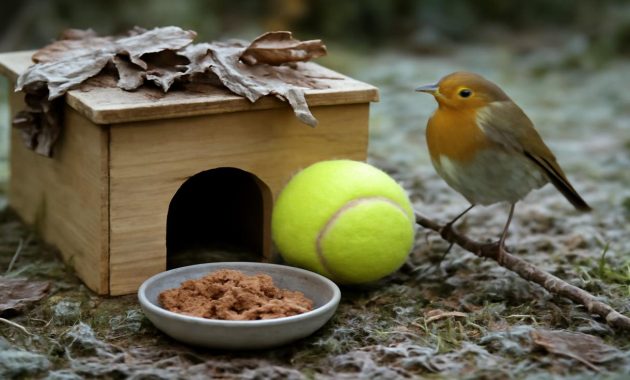
The first frost of the year arrived quietly in the dark, with that soft, crystalline stillness that makes every sound feel too loud. When you opened the back door that morning, the garden looked like it had been dusted with sugar. Breath clouding in front of you, you stepped out, crunching across the stiff grass, thinking of nothing more than the shock of cold on your face and perhaps a hot drink waiting in the kitchen. That was when you saw it—just a small shape by the edge of the pond. You almost didn’t notice. A sodden tennis ball bobbing at the rim of the water, you thought. Until you got closer.
It wasn’t a ball. It was a tiny hedgehog, a late-foraging youngster, its spines slicked with ice, nose barely above the surface, claws tangled in the overhanging mesh. You remember the swift, sour bolt of panic and the helplessness that followed. By the time you reached it, it was too late. The garden, which had always felt like your gentle, harmless place, had suddenly revealed its sharp edges.
That’s usually how it happens. Not with malice, but with surprise. A bird caught in a narrow gap behind a shed. A frog trapped in a steep-sided bucket after a night of rain. A mouse that falls into a drain, inches from safety. Gardens, which we like to imagine as miniature Edens, can be quiet mazes of hazards. And in winter, when wild animals are at their most desperate and depleted, the smallest miscalculation becomes fatal.
But what if the smallest kindness could counter that? What if the difference between life and death for a hedgehog, a blackbird, a robin, was as ordinary as a leftover tennis ball?
How a tennis ball becomes a life raft
A tennis ball is unremarkable. It rolls under the sofa, it gets chewed by the dog, it fades to a dull, dirty green in a forgotten flowerbed. Yet in the winter garden, something about its size, its buoyancy, its bright, unmistakable presence, turns it into a tiny, fluorescent guardian.
Picture a shallow ornamental pond, the kind that seems safe because it’s “not that deep.” In summer, it’s a glittering bowl of movement—dragonflies, water boatmen, the occasional blackbird flutter-bathing at its edge. But in winter, the water darkens, leaves clump in slick, rotting islands, and ice creeps in from the sides like closing fingers. A thirsty hedgehog wanders in the cold dusk, nose working overtime for a last drink before the long sleep. It leans over the rim, paws wetting on the slippery edge. One small slip, and suddenly it’s in the water, body weighted down, claws scrabbling for purchase on a smooth, vertical side it cannot climb.
A tennis ball, left floating on the surface, changes the script. The hedgehog falls in—but its flailing paws meet something solid, something that moves with it, something that doesn’t go under. The ball bumps against the pond’s edge or the frozen skin of ice, creating a wobbling, vital bridge. Not elegant, not guaranteed, but sometimes just enough. A hedgehog, or a bird, gains a fraction of a second, a little leverage, one last chance to hook claws on brick or ice and scrabble free.
It sounds too simple, like a story you’d tell a child. But wild rescues are often decided on the level of seconds and inches. The absurd little tennis ball, floating aimlessly, becomes a lifeline purely by existing in the water at the right time. It is the gentlest kind of intervention—no engineering degree required, no power tools, just the conscious choice to place something buoyant where an animal might one day desperately need it.
The hidden danger zones in an ordinary garden
Walk out into your own garden and look at it through the eyes of a creature that weighs less than a bag of sugar, that can’t understand glass, that doesn’t know what “slippery” means until it’s already falling.
There’s the water butt, its rim just high enough that a hedgehog can lean over, but too tall and smooth for it to escape if it falls in. There’s the steep-sided bucket you left out to collect rain. There’s the cattle grid at the end of the drive, the gap behind the shed, the compost bin with its sheer plastic walls. And of course, there’s the pond: beautiful, reflective, and—at night in winter—an invisible hazard.
Birds land for a drink on ice that looks solid but is only a delicate crust. They peck at reflections, misjudge depth, and end up in water so cold it seizes their muscles. Frogs and toads, drawn to any vestige of dampness, hop their way into containers that become inescapable prisons.
We underestimate how perilous “just a few inches of water” can be when your body is inches tall. We also underestimate how often wild visitors use our gardens—even the small, untidy, overlooked ones wedged between walls. Hedgehogs, in particular, are nighttime wanderers, weaving through whole neighborhoods under cover of darkness, slipping through gaps in fences, traversing gardens like stepping stones.
To them, our backyards are not private properties; they are corridors, oases, and, occasionally, traps.
A small gesture with a wide ripple
This is where that oddly specific suggestion—tennis balls in your garden—comes into focus. The tennis ball is a symbol of something larger: the power of one tiny, deliberate, almost laughably simple action that quietly reshapes the odds of survival for dozens of animals you may never even see.
Imagine looking over your garden and asking a different kind of question, not “How does this look?” but “If I were small, cold, tired, and afraid, could I get out?” That tiny shift in perspective is the true gesture. The tennis ball is just the visible tip of it.
You drop one in the pond to act as a floating refuge. Another in the water butt, so if a mouse or hedgehog falls in, there’s something to cling to while it searches for a foothold or until you notice. You wedge one in the bottom of a steep-sided trough, where it can jam against the side and become an improvised step. You’ve created, in all those overlooked corners, tiny chances for escape.
Part of the beauty lies in how ordinary this is. You’re not rewilding hectares of land. You’re not launching a conservation project. You’re placing a ball in some water. Yet for a robin that misjudged its landing on a freezing morning, that bouncing, bobbing sphere might be the thing that lets it haul itself, soaked and shocked, back into the brittle air rather than disappearing soundlessly beneath the surface.
The quiet drama of winter nights
Winter can make the garden feel empty. In daylight, at least. The flowers die back, the insects vanish, and the lawn lies stiff and silent. You might go days without seeing much more than a passing crow. But the garden’s quiet isn’t an absence of life; it’s a change of tempo.
Most of the real drama now happens when you’re not watching. In the ink between dusk and dawn, hedgehogs trudge low and determined, seeking last meals or good nesting spots. Blackbirds and robins, hungry and bold, push their luck at feeders and water sources. Mice trace invisible highways under cover of darkness, scurrying from hedge to shed, from compost heap to greenhouse. Foxes ghost through, pausing to listen, their breath steamy in the frigid air.
All of them are one step closer to the edge in winter. Fat reserves shrink. Food is scarce. Cold gnaws at every organ. A mishap that might have been survivable in summer—a tumble into chilly water, a night spent soaked and shivering—is now a direct route to hypothermia.
What you do in your garden before night falls becomes part of that story. The tennis ball floating in the ice-rimmed pond is a character in a nighttime drama you will almost certainly never witness. Somewhere, under moonlight or street glow, a hedgehog may wobble against it, regaining its footing. A blackbird may clutch at it with frantic claws, wings half-splayed, hauling itself from the water’s grasp. You will sleep through these scenes, unaware. And yet, because of you, the next morning there will still be rustling under the shrubs, a flicker of brown in the undergrowth, the echo of tiny feet scrambling away.
Transforming obstacles into lifelines
Once you start seeing your garden as a landscape of potential perils and rescues, the possibilities multiply. The tennis ball is only the beginning.
You notice that the pond’s edges are sheer, so you tilt a piece of rough wood from the bank down into the water—a ramp for anything that falls in by mistake. You place a brick or a flat stone under the surface near the edge, creating a “stepping island” for birds and small mammals. You cover open drains and deep buckets, or at least leave something floating or angled inside them—again, a tennis ball, a small plank, a half-submerged stone.
These are not grand designs. They don’t change your garden’s character, they don’t shout for attention, and they require no special skills. They just say: if you fall, I’ve thought about you. I’ve left you a chance.
| Garden Hazard | Risk for Wildlife | Simple Fix (Using Tennis Balls & More) |
|---|---|---|
| Garden pond | Drowning risk for birds, hedgehogs, small mammals | Float 1–3 tennis balls; add a rough plank or stone ledge at one side |
| Water butts & barrels | Trapped animals unable to climb the smooth, tall sides | Keep lidded where possible; drop in a tennis ball or piece of wood as an emergency float |
| Buckets & troughs | Frogs, toads, mice and insects drowning overnight | Store upside down when not in use; if left out, angle a stick inside and add a floating ball |
| Steep-sided fountains | Birds falling in while drinking or bathing | Place a stone “island” or tennis ball where water collects, giving a safe perch |
| Small wildlife-access gaps | Animals trapped behind sheds or in narrow spaces | Leave a clear, climbable route out; use bricks or short planks as steps |
Each of these adjustments is a variation on the same theme: turning something that traps into something that supports. The tennis ball, round and persistent, is just particularly good at being there when everything else goes wrong.
Why hedgehogs and birds need us most in winter
Both hedgehogs and many garden birds live precarious lives at the best of times. But winter tightens that precariousness like a vise.
Hedgehogs, those small, snuffling bundles of spikes, rely on building up enough fat in autumn to see them through hibernation. A late litter, an early cold snap, or a disturbed nest can leave them underweight and struggling. Some will still be wandering in November or December, hunting beetles and worms, desperate to drink. Dehydration can be as dangerous as hunger, especially when water sources freeze.
Birds, meanwhile, burn through their energy reserves at a startling rate. Tiny bodies lose heat quickly; nights are long; food is scarce. A fall into frigid water, even if they clamber out, can be catastrophic. Wet feathers lose their insulating power; a shivering bird may not survive until morning.
Our gardens are not just backdrops to their struggle; they are arenas in which the struggle is decided. If we leave fresh, unfrozen water in shallow dishes, we offer a lifeline. If we place feeders out of reach of predators, we help refill those dwindling reserves. And if we ensure that the water in our ponds and containers includes escape routes—like tennis balls and ramps—we reduce the chance that a simple sip ends in silence.
There’s something startlingly intimate in this relationship. A hedgehog hibernating under your shed. A robin visiting your fence post every day at dawn. They do not know who you are. They will never thank you. Yet you become, in ways they will never understand, the quiet custodian of their chances.
A ritual of care you can begin today
There is a special satisfaction in making preparations for winter. Sweaters rediscovered. Boots lined by the door. Logs stacked. It feels like a conversation with the cold: I see you coming; I’m getting ready.
You can fold the creatures of your garden into that ritual. This afternoon, when the light is thinning and the air smells of earth and smoke, walk out with a few old tennis balls in your hands. Drop one gently into the pond and watch it bob, impossibly bright against the dark water. Toss another into the water butt. Check the buckets and troughs, the forgotten basins, the containers that will soon brim with rain. Either upturn them or give them their own tiny guardians.
Then go a step further. Clear a small space under a hedge where leaves and dry grass can collect—a potential hedgehog nest. Top up a shallow dish of water with pebbles in it, so birds can drink without slipping. Scatter a few seeds, a handful of mealworms, or crumbled fat balls in sheltered corners where robins and blackbirds like to dart.
These are acts as humble as tying your shoelaces. No one will see them; no one will applaud. But they reframe your relationship with this patch of earth. You are no longer just its owner or its gardener. You are, in the quietest, kindest way, its keeper.
The story you won’t see—but will feel
In a month or two, when the hardest frosts arrive and the garden glitters with ice at dawn, you might step out again and see that same pond, that same floating tennis ball, now crusted with frost around its edges. The hedges will be bare, the grass dulled, the flowerbeds reduced to stubble. It will look, from a distance, lifeless.
But you’ll know better.
You’ll know that under the shed, a hedgehog may be sleeping, tucked into a nest partly built from the leaves you forgot to sweep. You’ll know that the robin singing from the fence survived last night’s cold, perhaps thanks in part to the energy from yesterday’s scattered seeds. You’ll know that on some unseen hour, in some muffled, breathless darkness, that ridiculous, fluorescent-green ball might have been the difference between a frantic struggle and a slow sinking.
And even though you didn’t witness it, the garden will feel different to you. More alive. More mutual. Less like a possession and more like a shared space, full of quiet, fragile lives that intersect with yours in ways you only half comprehend.
A tennis ball is such a small thing. A scrap of modern sport, repurposed into a buoy. But it carries with it an idea that reaches far beyond its size: that kindness does not need to be heroic to be transformative. That paying attention is, in itself, a powerful act. That we are, whether we meant to be or not, participants in the stories of the wild beings who pass our doors.
This winter, you can decide what sort of character you want to be in those stories. Not the bystander. Not the accidental villain with the uncovered barrel and the sheer-sided pond. But the quiet ally, the thoughtful neighbor, the one who saw how small the creatures were and how big the dangers seemed—and who answered with a handful of tennis balls and a heart tuned toward gentleness.
Place them now, in the cold or the drizzle or under a lowering sky. Then go inside, warm your hands, and let the knowledge settle in: somewhere out there, because of that absurd little sphere, a hedgehog or a bird may live to see another dawn.
Frequently Asked Questions
Do tennis balls really make a difference for wildlife?
Yes. A tennis ball in a pond, water butt, or trough provides a floating object that struggling animals can cling to and use for support. It doesn’t replace proper ramps or steps, but it significantly improves an animal’s chances of escape, especially in slippery, steep-sided containers.
Where should I put tennis balls in my garden?
Place them anywhere there is standing water with steep or smooth sides: ornamental ponds, water butts, buckets, troughs, and small fountains. Ideally, each water body should have at least one floating ball and a ramp or stone to climb onto.
Will tennis balls harm the water or the animals?
Used in small numbers, standard tennis balls are generally safe in garden ponds and containers. If you’re concerned, avoid heavily degraded or chemically treated balls and check them regularly. If they become very worn or moldy, replace them.
What else can I do to help hedgehogs and birds in winter?
Provide shallow, unfrozen water; offer appropriate food (like quality birdseed, suet, or meat-based hedgehog food); leave some leaf litter and wild corners for shelter; and avoid using pesticides and slug pellets. Check bonfires and compost heaps carefully before lighting or turning them.
How many tennis balls do I need?
For most small gardens, three to six balls are enough: one or two in the pond, one in each water butt or trough, and spares for any additional containers. The goal is simply to ensure that every risky water area has at least one floating “life raft.”
Is this still useful if I don’t have a pond?
Absolutely. Many accidents happen in buckets, barrels, and other containers. Even if you have no pond, adding tennis balls and escape routes to any water-holding items in your garden can prevent drownings for small mammals, birds, frogs, and insects.
When should I start putting tennis balls out?
Start in autumn and keep them in place throughout winter and early spring, when water is coldest and animals are most vulnerable. In reality, they’re helpful year-round, but their life-saving potential is greatest during the colder months.