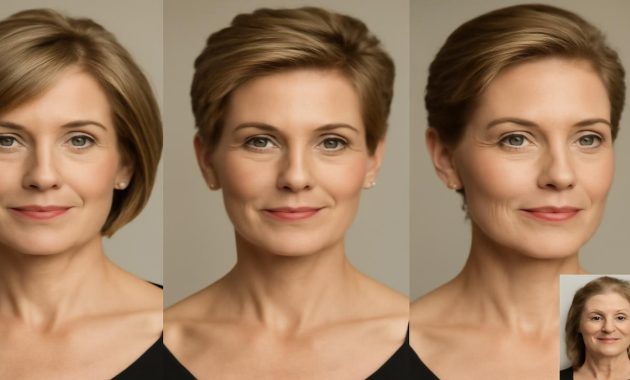
The woman in the mirror is still you, you think, leaning in a little closer. The laugh lines are deeper than you remembered, there’s a softness along the jaw, and your hair seems to have lost some of its old enthusiasm. You tilt your head, lift your hair with your fingers, and for a second—just a second—you can see it: a younger version of your face, brighter, a little more defined, somehow more “you.” Then you let go, your hair falls back, and the moment disappears again like a wave smoothing itself over wet sand.
The Subtle Magic of a Well-Chosen Cut
The stories we tell about aging often focus on what we lose. Less collagen, less firmness, less shine. But talk to any good hairstylist who’s worked with women over 50, and they’ll tell you a different story entirely: the right haircut doesn’t erase the years, it rewrites them. It’s less about looking “young” and more about looking awake, lifted, and in harmony with the person you are now.
“Hair is like a frame for a painting,” one stylist in her late fifties told me. “You wouldn’t put a masterpiece in a frame that drags it down. After 50, your frame needs to do more lifting, not less.” She said it while combing through a client’s salt-and-pepper bob, turning the chair slowly, watching how the light caught the strands. The client, wrapped in a black cape, studied herself in the mirror with a curious, almost cautious hope.
That hope is powerful. We all know you can’t turn back time—but you can absolutely redirect the eye. Lifting haircuts work like subtle architecture: they guide attention upward, away from heaviness around the jaw or neck, toward cheekbones, eyes, and that spark that never really went away. And while there are dozens of cuts that can flatter a mature face, stylists consistently return to three clear winners when the goal is that “ten years younger” illusion: the layered soft bob, the modern shag with face-framing layers, and the gently lifted long cut with movement.
Before we walk into each of those, it helps to understand why certain shapes are so flattering after 50. As we age, the face naturally loses volume in the cheeks and gains it a bit lower, around the jawline. Skin softens, features blur slightly. A lifting haircut adds structure where your face has lost some and removes weight where gravity has stepped in as an uninvited collaborator. The magic is in angles, length, and how the hair moves—or doesn’t—around your face.
The Science of “Lift”: How Hair Can Reframe Your Face
Think of your hair as a kind of soft scaffolding. Done well, it can create diagonal lines that visually “pull” the face up, much like a carefully placed scarf or a perfectly cut blazer. Done poorly, it can drag the gaze downward, especially if the hair is long, heavy, and all one length.
Here’s what stylists watch for when they’re trying to “lift” the face with a cut:
- Where the hair breaks on the face: Ends that hit right at the jaw can emphasize jowls, while ends around the cheekbones or collarbones can subtly highlight bone structure.
- Weight distribution: Too much volume at the ends creates a “triangle” that drags down the features. Lightening the bottom and adding movement near the eyes and cheeks literally changes how your face is read.
- Texture and movement: Soft waves or feathered layers create gentle, upward lines and airiness. Heavy, blunt shapes can feel harsh and aging.
- The hairline and part: A slightly off-center part, a soft fringe, or layers that lift away from the face can open your features and bring light to the eyes.
You don’t need to memorize any of this to walk into a salon; you just need to know what effect you’re after. Use language like “I want my face to look lifted,” “I’d like softness and movement around my eyes,” or “I want to avoid heaviness near my jawline.” A skilled stylist will translate that into the technical details. And most of them, when you mention “lift,” will begin to steer you toward some version of these three expert-approved cuts.
| Haircut | Best For | Lifting Effect | Maintenance |
|---|---|---|---|
| Layered Soft Bob | Straight to slightly wavy hair, fine to medium density | Highlights cheekbones, opens the face, reduces jaw heaviness | Salon visit every 6–8 weeks |
| Modern Shag with Face-Framing Layers | Wavy or textured hair, medium to thick | Adds height at the crown, creates vertical lines, softens features | Salon visit every 8–10 weeks |
| Lifted Long Cut with Movement | Medium to long hair, any texture, those not ready to go short | Removes weight at the ends, brings focus to eyes and collarbones | Salon visit every 10–12 weeks |
1. The Layered Soft Bob: The Quietly Powerful Refresh
Picture a bob that doesn’t try too hard: not severe, not too sharp, not that rigid, helmet-like shape many of us still associate with the word. Instead, imagine a bob that just kisses the collarbone or brushes the jaw, with airy layers that move when you turn your head. It curves in slightly at the ends rather than hanging like heavy curtains. That’s the layered soft bob—the cut stylists reach for when a client sits down and murmurs, “I’m feeling a bit…tired-looking.”
Why does it read as “younger”? Part of it is length: somewhere between the jaw and the collarbones is a sweet spot for many faces over 50. Too short, and the cut can look severe. Too long, and it can weigh the face down. The soft bob floats right in the middle, pulling attention to the mid-face—cheekbones, lips, and eyes—rather than the neck or jowls.
A stylist will often add subtle layering through the back and around the face to keep the shape from looking blocky. These layers can be almost invisible to the naked eye, but you feel them in movement. They prevent that the-hair-and-head-are-one-piece effect and instead create gentle shifts of volume, like the way leaves tremble in a breeze rather than sitting flat.
If your hair is fine, a layered bob can make it appear fuller by lifting the roots slightly and taking away heavy, straggly ends that tend to look thinner. If your hair is thick, those same layers remove bulk so the hair doesn’t sit like a dense blanket on your shoulders.
Styling doesn’t have to be complicated. Many women over 50 learn a simple trick: blow-dry with a round brush, lifting the hair at the crown and rolling the ends slightly inward. Others let their natural wave shine and just encourage a few bends with a curling wand. The goal isn’t perfection; it’s movement that follows your face rather than fighting it.
How to Ask for It
In the chair, you might say: “I’d like a bob that feels soft and lifting, not severe. Something between my jaw and collarbone, with light layers to keep it from looking heavy around my jaw.” Show your stylist with your hand where you want it to fall—they’ll adjust according to your neck length and face shape.
2. The Modern Shag: Playful Lift and Effortless Texture
If the soft bob is the calm, steady friend, the modern shag is the one who talks you into taking a spontaneous road trip. It’s a little more rock ’n’ roll, a little more playful—but incredibly flattering when you want to soften and lift the face. This isn’t the choppy, chaotic shag of the 1970s; today’s version is more refined, with carefully placed layers that create soft volume at the crown and around the eyes.
The secret weapon of the modern shag is its face-framing layers. These strands often start around the cheekbones or slightly below and cascade in soft, piecey shapes that follow the contours of your face. They work like shadows and highlights in a painting, adding dimension exactly where time has smoothed it away. When they’re cut well, they draw the gaze up and in, toward your eyes and smile.
For women with natural wave or curl, the modern shag can feel like permission: permission to stop fighting for straightness, to let the hair do what it has always wanted to do, but in a more deliberate, flattering way. The layers lighten the load, allowing curls to spring up instead of being pulled flat by their own weight. The crown gets a touch of height—nothing exaggerated, just enough to prevent that “collapsed” look that can make the face appear tired.
The beauty of this cut is that it still looks good when imperfect. In fact, it thrives on lived-in texture. A bit of air-drying, a dab of curl cream, a scrunch with your fingers, and you’re done. On non-wash days, you can revive the lift with a spritz of water or a lightweight styling spray and a little tousling at the roots.
How to Ask for It
When you talk to your stylist, try: “I’d like a modern shag that feels soft and flattering, with layers that frame my face and add lift at the crown. I don’t want anything too extreme—just movement and texture that make me look more awake.” Bring a couple of photos of shags you like, especially on women with a similar hair texture to yours.
3. Lifted Long Length: When You’re Not Ready to Go Short
There’s a long-standing myth that women over 50 should cut their hair short, as if a birthday suddenly rewrites the rules of length. Many stylists quietly disagree. Long hair can absolutely look fresh, youthful, and elegant—if the cut is doing some lifting work.
The key is movement and shape. The aging trap for long hair is heaviness: long, blunt ends that hang at one length, dragging the gaze downward, pulling features with them. A lifting long cut keeps the length you love but trims away the weight that’s working against you.
Most stylists will start by choosing a flattering “base length”—often somewhere between the collarbones and the chest, depending on your height and proportions. From there, they’ll build in long layers that begin around the cheekbones or below and flow through the mid-lengths of the hair. These aren’t choppy or extreme; they’re subtle, like gentle steps carved into a slope.
The result is hair that still feels long when you run your fingers through it, but doesn’t fall in a solid sheet. It moves. It sways. It catches light. That movement is visually lifting, especially when a few soft pieces are shaped around the face. Those face-framing layers might graze the corners of your mouth, your jawline, or your collarbones, depending on what you want to emphasize.
For some women, especially those with silver or white hair, this combination of length and softness can be breathtaking. The contrast between cool, luminous color and a cut that floats around the face instead of hiding it creates an almost ethereal effect—timeless rather than “trying to be young.”
How to Ask for It
In the salon, you might say: “I want to keep my hair long, but I’d like it to feel lighter and more lifting. Can we add long layers and some soft pieces around my face to bring out my eyes and cheekbones?” If there are areas you’re self-conscious about—say, your neck or jawline—mention those too. A few artful layers can redirect focus.
Color, Texture, and the Little Details That Change Everything
While the cut does most of the heavy lifting, a few supporting players can make a surprisingly big difference in how young and awake your hair makes you look.
Color doesn’t have to mean covering every gray; in fact, a growing number of stylists encourage working with natural silver or salt-and-pepper hair. What matters more is dimension. Even subtle variations—slightly lighter strands around the face, a softer root, lowlights to prevent a “block” of color—can mimic the way sun and time would naturally paint the hair, which usually reads as youthful.
Texture is your ally. Overly flat, ironed-straight hair can look dated and emphasize fine lines simply because it offers no softness to balance them. Conversely, huge, uncontrolled volume can feel overwhelming. The sweet spot is gentle lift at the roots, a bit of bend or wave through the mid-lengths, and ends that look healthy rather than wispy or brittle.
Parting also plays a quiet but powerful role. A strict, razor-straight center part can pull the face downward, especially if hair lies flat against the scalp. Experimenting with a slightly off-center part, or even a soft side part, can shift weight and create instant visual lift. The change is small on paper, but large in the mirror.
And then there’s fringe—bangs, but grown up. A heavy, blunt fringe all the way across the forehead can shrink the face and feel harsh. But a wispy, side-swept fringe or soft, curtain-style pieces that split in the middle can open the forehead, hide a few lines if you care to, and create a youthful softness around the eyes. Many of the most flattering post-50 cuts pair one of the three key shapes with this kind of gentle fringe.
Confidence: The Final, Invisible Layer
The most striking thing about women who look “ten years younger” after a haircut isn’t actually their hair. It’s the way they inhabit themselves afterward. Shoulders relax. Eyes seem brighter. Heads tilt at a slightly different angle, as if they’ve just remembered something delightful about who they are.
A lifting haircut isn’t about pretending you’re 30 again. It’s about refusing the story that after 50, your job is to shrink, to play small, to disappear into sensible cuts and safe choices. Your hair can be soft or edgy, silver or warm, short or long—but it should always feel like it’s participating in your life, not apologizing for it.
Next time you stand in front of the mirror and lift your hair with your hands, hold that image for a second longer. Notice what changes in your face when the hair moves: where the light hits, which lines fade into the background, which features leap forward. Then take that vision with you to your stylist. Ask for lift. Ask for movement. Ask, above all, to see the woman in the mirror the way you feel her from the inside—very much alive, very much here, and absolutely not done yet.
Frequently Asked Questions
Which haircut is best if I have fine, thinning hair after 50?
A layered soft bob is often the most flattering for fine or thinning hair. The length (between jaw and collarbone) helps hair look fuller, while subtle layers add volume without making the ends look wispy. Avoid very long, all-one-length cuts, which can make fine hair look sparse.
Can I still wear long hair after 50 without looking older?
Yes. The key is shape and movement. A lifted long cut with soft, face-framing layers removes heavy, dragging ends and adds dimension around your eyes and cheekbones. Long hair looks youthful when it’s healthy, slightly layered, and not hanging in a solid sheet.
Do bangs really make you look younger?
Soft, well-cut fringe can create a younger, more open look by drawing attention to your eyes and partially disguising forehead lines. Light, side-swept or curtain bangs are usually more flattering than heavy, blunt bangs, which can feel harsh and shorten the face.
How often should I get my hair cut to maintain a lifting shape?
For a bob, plan on every 6–8 weeks to keep the lines clean and the shape lifting rather than sagging. Modern shags generally hold 8–10 weeks, while longer layered cuts can stretch to 10–12 weeks, as they grow out more softly.
What if I have curly or wavy hair—do these cuts still work?
Absolutely. The modern shag is especially good for waves and curls, because the layers release natural movement and avoid bulk at the ends. A lifted long cut with long layers can also look beautiful on curls. The key is finding a stylist experienced with your curl type and asking for shape that enhances, not flattens, your natural texture.
Do I need to color my hair to look younger, or can I keep my gray?
You can look vibrant and lifted with any color, including natural gray or white. The important thing is dimension and shine. Ask for subtle variations—slightly lighter pieces around the face or soft lowlights—if your color looks flat. Healthy, shiny gray with a flattering cut can look incredibly modern and youthful.
How do I talk to my stylist if I’m not sure what will suit me?
Use feeling words and focus on effect. Say things like, “I want my face to look more lifted,” “I’d like softness around my eyes,” or “I want to avoid heaviness at my jawline.” Bring two or three photos of styles you like on women with similar hair texture. A good stylist will read your features, your lifestyle, and your hair type to adapt one of these three lifting cuts to you personally.