The first thing you notice is the sound: a low, constant splash of water against the clay steps, women’s bangles chiming as they lower steel pots into the river, a child laughing as he darts between them, bare feet slapping against wet stone. It could be any morning in any riverside village—until someone points to the small shrine of candles and wilted marigolds on the bank. “For the children we lost,” an older woman says quietly. Cholera has come through here before. Everyone knows the signs: sudden watery diarrhea, the terrifying speed with which a healthy body can simply… empty out. For generations, the story of cholera has been the same: dirty water, bad luck, a race to rehydrate. But now, in a set of quiet laboratories far from this river, scientists believe they’ve uncovered a twist in the story—one that begins not at the water’s edge, but at the dinner plate.
A Strange Clue in a High-Protein Bowl
The discovery did not start with a grand theory, but with a small, nagging observation. Researchers studying communities in cholera-prone regions noticed something odd: in some neighborhoods, outbreaks cut through families like a scythe. In others, people living just as close to the same contaminated water seemed oddly resistant. Water quality was poor in both places. Hygiene wasn’t dramatically different. What changed, when they looked more carefully, was the food.
In the communities that fared better, meals tended to be richer in protein: lentils thickened into hearty stews, fish pulled from nearby rivers and dried on woven mats, occasional chicken or eggs when money allowed, and beans cooked down with fragrant spices. These weren’t wealthy households; they were simply putting more protein, however modest, onto their plates. The pattern was intriguing enough that one group of scientists decided to test an idea that felt, at first, almost too simple: could a high-protein diet help the body resist cholera?
To find out, they turned to animals whose gut biology, in some key ways, mirrors our own. Mice were divided into groups: some fed a standard diet, others given meals significantly richer in protein. Then came the unsettling part of the experiment—deliberately exposing them to Vibrio cholerae, the bacterium that causes cholera. It was the kind of trial that unfolds slowly, in the quiet anxiety of data collection: watching weight charts, measuring bacterial counts, tracking fluid loss.
The results surprised even the researchers. Mice on the high-protein diet didn’t just do “slightly better.” In many cases, they were dramatically less likely to develop severe cholera-like symptoms. Their bodies seemed to refuse to become the open floodgates the bacteria needed. Something inside them was standing its ground.
The Microbial Neighborhood Inside Us
To understand what was happening, you have to imagine the gut not as a hollow tube, but as an entire neighborhood: crowded, noisy, and constantly negotiating the terms of who gets to live where. Trillions of bacteria set up shop there from the day we’re born, forming what we call the gut microbiome. Some are freeloaders, some are troublemakers, but many act like a second immune system—breaking down food, producing vitamins, even sending chemical messages to our own cells.
Cholera doesn’t just drift into this neighborhood quietly. It storms in, armed with tools to latch onto the intestinal wall and toxins that trigger a catastrophic flushing of water and electrolytes. In people whose microbiome is fragile or poorly nourished, cholera finds empty real estate, weak defenses, and a vulnerable landscape. But in that lab, where mice had been eating more protein, the gut neighborhood looked… different.
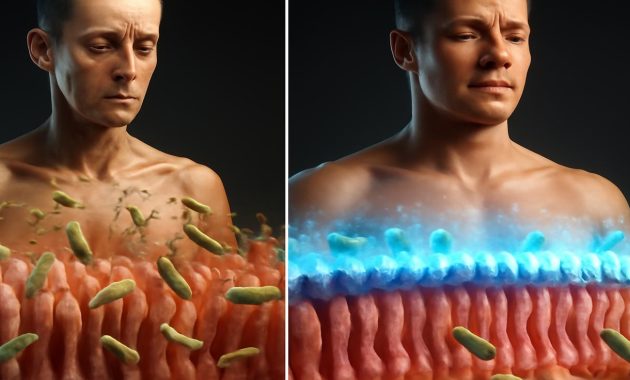
Under the microscope and through genetic sequencing, researchers saw higher numbers of certain helpful bacteria. These microbes weren’t just taking up space; they were changing the chemistry of the gut. They produced metabolites that helped strengthen the intestinal barrier—tightening the seams between cells so toxins had a tougher time slipping through. Some seemed to crowd out Vibrio cholerae directly, competing for the same resources and attachment sites. Others nudged the immune system into a more vigilant, balanced state—ready to respond, but less likely to overreact in ways that cause further damage.
Protein, it turned out, was less of a magic bullet and more of a quiet architect. It gave the body the raw materials to build and maintain the unsung defenses inside: structural proteins to keep the intestinal lining intact, antibodies to recognize threats, and the fuel beneficial bacteria need to thrive. A high-protein diet wasn’t killing cholera outright—but it was helping the body become a place where cholera had a harder time turning a small infection into a lethal tidal wave.
How Protein Helps the Body Push Back
Behind the poetic language of “stronger defenses” is a surprisingly practical biology lesson. Protein is broken down into amino acids, which become the building blocks of just about everything the immune system uses to fight invaders. Antibodies—the Y-shaped molecules that recognize and flag pathogens—are made of protein. So are many of the signaling molecules that tell immune cells where to go and how aggressively to respond.
In the context of cholera, timing is everything. The bacterium works fast, and the body needs to decide just as quickly how to respond. When diets are chronically low in protein, the immune system can become sluggish or misdirected: it may not mount a strong enough initial response, or it may overreact, causing inflammation that damages the gut lining and makes fluid loss even worse. The scientists found that mice given more dietary protein showed a different profile of immune signals in the gut—less of a frantic, uncontrolled alarm, more of a sharp, coordinated defense.
Yet the story doesn’t stop with human cells. Many beneficial gut bacteria also need nitrogen, a key component of amino acids, to flourish. When the diet is too thin, they compete desperately, and some species simply disappear. With adequate protein, the microbial community becomes richer and more diverse. Diversity may sound like a buzzword, but in the gut, it’s a kind of biological resilience: when many species are sharing the load of defending territory, digesting food, and producing helpful chemicals, it’s harder for a single invader like Vibrio cholerae to tip the entire system into collapse.
| Aspect | Low-Protein Diet | Higher-Protein Diet |
|---|---|---|
| Gut barrier integrity | Weaker, easier for toxins to cross | Stronger lining, tighter cell junctions |
| Microbiome diversity | Reduced “good” bacteria, less competition for cholera | More helpful species, cholera faces competition |
| Immune response | Slower, sometimes chaotic and damaging | Faster, more coordinated and targeted |
| Disease severity in studies | More fluid loss and severe symptoms | Reduced symptoms, better survival |
From Lab Bench to Riverbank
It’s one thing to show this effect in mice in a carefully controlled laboratory. It’s another to imagine what it means on the riverbank where cholera is not an experiment, but a recurring guest. The scientists are careful, almost painfully so, about what they claim. A high-protein diet, they emphasize, is not a substitute for clean water, vaccines, or medical care. No meal plan can make drinking raw wastewater safe. But the findings suggest that the equation of risk is more complicated—and perhaps more hopeful—than “bad water equals inevitable disaster.”
Picture a household in a low-income neighborhood where water sources are frequently contaminated. A single cholera bacterium might pass through the gut quietly, losing its foothold against a robust microbiome and healthy barrier. In another household, where chronic undernutrition has left people’s defenses patchy and weak, the same exposure could ignite a full-blown, life-threatening infection. If those defenses can be strengthened, even modestly, by changing what’s in the cooking pot, it could shift the odds in a deeply tangible way.
For public health workers, this discovery lands like a new piece in a long, frustrating puzzle. They’ve known for years that malnutrition and cholera travel together, each making the other worse. What the new research offers is a clearer, mechanistic view of how one might be shaping the other—through the immune system, through the microbiome, through the physical barrier of the gut itself. It also hints that interventions once thought of as “nice-to-have” nutrition upgrades could be quietly lifesaving.
What a High-Protein Plate Actually Looks Like
When people hear “high-protein diet,” they often picture a glossy gym brochure: towering steaks, protein shakes, and bodybuilders counting grams. But in the context of cholera prevention, the story is softer, more grounded in everyday kitchens. The researchers are not suggesting extreme diets; they’re talking about moving people from chronically low protein intake toward a steadier, adequate level that the immune system can rely on.
That can look remarkably humble. In one tropical village, it might mean an extra scoop of lentils in the family pot, or pairing rice with beans rather than eating starch alone. In a coastal town, it could mean more small dried fish mixed into sauces and stews, where every chew carries calcium and protein together. In urban slums where chickens scratch the dust between houses, it might mean prioritizing eggs—even a couple of times a week—over less nourishing snack foods. For children, it can be as simple as a cup of fortified milk or yogurt, where available, or a thicker, legume-rich porridge.
None of these foods are exotic; many are traditional. The challenge is not desire, but access. Protein-rich foods are often more expensive, harder to store, or seen as occasional luxuries rather than daily staples. The science, meanwhile, is urging a quiet re-ranking of priorities: when budgets are thin and risks of diarrheal disease are high, those extra grams of protein might be as critical as the soap by the tap.
Rethinking Cholera Prevention as a Whole-Body Story
For decades, cholera prevention strategies have been built on three sturdy pillars: clean water, good sanitation, and prompt treatment with rehydration solutions and, when appropriate, antibiotics. More recently, oral cholera vaccines have added a powerful new tool. What the high-protein studies suggest is not that these pillars are flawed, but that there is an invisible fourth one we have underestimated: the inner terrain of the person exposed.
Imagine two maps layered on top of one another. The first shows the familiar geography of risk: contaminated water sources, overcrowded neighborhoods without proper sewage, places where floods can spread fecal bacteria in a single night. The second is an invisible map laid over millions of individual bodies: some well-fed, some chronically undernourished; some with microbiomes buzzing with diverse bacterial life, others thinned out by repeated infections and sparse diets. Cholera moves through the first map—water, soil, hands. But whether it takes root, and how violently, depends in part on the second.
This shift in perspective does something important. It reminds us that human bodies are not passive backdrops in outbreaks, but active participants. They’re landscapes that can be degraded by poverty and neglect, or strengthened, slowly, by better nutrition. When public health teams bring vaccines or install water treatment systems, pairing those efforts with sustainable sources of protein—through school meals, community fish ponds, legume farming, or small livestock projects—could transform how deeply the benefits of those interventions stick.
Researchers are now exploring what this might look like in practice. Could nutritional support be timed to high-risk seasons, like pre-monsoon periods when flooding is likely to contaminate wells? Could cholera-prone clinics routinely screen for protein-energy malnutrition and treat it as a frontline defense, not just a side issue? Could education programs help families re-evaluate the value of locally available protein sources they already know but underuse?
The Caveats, Cautions, and Quiet Hope
Science, if it’s honest, always travels with a small cloud of questions. It’s important to note that most of the detailed mechanistic work linking high-protein diets to reduced cholera severity has so far been done in animals or controlled trials with limitations. Human lives are messier, bodies more diverse, and societies layered with pressures that don’t fit under a microscope slide. People living in cholera hotspots often face multiple forms of stress: other infections, heavy workloads, climate shocks, and scarce health services.
There’s also the danger of oversimplifying the message. A high-protein diet will not make anyone invincible. It won’t make sewage-contaminated water drinkable or substitute for rehydration therapy when someone is already gravely ill. Framing it as a cure-all would not just be misleading—it would be cruel to those who cannot access such diets yet.
But within those cautions, there is a real, grounded sense of possibility. Cholera has always been a disease that flourishes in the cracks—between rich and poor, between safe infrastructure and neglected margins. By showing how something as intimate and daily as food can alter the script of an infection, the research offers a rare sense of agency. Clean water systems can take years, even decades, to build. Vaccines require funding and logistics. Changing what goes into a pot of stew, while not easy, may be a more immediate shift communities can begin to explore with support.
A New Chapter in an Old Story
Back on the riverbank, the morning has brightened. Children run along the edge, tracing circles in the wet sand with their toes. Their mothers talk about marriages, prices at the market, the weight of the last harvest. Somewhere in a distant city, a scientist is poring over data charts, tweaking models that describe the dance between bacteria, gut cells, immune molecules, and nutrients. The two scenes feel worlds apart, but they are now connected by a growing understanding: the fight against cholera is not only fought at the tap or in the clinic, but also at the table.
In that realization is a surprisingly tender kind of science. It honors the ordinary act of cooking as a frontline defense. It validates the instincts of caregivers who have long insisted that “strong food makes strong children,” even when they couldn’t have named a single bacterium. And it points to a future where we respond to cholera not only by battling the pathogen, but by nourishing the people it seeks to exploit.
The story of cholera has always been about water. Now, quietly, protein is being written into the narrative—not as the hero that saves everyone, but as an ally that helps bodies stand a little steadier when the flood comes. In a world where climate change, urban crowding, and fragile infrastructure threaten to keep cholera alive for years to come, that extra steadiness could mean fewer candles on riverbank shrines, fewer mothers watching clay steps in the early light and counting the names of children lost.
And that, in the end, is what this science is really about: turning data and diets into something deeply human—the chance for more people, in more vulnerable places, to live through another cholera season and see the river not as a threat, but simply as home.
FAQ: High-Protein Diets and Cholera
Does a high-protein diet prevent cholera infection completely?
No. A high-protein diet cannot fully prevent cholera infection. It may reduce the severity of illness and help the body resist serious symptoms, but safe water, sanitation, vaccines, and medical care remain essential.
Is this research only in animals, or also in humans?
Much of the detailed mechanism has been studied in animals, especially mice. Observations in human communities support the idea that better protein intake is linked to lower severity of diarrheal diseases, but more human-specific research is still ongoing.
What are good protein sources in low-income or rural settings?
Affordable options often include lentils and other pulses, beans, chickpeas, peas, groundnuts (peanuts), small fish (fresh or dried), eggs, dairy where available, and traditional dishes that combine grains and legumes, like rice and beans.
Can children benefit more from higher protein intake in cholera-prone areas?
Yes. Children are especially vulnerable to both malnutrition and diarrheal diseases. Adequate protein helps their growth, immune system development, and gut health, which together can lower the risk of severe outcomes from infections like cholera.
Should communities focus on protein instead of clean water and sanitation?
No. Nutrition is an important additional layer of protection, not a replacement. Clean water, proper sanitation, hygiene practices, vaccination, and access to treatment remain the foundation of cholera control. Better protein intake works best alongside these measures, not instead of them.