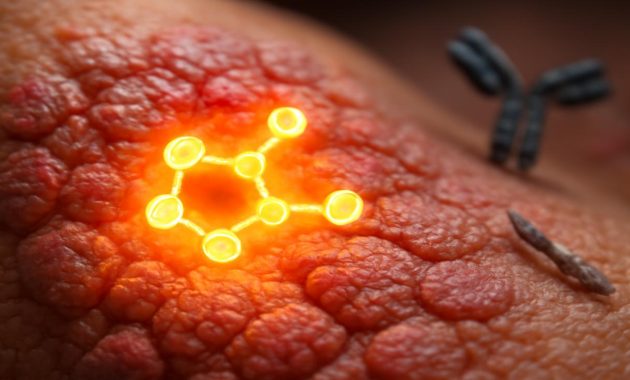
The man in the photograph is holding out his arm like an offering. Pale winter light brushes across the silver scales covering his skin, each patch a tiny continent of discomfort. A researcher in a blue lab coat leans in, not to judge the redness or thickness of the plaques, but to collect the smallest drop of blood. Somewhere in that crimson bead, they suspect, lies a story about sugar—not the kind in your coffee cup, but the invisible sugars laced through our own cells. Sugars that might just explain why skin can suddenly turn against itself, flaring into the relentless storms we call psoriasis.
When the Skin Starts Speaking in Flames
Psoriasis has always been a disease you can see, but not really understand. If you know someone who lives with it—or if you do yourself—you know it’s more than a “skin problem.” It can feel like a constant argument between body and self, waged in itch, pain, and raw self-consciousness. Clothes become armor. Short sleeves turn into a calculated risk. Even simple pleasures, like swimming in a public pool or shaking someone’s hand, can feel like invitations for stares or questions.
For decades, scientists have known the immune system is at war in psoriasis. T cells, those normally loyal soldiers that fend off infection, seem to misidentify the skin as an invader. They pour into the upper layers like an overzealous security team, firing off inflammatory signals. Skin cells, caught in the crossfire, abandon their usual slow, measured growth and instead sprint for the surface, piling up in thickened, scaly patches.
Yet for all this detail, something important has been missing from the story: why does the immune system lose its way? Why in some bodies and not others? Why now and not five years ago? Why this patch of skin and not that one?
To answer that, researchers have started looking in a less obvious place. Not at the genes, not at the immune cells themselves, but at the way those cells feed. Because every act of inflammation, it turns out, needs fuel. And that fuel is often sugar.
The Quiet Sugar Language Inside Your Cells
In labs around the world, psoriasis is increasingly being seen through a strange new lens: metabolism. Not just the metabolism that decides how easy it is for you to put on weight, but the microscopic metabolism of cells—how they sip, burn, and rearrange nutrients to carry out their daily work. Among those nutrients, glucose—the plain old sugar coursing through your blood—suddenly looks less like a bit-player and more like a master scriptwriter.
When researchers examined immune cells and skin cells from people with psoriasis, they noticed something uncanny: the cells behaved as if they were always “on,” metabolically speaking. They weren’t just using sugar for energy; they were reprogramming how they used it. Like a city that never turns off the lights, these cells were burning glucose at a frantic, unsustainable pace. And that constant burn was fanning the flames of inflammation.
But the story doesn’t stop at basic fuel consumption. Sugars in the body don’t just provide energy—they decorate our cells. On the surface of each cell, tiny chains of sugar molecules attach to proteins and fats, forming complex, branching structures scientists call glycans. These sugar patterns are like molecular handwriting, broadcasting messages to the immune system: “I belong here,” “I’m injured,” “I’m infected,” or sometimes, “Something is wrong.”
Over the past few years, teams studying psoriasis have found that these sugar decorations are subtly—but powerfully—altered. It’s as if the handwriting on the skin’s surface has changed. Immune cells, always alert for danger signals, read those altered patterns and mistake them for alarm bells. They rush in, ready to attack, and in the process transform ordinary skin into an inflamed landscape.
The Surprising Sugar Switch
One of the most surprising findings is that certain enzymes that manage sugar use are dialed way up in psoriatic skin. These enzymes help pull glucose into cells and channel it through pathways that don’t just produce energy but also crank out building blocks for inflammatory molecules. It’s like rerouting traffic so that every road in the city leads to the same crowded intersection of inflammation.
In some lab experiments, when researchers gently dialed back these sugar-related enzymes—using genetic tools or drug-like compounds—the overactive immune cells began to calm down. Skin cells slowed their frantic dividing. The immune signals quieted. The psoriatic “storm” began to fade, at least in petri dishes and experimental models. A delicate pattern emerged: tweak the sugar pathways, and the disease itself changes.
Even the barrier of the skin—the outermost layer that protects us from the outside world—turns out to be influenced by sugar mechanisms. Changes in glycosylation (the process of attaching sugar chains to proteins and fats) appear to alter how snugly skin cells fit together, how well they hold water, and how visible those angry, red boundaries become between affected and unaffected skin.
And then there is the achingly human side of this subtle chemistry. For someone living with psoriasis, the disease can feel random, cruel, and deeply personal. Yet here, in the hidden world of cellular sugar use, there is a new kind of explanation. Not a moral failing, not “bad skin hygiene,” not simply stress—but the complex misreading of sugar signals, quietly shaping how the immune system and skin talk to each other.
Psoriasis, Sugar, and the Rest of the Body
Psoriasis doesn’t usually travel alone. Doctors have known for years that people with psoriasis face higher risks of metabolic syndrome, type 2 diabetes, and cardiovascular disease. Until recently, these links were often chalked up to chronic inflammation or shared genetic vulnerabilities. Now, the sugar story offers a bridge between those worlds.
The same metabolic shifts that drive overactive immune cells in the skin also show up in the rest of the body. Insulin resistance, elevated blood sugar, and disrupted lipid levels frequently appear in the health records of people with psoriasis. It’s as though the skin is not just a canvas for inflammation but a mirror reflecting deeper metabolic imbalances.
Researchers are now piecing together how these conditions might feed into one another. When blood sugar levels run high, more glucose is available to immune cells, feeding their inflammatory fires. Altered sugar decorations on blood vessel walls may attract rogue immune cells and contribute to plaque buildup in the arteries. Meanwhile, the chronic inflammatory signals from psoriatic skin can ripple outward, nudging the liver, fat tissue, and even the heart into a stressed, reactive state.
For patients and clinicians, this creates a new kind of curiosity: if sugar metabolism is tangled up with psoriasis, could treating one help calm the other?
A New Kind of Target: Metabolism as Medicine
Most current psoriasis treatments aim at the immune system itself. Topical creams and ointments try to soothe the symptoms where they appear. Phototherapy uses carefully controlled light, coaxing the skin into a quieter rhythm. Systemic drugs and biologics—powerful medicines that block specific inflammatory molecules—have transformed quality of life for many people. Yet these therapies don’t usually ask why the inflammation got started.
Metabolic research suggests another layer of treatment: changing the way cells use sugar in the first place. In experimental systems, drugs that interfere with key sugar-handling steps have shown tantalizing effects. Some compounds slow the uptake of glucose into overactive cells. Others target the enzymes that turn sugar into inflammatory precursors. Still others focus on those sugar decorations on the cell surface, trying to adjust the way immune cells “read” the skin.
All of this is early, careful work—not something you’ll find on pharmacy shelves tomorrow. But the principle is powerful: if you can nudge metabolism, you might nudge the disease. Instead of only silencing immune messengers after they’ve sounded the alarm, you rewire the system that made them so loud to begin with.
Curiously, some of the medications already used for diabetes and metabolic disorders are being quietly explored in psoriasis research. Could a drug that stabilizes blood sugar also calm the immune system—at least in certain patients? Early hints suggest that, for some people, the answer may be yes. It’s too soon for sweeping claims, but the door is firmly open.
The Lived Experience, Seen Through a New Lens
To someone staring at their own skin in the bathroom mirror, the idea of sugar pathways and glycan patterns can feel abstract, almost detached from the daily reality of stinging shower water and unwanted questions from strangers. But this research, if anything, adds humanity back into the story.
Take a moment to imagine a person you know with psoriasis. Maybe they’ve worn long sleeves in the heat of summer. Maybe they have a practiced way of brushing off flakes from dark clothing when they think no one is looking. Maybe they shrug off the discomfort with jokes, or fall abruptly quiet when the conversation turns to skin.
For them, hearing that their condition may be linked to how their bodies handle sugar—not just in their diet, but written into the fine-tuned machinery of their cells—can be oddly empowering. It shifts the narrative from self-blame to biology. It invites a kind of self-compassion: this isn’t something you “caused” with a choice, but something research is finally starting to decode at a microscopic level.
It also makes those seemingly small lifestyle decisions feel more connected. A walk after dinner, a night of decent sleep, stress management practices, discussions about weight or diet with a healthcare provider—these no longer sit in a separate box labeled “general health.” They merge with the story of psoriasis itself, because each of them brushes gently, indirectly, against the body’s sugar pathways.
To be clear, the science does not say that cutting out sugar will cure psoriasis, or that someone’s flares are their fault for what’s on their plate. Life is more complex than that; so is disease. But the research does say this: the invisible ways our cells use sugar matter deeply to how psoriasis behaves—how it lights up, how it quiets down, how it intertwines with the rest of the body.
A Glimpse at What’s Changing
Scientists, clinicians, and patients are now standing at a kind of crossroads. On one path, psoriasis remains what it’s long been: a chronic condition mostly managed at the surface level, with powerful but narrowly focused drugs trying to rein in runaway inflammation. On the other path, psoriasis becomes a metabolic-immune disorder, a subtle interplay of how the body handles sugar, fats, and immune communication, with new possibilities for treatment at every turn.
Here is a simplified snapshot of what researchers are uncovering about sugar and psoriasis:
| Sugar-Related Factor | What Researchers Are Seeing | Possible Impact on Psoriasis |
|---|---|---|
| Glucose uptake in skin and immune cells | Increased activity of transporters that pull sugar into cells | More fuel for inflammation and rapid skin cell growth |
| Sugar processing enzymes | Key enzymes involved in sugar breakdown and branching are upregulated | Boost in inflammatory molecules; altered skin barrier function |
| Glycan (sugar chain) patterns on cells | Changed sugar decorations on skin and immune cells | Immune cells may misread skin as “danger,” triggering attacks |
| Systemic blood sugar and insulin | Higher rates of insulin resistance and metabolic syndrome | More severe or persistent psoriasis; increased cardiovascular risk |
| Metabolic-based therapies | Experimental targeting of sugar pathways in cells | Potential new treatment strategies alongside immune-focused drugs |
Each row in that table is not just a data point on a chart, but a small doorway; a hint that psoriasis is not only written on the skin, but woven into the chemistry of everything beneath it.
Looking Forward: From Lab Bench to Everyday Life
Somewhere in a lab right now, beneath buzzing fluorescent lights and the low hum of equipment, a researcher is peering into yet another petri dish of skin cells. They might be adding a compound that blocks a sugar-handling enzyme, or measuring how much glucose those cells consume when they’re flooded with inflammatory signals. On their computer screen, graphs slowly build themselves, curves rising and falling, hinting at what future care might look like.
But the destination for all of this isn’t only an academic paper or a conference slide. It’s a living room where someone with psoriasis is sitting on the edge of a couch, rolling up their sleeve for a new kind of conversation with their dermatologist. A conversation that doesn’t just ask, “How bad are the plaques?” but also, “How is your sleep? Your stress? Your blood sugar? Your heart?” A conversation that sees the skin not as a separate problem, but as part of a whole, intricate human system.
Will sugar-targeting drugs become a standard part of psoriasis treatment? No one can say yet. Science moves slowly, and responsibly so. The path from a promising lab result to a safe, effective therapy is long and often unpredictable. But the idea that psoriasis might be calmed not only by tamping down the immune system, but by gently steering how cells use sugar, changes the landscape of what’s possible.
For now, the research offers something subtler but invaluable: a deeper story. A reason why psoriasis can be tied to diabetes and heart disease. A molecular explanation for why some flares seem to mirror times of metabolic stress. A reminder that what we see on the skin is never just skin-deep.
Next time you notice the pattern of light on your own arm or the texture of your hands, pause for a heartbeat. Beneath the surface, sugar molecules are tracing their invisible lines, curling into chains, decorating proteins, whispering instructions to your immune cells. Usually, that sugar language keeps peace. Sometimes, in psoriasis, it gets scrambled, and the skin begins to speak in flames.
Now, at least, we know to listen there—to the quiet, surprising sugar mechanisms that have been part of the story all along.
Frequently Asked Questions
Does this mean eating sugar causes psoriasis?
No. Current research does not say that dietary sugar directly causes psoriasis. The “sugar mechanism” refers mainly to how cells inside the body use and decorate sugar molecules, not just how much sugar you eat. However, overall metabolic health—including blood sugar control—can influence inflammation and may affect psoriasis severity in some people.
Can changing my diet improve my psoriasis?
Some people notice that a balanced diet, weight management, and limiting highly processed, sugary foods help reduce flare intensity or frequency, especially if they also have metabolic issues. But diet alone is rarely enough to control psoriasis. Any major changes should be discussed with a healthcare professional who understands both skin and metabolic health.
Are there psoriasis treatments that specifically target sugar pathways yet?
Most approved treatments still focus on the immune system and inflammation, not directly on sugar metabolism. However, research into metabolic pathways is active, and some existing drugs for diabetes and metabolic disease are being explored for their potential benefits in psoriasis. These approaches are still largely in the research and clinical trial stages.
How is this sugar research helpful if it’s still early?
Understanding the sugar mechanisms in psoriasis helps explain why the disease is linked to conditions like diabetes and heart disease. It may guide more personalized treatment in the future and encourages doctors and patients to look at overall metabolic health—not just the skin—when managing psoriasis.
Should people with psoriasis be checked for diabetes or metabolic problems?
Many experts recommend that people with moderate to severe psoriasis talk to their healthcare provider about screening for metabolic issues, including blood sugar, cholesterol, and blood pressure. Early detection and management of these conditions can protect long-term health and may also influence how psoriasis behaves over time.