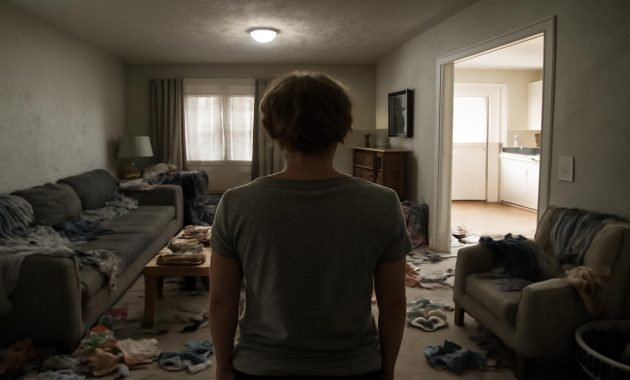
The first time I realized my cleaning “strategy” was a lie, I was standing in the doorway of my kitchen, dish towel in hand, in what could only be described as a domestic optical illusion. The countertops gleamed. The sink sparkled. The floor, freshly mopped, smelled faintly of lemon. I should have felt triumphant. Instead, all I could see was the shadowy hallway leading to the bedroom—clothes draped over a chair, half-unpacked bags, stacks of books leaning like toppled towers. My stomach sank. Somehow, after an hour of effort, my home felt messier, not cleaner. That’s when it hit me: I had started with the “cleanest” room again… and I was right back in the same trap.
Why the “Cleanest Room First” Rule Feels So Comforting (and So Wrong)
There’s a moment, right before you begin cleaning, that feels a bit like standing on the edge of a dense forest. You’re holding your metaphorical machete, staring into the tangle of to-dos, and you know you have to walk in. Then you look over and see it—a tidy-ish room. The living room where the cushions are only slightly crooked. The guest room with just a light dusting of clutter. A patch of clear path through the trees.
So you do the “sensible” thing. You start there.
It seems harmless. Efficient, even. Get a quick win, right? Something small to get you moving. But somewhere between wiping a nearly clean counter and lining up books that were already mostly aligned, your brain starts to hum with a subtle, dangerous satisfaction. See? it whispers. You’re doing great. Look how much you’ve already done.
And yet, the forest is still there. The pantry that’s become a graveyard of expired spices. The hall closet wedged shut by coats from three winters ago. The office that holds not just paper but decisions you’ve been postponing for months. The reality is uncomfortable: starting with the “cleanest” room often has less to do with strategy and more to do with avoidance.
We don’t choose the clean room because it’s smart. We choose it because it’s safe.
The Psychology Hiding Behind Shiny Counters
There’s a kind of spell that a half-clean home casts. It tricks your eyes before it tricks your mind. When one room looks nice, your brain eagerly uses it as a shortcut: Things are under control. And the moment you feel that, the pressure lifts. The urgency dissolves. You sink into that comforting illusion like a well-worn couch.
This is where the mistake begins.
Momentum, in life and in cleaning, is strange. We assume that starting anywhere is better than not starting at all. That as long as you’re moving, you’re progressing. But cleaning a room that is already 80% done isn’t the same as addressing the spaces that carry 80% of your stress. There’s a difference between progress and proximity; just because you’re close to completion in one room doesn’t mean you’re close to peace in your home.
Starting with the cleanest room allows you to feel productive without confronting the actual source of your overwhelm. It gives you visible results without emotional risk. No hard decisions. No memories you’re not ready to unpack. No confronting why you’re keeping three broken umbrellas “just in case.” The stakes are low. The payoff—at least visually—is high.
But when you walk from that perfect, scented room into the one you’ve been ignoring, your nervous system takes a hit. The contrast is jarring. Your body knows what your brain won’t admit: you’ve just spent precious time rearranging deck chairs while the ship still quietly takes on water.
The Energy Cost You Don’t See
Every room you enter, every decision you make, draws from the same limited pool of energy. Think of it like a battery you start the day with. By the time you’ve fussed over a mostly clean space—debating which basket looks better on the shelf, straightening pictures on the wall—you’ve burned through some of that charge. Then you finally wander into the real problem zone: the basement, the kid’s room, the office. Your battery is already at 40%, and that’s before you’ve even opened the first drawer.
That’s when the thoughts creep in:
- This is too much.
- I’ll never finish.
- Maybe I’ll do this another day.
Ironically, if you had started in the worst room, your energy would have met your challenge evenly. Fresh brain, fresh emotional resilience, fresh willingness to make hard calls. But because you spent the start of your day polishing what was already shiny, you arrive tired at the place that demands the most from you.
It’s not laziness. It’s misallocation. It’s spending your best effort in the place that needs it least.
The Messy Room Is the Map, Not the Monster
Imagine walking into the room you’ve been avoiding—not the polite clutter, but the real chaos. Maybe it’s the room of unfinished projects and tangled cords. Maybe it’s a small kitchen where every spare inch has become a landing pad for things that don’t belong. At first glance, it looks like the enemy.
But if you stand there quietly, you’ll realize something else: this room is actually your most honest reflection.
The items on the floor? Half-remembered intentions. The boxes in the corner? Decisions deferred. The piles of paper? A visible backlog of “later.” The mess is not random—it’s a map of how your time, your energy, and your attention have been pulled away from you.
Starting in the messy room means starting with the truth.
It’s where you learn why your home fills faster than you can empty it. Why you buy storage instead of making space. Why you shuffle objects from room to room rather than letting them leave your life. It reveals your patterns with startling clarity: the hobbies you thought you’d love, the clothes tied to versions of yourself you never became, the “just-in-case” backups for fears you’ve never named.
When you begin here, every decision you make has leverage. Every item you remove creates a ripple. The messy room holds the gravitational center of your clutter. Shift it, and everything else becomes lighter.
| Approach | Short-Term Feeling | Long-Term Effect |
|---|---|---|
| Start with the cleanest room | Quick satisfaction, illusion of control | Big problem areas remain, motivation fades |
| Start with the messiest room | Initial discomfort, emotional resistance | Real relief, visible progress where it matters |
| Start with the highest-stress room | Challenging but meaningful | Daily life feels easier, future cleaning gets simpler |
Most cleaning advice tells you to chase “easy wins.” But not all wins are equal. Clearing a coffee table in an already tidy room is satisfying. Clearing the only flat surface in a cluttered kitchen is life-changing. That’s the surface where you’ll chop vegetables, sort mail, help with homework, roll out dough, fold laundry. One change affects everything.
Comfort vs. Transformation
Starting with the cleanest room offers comfort. You get to stay near who you already are—a person who “just needs to tidy up a bit.” There’s no disruption to your self-image. No confrontation with the ways you’ve been postponing your own needs.
Starting with the messiest room asks more of you. It asks you to admit something quiet and tender: the way I live right now isn’t the way I want to live. That admission is hard. It may even feel like failure. But it’s actually the door to transformation.
The cleanest room protects your pride. The messiest room protects your future.
Designing a New Starting Point
If “start with the cleanest room” is a mistake, what should take its place? Strangely, the answer isn’t simply “start with the messiest.” The real key is to start with the room that holds the most weight in your daily life.
That might be the kitchen, where you begin and end each day. It might be the entryway that either welcomes you home or slaps you in the face with chaos every time you walk through the door. It might be your bedroom, where the last thing you see at night is a reminder of every unfinished task.
Ask yourself three questions:
- Which room makes my shoulders tense the moment I see it?
- Which room do I use the most in a normal day?
- Which room, if it felt peaceful, would change how I move through my entire home?
The room that appears in all three answers is your true starting line. Not the neatest. Not the smallest. Not the one that gives you an easy gold star. The one that holds your life together—or drops it, daily, at your feet.
When you begin there, something interesting happens. Your effort starts earning interest. Clearing the hallway means less tripping over shoes, less visual noise. Decluttering the kitchen means meals take less time, less energy, fewer dishes stacked like accusations by the sink. Those small but powerful shifts make you more willing to tackle the next thing, and the next.
Micro-Zones, Not Whole Rooms
There’s another reason we cling to the cleanest room: it feels finishable. We can stand there, do a sweep, step back, and say, “Done.” The messiest room doesn’t offer that mercy, at least not at first. So don’t ask it to.
Instead of cleaning a whole room, clean a zone.
- One shelf in the pantry.
- One section of the closet rod.
- One counter, from sink to stove.
- One drawer in the desk.
Starting in the hardest room doesn’t mean swallowing the whole forest. It means choosing the most overgrown trail and clearing just enough path that tomorrow, you won’t dread walking there as much. You don’t have to conquer. You just have to carve out one patch of sanity at a time.
Strangely, this makes the “cleanest room first” logic feel less necessary. You don’t need easy terrain when the hard terrain has been broken into steps that your everyday self can realistically climb.
The Myth of the Perfect Before-and-After
Part of why we gravitate to the cleanest room is that we’ve been trained by before-and-after culture. We see photos of total transformation—disaster on the left, magazine spread on the right—and some part of us wants that satisfying arc in a single afternoon.
The almost-clean room offers a cheap version of the same feeling. A quick before-and-after. A small, instantly photographable victory. You can snap a picture of your freshly made bed and polished nightstand and pretend that the camera doesn’t know there’s a laundry avalanche just outside the frame.
But your nervous system knows. Your body knows. The cognitive load of unfinished clutter is like background noise—you can learn to ignore it, but it still drains you.
Real peace in a home doesn’t come from single-room perfection. It comes from an honest baseline: from knowing that, while not every corner is curated, every space is at least navigable and mostly intentional. That you don’t have to stack things on the floor to use your desk. That you can open a drawer without feeling ambushed.
When you start with the “cleanest” room, you’re often chasing aesthetics. When you start with the heaviest room, you’re building function. One is for the camera. The other is for your life.
Letting Go of the Performance
There’s another layer to this: other people.
The rooms guests see are often the ones we keep closest to “clean.” The living room, the hallway, sometimes the bathroom. These are also the rooms we’re most tempted to start with, because they help us maintain the illusion—not just to ourselves, but to anyone who visits—that we have it together.
Meanwhile, the real explosions are behind closed doors.
Starting with guest-facing rooms is, in a way, an act of performance. Starting with the hidden rooms is an act of intimacy with yourself. It’s choosing to care more about how your life feels than how it looks.
You might not be ready for that every weekend. That’s okay. But if you always, always begin in the places other people see, you may never get around to the places where you actually live.
Rewriting Your Cleaning Story
Imagine this: instead of standing in your doorway, scanning for the neatest space to “finish,” you walk straight toward the room that usually makes you look away. You don’t bring a grand plan. You bring a trash bag. Maybe a box for donations. A timer, set for twenty-five minutes. And one small promise to yourself: I will not make this perfect. I will make this lighter.
You start with the floor around the bed. Or the area around the sink. Or the pile that’s been living on the chair so long it’s become part of the furniture. You sort just that. Trash, donate, keep. The timer buzzes. You stop, even if you’re on a roll. Especially if you’re on a roll. You let yourself feel what it’s like to walk past that one cleared space for the rest of the day.
Tomorrow, or next weekend, you come back. Not as a penance, not as an emergency, but as a continuation. This is what “starting in the hardest room” actually looks like: not a marathon of self-punishment, but a steady reorientation toward the parts of your life you’ve been sidelining.
You might still pass the “clean” room and feel the itch to fuss with what’s already okay. To refold the blanket instead of sorting the box in the corner. Some days, you might give in to that urge. But over time, you’ll notice a shift. The real relief will come not from perfect pillows, but from opening a closet and not flinching.
That’s when you’ll know you’ve broken the spell.
Frequently Asked Questions
Is it ever okay to start with the cleanest room?
Yes—if your goal is to build momentum on a very low-energy day, doing a two-minute tidy in an almost-clean room can help you get moving. The key is not to stop there. Use it as a warm-up, then move quickly to the room that actually causes you the most stress.
How do I handle the emotional weight of starting in the messiest room?
Keep your sessions short and specific. Set a timer, choose a tiny area, and decide in advance what success looks like (for example, “clear just this chair” or “empty only this drawer”). Have water nearby, open a window, and take breaks. Emotional heaviness often shows up as sudden fatigue or distraction—expect it, and work in small waves.
What if I don’t have time to tackle the worst room right now?
If your time is limited, shrink the task, not the room. Instead of switching to an easier space, narrow your focus within the hard room. Spend five minutes sorting a single pile or filling one small bag with trash or donations. Even tiny progress in the right place beats big progress in the wrong one.
How do I decide which room should be my true starting point?
Notice your body’s reaction when you picture each room. The one that makes you sigh, cringe, or quietly think, “Not that one,” is a strong candidate. Then ask: how often do I use this space, and would my daily life feel noticeably better if it were lighter? If the answer is yes, that’s your starting room.
Won’t my home look worse if I ignore the cleaner rooms at first?
Possibly in the very short term—but only visually. Functionally and emotionally, your home will start to feel better faster when you relieve the largest points of friction. Once your heaviest room becomes manageable, maintaining the cleaner rooms actually gets easier, because you’re no longer constantly dodging the same unresolved messes in your day-to-day life.