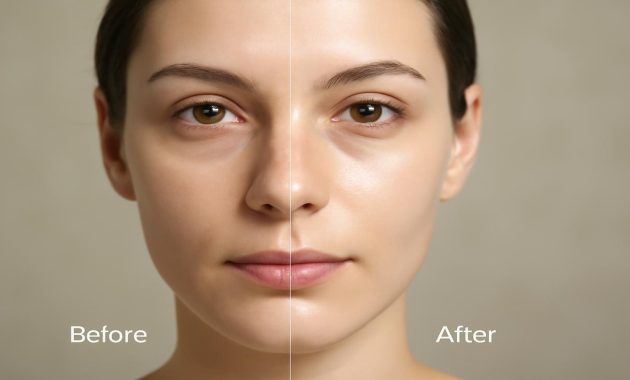
The first night I did it, I stood alone in my bathroom with the door closed, feeling oddly like I was about to confess a secret to the mirror. In one hand: my regular, thoughtfully packaged glass jar of moisturizer. In the other: the humble blue tin from Nivea, the same one my grandmother used to keep on her bedside table like a tiny, dented moon. It smelled like a memory—powdery, creamy, a little old-fashioned. I decided I would give it seven nights, half a face, and my full attention. The deal was simple: Nivea blue cream on the left side, my usual routine on the right. No filters, no special lighting, no wishful thinking. Just a week of watching, feeling, and noticing what actually changed.
The Night I Drew an Invisible Line Down My Face
The air in the bathroom felt slightly cool against my skin; it was one of those quiet evenings when the world outside dimmed early and the house hummed with soft appliances and distant traffic. I washed my face with my usual gentle cleanser, patted it dry, and studied the familiar landscape in the mirror: faint lines at the corners of my eyes, some redness around my nose, a small cluster of stubborn texture along my left cheek. Nothing dramatic. Just a face that had known late nights, long days at a screen, and not nearly enough water.
I opened the Nivea tin. The cream inside was dense, almost solid, like softened butter pulled straight from a cold pantry. It held the same distinctive scent I remembered from childhood—clean, comforting, slightly floral. I scooped out a pea-sized amount with the tip of my finger and felt the weight of it, thick and cool, as it warmed slowly against my skin.
I started at the jawline on the left side only, intentionally drawing an invisible boundary straight down the center of my nose. The cream resisted at first, dragging a little, as if unsure it belonged there. It demanded patience, coaxing, warmth from my fingertips. As it melted in, it left a shiny veil, heavier than my usual lightweight gel-cream on the right side. My face became two different textures: one side satin-matte and tidy, the other side gleaming like I’d just walked out of a winter wind and slathered on protection.
It felt slightly ridiculous and strangely thrilling. Half a face in the past, half in the present. I turned my head right, then left, letting the overhead light hit each cheek in turn. The Nivea side looked plump almost instantly, like someone had quietly inflated it with air.
The First Few Mornings: Glow vs. Grease
The next morning I woke thinking about it before I even opened my eyes. Did one half of my face feel different already, or was that just my brain eager for a story? The bathroom mirror, as usual, was unforgiving but honest.
On the Nivea side, my skin looked surprisingly calm. That cheek that often wakes up with faint pillow creases was smooth, almost ironed out. The right side, with my usual moisturizer, looked fine—soft, hydrated—but not different. The left, though, had a dewy sheen that bordered on “Is that glow or is that residue?” When I ran my fingers over both sides, I could feel it: the Nivea half felt cushier, like there was a protective layer still lingering at the surface.
By day three, patterns were starting to show. The Nivea side woke up each morning slightly less red and less tight, especially around my nostril where my skin tends to feel raw in colder, drier air. The texture along my left cheek felt like it was slowly relaxing, as if the little rough patches were being padded from underneath. But there was a downside, too: on nights when I got generous with the application, I’d wake up with a couple of tiny clogged-looking bumps on my lower cheek, the kind that feel like they’re thinking about becoming pimples but haven’t committed yet.
My skin is combination—oily around the nose and chin, drier across the cheeks—so this heavy, old-school cream was always going to be a gamble. On the oily part of my left T-zone, Nivea sat like a stubborn guest who refused to leave, while the dryer parts just drank it in and asked for more. It quickly became a game of dosing: too little and the magic wasn’t obvious; too much and I could feel a hint of greasiness the next morning.
| Day | Left Side (Nivea Blue Cream) | Right Side (Usual Moisturizer) |
|---|---|---|
| 1 | Instantly glossy, deeply cushioned feeling, slight heaviness | Light, absorbed quickly, no noticeable residue |
| 3 | Redness reduced, texture softening, a couple of tiny bumps forming | Consistently hydrated but no major change in redness or texture |
| 5 | Cheek looks plumper and smoother, oily around nose by morning | Steady, familiar look; fine, but less “plump” |
| 7 | Noticeably softer, faint lines blurred, minor congestion on chin | Balanced, comfortable, lines and texture unchanged |
What’s Actually Inside That Blue Tin?
At some point between nights two and three, curiosity sent me squinting at the tiny ingredient list on the back of the tin. It’s a cocktail of old-school staples: mineral oil, petrolatum, glycerin, and a blend of waxes. No trendy actives. No acids. No peptides with futuristic names. This isn’t a treatment in the modern sense; it’s a classic occlusive cream designed to trap moisture and shield skin from the outside world.
On my face, this translated into a very particular kind of comfort. The Nivea side felt like it was wearing a soft, invisible raincoat over a sweater: protected, insulated, almost cocooned. The right side felt naked but breathable, like a light t-shirt.
That difference matters. If your skin is craving water, Nivea isn’t technically adding much of it; what it does is keep whatever you already gave your skin—from a hydrating serum or damp skin—locked in. I noticed this clearest when I applied Nivea right after patting on a hyaluronic acid serum: the next morning, that half of my face looked like it had actually slept eight hours.
Midweek: When the Mirror Started Choosing Sides
By night four, I found myself almost looking forward to the ritual. There’s something soothing about the resistance of the thick cream under your fingers, about feeling it slowly yield and warm as you massage it into the curves of your cheekbones. It made me slow down. My usual routine is quick, efficient, perfunctory. Half-face Nivea turned it into a small, deliberate act.
My partner, who never notices anything short of a full haircut, squinted at me across the couch on day five and said, “You look… extra dewy on this side,” pointing vaguely at my left cheek. “Is that on purpose?” I laughed and explained the experiment, suddenly very aware that my face had become a kind of split-screen, a live before-and-after.
Standing in front of the mirror that night, I really looked. On the Nivea side, the fine lines near my eye seemed a little softer, not gone, but blurred at the edges. The overall tone looked slightly more even, with less of that patchy pinkness. The right side, with my usual moisturizer, still looked absolutely okay—but more familiar, as if it had hit a plateau. Hydrated, yes. Transformed, no.
But it wasn’t all glowing reviews. Around my left nostril and along the side of my chin, I could see a bit more shine and feel the faintest hint of congestion if I pressed my fingertips along the jawline. No angry breakouts, but that subtle, under-the-surface thickness that warns you not to push your luck. This cream, I realized, is not a “slap it on everywhere and forget it” product if you’re prone to oiliness or clogged pores.
The Sensory Side of Skincare We Don’t Talk About Enough
What surprised me more than the visible difference was the sensory one. In a world where so many skincare products are nearly weightless and scentless—engineered to disappear the second you apply them—Nivea blue cream is unapologetically present. You feel it. You smell it. It hangs around.
There’s a warm nostalgia woven into that powdery scent, one that reminded me of winter evenings as a child, watching an older relative rub it into chapped hands or windburned cheeks. There is something strangely grounding about that. Skincare, after all, isn’t just about molecules and results; it’s about how a product makes you feel while you use it.
Each night, when I opened the tin, the familiar smell and the thick texture acted like a signal: slow down. Take time. Massage, don’t just smear. In that way, the ritual itself might have contributed as much to the apparent results as the formula did—extra circulation from massage, extra awareness of how my skin responded, extra softness from simply paying attention.
The Seventh Night: The Verdict in the Bathroom Light
By the time I reached night seven, the invisible line down my face felt much less hypothetical. I could see it, not as a hard divide, but as a gentle gradient of difference.
The Nivea side looked, in a word, cushioned. My cheek felt thicker in a healthy way, the texture smoother when I ran my fingertip from the apple of my cheek toward my ear. The faint dehydration lines that sometimes show up when I smile in harsh lighting looked less etched, like someone had taken a soft-focus tool to them overnight.
The right side—my control side—hadn’t deteriorated. It was still well-behaved skin: moisturized, pliable, familiar. But if you studied both sides together, there was a quiet shift in the story they told. The Nivea side looked more rested, as though it belonged to someone who had taken a week off from stress and central heating, while the right side belonged to someone who had just powered through business as usual.
Yet the trade-offs were clear too. On the left, the shine was real. By morning, my nose and chin edges were visibly oilier compared to the other side. And there were two very small, flesh-colored bumps near the left corner of my mouth—not inflamed, but unmistakably new. A gentle reminder from my skin that heavy occlusion comes with a price if your pores are easily overwhelmed.
Would I Keep Using It? Yes—but Not Everywhere.
When the experiment ended, I didn’t rush to even things out right away. I actually missed the cocooning feeling on that one side when I skipped it the next night. But instead of adopting Nivea as an all-over, every-night moisturizer, I found myself instinctively reframing it in my mind.
For me, Nivea blue cream became less “face cream” and more “targeted comfort.” A night-mask for cheeks that had met too much wind. A rescue layer for skin feeling parched from indoor heating or long flights. Something to pat gently onto the highest points of my cheekbones, the dry edges of my nose, or even across my neck, which loved the thickness without complaining.
On my oilier zones—the center of my forehead, the sides of my nose, the chin—I’d be much more selective. A rice-grain amount at most, and not every night. It’s a product that seems to shine in situations where the air is dry, the skin barrier is tired, and you crave that old-fashioned, steadfast kind of protection.
What This Week Taught Me About “Simple” Skincare
Spending a week with half my face in the past and half in the present did something strange: it made me question my addiction to complex routines. Layered serums, textures that vanish instantly, long ingredient lists full of cutting-edge science—they have their place, and I still enjoy them. But there is something compelling about a product that has survived decades with barely a change, living quietly in its blue tin.
Nivea didn’t resurface my skin. It didn’t banish every pore, erase every line, or deliver miraculous overnight transformations. What it did was simpler and more grounded: it softened, cushioned, protected. It reminded me that the skin barrier itself is worth caring for—not just with fancy actives, but with something that stays, shields, and comforts.
It was also a lesson in listening. Because I used it on only half my face, I could clearly hear what my skin was trying to say. Dry areas whispered, “More of this, please.” Oilier zones muttered, “Easy, easy, we’re fine.” That conversation is easy to miss when you’re applying the same thing everywhere, every night, out of habit rather than curiosity.
In the end, when I finally smoothed a thin layer of Nivea across my entire face for one night, it felt a bit like calling a truce between the two halves. The mirror looked back with a more even story—soft, slightly over-luminous, but undeniably cared for. I wiped a small dot of cream off my chin, instinctively, already knowing my limits.
Maybe that’s the real takeaway of this little experiment: there is no single product that will be a flawless hero for every inch of your face, every day of your life. But there are honest, unpretentious formulas like this blue cream that can become quiet allies—especially when you learn where, when, and how to let them into your routine.
FAQs
Is Nivea blue cream safe to use on the face?
For most people, yes. It’s a long-standing cosmetic product designed for skin, and many use it on the face without issues. However, it is quite heavy and occlusive, so if you have very oily or acne-prone skin, you may experience clogged pores or breakouts in certain areas.
Can Nivea blue cream replace my regular moisturizer?
It depends on your skin type. If your skin is dry to very dry, especially in colder months, Nivea can work as a primary nighttime moisturizer. For combination or oily skin, it may be better as an occasional, targeted treatment rather than a complete replacement.
Will Nivea blue cream reduce wrinkles?
It won’t erase wrinkles, but by softening and plumping the outer layers of the skin through intense moisturization, it can make fine lines appear less noticeable. It’s more about improving texture and comfort than delivering long-term anti-aging benefits like some active ingredient serums.
Is Nivea blue cream suitable for sensitive skin?
Many people with sensitive skin tolerate it well because it is primarily a protective, moisturizing formula. That said, it does contain fragrance and certain emollients that can irritate some individuals. Always patch-test on a small area first before applying it widely on the face.
How much Nivea blue cream should I apply?
A little goes a long way. Start with a pea-sized amount for the whole face and adjust depending on your skin’s dryness and tolerance. You can also apply it only to specific dry areas—like cheeks or around the nose—instead of the entire face.
Can I layer Nivea blue cream over serums?
Yes. In fact, it often works best applied as the final step over a hydrating serum. The cream acts like a seal, helping to lock in the moisture and humectants from the products underneath.
Is it okay to use Nivea blue cream every night?
If your skin is dry and comfortable with heavier products, nightly use can be fine. If you notice congestion, extra oiliness, or breakouts, you may want to limit it to a few nights a week or apply it only to your driest areas.
Can Nivea blue cream be used around the eyes?
Some people do gently tap a tiny amount around the eye area at night for extra moisture, but caution is important. The skin there is delicate, and this cream is quite rich. Use sparingly, avoid getting it too close to the lash line, and discontinue if you notice milia (tiny white bumps) or irritation.
Is Nivea blue cream good for all seasons?
It tends to shine in colder, drier seasons or climates where your skin needs extra protection from wind and low humidity. In hot, humid weather, it may feel too heavy, especially for oily or combination skin, and you might prefer something lighter.
What did using it on half your face for a week really show?
It highlighted that Nivea blue cream can noticeably soften, cushion, and even out dryness-related texture in just a few days, especially on drier areas of the face. At the same time, it underscored that heavier, occlusive formulas can lead to minor congestion in oilier zones, making it best used thoughtfully and selectively rather than as a one-size-fits-all solution.