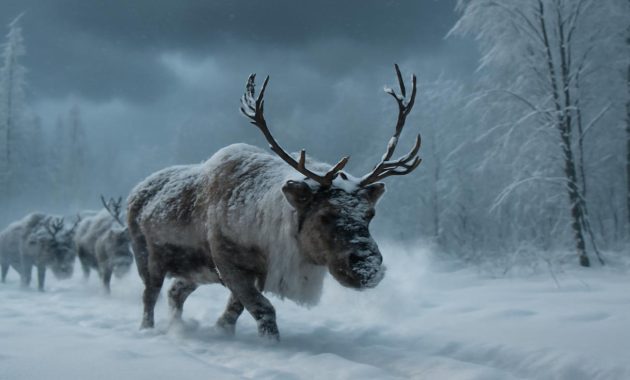
The first warning sign isn’t on a screen at all. It’s in the way the wind changes at dusk, slipping through branches with a sharper edge, in the sudden hush of birds that were noisy only hours before. Somewhere on the outskirts of town, a red fox pauses in a frozen field, lifts its nose to the air, and seems to listen. High above, invisible in the thickening clouds, a line of geese recalculates its route through a sky that is about to become more dangerous than usual. Meteorologists are watching the same sky, but with instruments and models instead of instinct. And what they’re seeing has them sending out a quiet, urgent message: early February may not behave like the February we’re used to.
A Winter That Feels Wrong in the Bones
In a dim control room lit by monitors and the cool glow of weather maps, the Arctic doesn’t look like a faraway wilderness. It looks like a swirl of color—inky blues and violent purples—sliding southward over North America and Europe. Meteorologists call it an “Arctic outbreak,” a spill of polar air escaping its usual boundaries. To everyone else, it just feels like a winter that has teeth.
Forecast centers across the Northern Hemisphere are tracking the signals: a stretched and wobbly polar vortex, strange meanders in the jet stream, and cold anomalies that models insist may dip much farther south than usual in early February. The numbers are clinical—pressure gradients, temperature anomalies, ensemble projections—but the story they tell is visceral. It is a story about air so sharp it scrapes the inside of your nose, snow that falls dry and squeaking underfoot, and ice that forms faster than animals can adapt.
On the screens, the cold front looks like a blade, slicing through regions that have lately come to expect milder winters. There’s a sense of suspense in the forecast offices, the kind that settles in just before a storm: how low will temperatures drop, and how fast? Where will heavy snow pile up? How long will rivers run under ice thick enough to trap the unwary?
These questions matter not only to commuters and farmers and energy grids, but to the living wild world that cannot simply turn up the thermostat or reschedule a trip. Because for the creatures that move by instinct and navigate by starlight, the way this winter behaves could mean the difference between successful migration and quiet disappearance.
When the Compass Is the Sky
On a clear night in late winter, you can stand in an open field and watch the sky turn into a road map. Stars wheel in silent arcs, the Milky Way hangs like a pale river, and, if you’re lucky, thin ribbons of green aurora may pulse along the horizon. For many species, that sky is more than backdrop. It is a compass, a calendar, and a set of instructions written in light.
Birds are the most famous celestial navigators. Some species read the pattern of constellations; others use the position of the sun, or even the polarization of sunlight, to keep themselves aimed in the right direction. Deep in their brains, a delicate magnetic sense—guided by Earth’s geomagnetic field—adds yet another invisible lane marker on their long-distance flights. Under typical winter conditions, that layered guidance system works with an elegance evolution has spent millions of years refining.
Harsh Arctic outbreaks disrupt more than just comfort. Prolonged cloud cover, heavy snow, and turbulent winds can scramble the signals birds rely on. Star patterns vanish behind thick, icy overcast. Storm systems shove flocks off course, further then they can easily correct. Where they expected to find open water or exposed feeding grounds, sudden cold can lock lakes and fields under ice, forcing detours that cost precious energy.
It isn’t only birds that feel the navigation puzzle become more complex. Salmon and other fish that time their upstream journeys to subtle shifts in water temperature may find themselves confronted with rivers iced over or delayed thaws. Sea turtles that cue their movements to temperature gradients in the ocean encounter sharp, unnatural drops, triggering cold-stunning events that leave them floating, motionless, and helpless.
To us, a few degrees might sound minor. For animals finely tuned to seasonal rhythms, it’s more like rearranging the landmarks in the dark.
Frozen Threads in a Fragile Food Web
While the forecast models hum in their digital loops, scenes are already unfolding outdoors that hint at what an Arctic February can do to the living fabric of a landscape. Imagine standing at the edge of a tidal marsh at dawn. Each blade of grass is sheathed in ice. The mud that squelched under your boots just last week is now a brittle crust, sealing away the worms and invertebrates that shorebirds rely on.
Many animals can survive cold snaps; evolution has not been stingy with winter tricks. Fat reserves, thick fur, torpor, hibernation, and migration are all strategies baked into the genes of countless species. But extreme, prolonged, or poorly timed cold can push those strategies to a breaking point.
A small insect-eating bird arriving early from migration might find its usual feeding grounds buried under a crust of snow that came too late in the season. A field mouse that cached seeds in a familiar patch of grass may now find that patch under a wind-hardened drift. Larger animals like deer and elk can often ride out the cold, but deep snow can trap them in place, cutting them off from food and making them easy targets for starving predators.
The real danger lies in how these individual struggles combine. Every ecosystem is a network of dependencies: predators and prey, pollinators and plants, grazers and grasses. Prolonged Arctic conditions can knock several pieces loose at once.
| Impact | Typical Result | Vulnerable Species |
|---|---|---|
| Rapid temperature plunge | Cold shock, disorientation, energy loss | Songbirds, bats, reptiles, amphibians |
| Prolonged snow cover | Buried food sources, starvation | Deer, ground-feeding birds, small mammals |
| Frozen wetlands and shallows | Loss of refuge and feeding grounds | Ducks, waders, amphibians, fish fry |
| Disrupted migration cues | Late arrivals, route errors, crowding | Waterfowl, raptors, shorebirds |
| Ice on hunting or foraging grounds | Reduced success, higher mortality | Otters, foxes, herons, kingfishers |
Each line in that table is really a story waiting to happen on the ground. A barn owl forced to hunt over a snow-blanketed field where every vole tunnel is hidden, burning through its reserves with each fruitless pass. A heron standing, motionless, at the edge of a stream that has turned to glass overnight, fish now safely below a barrier of ice.
For some animals, a single brutal event can wipe out a local population that was already hanging on by its fingernails. For others, the impacts are more subtle but add up over time: slightly lower survival this year, slightly fewer offspring the next, and a slow fade that is easy to miss unless you’re counting carefully.
Cold in a Warming World
There’s an odd tension in hearing meteorologists warn of extreme cold while the broader scientific narrative is about a warming planet. How can bitter Arctic outbreaks and global warming exist in the same sentence without sounding contradictory?
Step into a classroom, and you might see a scientist drawing lines on a whiteboard: one for the jet stream, one for the equator, one for the pole. The polar vortex, that band of spinning cold air high in the atmosphere, is often portrayed as a tidy circle keeping frigid air locked over the Arctic. But in a warming world, especially one where the Arctic is heating up faster than the mid-latitudes, that circle grows less tidy. The temperature difference—the engine that helps hold the vortex in place—weakens. The once-stable loop starts to wobble and elongate, sending tendrils of cold air spilling south.
In practical terms, that can mean strange, dramatic winters: balmy spells followed by sudden deep freezes, rain in January followed by blizzards in March, or, as forecasters now suspect, an early February that slides abruptly into Arctic mode across regions unprepared for it. It’s not that climate change creates the cold out of nowhere. It disrupts the choreography of where that cold goes and when.
Wildlife that evolved to read relatively reliable seasonal patterns now faces a kind of meteorological whiplash. Animals time hibernation, migration, breeding, and molting to cues that no longer line up as neatly as they once did. A pond that usually freezes slowly, giving frogs time to burrow deeper, might crash into ice overnight. A thaw that typically anticipates the return of insects and nesting birds may now arrive at the wrong moment, mismatching food and mouths.
Meteorologists, ecologists, and climate scientists are watching these intersections with growing concern. It’s no longer enough to know that a cold event is coming; the timing, intensity, and duration all weave into a much larger question: how many more shocks can ecosystems absorb before their intricate patterns begin to unravel?
Signals, Stories, and the People Who Watch the Weather
In many ways, meteorologists are storytellers who speak in maps and models rather than paragraphs. Each early warning about an Arctic outbreak begins as a quiet anomaly in the data: a sudden kink in the jet stream, a cold pool deepening over Siberia, pressure patterns that echo historic cold waves. Those signals trigger discussions, comparisons to past events, and long hours refining forecasts that may influence everything from energy planning to wildlife rescues.
Somewhere, a wildlife rehabilitator reads the same forecast and starts rearranging space for possible arrivals: cold-stunned turtles, frostbitten bats, songbirds run ragged by storms and low food supplies. Park rangers consider closing sensitive trails, knowing that stressed animals may be pushed into marginal habitats where human disturbance becomes one more pressure they cannot afford.
In Indigenous communities from the Arctic to temperate forests, experienced hunters and elders read their own set of signs: the thickness of caribou coats, the timing of freeze-up on lakes, the behavior of the ravens that seem always to know what the weather is planning. Oral histories hold memories of winters that went wrong, of mass die-offs and strange animal movements. For meteorologists connecting modern data with traditional knowledge, these stories are another kind of long-term record, one that can help interpret the patterns visible on a computer screen.
The warnings about early February’s Arctic conditions are not apocalyptic pronouncements; they’re invitations to pay attention. Pay attention to the feeders in your backyard. Pay attention to the wetlands at the edge of town. Pay attention to the way wind and sky and silence change in the days before the cold arrives. The more we notice, the more we can help, and the more clearly we can see the broader picture emerging from what might otherwise feel like just another winter storm.
What We Can Do While the Air Grows Sharper
It’s easy to feel small in the face of a sweeping Arctic outbreak. After all, no one can stand in front of the jet stream and push it back into place. But on the scale where a single berry bush or open patch of water can mean survival for a handful of birds or mammals, there is room for small, precise acts of care.
As the forecast window narrows and temperatures begin to fall, homeowners can become quiet allies. Keeping bird feeders stocked with high-fat foods helps migratory and resident birds survive the energy drain of extreme cold. Fresh, unfrozen water is often as valuable as seed; a simple heated birdbath or regularly refreshed dish can keep more than one animal going through a brutal night.
Stray branches and brush piles in a corner of the yard, usually considered messy, suddenly become lifesaving shelter for small mammals and overwintering insects. Leaving dead stalks and leaf litter in a patch of garden offers insulation and hiding places. In colder regions, volunteers sometimes work with local wildlife organizations to break thin ice on smaller ponds or create small openings where ducks and waders can still feed.
On a larger scale, land managers and conservation groups are using advance warnings to identify which habitats are most likely to become critical refuges. South-facing slopes that gather sun, deep ravines that shield animals from wind, groundwater-fed streams that resist freezing—these become the winter equivalent of emergency shelters.
The technology that alerts us to looming Arctic air can also guide targeted help. Satellite data and on-the-ground temperature loggers map where cold pools settle and where pockets of relative warmth persist. In a future where weather extremes may grow sharper, this kind of precision could mean the difference between reactive crisis response and thoughtful preparation.
And then there is the simplest, most human act: watching carefully and reporting what we see. Community science platforms and local nature groups rely on everyday observers to document unusual bird movements, stranded turtles, or sudden die-offs. That information not only channels help where it is needed but also helps scientists refine their understanding of how extreme weather reshapes the living world.
Looking Ahead, Beyond This One Cold Spell
Early February will come whether we’re ready or not. The Arctic air will do what it has always done: move, spill, and reshape the atmosphere. Some animals will struggle and fail; others will reveal resilience that astonishes us. Somewhere a flock of geese will correct course after a storm-tossed night, guided by a sliver of stars that appears just long enough between cloud bands. A fox will still find a mouse beneath two feet of snow by listening more carefully than seems possible.
But it’s not just this one outbreak that matters—it’s the pattern it may be part of. As the planet warms, the book of winter is being rewritten in real time. The chapters now include strange pairings: record heat and record cold, early blossoms and late blizzards, rain-on-snow events that carve ice shells over entire landscapes. Every creature that lives by weather is reading along with us, adjusting where it can, failing where it cannot.
Meteorologists, in raising their voices about a likely Arctic February, are not only warning about icy roads and high heating bills. They are quietly reminding us that weather is more than background. It is the stage on which every story of migration, courtship, survival, and death is played out. When the script changes, even by a few degrees, the plot twists ripple outward through feathers and fur, scales and soil.
So when the cold comes—when your breath hangs heavy in the air and the usual street sounds are muffled under fresh snow—listen a little closer. Notice the sudden absence of certain calls, the new presence of others. Watch how the world rearranges itself around the simple, fundamental need to endure another night. Behind every forecast graphic and headline is a web of lives trying, in countless small ways, to navigate a winter that is no longer quite what their ancestors knew.
FAQ
Why are meteorologists expecting Arctic conditions in early February?
Forecast models are detecting disturbances in the polar vortex and shifts in the jet stream that allow very cold Arctic air to move southward. When these patterns line up, they can trigger widespread, intense cold outbreaks far from the polar regions.
How do extreme cold events affect animal navigation?
Severe cold often comes with heavy clouds, storms, and high winds. These can obscure stars, alter wind patterns, freeze key habitats, and remove the natural cues animals use to navigate, such as temperature gradients, open water, and predictable winds.
Which animals are most vulnerable during sudden Arctic outbreaks?
Small birds, bats, reptiles, amphibians, and juvenile animals are especially vulnerable, as they have limited energy reserves and less insulation. Species that arrive early from migration or that depend on open water or unfrozen soil are also at higher risk.
Can cold events like this still happen even though the climate is warming?
Yes. Global warming changes large-scale atmospheric patterns, including the stability of the polar vortex. In some cases, this destabilization can make Arctic air more likely to spill southward, leading to dramatic cold spells even as average global temperatures rise.
Is there anything individuals can do to help wildlife during extreme cold?
Yes. Providing food and unfrozen water, creating shelter with brush or leaf piles, minimizing disturbance in natural areas, and reporting distressed or unusual wildlife to local organizations can all make a meaningful difference for animals trying to survive harsh conditions.