The blackbird spots you first. You feel it before you see it: that prickle on the back of your neck as you cross the frosty lawn, seed tub gripped in your cold fingers. He hops out from beneath the holly, eye bright as a bead of coal, waiting for the familiar rattle of peanuts in the feeder. A robin appears on the fence, puffed up like a tiny russet lantern. A bluetit hovers impatiently near the fat balls. You smile, scatter seed, top up the feeders, and for a moment it feels like enough—like you’ve done your bit for the winter birds.
But as the morning breath steams in the chill air and a pale sun struggles through the cloud, something else is going on in your garden. A wren, no bigger than a teabag, threads its way along a tangle of dead stems at the back of the border. Sparrows vanish into a thick ivy cloak climbing the shed, only their chattering giving them away. A dunnock quietly rummages in the leaf litter under the hedge. These are the quiet routines that get birds through winter—rituals you can help with, even when you’re not standing there with a scoop of seed in your hand.
Feeding stations are the obvious headline act, of course. They bring bursts of colour and action to otherwise grey days. But for the birds in your patch, the feeders are just one of many stops on a cold and complicated daily circuit. To them, your garden is shelter, larder, roost, and refuge all woven into one. And this winter, they need more from you than full feeders. They need you to resist tidying urges, to leave things a little messy, to think low to the ground and late into the night. They need you, in other words, to see the garden through their eyes.
Look Down, Not Just Up: The Hidden Winter Pantry
On a still, grey afternoon, the showiest action is up at the feeder. Long-tailed tits arrive like soft, animated commas in the air, dabbing at the fat balls and vanishing just as quickly. But if you bend down—really crouch, feel the cold seep through your knees, and peer into the border—you’ll notice a different, quieter drama unfolding at ground level.
Blackbirds methodically flip leaves, searching for beetles and worms hiding from the frost. Robins patrol the soil where you dug last week, hoping you’ve exposed something juicy. Dunnocks slip between stems with the hesitant air of birds that like to stay half-hidden. Even when feeders are full, these birds are still hunting for natural food. It’s not just habit; it’s survival logic. Variety means resilience. Seeds and fat balls fill bellies, but insects and grubs provide vital proteins, fats, and micronutrients.
That means the neat, bare winter garden—borders scraped clean of leaves, stems clipped to the ground, soil raked into smooth perfection—is, to a bird, a kind of desert. Colourful, yes. Ordered, yes. But short on the wriggling, creeping things that keep them going when the weather turns vicious.
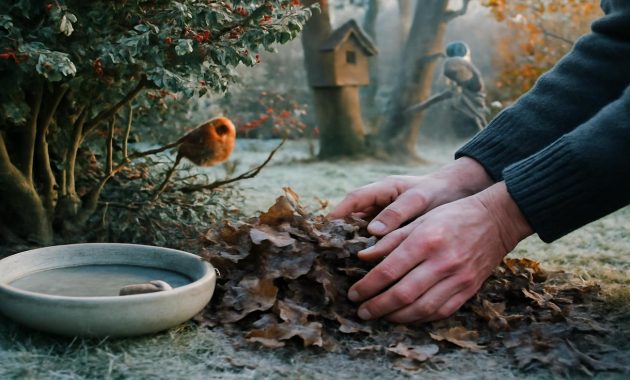
Here’s where inaction becomes an act of kindness. Every pile of leaves you don’t clear, every corner you leave rough, is a miniature wildlife service station. Under a mat of damp leaves, woodlice, spiders, and beetle larvae hunker down. Beneath a clump of ornamental grass, moth pupae wait out the cold. All of these are potential meals for a desperate bird on a hungry morning.
Instead of sweeping everything away, gather leaves into quiet heaps under shrubs or at the base of hedges. Tuck some into a corner behind a shed. Resist cutting down herbaceous perennials and let the dead stems stand until spring. Even the spent seedheads of flowers like coneflowers, teasels, and sunflowers are tiny buffets for finches and sparrows, trembling with seeds easily plucked in a quick stopover.
You’re not abandoning your garden; you’re reimagining it as a winter pantry—one that refills itself without you needing to lift more than a rake or two.
Warmth, Shelter, and Safe Corners: Building a Winter Refuge
Feathers are miraculous things. Run your eyes along a bluetit’s flank and you can almost feel the layered down beneath the neat outer coat, trapping warm air against a body that weighs less than a 50p coin. But on a bitter January night, when the wind claws its way through gaps in fences and the sky threatens snow, even the best plumage needs help from the landscape.
Birds are not just looking for food in your garden; they’re looking for somewhere safe to wait out the cold and the dark. You might not see it, but when you turn off your kitchen light and pull the curtains, the night shift is beginning. Sparrows pack tightly into hedges, huddling together in a gentle, constant rustle. Tits squeeze into crevices in ivy, sometimes piling into nest boxes just to share their pooled warmth. A blackbird might claim a dense shrub, burrowing deep into the foliage where the wind can’t find it.
This is why the structure of your garden matters so much in winter. That scrappy, slightly overgrown hedge you keep meaning to tame? That might be the dormitory for half your local sparrow population. The tangled climber on the fence you’ve been threatening to “start again”? It’s probably an overnight hostel for wrens and robins.
You can consciously design safe spaces into the garden without losing its shape. Consider:
- Layered planting: A mix of low shrubs, medium-height bushes, and taller trees creates multiple roosting levels.
- Evergreens: Holly, yew, box, and dense conifers offer year-round cover that doesn’t thin out in December just when it’s most needed.
- Ivy and climbers: Letting them grow thick on a fence or shed wall creates both roosts and insect-rich microhabitats.
- Untidy corners: A pile of prunings, stacked logs, or old branches out of sight behind a shed can become a snug winter haven.
Most of all, avoid heavy pruning in the coldest months. When you hack back that shrub in January, you’re not just removing branches; you might be stripping away somebody’s bedroom. If you must reshape things, wait until the worst of winter has passed and the birds have other options.
Why Nest Boxes Matter More Than You Think in Winter
Nests aren’t just for spring. On harsh nights, birds will use nest boxes as overnight roosting spots, especially small species like bluetits, coal tits, and wrens. If you have boxes already, winter is when their quiet, unspectacular usefulness really shines.
Make sure boxes are:
- Securely fixed, so they don’t swing in strong winds.
- Slightly angled forward, to keep rain out of the entrance.
- As sheltered as possible from the prevailing wind.
If you’re putting up new boxes, you don’t have to wait until spring. Install them on a calm winter’s day, and birds may begin using them almost immediately as night shelters, scouting them for future nesting too. You’re basically offering them a spare room with good insulation and no rent.
Water in a Frozen World: The Gift of a Simple Puddle
In the heart of winter, it’s easy to think food is all that matters. But imagine trying to swallow a dry biscuit with no tea, and you’ll get a small sense of why water is just as critical as calories to a bird. They need it to drink, of course, but also to bathe—yes, even when you can see your own breath in the air.
Clean feathers are efficient feathers. When birds bathe and preen, they’re maintaining the delicate waterproofing and insulation that stand between them and hypothermia. But winter can lock away most of their water sources under a sheet of stubborn ice.
This is where even the tiniest garden pond or shallow birdbath becomes a winter lifeline. You don’t need anything elaborate. A wide plant saucer, a shallow dish sunk into the ground, even an upturned bin lid cleaned and repurposed—all can become part of a daily survival ritual for your local birds.
What they need from you is consistency:
- Break the ice daily: Never pour boiling water in, as it can crack containers and shock wildlife. Gently tap or remove the ice instead.
- Keep it shallow: A depth of 2–5 cm in some areas is ideal. Birds need to stand, not swim.
- Provide perches: A flat stone, submerged brick, or stick across the bath offers secure footing.
- Clean regularly: Every few days, scrub with a brush and rinse well. Avoid detergents.
On the coldest mornings, you’ll see them arrive in cautious relays. A robin first, perhaps, tilting its head to check for danger. Then a blackbird, shuffling forward to drink, yellow bill dipping and dripping. A bluetit might vault in next, flinging droplets everywhere in a flurried, furious bath before launching off to a nearby branch to preen.
To them, this is not a luxury spa. It’s a crucial part of staying alive. And you control the tap.
Safe Feeding, Not Just More Feeding
It’s easy to think generosity is just measured by quantity—the bigger the feeder, the better the care. But for winter birds, safety and cleanliness matter just as much as how much you put out.
If you step back from your feeder for a moment, you’ll notice something: it’s not just a café; it’s also a very public, very exposed dining room. Sparrows squabble on the perches. Finches jostle on the tray. A nervy robin dashes in and out like someone trying to grab a sandwich from a crowded buffet. All this commotion is being watched from above and from the shadows.
Birds of prey, particularly sparrowhawks, quickly learn the feeding routines of a neighbourhood. A badly placed feeder—right in the middle of an open lawn with nowhere to dash for cover—can start to feel like a trap. What birds need from you is not just full feeders, but thoughtfully placed ones.
Hang or position feeders:
- Within a short, flapping dash of dense cover such as hedges, shrubs, or climbers.
- High enough to be out of easy reach of cats, but not so high they’re completely exposed.
- With a clear line of sight around the base, so ground-feeding birds can spot approaching predators.
Hygiene matters too. Where many birds gather, disease can spread fast, especially in cold, damp conditions. Trichomonosis in finches and other infections can rip through local populations in a single winter.
So make cleanliness part of your winter rhythm:
- Wash feeders and bird tables with hot water every week or two.
- Let them dry thoroughly before refilling.
- Rotate feeding spots occasionally to avoid a build-up of droppings below.
- Throw away any damp, mouldy, or clumped seed—never leave it out “just in case”.
Choosing the Right Winter Menu
You don’t have to provide a gourmet spread, but some foods simply work harder for birds in winter:
- High-energy seeds: Sunflower hearts, black sunflower seeds, and good-quality seed mixes.
- Fat-based foods: Suet blocks, fat balls (in plastic-free holders), suet pellets.
- Soft foods for ground feeders: Raisins (soaked), grated cheese, oats (sparingly), chopped apples or pears.
A simple table of what different birds tend to prefer can help you visualise how your choices support a variety of visitors:
| Bird | Preferred Foods | Where They Feed |
|---|---|---|
| Robin | Mealworms, soft seed mix, grated cheese | Ground, low tables |
| Bluetit | Sunflower hearts, fat balls, peanuts | Hanging feeders |
| Blackbird | Fruit, raisins, suet pellets | Ground |
| Goldfinch | Nyjer seed, sunflower hearts | Specialist seed feeders |
| Sparrow | Mixed seed, grains, suet | Feeders, tables, ground |
Think of your feeding as part of a larger winter support system, not the whole story. The more you combine food with water, shelter, and natural foraging, the more your garden becomes a true safe haven.
Letting the Garden Breathe: Less Perfection, More Life
There’s a quiet revolution happening in gardens everywhere. The old ideal of the winter garden as a place of strict order—bare soil, pruned shapes, swept paths—is giving way to something looser, wilder, and kinder. Not neglected, but allowed to breathe.
If you stand at your back door on a cold evening and really listen, you might hear the subtle sounds of that change: the soft rush of sparrows deep in a hedge; the crumbly rustle of a blackbird working through a leaf pile; the thin, silver thread of a robin’s winter song coming from the tangled clematis instead of a manicured shrub.
This winter, what birds really need from you is permission—for your garden to be a little bit more like them: resilient, adaptable, slightly scruffy around the edges, full of hidden life.
That might look like:
- Leaving dead seedheads standing, their silhouettes etching delicate patterns against low sun.
- Accepting that a corner of the lawn can be more useful as long grass and fallen leaves than as a perfect green square.
- Planting one or two berry-bearing shrubs—hawthorn, cotoneaster, rowan—to drip with winter food.
- Delaying the big garden “spring clean” until insects have had a chance to emerge and birds no longer depend on that winter cover.
In doing less, you’re giving more: more places to hide, more things to eat, more reasons for birds to stay.
And in return, they gift you something that’s hard to name but instantly felt—those sudden eruptions of song on a dim January morning; the whoosh of wings as a flock of tits moves as one through the trees; the sight of a blackbird, chest puffed and bill aglow, singing from your rooftop as if it’s already certain spring will come.
Feeding them is a kindness. But shaping a garden that quietly carries them through the hardest months—that’s a love story written in leaves, water, shade, and gentle neglect. And it begins, quite simply, with you looking beyond the feeder and asking: what does this place feel like, if you’re small, feathered, and hungry for another day?
Frequently Asked Questions
Should I stop feeding birds in spring if I’ve fed them all winter?
No, you don’t need to abruptly stop. Gradually reduce high-fat foods as natural food becomes more plentiful, but you can keep offering seeds and fresh water year-round. Just maintain good hygiene and avoid cheap, low-quality mixes.
Is it bad to leave leaves and dead stems in my garden over winter?
Not at all. Leaving some leaves and stems provides shelter for insects and other invertebrates, which in turn become vital winter food for birds. You can keep paths and key areas tidy while allowing wilder pockets elsewhere.
How often should I clean my bird feeders in winter?
Ideally every one to two weeks. Use hot water and a brush, then let them dry fully before refilling. If you notice sick or lethargic birds, stop feeding for a few days and clean everything thoroughly.
Do birds really bathe in very cold weather?
Yes. Even in low temperatures, birds bathe to keep their feathers in good condition. This helps maintain insulation and waterproofing. Providing shallow, unfrozen water is one of the most helpful things you can do in winter.
What small changes can I make this winter if I don’t have much space?
Even in a tiny garden, balcony, or courtyard, you can help. Put up one feeder, provide a shallow water dish, add a pot with an evergreen shrub or climber for shelter, and avoid over-tidying. Small pockets of care add up across a neighbourhood.