The school nurse’s office smells faintly of disinfectant and fruit snacks. Outside the cracked-open window, a playground hums with the shrieks and laughter of children who still trust the world to be mostly kind. Inside, a little boy sits on the vinyl chair, feet swinging above the linoleum. He clutches a dinosaur sticker in one hand and his mother’s fingers in the other. The nurse swabs his upper arm with cool alcohol. He winces, the needle glints, and then—just like that—it’s over. A jab, a breath, a Band-Aid, and immunity begins its quiet work, like an invisible shield knitting itself together under his skin.
In the same town, another child is at home on the couch, fever burning under flushed cheeks, eyes glazed and distant. Coughs rack his small body in waves that make his ribs stand out like piano keys. His parents were sure they were choosing freedom when they decided to say no to vaccines. Freedom from “toxins,” from “government control,” from what they’d been told was an unnecessary risk. They didn’t think of the nurse’s office. They didn’t think of the newborn next door, too young to be vaccinated. They didn’t think of the pregnant teacher, the kid on chemo, the elderly neighbor on the bus. They thought of themselves, and the word “freedom” sounded so righteous rolling off their tongues that they never turned it over to look at its underside.
The Quiet Web That Holds Us Together
Immunity is not a fortress built around a single child. It’s more like a spider’s web: fragile in places, astonishingly strong in others, a network of fine threads that only really works when it’s mostly intact. When enough people vaccinate, the web holds. Germs hit the collective barrier and stop, thwarted by antibodies and memories written in our cells from tiny, carefully weakened pieces of the very things that once killed us by the millions.
Parents who refuse childhood vaccines like to imagine they stand apart from this web, as if they can opt out of physics or weather. They picture their families as islands, protected by diet, supplements, clean living, essential oils, or just “strong genes.” But disease doesn’t care about any of that. Viruses and bacteria move through classrooms and church pews, grocery store aisles and birthday parties, like smoke seeking oxygen. The unvaccinated child isn’t living in a separate universe; they’re moving through the same shared air, the same public spaces, the same intricate, invisible web everyone else relies on.
And here’s the part that often gets lost in the noise of online arguments: vaccines are not just about “my child” or “your child.” They’re about everybody’s child—especially the ones who have no choice. The toddler on chemotherapy whose immune system has been deliberately wiped out so her cancer can be treated. The infant too young to get their first set of shots. The kid with a severe allergy who can’t safely receive a certain vaccine. They’re all hanging by the strength of that communal web. When parents refuse vaccines and still call it freedom, what they are really claiming is the freedom to cut strands out of the net that everyone else is relying on to survive.
When “Personal Choice” Stops Being Personal
If you’ve walked through a pediatric ICU, you understand in your bones that the phrase “personal medical choice” is only personal up to a point. In those units, the air hums with machines that breathe for tiny lungs. Alarms chirp, nurses move with a practiced, quick efficiency, and more than one parent stands at a bedside with the hollowed-out look of someone bargaining with the universe.
In that space, there are no debates about whether measles is “just a rash” or who in your parenting group swears their kid’s autism was “caused” by a shot. There is fear. There is grief. And sometimes, there is anger—because so many of the diseases we now fight in those units should have been banished to the history books. We had them on the run. Then we let them circle back.
The consequences of vaccine refusal don’t always show up in some distant, abstract way. They arrive as actual outbreaks in real places where children live and play. They arrive as quarantines and ICU admissions. They arrive as phone calls that start with, “We need you to come to the hospital right now,” because someone’s baby has whooping cough or measles pneumonia or meningitis—diseases that modern medicine had largely caged until enough people decided they were no longer scary enough to justify a needle.
| Disease | Era Before Widespread Vaccination | What Vaccines Changed |
|---|---|---|
| Measles | Hundreds of thousands of cases every year, thousands hospitalized, many deaths and lifelong disabilities. | Cases dropped by over 99% in countries with high vaccination coverage; outbreaks reappear when coverage falls. |
| Pertussis (Whooping Cough) | Common cause of infant death; gasping cough so violent it can break ribs. | Massive reduction in severe disease; now most deadly to babies too young to be fully vaccinated. |
| Polio | Paralyzed tens of thousands annually; children in iron lungs, lifelong disability. | Driven to the brink of global eradication; now extremely rare where vaccination rates remain high. |
These numbers are not just statistics; they were once hospital beds filled with children whose parents would have given anything—anything—for a simple shot to have existed in time.
The Seductive Story of “Natural” Freedom
There is a particular romance to the idea of being “natural” in a world that feels industrial, chemical, and out of control. It’s easy to understand why it’s tempting. Picture a sun-drenched kitchen: homemade sourdough, herbs hanging to dry, a child drinking green smoothies, shoes left at the door. In that scene, a vaccine can seem like a harsh intrusion from the outside world, a sharp needle carrying the faint scent of fluorescent lighting and bureaucracy.
The modern anti-vaccine movement has learned to wrap itself in this aesthetic. It shows up on pastel Instagram grids: barefoot kids in fields of wildflowers, captions about “trusting mama instincts” and “honoring the body’s innate wisdom.” The word “toxins” floats through these spaces like a ghost, undefined but ominous. Freedom, in these narratives, means opting out of “Big Pharma,” of fluorescent waiting rooms, of “unnatural” interventions.
But disease is also natural. So are paralysis, pneumonia, seizure, and death. So is watching a child cough until they turn blue, or develop brain swelling from measles. Nature is not a curated aesthetic; it is rain and mud and predators and microbes, indifferent to our hashtags and feel-good beliefs. Vaccines are one of the few ways we have learned to negotiate with that indifference, to turn nature’s own mechanisms of learning and memory in our favor. They are not an insult to the body’s wisdom; they are a collaboration with it.
Fear, Misinformation, and the Echo Chamber
Underneath the talk of freedom, there is often plain, raw fear. Fear of needles. Fear of side effects. Fear of doing the wrong thing and living with regret. Most parents who refuse vaccines are not villains; they are frightened people who have been handed the wrong story and clung to it because it offers them a way to feel in control.
Online, those stories multiply like bacteria in a petri dish. One sensational blog post becomes a screenshot becomes a voice note passed from phone to phone in parenting groups. A single anecdote—“my friend’s cousin’s baby changed after a shot”—is repeated until it starts to sound like evidence. A long-debunked, retracted study about vaccines and autism is still passed around like contraband truth, even as mountains of real data show no such link.
In those echo chambers, any pushback is labeled “censorship,” any scientific explanation dismissed as “propaganda.” Doctors become villains. Public health workers become faceless “they.” The word “research” is stretched to include fifteen minutes on a search engine and a podcast episode. Confirmation bias does the rest: we notice what matches what we already believe and ignore what doesn’t. And so, fear wraps itself in the language of “informed choice” and “medical freedom,” even as it leads people directly toward more risk, not less.
Freedom Is Not Doing Whatever You Want
Walk into a grocery store and you’ll see small, everyday sacrifices of absolute freedom everywhere. People stop at red lights in the parking lot even when it’s clear, because we’ve agreed not to plow through intersections at will. Parents strap screaming toddlers into car seats because they know the laws of physics will not bend just because the child is tired. We wash our hands after using the bathroom. We don’t light cigarettes in nurseries. We live inside a dense web of small, civilized constraints—things we don’t do, or must do, because other people’s safety depends on it.
Many of those constraints are enforced by law, but most are enforced by something quieter: an understanding that our actions ripple outward. That’s the core of public health. It’s not just about personal risk; it’s about the probability that our choices can harm someone else, possibly someone far more vulnerable than we are.
Vaccines belong in that same category. They are more like stop signs than personal dietary choices. Yes, a vaccinated child gains individual protection, but the real power lies in how each shot strengthens the web for everyone. The phrase “herd immunity” may sound impersonal, but it describes something intimate and tender: a circle of protection around the people who can’t stand in that circle themselves.
Who Carries the Cost of Someone Else’s Freedom?
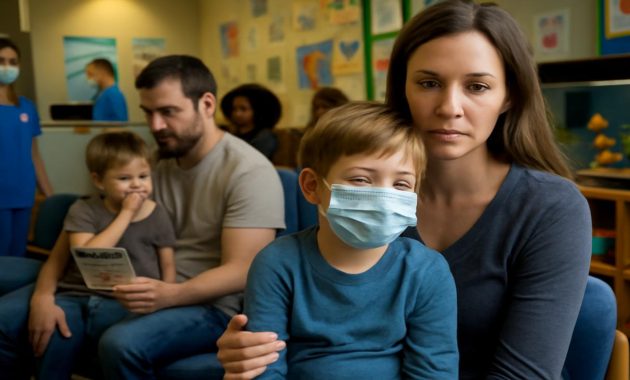
Imagine standing in a crowded pediatric waiting room in winter. Strollers parked in a row, jackets unzipped, a chorus of coughs and sniffles layered over the rustle of picture books. Now imagine that in that room are three children:
- A baby just six weeks old, too young for most vaccines, asleep in a carrier against her mother’s chest.
- A thin nine-year-old boy with patches of hair missing, his immune system dismantled by chemotherapy drugs, clutching a stuffed animal that’s been through as much as he has.
- A toddler with a history of severe allergic reactions to certain medications, including one of the vaccine components.
None of these children have the luxury of “choosing” vaccines in the usual way. They need the rest of us to create a buffer around them—a ring of immune systems trained and ready to intercept infections before they can reach those fragile bodies. When a parent with a perfectly healthy child shrugs and says, “We’re going to skip shots; we’ve done our own research,” they are not simply accepting risk for their own family. They’re shifting the danger onto these other kids, onto strangers they will never meet, whose stories will never show up in their social media feeds.
That’s the part of the freedom narrative that rarely gets said out loud: if one group claims the right to ignore the communal safety net, someone else quietly picks up the tab. For vaccine refusal, the “someone else” is very often the smallest, sickest, and least powerful among us.
The Stories We’ve Forgotten
Part of the problem is that vaccines have worked too well. We don’t remember the eras when schoolyards emptied during polio outbreaks, when parents wheeled children in iron lungs past windows that showed other kids riding bikes and jumping rope. We don’t remember measles wards, the rows of small faces spotted red, the oxygen tents, the graves too small and too many.
Ask someone who grew up before these vaccines were widespread and the tone shifts. There is a gravity in their voices, a muscle memory of fear. They remember who didn’t come back to class after Christmas break. They remember neighbors who walked with braces or never walked again. For them, the offer of a vaccine was like someone handing over a life jacket after years of treading water in a storm. There was no philosophical debate about whether the life jacket was “natural.” It was a miracle with a small sting, and they lined up for it.
We live now in the long shadow of that miracle, comfortable enough to question the very tools that bought us this comfort. There is a strange privilege in being able to treat vaccines as optional, a privilege built on the back of decades of collective participation. When parents say no and still call it freedom, they are often standing on a foundation built by countless others who quietly said yes.
Reclaiming What Freedom Really Means
So what might freedom look like if we stripped away the marketing and the echo chambers and went back to basics?
Real freedom has something to do with dignity. With not watching your child struggle for air from a disease we know how to prevent. With being able to send your newborn to daycare without doing risk calculus about measles outbreaks. With going to the park with your toddler on chemo and not silently scanning every other parent there, wondering who chose to opt out of the social contract.
Freedom, in the truest sense, also carries responsibility. It means having the liberty to make choices—and the integrity to choose in ways that do not casually endanger others. Wear the baby carriers and make the organic snacks. Filter your water, hang your herbs to dry in the window. Trust your intuition when your child has a fever, when something seems off, when a doctor doesn’t listen. But when it comes to the thin line between an outbreak contained and an outbreak unleashed, recognize that your choice is not floating in a vacuum.
There is a quieter, less glamorous kind of freedom that doesn’t photograph well on social media: the freedom of entire communities to stay healthy. The freedom of teachers to walk into classrooms without fear of contracting something they might carry home to their own vulnerable loved ones. The freedom of doctors and nurses to fight the battles they cannot prevent, instead of re-fighting the ones we already won and then surrendered out of neglect and misinformation.
Choosing the Web Over the Island
Someday, years from now, a child will ask their parent, “Did I get shots when I was little?” And that parent will pause, remembering the small white clinic room, the stickers and tears, the careful conversations, the decisions that did not always feel easy but felt necessary. “Yes,” they’ll say. “You did. Because we care about you, and we care about other people too.”
That is the story we have the chance to tell. Not one of government coercion or blind obedience, not one of fear and rumor, but one of solidarity woven through small, ordinary acts. Of people accepting a tiny, momentary discomfort to strengthen a web that holds neighbors and strangers alike.
Parents who refuse childhood vaccines in the name of freedom have misunderstood the kind of freedom worth fighting for. The freedom that matters most is not the right to stand apart—it is the shared safety that allows all of us, especially the most fragile among us, to move through the world with a little less fear. Choosing vaccines is choosing the web over the island. It is choosing to be part of something larger, something sturdy enough to catch us when we fall.
Frequently Asked Questions
Are childhood vaccines really necessary if diseases are rare now?
Yes. The reason many vaccine-preventable diseases are rare is precisely because vaccination rates have been high. When enough people stop vaccinating, those diseases return. Outbreaks in recent years—especially of measles and whooping cough—have occurred in communities with lower vaccination coverage.
Isn’t it my personal right to decide whether my child gets vaccinated?
You have legal rights as a parent, but vaccines are not a purely personal matter. Infectious diseases spread in communities. Choosing not to vaccinate increases risk for others, especially infants, people with weakened immune systems, and those who cannot be vaccinated for medical reasons.
Can a child get the illness from the vaccine itself?
Routine childhood vaccines are designed to stimulate the immune system without causing the actual disease. Some vaccines use inactivated (killed) viruses or only pieces of the germ; others use weakened forms that cannot cause illness in healthy people. Mild side effects like low fever or soreness are possible, but serious disease from vaccines is extremely rare.
What about serious side effects—aren’t they being covered up?
All medical interventions carry some risk, and vaccines are no exception. However, serious side effects are very rare and are actively monitored by multiple safety systems. When problems are detected, recommendations or formulations are updated. The known, common risks of vaccine-preventable diseases are far higher than the rare risks of vaccines themselves.
How can I feel more confident about vaccinating my child?
Ask your child’s healthcare provider specific, detailed questions about each recommended vaccine: what it prevents, possible side effects, and how long it’s been in use. Request information from reputable medical and public health organizations. It can also help to talk with older relatives who remember life before these vaccines existed; their stories often put the decision into powerful perspective.