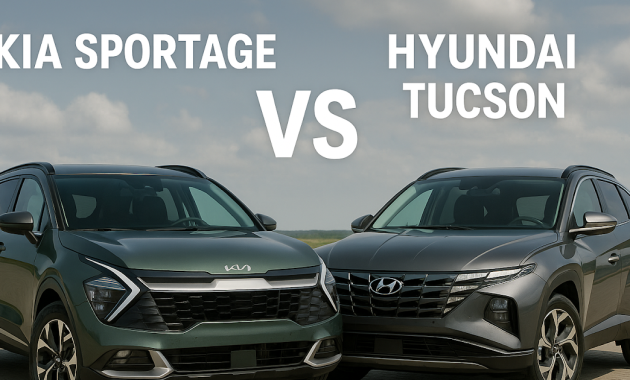
Introduction: Two Cousins, One Crown

When it comes to compact SUVs, the Kia Sportage and Hyundai Tucson are two of the hottest names in the game. They’re like cousins—literally—since Hyundai and Kia are part of the same parent company. But while they share a lot under the skin, these two SUVs go in slightly different directions when it comes to looks, feel, and features.
So which one is the better pick for 2025? Whether you’re commuting, road-tripping, or just want a stylish and practical ride, this head-to-head comparison will help you decide.
Exterior Design: Bold vs Elegant
Let’s face it—how your SUV looks matters. Both the 2025 Sportage and Tucson have bold styling, but with different personalities.
Kia Sportage GT-Line:
Futuristic front with boomerang LED DRLs
Blacked-out grille and aggressive stance
More “edgy” and youthful
Hyundai Tucson Limited:
Parametric grille that blends with LED DRLs
Smoother, more upscale look
Subtle but sharp
👉 Winner: Tie – It depends on your vibe. Sportage for sporty style, Tucson for clean luxury.
Performance: Turbo vs Naturally Aspirated
Both SUVs offer a base 2.5L engine and an optional turbo engine—depending on trim.
Kia Sportage GT (Turbo Model):
2.5L Turbocharged I4
281 hp / 311 lb-ft torque
8-speed dual-clutch transmission (DCT)
Available AWD
Hyundai Tucson N Line (Turbo Model):
Same 2.5L Turbo I4
281 hp / 311 lb-ft torque
8-speed DCT
Available AWD
So yes, they’re mechanically twins. But the Sportage GT feels slightly more aggressive in throttle response and offers a sportier ride feel with stiffer suspension tuning.
👉 Winner: Sportage GT – Slight edge for driving engagement.
Interior & Comfort: Space and Tech Galore
Step inside either cabin and you’ll see just how far Korean automakers have come. These interiors punch above their price class.
Kia Sportage Highlights:
Dual 12.3-inch curved displays
Sporty seat design with contrast stitching
39.5″ rear legroom
74.1 cu. ft. cargo space
Hyundai Tucson Highlights:
10.25-inch digital cluster & infotainment
Softer, lounge-like interior vibe
41.3″ rear legroom (more than Sportage)
80.3 cu. ft. cargo space (also more)
So Tucson takes the win for sheer interior space, but the Sportage is a bit more driver-focused in layout and tech design.
👉 Winner: Tucson – If you value maximum space and a minimalist feel.
Infotainment & Tech: Connected and Clever
Both SUVs come loaded with the latest connectivity and safety tech, including:
Apple CarPlay / Android Auto
Wireless charging
Multiple USB-C ports
Navigation with real-time traffic
Available Harman Kardon (Sportage) or Bose (Tucson) audio
However, Kia edges out slightly with its Kia Connect app that feels smoother in integration. The Sportage GT also includes an available fingerprint authentication system (depending on region)—a pretty cool future-forward feature.
👉 Winner: Sportage – Slightly better tech integration and digital layout.
Safety Features: Fully Stocked
Both the Tucson and Sportage are loaded with standard safety features:
Forward Collision-Avoidance Assist
Blind-Spot Collision Avoidance
Rear Cross-Traffic Alert
Lane Keeping and Lane Following Assist
Highway Driving Assist (semi-autonomous cruise control)
These are practically tied—great news if safety is a top concern.
👉 Winner: Tie – Both nail it here.
Driving Feel: Smooth vs Sporty
On the road, the difference in character becomes more apparent.
Sportage GT has a stiffer suspension, heavier steering, and more responsive throttle mapping. It feels more engaging for the driver.
Tucson Limited is tuned for comfort. It’s quiet, calm, and absorbs road imperfections like a champ.
If you like a sportier feel (without going full performance SUV), the Sportage is your pick. But if you prioritize comfort and ease, the Tucson wins.
👉 Winner: Depends – Sportage for fun, Tucson for comfort.
Fuel Economy
According to EPA estimates:
Kia Sportage Turbo AWD:
24 mpg city / 28 mpg highway
Hyundai Tucson Turbo AWD:
Similar numbers—within 1 mpg either way depending on trim.
👉 Winner: Tie – Near identical.
Price & Value
Let’s talk dollars. As of mid-2025:
Kia Sportage GT-Line AWD: Starts around $33,000
Hyundai Tucson Limited AWD: Around $35,000
The Sportage gives you similar features for a slightly better price point, especially if you opt for the EX or GT-Line trims.
👉 Winner: Sportage – More bang for your buck.
Final Verdict: Which One Should You Buy?
Both the 2025 Kia Sportage and Hyundai Tucson are excellent compact SUVs with strong value, style, and tech. But here’s a quick breakdown depending on your priorities:
Category Winner
Exterior Design Tie
Performance Sportage
Interior Space Tucson
Tech Features Sportage
Ride Comfort Tucson
Price/Value Sportage
Choose the Kia Sportage if you want:
A bolder, sportier design
Turbocharged driving fun
A more driver-focused interior
Slightly better tech experience
Choose the Hyundai Tucson if you want:
A calmer, more premium vibe
More interior and cargo space
A comfortable, quiet ride
Soft-touch minimalism