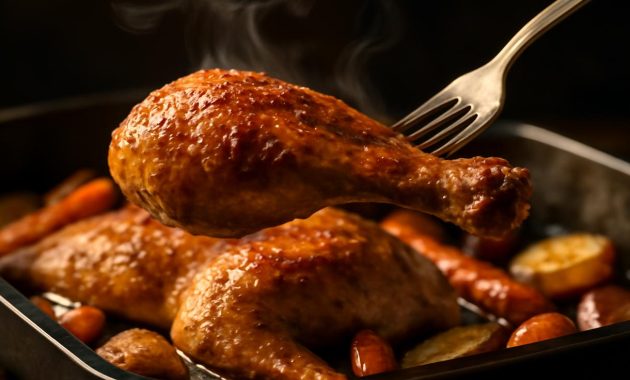
The night I finally stopped experimenting with chicken began like all the other “this time I’ll nail it” evenings—too many tabs open on my laptop, a fridge door hanging open far too long, and that quiet desperation that comes from wanting dinner to feel like more than just fuel. Rain pattered against the kitchen window. A streetlight cast a little yellow halo across the counter, where a pack of chicken thighs sat waiting, pale and unconvincing. I remember thinking, not for the first time, There has to be a way to do this that just works. Every. Single. Time.
The Night of Too Many Chicken Recipes
I had roasted chicken every possible wrong way: too dry, too pale, rubbery skin, soggy skin, flavorless, over-salted, underseasoned. You name the disappointment, I’ve chewed through it. I had marinated for days, rubbed with elaborate spice blends, seared in cast-iron at volcanic temperatures, basted with melted butter like I was auditioning for some rustic cooking show.
Every recipe promised the same thing: “the juiciest chicken ever.” You know the claims—“life-changing,” “no-fail,” “restaurant-level.” My browser history that night looked like a timeline of culinary heartbreak. Somewhere between “Best Ever Baked Chicken” and “Foolproof Crispy Thighs,” I shut the laptop and just stood there in the dim kitchen, listening to the hum of the refrigerator and the rain.
What I wanted, really, was something beyond a recipe. I wanted a method. A way of cooking I could trust the way I trust gravity or morning coffee: uncomplicated, predictable, reliable. A kind of kitchen law of nature. I was tired of hoping. I wanted to know.
The Method That Felt Like a Secret
The breakthrough didn’t arrive like a lightning bolt; it crept in as a small, almost boring idea. I remember an old conversation with a friend who cooked in professional kitchens. “With chicken,” she’d said while trimming herbs with the calm of someone who’s done it a thousand times, “you don’t need a magic recipe. You need heat, time, salt, and space. The chicken does the rest if you let it.”
Heat. Time. Salt. Space. It echoed back that rainy night while I stared at those raw thighs. I decided to forget everything flashy I’d ever read. No twelve-ingredient marinades. No sugar-crusted spice rubs that burn before the meat cooks through. No confusing oven gymnastics: start low, go high, then broil, then tent, then rest, then pray.
I grabbed a small bowl, some salt, some oil, and a few basics from the spice drawer. The air smelled faintly of garlic powder and paprika as I shook the seasonings together. There was calm in the simplicity—almost a quiet defiance against every overcomplicated recipe I’d saved and never repeated.
I patted the chicken dry, feeling the cool, slightly sticky texture under my hands. That step, I realized, felt like the first true promise I was making to myself: no shortcuts, but no drama either. Just attention. Just care. The thighs glistened slightly when I rubbed the oil and seasoning into the skin. I lined them up on a pan, leaving a little breathing room around each piece, and it already looked different from my usual crowded chaos.
Space. That was going to matter, I could feel it.
The Quiet Science of Perfect Baked Chicken
Here’s what I’ve learned after repeating this method so many times I could do it half-asleep: great baked chicken isn’t a trick. It’s a chain of small, respectful decisions, each one helping the bird become what it already wants to be—golden, crisp at the edges, tender within.
Dry, Then Season Like You Mean It
The chicken comes out of its package slick and damp, and your first instinct might be to rush. But the towel step matters. When you press paper towels lightly against the skin, you can feel the moisture leaving. That moisture, if you ignore it, becomes steam in the oven—a tiny sabotage that softens the skin you want to crisp.
Then there’s the salt. I stopped being shy. I salt the chicken like I’m greeting an old friend at the door: warmly, openly, with the clear intention of making them feel at home. A little pepper, a sprinkle of garlic powder, maybe a dusting of smoked paprika or dried thyme. The smell of the seasonings on raw meat is oddly comforting—a promise, not yet fulfilled, but on its way.
Oil and Space
A drizzle of oil becomes your quiet co-conspirator. Not a bath—just enough to give the skin a supple sheen, to help the spices cling and the heat kiss the surface more evenly. You rub it in with your fingers and feel the chill of the meat under the warming slick of oil. This is the part that feels almost meditative, like tending a small animal or polishing a favorite tool.
Then you give each piece its own territory on the pan. No crowding, no overlapping. A lonely chicken is a crispy chicken. Space allows the hot air to swirl around, to touch every curve and corner. It’s open air that transforms the exteriors from floppy to crackling, from pallid to bronze.
High Heat, No Drama
I used to toggle my oven temperature like I was day trading: up, down, broil, bake, convection, no convection. That frantic choreography never resulted in the certainty I was chasing. These days, I set the oven to a temperature that feels decisive and walk away.
What matters is this: the heat is strong enough to brown the skin but not so wild that it burns before the inside cooks through. Once the pan slides onto the middle rack, the kitchen begins its slow transformation. The soft hiss of fat hitting hot metal drifts into the room. After a while, the first whisper of roasted chicken scent begins to unwind itself into the air, threading its way down the hallway, under doors, around corners.
There’s a moment, maybe twenty minutes in, when the aroma shifts from something’s cooking to something is almost ready. It’s a deeper, more golden smell, threaded with the mineral warmth of rendered fat and toasted spices. The oven window clouds slightly, the edges of each thigh turn a deeper bronze, and your shoulders begin to unclench.
How the Method Actually Works (Without Overthinking It)
At some point, I did learn the “why” behind this method, but it only mattered because it made me trust the process enough to stop tinkering.
| Step | What You Actually Do | Why It Matters |
|---|---|---|
| Dry the chicken | Pat with paper towels until the skin is no longer wet. | Less surface moisture = less steaming, better browning and crispier skin. |
| Season generously | Salt, pepper, simple spices, rubbed in all over. | Salt moves inward as it rests, seasoning the meat, not just the surface. |
| Add oil | Light coating of neutral or olive oil. | Helps with even browning and protects the surface from drying out. |
| Give it space | Arrange pieces with gaps between. | Air circulation means roasting, not steaming, so you get color and texture. |
| Roast and rest | Bake until done, then let it sit a few minutes. | Juices redistribute, texture relaxes, flavor deepens. |
This is the method in its bare bones, but the beauty is how forgiving it is. Chicken thighs especially are like that friend who shows up looking good even after a long, chaotic day. They carry a little extra fat, a little extra forgiveness. Cook them a few minutes more than intended, and they still emerge juicy, almost silky beneath the crisped skin.
And the moment you pull the pan from the oven, there’s a sound I’ve come to love almost as much as the smell: the soft crackle as the hot skin gently shifts in the cooler air. The juices bubble in tiny amber pools at the bottom of the pan. The whole thing glows, especially in that in-between light of early evening. It looks less like something you “made” and more like something that finished becoming itself.
When the Method Became a Ritual
The next time I made it, there was no laptop, no recipe hunt. Just muscle memory. Pat dry, season, oil, space, high heat, rest. The steps moved through my hands without much thought. While the chicken roasted, I sliced a lemon, tore a handful of parsley leaves, maybe shaved some fennel or sliced a tomato if something good was lying around.
This isn’t the sort of cooking that demands your entire brain. It frees your brain. You can tidy the counter, open the window, listen to an old album, or pour a glass of wine. You’re not tethered to the oven door, flipping back and forth between instructions and reality.
Over time, the method turned into something more than a way to cook chicken. It became the evening reset button. On weary days, there was a strange comfort in knowing that I could come home, turn on the oven, and let this small, repeated act anchor me. There is relief in repetition, in mastering one thing so thoroughly that it no longer feels like a challenge at all.
People started asking for it, too. Friends would come over and say, “Can you make your chicken?” That always made me laugh. My chicken? It’s barely a recipe. But there is something quietly intimate about having a dish people associate with you—a flavor they recognize, a texture they trust.
On one autumn night, we sat around the table with plates holding nothing more complex than those roasted thighs, some roasted carrots glossed with their own sweetness, and a tangle of dressed greens. Outside, leaves scraped softly along the pavement. Inside, the talk dissolved into that lovely quiet that only happens when everyone’s too busy enjoying what’s in front of them to fill the air with words.
How It Adapts to Your Life (Instead of the Other Way Around)
The magic of this method is not that it never changes; it’s that the core doesn’t have to. Once you trust the foundation, you can decorate it or keep it bare. It moves with you, from rushed weeknights to slow Sundays.
Simple Swaps, Same Backbone
Some evenings the chicken comes out showered with lemon zest and chopped herbs, bright and green, like late spring. Other nights it leans smoky and deep with cumin and smoked paprika, something that feels right with roasted potatoes and a dollop of yogurt on the side. You can tuck garlic cloves or halved shallots onto the same pan, letting them slump and caramelize in the rendered fat.
But below all those variations, the method holds steady: dry, season, oil, space, hot oven, rest. When you don’t have the energy to be creative, plain salt and pepper will still reward you.
Making Space Around It
Because it’s so reliable, this way of baking chicken quietly reorganizes the rest of your meal. You can plan around it without anxiety. Rice on the stove, salad from whatever greens and vegetables you have, maybe torn bread to drag through the pan juices—everything becomes easier because the centerpiece doesn’t require worry.
I’ve used it when cooking for just myself, eating a leg over the sink in my socks, kitchen light humming softly above. I’ve used it for gatherings, setting out platters on a worn wooden table, steam rising in gentle waves. The roasted thighs don’t shout; they sit there, steady and golden, like they’ve always belonged.
When you find a method like this, it doesn’t just save time. It gives something else back: the feeling that you can feed yourself and the people you care about without performance, without proving anything, without chasing novelty every single time.
Why I Stopped Experimenting (At Least with This)
Every once in a while, a new chicken recipe will flutter across my screen—sticky glazes, elaborate stuffings, complicated pan sauces. They’re tempting, in the way a shiny new gadget is tempting. But then I think of the quiet pleasure of sliding that familiar pan into the oven, the predictability of the scent filling the kitchen, the way the skin fractures delicately under the first bite and the meat yields, tender and unmistakably chicken.
There’s a kind of deep relief in deciding, This is good enough. This is more than enough. In a world that tells us we should constantly upgrade, improve, and explore the “next best thing,” there’s something gently rebellious about saying, “No, I’m staying here. I’ve found my way, and it works.”
I stopped experimenting not because curiosity died, but because this one small corner of my life no longer needed it. The method holds. It’s the kind of dependable that makes room in your day for other unknowns—projects, conversations, quiet walks, the thousand shifting puzzle pieces of a modern life.
There’s a particular kind of contentment in scraping up the last sticky bits from the pan with a piece of bread, feeling the evening slow down around you, knowing that tomorrow, or three weeks from now, or in the heart of some future winter when the world feels hard and loud, you can do this again. Same pan. Same steps. Same golden, crackling, juicy result.
You close the oven, switch off the light, and feel—under the simple satisfaction of a well-cooked meal—that rare, steady thing: trust in something you’ve done with your own hands, again and again, until it became a quiet, reliable part of your life.
Frequently Asked Questions
Do I have to use chicken thighs, or will this work with breasts too?
The method works best with bone-in, skin-on thighs or legs because they stay juicy and forgiving. You can use bone-in, skin-on breasts, but they’ll cook a bit faster and can dry out more easily. If you use breasts, start checking for doneness earlier and pull them as soon as they’re just cooked through.
How do I know when the chicken is done?
The most reliable way is with a meat thermometer: the thickest part should reach about 74°C (165°F). If you don’t have one, pierce near the bone; the juices should run clear, not pink, and the meat should feel firm but not tough when pressed.
Can I marinate the chicken first?
You can, but it’s not required. If you love a particular marinade, go ahead—just make sure to still pat the surface dry before baking so the skin can brown. Avoid very sugary marinades at high heat, as they can burn before the chicken cooks through.
Should I line the pan with parchment or foil?
You can, especially for easier cleanup. A bare metal pan tends to give slightly better browning on the underside, but parchment or foil lined pans still produce excellent results and make post-dinner life much simpler.
How long should I let the chicken rest after baking?
Five to ten minutes is usually enough. That short rest lets the juices settle back into the meat instead of spilling out onto the cutting board or plate, keeping each bite tender and moist.