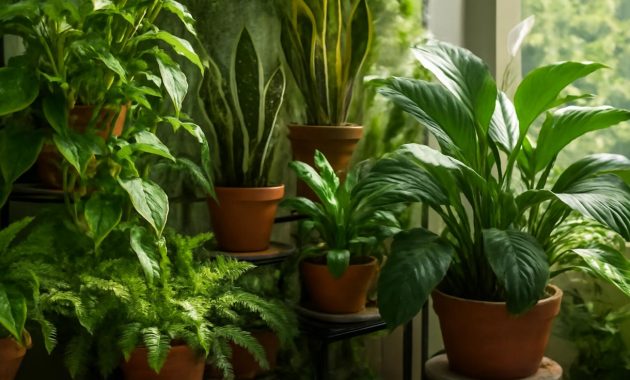
The first time I noticed it, I was standing barefoot in the garden at dusk, hose dangling from my hand, wondering if I was a terrible gardener. My kale looked ragged. The beets sulked in the shade of an overgrown cosmos. One tomato vine had flung itself in a wild arc straight through the basil like a drunk friend at a party. It was chaos. Not the tidy, gridded, influencer‑approved garden I had imagined in winter, staring at seed catalogs and color‑coordinated plans. This was mess: stems tangled, leaves overlapping, roots almost certainly wrestling underground. I almost reached for the pruning shears to “fix” it—then I decided to wait. To watch. To see what would happen if I let the plants compete just a little, instead of rescuing them every time they brushed shoulders.
Letting Go of the Perfect Garden
Most of us are taught that plants are fragile. Every gardening book seems to whisper the same message: space them carefully, fertilize regularly, weed religiously, thin ruthlessly. Follow the rules and you’ll be rewarded with straight rows and obedient harvests. That was the script I’d been following for years—until my garden began quietly breaking it.
It started with laziness, if I’m honest. One spring I sowed carrots, lettuce, radishes, and dill in a series of neat, delicate lines. A week later, a late cold snap kept me indoors. By the time the weather eased, the rows were no longer neat. Tiny seedlings were popping up everywhere, leaning into each other, crowding the lines I had drawn in the soil. It was a green fuzz of potential—and also a mess crying out for thinning.
I knelt down, fingers poised to pluck the extras, and hesitated. The sun was warm on my neck. Bees were already ogling the first open blossoms on the nearby borage. A breeze ran its fingers through the young leaves, and in that moment, the garden felt less like a project and more like a conversation I’d interrupted. What if I wasn’t the main character here? What if I stepped back and let the plants sort things out among themselves?
So I made a quiet bargain with the garden that day: I would still weed, but more selectively. I’d still intervene in emergencies. But the subtle jostling for space, light, and water? The tiny competitions beneath the soil and between overlapping leaves? I’d let those run their course and see whether balance could emerge without me orchestrating every step.
The Sound of Roots Arguing
When you stop treating your garden like a static blueprint and start seeing it as a living negotiation, the way you look at plants changes. You begin to notice the tension in a patch of overcrowded seedlings: the way some leaves angle just slightly higher, catching an extra sliver of sun. The way certain stems choose to lean rather than fight upright. You notice the compromises.
In one bed that year, I let the sunflowers seed themselves alongside the tomatoes. Every rule said I should rip them out. Sunflowers are heavy feeders, greedy with light and nutrients. Tomatoes, equally hungry, were meant to have that bed to themselves. Instead, I let half a dozen sunflower volunteers stay. By midsummer they were towering above my head, thick stalks creaking gently when the wind picked up, tomato vines snaking around them like opportunistic climbers using a free trellis.
I watched, thinking I was witnessing a quiet war. But as weeks passed and I poked my fingers into the soil, what I felt was not depletion. It was cool, shaded moisture even after hot days, preserved under the leafy canopy. The sunflowers cast a dappled pattern over the soil, preventing it from baking into a hard crust. The competition I’d feared was also cooperation in disguise. The tomatoes, shielded from the harshest afternoon sun, produced steadily and deeply. The sunflowers, though perhaps not as enormous as they would have been alone, still lifted their huge golden faces to the sky.
Not every pairing was that poetic. In another bed, I let a swath of self-sown arugula encircle young broccoli plants. Arugula is quick, hot, impatient. Broccoli is slow, methodical, a long-term planner. As the weeks went on, the arugula bolted, blasting upward, shading the broccoli. Here was the darker side of competition—one plant racing ahead, another stalled in its shadow. Yet when I finally pulled most of the arugula to make way for the broccoli, I found the soil beneath was crumbly and rich, shot through with fine roots that had done the hard work of opening airways and feeding microbes. The broccoli, though slightly stunted at first, rebounded in the freed-up space with a vigor I hadn’t seen in prior years.
It felt, standing there with hands full of peppery leaves, as if I’d just watched a time-lapse of a forest succession, only compressed into a single season and a couple of square meters. Early colonizers rush in, fill space, then step aside—willingly or not—for slower, longer-lived species. The competition is real, but it’s also the mechanism by which the system reorganizes itself, discovers new balances, and builds depth.
The Subtle Art of Crowding (Just Enough)
Letting plants compete doesn’t mean abandoning them to brutal survival-of-the-fittest chaos. It’s more like tuning an instrument: a small twist too far and the string snaps; just enough and the note rings clear. Over time I began to notice patterns—almost rules—that helped me decide where to lean in and where to hold back.
I started sowing seeds closer than any packet recommended, then letting the plants negotiate their own spacing. Some thinnings I made with my plate in mind—delicate beet greens, baby radishes, tender lettuces—pulling just enough to give breath to the rest. Other times, I watched as the plants themselves decided who stayed. Lettuce seedlings under taller peas grew paler but sweeter. Self-sown calendula muscled between cabbage heads, drawing in hoverflies that patrolled for aphids. Instead of lines, I began seeing layers.
At some point, I jotted down a little guide in my gardening notebook to remind myself what kind of crowding seemed to help rather than harm. It looked something like this:
| Plant Relationship | Crowding Level | What Tends to Happen |
|---|---|---|
| Deep-rooted + shallow-rooted (e.g., carrots & lettuce) | Moderate crowding | Share soil layers, better overall use of water and nutrients. |
| Tall + low-growing (e.g., corn & squash) | Closer than normal | Shade and living mulch, cooler soil, fewer weeds. |
| Fast + slow growers (e.g., radish & broccoli) | High initial crowding | Quick crop leaves behind loosened soil for slower crop. |
| Heavy feeders + heavy feeders (e.g., corn & sunflower) | Low crowding | Risk of depletion; better spaced or paired with nitrogen fixers. |
| Flowers among veggies (e.g., calendula in cabbage) | Scatter freely | More pollinators, more predators of pests, more resilience. |
None of this was scientific in the rigorous sense. It was observation, season after season, of what happened when I resisted the urge to grant each plant its own personal bubble. Some veggies actually seemed to prefer the social pressure. Carrots grew straighter when packed into a narrow band, their shoulders bracing against each other. Lettuce heads, nudged side by side, blanched themselves slightly, leaves tender and less bitter. Herbs like parsley and cilantro persisted longer into summer’s heat under a light shade of taller neighbors.
It wasn’t about neglect; it was about not overprotecting. I still watched like a hawk for true distress—the wilt that doesn’t perk up at sunset, the yellowing that screams deficiency, the insect damage that’s more than cosmetic. But I no longer intervened every time one plant shaded another or reached into its neighbor’s space. A little friction seemed to make the whole system sturdier.
When Competition Becomes Cooperation
Perhaps the most surprising thing that emerged from this experiment in benign neglect was how many apparent competitions softened into collaborations. Take my bean teepee, for instance. I’d built it as a childlike structure of poles, envisioning climbing beans curtaining the sides by July. That year, I let volunteer nasturtiums pop up around its base. They rammed their round leaves into the beans, grabbed the lowest rung of the teepee and flung themselves upward, leaves overlapping, flowers spilling.
The first reaction in my old gardening brain was: too crowded. One of them will suffer. But I left them. As the summer wore on, I began to spot a pattern during my morning rounds. Aphids clustered mostly on the nasturtiums, leaving the beans relatively peaceful. The nasturtiums were acting as a decoy buffet, sacrificing themselves so the beans could breathe. The “loser” in that relationship was, paradoxically, the protector.
In another corner, self-sown chamomile wove itself between my onions. Their feathery stems competed for air, but over time I noticed fewer thrips on the onions compared to previous years. The chamomile, so delicate-looking, exuded tiny chemical whispers that seemed to shift the balance of who showed up. Again and again, apparent crowding was masking complex exchanges of scents, exudates, and shelter—a dense web of subtle favors and costs that added up to something like equilibrium.
The Emotional Weather of a Wilder Bed
There’s a psychological shift that comes with letting plants compete slightly. You stop seeing every yellowed leaf or uneven growth as a failure and start reading it more like weather—passing, contextual, part of a whole mood rather than a verdict. The perfectionism so many of us carry into the garden begins to fray at the edges.
It isn’t always comfortable. Standing in front of a bed where volunteer dill has flung itself into the middle of your carefully planted carrots can trigger an almost physical itch to “fix” it. You imagine the yield you might lose, the straight rows you are definitely losing. But if you pause, crouch, and really look, other details step forward: how the lacey dill canopy softens the glare, how soil beneath that tangle stays cool and damp when the path beside it cracks. How many ladybugs and tiny wasps frequent that spot compared to the bare, tidy bed across the way.
In the beginning, I’d second-guess myself constantly. Was I just being sloppy? Romanticizing neglect? But then I’d see how, after a storm, the denser patches recovered faster than the isolated specimens in wide, bare soil. I’d notice how disease rarely wiped out a whole planting when varieties were mixed and competition had naturally limited the lush, vulnerable growth that pathogens love.
Letting go of micromanagement also meant accepting that not every seedling I planted had a guaranteed right to full maturity. Some would be outcompeted. Some would fade quietly in the shade of others. There’s a humility in watching that happen without rushing to save them all. The garden, under this lens, is not a democracy where every plant gets equal resources; it’s a shifting commons where balance emerges from a thousand small contests and alliances.
Learning to Intervene Less—and Better
The funny thing is, by stepping back from constant intervention, I became more attuned to when intervention truly mattered. Instead of defaulting to “thin by the book,” I began asking: Who is really suffering here? Who’s actually thriving because of this tangle? Is this a momentary crowd or a long-term chokehold?
If a patch of seedlings all leaned pale and spindly towards a single gap in the canopy, I might gently open that window—snipping one or two bullies rather than decimating the whole crowd. If a squash vine overran young peppers, I’d guide its tendrils elsewhere and mulch around the peppers, giving them a chance to push back. Intervention became lighter, more surgical. I was no longer the architect imposing a plan, but a quiet moderator stepping in only when the conversation tipped towards genuine harm.
This changed how I felt walking among the beds. Instead of a low-grade anxiety that everything needed me—watering, feeding, stake-tying, pest-scouting—I sensed more of an ongoing, self-tuning process. Plants reached for light, adjusted, yielded, resprouted. Some died. Others exploded with unexpected vigor. My job became watching and occasionally nudging, not choreographing every move.
Balance, in Slow Motion
By the third season of this experiment—of letting the garden be a little more like itself and a little less like my winter plans—I noticed a quiet, cumulative shift. There were more birds. More spiders. More small rustlings in the mulch at dusk. Slugs still existed, but they were rarely a crisis; something was always eating them. Aphids arrived and then blurred into food for hoverfly larvae and ladybugs.
Soil that had once needed frequent watering stayed moist longer, shaded by overlapping leaves and threaded with roots. When I pulled up spent plants at the end of the season, the earth beneath was loose, studded with wormholes, smelling sharply of life. It felt like a direct consequence of all that small-scale competition—roots constantly growing, dying, leaving channels and carbon behind.
The yields told a similar story, though in a more nuanced voice. I no longer got the immaculate, uniform rows of identical heads you see in catalogs. Instead, I harvested a mosaic: some smaller, some enormous, some odd-shaped, many interplanted companions coming in at the same time. I didn’t necessarily get more pounds of any one crop than in my strict-spacing days. But I got more overall diversity, fewer catastrophic failures, and a steady drip of harvests from multiple players in each bed.
Perhaps the most unexpected balance, though, was internal. The garden stopped being a test I might fail and became more of a relationship I was learning. Accepting a little competition among plants took the pressure off me to be the sole provider and protector. I could trust, a bit more each year, that life negotiates with itself if given enough room and complexity.
Trying It in Your Own Patch of Earth
If this way of gardening calls to you, you don’t have to overhaul everything at once. You can start with a single bed, a pot, a corner of your yard that’s currently too neat for its own good. Sow something more densely than the packet suggests. Let a volunteer or two stay where they’ve chosen to sprout. Plant a flower among your vegetables and resist the urge to clear it out when it leans on its neighbors.
Pay close attention. Notice where competition sharpens growth and where it stunts it. Watch how shade patterns shift over a day. Sink your fingers into the soil under crowded vs. bare spots and compare the feel. When something genuinely struggles, step in—but maybe more gently and later than you normally would. Think of yourself as a guardian of the whole system’s health rather than a champion of each individual plant.
Over time, you may find, as I did, that your role subtly changes. You’ll thin less, observe more. You’ll plant with layers in mind—roots, leaves, blossoms, timing—rather than only spacing. You’ll start asking not “How do I make room?” but “What might happen if I let these two share?”
One evening near the end of summer, I walked out to the garden again barefoot, like that first uncertain twilight. The tomatoes were still flung through the basil, but both were lush and fragrant. Calendula flowers winked between cabbage heads. A volunteer amaranth, tall and ruby, had risen like a flag at the end of a bed I’d never planned for it. Everywhere I looked there were negotiations: light traded for shelter, space traded for pollinator traffic, individual vigor traded for communal resilience.
I stood in the middle of it all and realized I was no longer trying to enforce balance from above. I was witnessing it, emerging from competition that was not erased, only softened around the edges. The garden was not tidy, but it was alive in a way my perfect grids had never quite been. I had let the plants compete, just a little—and they had, slowly, taught me what balance actually looks like.
Frequently Asked Questions
Does letting plants compete reduce my overall harvest?
Not necessarily. You may get fewer perfect, uniform specimens of a single crop, but more overall diversity and resilience. Many gardeners find that while some individual plants are smaller, total usable harvest from a mixed, slightly crowded bed can actually increase—and losses from pests or weather tend to decrease.
Won’t overcrowding just cause disease and pest problems?
Extreme overcrowding can encourage disease, especially in humid climates. The key is “slight” competition, not dense suffocation. Aim for enough airflow that leaves can dry, but not so much bare soil that the ground bakes and weeds take over. Mixing species and growth forms often reduces pest buildup compared to monocultures.
How do I know when to thin and when to leave plants alone?
Watch for signs of true stress: persistent wilting, severe yellowing, or plants that barely grow at all. If everything looks reasonably vigorous, you can leave a bit more crowding. Thin where plants can’t get any light or are clearly stopped in their tracks, but try removing only the worst blockages instead of every extra seedling.
Are there plants that should not be crowded?
Yes. Very large, heavy-feeding plants—like big cabbages, corn, or pumpkins—need a certain amount of space to thrive. Root crops like beets, turnips, and onions also suffer if packed too tightly. You can still experiment with companions around them, but give these plants enough personal room to form their proper size.
Can I try this in containers or on a balcony?
Absolutely. Containers are a great place to experiment with slight competition. Try pairing deep- and shallow-rooted plants, tall and trailing ones, or a fast grower with a slower one. Just be mindful that pots dry out quickly, so you’ll need to water more consistently than in a garden bed.