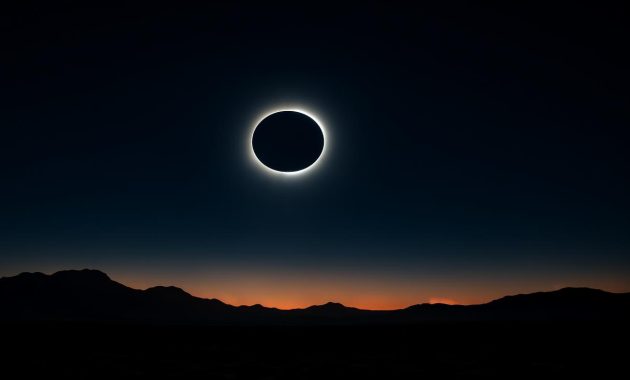
The first sign that the world is about to change is not the darkness, but the quiet. Birds fall silent mid-song. The wind softens, as if it, too, is holding its breath. People who were chatting a minute ago now speak in whispers, pointing upward with the hushed urgency of those who sense something rare and fragile slipping into view. Above you, the familiar daytime sky is turning a shade too deep, a blue with memory in it—like the last light before a storm, or the first moment after waking from a vivid dream. As the sun disappears and darkness spreads across the landscape, a rare solar phenomenon is about to unfold, an event scientists describe as one of the most powerful astronomical moments of modern times.
The Day the Shadows Go Strange
You notice the shadows first. They start to look wrong—edged, doubled, sharper at the corners, like someone upgraded the contrast on the world without telling you. Every gap between leaves, every narrow opening, becomes a tiny projector, throwing curved images of the partially eaten sun onto the ground. Instead of ordinary dappled light, the pavement and picnic tables and car hoods are suddenly carpeted with a thousand small crescents, flickering gently in the fading light.
The temperature slips down, almost imperceptibly at first. A light summer afternoon begins to feel like an October evening. Goosebumps rise on bare arms. Someone pulls on a jacket they didn’t think they would need. Dogs pace restlessly, ears twitching. Insects that usually wait for dusk start their chorus a little too early. Somewhere in the trees, a confused bird calls out its sunset song, even though by the clock, lunchtime is only just fading.
High above, the moon glides silently into perfect alignment with the sun and the Earth. From where you stand on the thin strip of the planet that happens to lie in the moon’s shadow, the sun is slowly being bitten away—chunk by bright chunk—until the glaring disc becomes a narrowing arc. You know you should keep your protective glasses on, and you do, but it’s hard not to feel like you’re peeking through the keyhole of the universe, watching something intimate and impossibly grand.
A Dance of Shadows and Fire
Solar eclipses are, in their barest description, simple geometry: three objects in space lining up in a particular way. The Earth, the moon, the sun—three cosmic dancers in a choreography of shadow and light. But stripped of poetry, the math still doesn’t explain the feeling of standing inside the moon’s shadow, as if a dark, invisible hand has brushed across the world.
The moon is small compared to the sun—a stone compared to a star. And yet, because of a coincidence of distance and size, it can appear almost exactly the same size as the sun in our sky. When it passes directly between the Earth and the sun, it can cover that brilliant, blinding face entirely. Astronomers can trace the precise moments, paths, and durations of eclipses years or even centuries in advance. They can plot where the shadow will touch, how long it will stay, which towns it will plunge into sudden midnight. The event is predictable down to the second.
And still, when totality arrives, the world feels anything but ordinary.
In those last moments before the sun is fully covered, the light turns metallic—thin and silvery, like the world has traded warm daylight for the glow of an old photograph. The horizon brightens in all directions at once, a perfect ring of sunset colors encircling the shadowed center. You stand in twilight, but the edges of the world are on fire with gold and amber and delicate violet. This is not a sunset that marches from east to west; it is a sunset that surrounds you, a perfect 360-degree curtain of fading day.
The Moment the Sun Vanishes
Then, without fanfare, it happens. The last sliver of sun collapses, and a collective gasp rises from every field, street, rooftop, and hillside where people have gathered. For a few heartbeats, the world has no sun at all.
You can take off your eclipse glasses now. Above you hangs not the sun you’ve always known, but something otherworldly—a black disc with a wild, ghostly halo made of light that doesn’t seem to come from anywhere. This is the solar corona, the sun’s outer atmosphere, normally drowned out by its intense glare. Wisps of white fire reach outward, shaped by immense magnetic fields, fanning into space like ethereal petals or frozen lightning.
The sky, in those seconds, is not quite night. Planets appear first—bright, startling jewels. Venus sparkles into view. Jupiter glows faintly where it hid unseen only minutes before. A few of the brightest stars burn through the dim indigo. You are standing under a sky that doesn’t belong to lunchtime or midnight, but to a strange in-between—an impossible compromise written in darkness and silver flame.
Time bends. The eclipse might last only two or three minutes of totality, but those minutes stretch, thicken, pool in your memory. You find yourself whispering, though you don’t mean to. Some people cry without knowing exactly why. Others laugh, sounding surprised by their own voices. A child tugs a parent’s hand, eyes wide and damp, torn between awe and a faint, ancient fear that something essential has been taken away.
Why Scientists Call It “One of the Most Powerful Moments”
For astronomers and physicists, a total solar eclipse is more than spectacle. It is, in the literal sense, a revelation—an unveiling of parts of the sun that are usually hidden. The corona, that shimmering halo you see during totality, is millions of degrees hotter than the sun’s visible surface. This paradox has teased scientists for decades: how can the outer layers be hotter than what lies beneath?
During eclipses, high-precision instruments—mounted on telescopes, aircraft, and even balloons—measure the corona’s light, structure, and energy. These data help scientists probe solar winds, flares, and the magnetic storms that can disrupt satellites, power grids, and radio communication on Earth. The brief darkness is, for them, a laboratory window that opens only rarely and shuts with ruthless punctuality.
Modern spacecraft stare at the sun constantly, wearing metal sunglasses far stronger than our cardboard eclipse glasses. But even with all that technology, there’s something about standing on the ground, with a whole atmosphere filtering and coloring the light, that no instrument can truly mimic. The eclipse becomes a bridge between human experience and hard science, a moment where wonder and data share the same sky.
A Shared Shadow Across a Divided World
One of the most quietly powerful parts of an eclipse is not in the sky at all, but in the way it rearranges people. Along the narrow band where the moon’s shadow will fall—the path of totality—strangers gather in fields and parking lots, on mountaintops and at the edges of lakes. They’ve driven for hours, sometimes flown across borders and oceans, all to stand in the same shadow at the same time.
Conversations start naturally, as if some invisible script has kicked in. Where are you from? How far did you travel? Is this your first one? People trade stories of failed attempts—clouded-out eclipses where the world remained frustratingly bright. They share snacks, solar filters, homemade pinhole projectors. Tripods rise like metallic trees, cameras perched and ready. Children run in and out of circles of adults, their voices weaving a high, excited thread through the hum of anticipation.
As the light fades, the chatter fades with it. Silence spreads, punctuated by the occasional incredulous exclamation. And when the moment of totality finally arrives, something unusual happens: thousands, sometimes millions of people, all looking in the same direction, all witnessing the same fragile spectacle, at the same instant. For a world that spends much of its time fragmented—by screens, by borders, by quiet and loud disagreements—this collective gaze feels almost radical.
Afterward, when the sun returns and people begin to fold blankets, unscrew camera gear, and climb back into their cars, there’s a strange sense of intimacy among them, as if they’ve just shared a secret. No one owns an eclipse; it belongs to anyone who happened to stand under the moon’s passing shadow. It is, in its own way, one of the most democratic wonders we have.
The Subtle Science of Feeling Small
Events like this are often described as “humbling,” but that word can sound too sharp, like a scolding. What a total solar eclipse offers instead is a kind of spaciousness. The intricate concerns of everyday life don’t vanish—your deadlines and arguments and worries wait patiently—but for a brief while, they shrink in scale, held up against the geometry of celestial bodies millions of kilometers away.
A total eclipse compresses the vastness of the solar system into something your body can feel: the chill on your skin, the quiet of animals, the strange shadows at your feet. It’s the universe, translated into temperature and color and sound, letting you know exactly where you stand in its architecture—on a spinning planet, in a narrow band of darkness, at the mercy of a perfect, fragile alignment that will be gone almost as soon as it arrives.
Scientists call this kind of experience “awe,” and they study its effects like any other natural phenomenon. Awe, they’ve found, can make people feel more connected, more generous, more curious. It softens the edges of ego, stretches our sense of time, and invites us to rearrange our priorities, if only for a little while. A total solar eclipse might last just minutes, but its aftershocks can ripple through a life for years.
Preparing to Stand in the Shadow
To witness such a rare solar phenomenon is partly about logistics, partly about intention. You can’t control the weather, the crowds, or the vagaries of traffic, but you can choose how you show up for the moment itself. The table below offers a compact guide to preparing—physically, practically, emotionally—for standing under the moon’s shadow.
| Aspect | What to Consider | Why It Matters |
|---|---|---|
| Eye Safety | Use certified eclipse glasses or solar viewers; remove them only during totality, and only if the sun is fully covered. | Looking at the sun without proper protection can cause permanent eye damage, even when most of the sun is obscured. |
| Location | Choose a spot along the path of totality with open skies and, if possible, historically favorable weather. | Only within the path of totality will you experience full darkness and see the corona clearly. |
| Timing | Arrive early; know the local start, peak, and end times of the eclipse. | Traffic and crowds can delay you; missing totality by minutes is the difference between extraordinary and merely interesting. |
| Comfort | Bring layers, water, snacks, and something to sit or lie on. | Being comfortable lets you stay fully present instead of distracted by minor discomforts. |
| Mindset | Decide whether to prioritize photography or direct experience; consider keeping devices to a minimum. | Totality is brief; dividing your attention between screens and sky can dilute the intensity of the moment. |
There’s a quiet irony here: in an age when information moves at light speed, witnessing an eclipse still demands patience. You wait for the moon to take its slow bite from the sun, for the light to dim, for the temperature to fall. You wait for something you cannot hurry, cannot pause, cannot replay in real time. When it arrives, it does so on its own terms—a cosmic appointment that will not be rescheduled.
Listening to the World as It Darkens
As the partial phases drag on—an hour or more of gradual change—it can be tempting to check your phone, to flip through messages or scroll through other people’s preparations. But it’s during this slow build that the most delicate details take shape, if you let yourself notice them.
Watch the way colors desaturate, how greens and reds lose warmth. Feel how the air moves differently across your skin. Study the shadows along walls and railings as they sharpen into fine, crisp lines. Look at the animals: the bees returning early to their hives, the flowers closing, the chickens—if you happen to be near a farm—heading toward their coops.
This is the Earth itself reacting, not to some metaphorical darkness but to the very real, measurable drop in light and heat. You are, in this sense, doing fieldwork simply by paying attention. You are gathering data in the most human way possible: with your senses fully engaged.
When the Light Returns
Totality ends almost rudely. A single bead of sunlight bursts from the edge of the moon—a brilliant “diamond ring” flashing in the sky. Instantly, the world flinches. Shadows reappear. The corona fades into the blue. Birds stir again, disoriented but determined to reset the clock.
It feels a bit like waking from a dream you didn’t know you were having. The sky is still strange for a while, but the spell has broken. People talk louder now, energy bouncing back as if someone turned up the volume on human life. A car honks in celebration. Someone nearby lets out the kind of whoop usually reserved for goals scored or finish lines crossed.
The partial eclipse continues as the moon slips away, but it’s different now. You’ve seen the main act, and you know the sun will return to its full, uncompromising brightness. People begin to leave, glancing back occasionally, as if the sky might offer one more secret before the show is over.
Later, when you’re home, you find it hard to describe the experience in a way that matches the feeling. You say, “It got dark in the middle of the day,” but that doesn’t quite capture it. You mention the corona, the planets, the ring of sunset. You talk about how everyone around you went quiet at the same instant, how you suddenly understood why ancient civilizations wrote stories of dragons and devouring gods. The words do their best, but some part of the experience resists translation.
A Rare Visit from the Universe
Most of the time, our planet’s relationship with the cosmos feels distant. Stars are dots. Planets are textbook diagrams. The sun is, above all, a source of warmth and light, its true nature so overwhelming that we rarely consider that it is a roaring, nuclear storm 150 million kilometers away. But a total solar eclipse changes that. It is the universe stepping closer, just for a moment, aligning its vast machinery in a way that makes sense not just to telescopes and equations, but to our skin and eyes and instincts.
Scientists call eclipses “transient events,” but that phrase undersells them. They are not just things that pass by; they are encounters that leave a mark. For the rest of your life, you may find that whenever you hear the word “eclipse,” you don’t first think of diagrams or dates. You think of that wind suddenly cooling, that ring of fire in the sky, that shared silence as the world forgot its noise and looked up together.
And somewhere inside you, even years later, there will remain the remembered feeling of standing under a disappearing sun, knowing—in your bones as much as in your mind—that for a few impossible minutes you were living through one of the most powerful astronomical moments of modern times.
Frequently Asked Questions
Is it safe to look at a solar eclipse?
It is safe to look directly at the sun only during the brief period of totality, when the sun is completely covered by the moon. At all other times, including partial phases, you must use certified eclipse glasses or a proper solar viewer. Ordinary sunglasses are not enough to protect your eyes.
Why do scientists care so much about total solar eclipses?
Total solar eclipses reveal the sun’s corona, which is normally hidden by the sun’s glare. Studying the corona helps scientists understand solar winds, magnetic fields, and energetic events that can affect satellites, communications, and power systems on Earth. Eclipses provide rare, natural conditions that are difficult to replicate with instruments alone.
How often do total solar eclipses happen?
Somewhere on Earth, a total solar eclipse occurs roughly every 18 months. However, any given location may wait many decades—or even centuries—between total eclipses. That’s why people often travel long distances to stand in the path of totality.
What’s the difference between a partial, annular, and total solar eclipse?
In a partial eclipse, the moon covers only part of the sun, creating a sun that looks like a missing bite. In an annular eclipse, the moon is slightly farther from Earth and appears smaller, so even at maximum coverage a bright “ring of fire” remains. In a total eclipse, the moon completely covers the sun’s disc, revealing the corona and creating brief midday darkness.
Why does it get cooler and quieter during a total solar eclipse?
As the sun’s light is blocked, the temperature near the ground drops, sometimes by several degrees. Animals and insects respond to the sudden dimming and cooling as if evening has arrived: birds may roost, crickets may sing, and daytime behavior shifts to nighttime patterns. This creates the eerie sense that the world has skipped ahead in time.