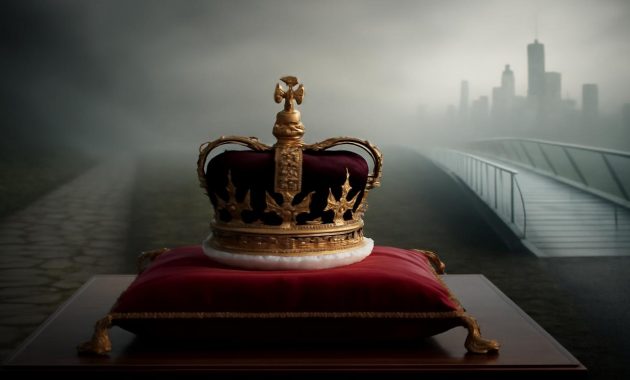
The rain comes sideways along the Mall, needling exposed cheeks, blurring the gold-tipped gates of Buckingham Palace into a watercolour of red, black, and grey. Umbrellas bloom like dark flowers. Somewhere beyond the railings, in rooms thick with history and hushed conversations, doctors’ notes and briefing papers are being shuttled along corridors built for coronations, not chemotherapy. The crowd at the palace fence isn’t large today—just a scattering of tourists, a handful of loyalists clutching flags gone limp in the drizzle, and one older woman in a faded anorak who watches the windows as if waiting for a sign. “You feel it changing, don’t you?” she murmurs, almost to herself. “Like the weather.”
Illness Behind Palace Walls
In recent months, the health of senior royals has drifted from cautious whispers into the public square. The monarchy, usually so drilled in composure, has started to look…frail. The image of timeless continuity—of crowns passing seamlessly from one steady pair of hands to the next—now shares space with stark medical statements and careful, almost apologetic video messages recorded in softly lit rooms.
The British monarchy has always traded on two illusions: permanence and distance. The Crown is supposed to stand apart from ordinary human chaos, somehow above both politics and the blunt statistics of aging. But illness is the great leveller. Cancer does not pause at palace gates. Hospital corridors do not roll out red carpets. When a monarch cancels engagements, or a future queen steps back for treatment, the machinery of the royal household judders and shivers like an old carriage on a modern motorway.
Yet this is not just another chapter in a centuries-long saga of royal ailments. It feels different. More exposed. More personal. We live in an age of live updates and instant opinion, when a single candid photograph can circle the globe faster than an official statement can be drafted. The image of monarchy as a kind of living monument—steady, unflinching, carved in civic stone—is being replaced, in real time, by something more vulnerable and startlingly human.
And so a difficult question pushes its way into the national conversation: when the health of the senior royals falters, how much should the system bend to preserve continuity—and at what point must it choose evolution instead?
The Weight of Continuity: A Crown That Never Sleeps
Walk through any British town and you’ll see the monarchy stitched into the everyday fabric: the crowned cipher on postboxes, Queen’s (now King’s) Counsel listings on brass plaques, royal insignia above pub doors and primary schools. The institution is so tightly woven into national life that it’s easy to forget how much of it is built on a story the country tells itself: the Crown endures, whatever happens to the person who wears it.
That story demands continuity at almost any cost. When a sovereign is ill, the system reaches for workarounds—counsellors of state, carefully choreographed appearances, the subtle redistribution of duties. The visible signs of monarchy must not falter: the Trooping the Colour balcony moment, the State Opening of Parliament, the Christmas broadcast that lands in living rooms between turkey and trifle. Tradition insists that the show must go on, even when the leading actors are resting offstage.
Inside the palace, continuity has its own rhythm. Red boxes continue to arrive daily, containing government papers and diplomatic reports. The private secretaries whisper updates about ministerial reshuffles and international crises. The monarch is expected to be briefed, to be present—if not in person, then in decision. Illness complicates but does not erase this expectation. The Crown is not allowed to have “sick days” in the way the rest of us do; it merely shifts weight to other shoulders.
And yet there is a quiet, rarely spoken truth lurking here: continuity is not just a principle; it’s a strain. When senior royals battle serious illness while still inhabiting intensely public roles, a kind of double performance unfolds. There is the inner work of being a patient, and the outer work of being a symbol. The monarchy’s instinct is to protect that symbol at almost any personal cost—limiting details, choreographing appearances, smoothing over absence with protocol.
But the public isn’t the same as it was even twenty years ago. There’s a growing sense that pretending nothing has changed, that the Crown is entirely unaffected by age and illness, may no longer be sustainable—or even ethical. Increasingly, people seem to want honesty over pageantry, transparency over carefully lacquered myths.
The Human Side of a Historic System
To understand the pressure points, it helps to remember that behind the grand language—“the Firm,” “the institution,” “the Crown”—there are simply people at work. A small team of private secretaries, communications officers, medical staff, and aides quietly adapting schedules around treatment cycles and recovery days. Courtiers agonising over whether to cancel an engagement in a distant cathedral city, knowing it might be a once-in-a-generation moment for those waiting in the cold, yet also aware that the royal in question has barely slept, or is grappling with side effects that don’t fit neatly beneath a ceremonial sash.
The human cost of continuity is often invisible, but it is real. For decades, the unspoken motto has been “never complain, never explain”—and certainly never reveal too much. The challenge facing today’s monarchy is whether that motto still serves anyone, including the royals themselves, in an age that has grown suspicious of walls and drawn to candour.
A Crown in a Changing Climate
The monarchy doesn’t exist in a vacuum; it’s being battered by cultural weather from every direction. Economic anxiety, climate grief, generational divides, post-imperial reckonings—these currents tug at the institution just as surely as rain batters the palace flagstones. Health crises among senior royals land in this already unsettled landscape, amplifying a deeper question: is this system built for the 21st century, or are we simply stretching a medieval design to its limits?
Public expectation has shifted dramatically. Where earlier generations might have recoiled from intimate details of a monarch’s condition, today’s audiences are used to celebrities who livestream their hospital stays and leaders who post video messages wearing compression socks. Privacy still matters—but so does a feeling of shared reality. The British monarchy finds itself caught between these competing values, trying to protect personal dignity while acknowledging collective concern.
This tension plays out in small, telling details. A short, carefully scripted announcement; a tightly framed video filmed in a familiar sitting room; a brief drive past waiting cameras to signal resilience. Each move is a negotiation between history and the present moment. Too little information and rumours proliferate; too much and mystique—the monarchy’s most enduring currency—risks draining away.
Meanwhile, the institution must juggle another, less obvious pressure: its own generational handover. Younger royals have built identities that lean heavily on modern causes—mental health, the environment, early childhood, sport. They speak the language of podcasts and social media, of vulnerability and openness. Their elders were shaped in a different mould: stoic, opaque, ceremonially fluent. As health issues nudge senior figures to the background, the balance of tone and style at the heart of the monarchy is quietly, perhaps irrevocably, shifting.
Public Sentiment: From Reverence to Conditional Loyalty
Listen to conversations on a train, in a café, in a university bar, and you’ll notice the language around the monarchy has changed. Where once there was unexamined deference—“That’s just how it is”—there is now a more conditional loyalty. People express sympathy for individuals while questioning the institution that frames their lives. “I feel for them, I really do,” someone might say, “but do we still need all this?”
Polls often show older generations holding firm in support, anchored by wartime memories, coronations, and a lifetime of Christmas speeches. Younger Britons, raised in a world of streaming platforms and diverse leadership models, are less convinced. Many feel emotionally moved by royal illness but are also more willing to ask: if the health of a few people can so destabilise the workings of the state, isn’t that, in itself, a structural problem?
| Generation | Typical View of Monarchy | Reaction to Royal Health Issues |
|---|---|---|
| Silent / Boomer | Deeply tied to identity, stability, and tradition. | Strong sympathy, focus on duty and continuity. |
| Gen X | Cautious respect, mixed with scepticism. | Empathy, but growing questions about workload and succession. |
| Millennial | Conditional support; values transparency and relevance. | Concern for individuals, push for modernisation and openness. |
| Gen Z | Often ambivalent or critical; questions inherited privilege. | Empathy mixed with calls for systemic change—or abolition. |
The monarchy sits at the intersection of these diverging expectations, challenged to be both ancient and responsive, mystical and medically honest, above politics yet deeply entangled with the emotional weather of the country.
Between Symbol and Person: The Emotional Fault Line
Royal illness exposes a fault line that runs straight through the heart of the institution: the gap between the person and the symbol. When a king or queen steps onto a balcony, they are not simply themselves; they are history incarnate, a vessel for centuries of tradition. Yet when they step into a hospital gown, they are simply a patient—scared, hopeful, exhausted, human.
For the public, holding these two truths at once is unsettling. It is easier, perhaps, to view the monarch as either untouchably grand or entirely ordinary. But reality refuses this binary. The same hand that waves from a gilded carriage may also tremble as it signs consent forms. The same face that appears on coins may one day be pale under hospital lights.
In the past, this discomfort was largely hidden. Today, it peeks out in every carefully worded update, every weekend paper column, every social media post that begins, “Whatever you think of the monarchy…” before expressing worry or relief. Health crises force the country to look directly at the paradox it usually glides past: the Crown must be both more than human and no more than human at the same time.
The Hidden Conversation About Care and Work
Beneath the surface, another conversation stirs—one that mirrors debates happening in workplaces and families across the country. When do we step back from duties because of illness? Who covers the workload? How much of our struggle do we share, and with whom?
In a strange way, public concern for unwell royals is also a projection of private fears. Many know what it is to coax an aging parent out of retirement, or to watch a respected boss push themselves further than their body can sensibly go. When they see the monarch attending yet another engagement while clearly still recovering, or hear that a senior royal is “resting comfortably” yet still signing off on official papers, they may recognise a familiar pattern: the quiet, stubborn refusal to let go.
Here, the monarchy’s choices become more than symbolic. If the Crown can model a more humane approach to illness and work—one that allows for open acknowledgment, flexible duties, even phased stepping back—it might echo far beyond the palace walls. If, instead, it clings to heroic, unbending continuity, it risks appearing out of step with a society slowly learning to talk about burnout, vulnerability, and the limits of stoicism.
Continuity at All Costs…Or a Different Kind of Strength?
On paper, the British constitutional setup has answers for everything. There are mechanisms for regency if a monarch becomes incapable of fulfilling duties, and for counsellors of state to step in when needed. Yet these formal levers are rarely pulled; they carry the whiff of crisis, of failure, of a system cracking rather than gracefully adjusting.
In practice, then, the monarchy improvises. Diaries are reshuffled, appearances scaled back, younger family members dispatched like relay runners carrying the public-facing torch. Continuity is preserved not by rigid adherence to one figure but by constant, quiet adaptation behind the scenes.
But this moment in history invites a more radical question: must continuity always look like sameness? Is there space for the Crown to evolve not just in personnel but in philosophy—to redefine what strength and stability mean in an era when honesty about frailty is increasingly recognised as its own kind of courage?
Imagine, for a moment, a monarchy that leans into transparency without surrendering all privacy: regular, straightforward health bulletins that neither dramatise nor downplay; clear explanations of who is handling which duties and why; open acknowledgment that even the highest office cannot out-muscle biology. Imagine, too, a model of succession that feels planned rather than panicked, where the baton is gradually and visibly passed long before hands begin to shake.
This is the evolution many quietly long for—not the storming of the palace gates, but a gentle opening of them. A monarchy that recognises the difference between mystery and secrecy, between dignity and silence, between endurance and denial. Evolution, in this sense, need not mean revolution. It could mean a slower, more intimate recalibration of how the Crown relates to its people.
The Risk of Standing Still
History is not especially kind to institutions that refuse to adapt to the bodies that inhabit them. Medieval courts clung to rites that no longer resonated; empires insisted on hierarchies that the world had outgrown. Often, what finally undid them was not any single event but an accumulation of small failures to understand the age they lived in.
The British monarchy stands at such an inflection point. Health battles among the senior royals are not just private misfortunes; they are signals flashing in the dashboard of the constitutional car. They raise pragmatic questions—about workload, succession, and representation—but also moral ones about care, realism, and the right of the public to know how the symbolic centre of its state is really faring.
To insist on continuity at all costs is to risk fossilisation: an institution that survives on paper but loses emotional resonance, respected in form but no longer believed in spirit. To choose evolution is riskier in the short term but more hopeful in the long: it acknowledges that even crowns must sometimes be lightened, recalibrated, reimagined for the heads that wear them.
Listening for the Future in the Rain
Back on the Mall, the rain has thinned to a mist, and the woman in the faded anorak has folded her damp flag away. The palace windows are still just windows. No figure appears, no curtain twitches. Cars slip in and out of side gates with the smooth inevitability of long-practised protocol. From a distance, everything looks as it always has: the palace, the railings, the gentle rise of the Victoria Memorial gleaming dull gold under the pewter sky.
And yet something has changed, or is changing, in the invisible space between those windows and the watching crowd. The spell of distance has cracked; the knowledge of vulnerability has seeped in. The people at the fence know now, more viscerally than ever, that the lives unfolding behind those walls are not immune from the fears that visit every kitchen table, every GP’s waiting room.
The defining question for the British monarchy is no longer whether it can survive scandal, or modern media, or shifting politics. It is whether it can look its own humanity in the eye and still find a way to be the nation’s chosen symbol. Whether it can build a model of continuity that doesn’t deny frailty but accommodates it with grace. Whether it can stop pretending the weather will never change and start showing how to walk through the storm with honesty—and perhaps, in time, with a lighter, wiser crown.
As health battles shake the senior royals, the choice sharpens into focus: cling to continuity at all costs, or accept that true endurance might lie not in looking unbreakable, but in being willing, at last, to evolve.
Frequently Asked Questions
Why do royal health issues feel like such a big national event?
Because the monarch is both a person and a national symbol, their health takes on a constitutional and emotional significance that goes beyond ordinary public figures. It triggers questions about continuity, succession, and the stability of long-standing traditions.
How much information about a royal’s health should be made public?
This is the core tension. Royals are private individuals with medical rights like anyone else, yet their ability to perform duties affects the functioning of the state. Many argue for a middle path: clear, factual updates without intrusive detail.
Does serious illness automatically mean the monarch should abdicate?
No. The UK has legal mechanisms such as regency and counsellors of state to cover periods when a monarch cannot fully perform duties. Abdication is rare and carries heavy historical and emotional weight, so it is considered only in extreme circumstances.
How are younger royals affected when senior members fall ill?
Younger royals often take on more public engagements and responsibilities, accelerating an informal generational handover. This can change the tone and style of the institution, bringing in more modern approaches and priorities.
Is the monarchy likely to disappear because of these health crises?
Serious health issues alone are unlikely to end the monarchy, but they can intensify existing debates about its role, cost, and relevance. The institution’s long-term survival will depend on how well it adapts—both symbolically and practically—to these pressures.