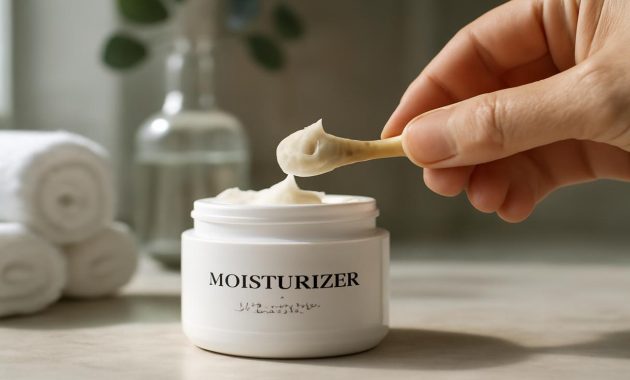
The jar looks like it belongs in your grandmother’s bathroom cabinet. No frosted glass. No rose-gold lid. No minimalist font whispering about “biomimetic peptides.” Just a squat, off-white tub with a paper label that turns slightly fuzzy at the edges when you touch it with damp fingers. It sits on the edge of a sink in a fluorescent-lit clinic, between a cracked soap dish and a box of tongue depressors, looking almost shy beside the sleek serums and chrome instruments. And yet, somehow, this plain little thing has done what billion‑dollar brands, glossy ad campaigns, and influencer armies haven’t: it has quietly become the number one moisturizer chosen by dermatology experts.
The Day the No-Name Jar Stole the Spotlight
It started, as these things often do, with a question that sounded almost too simple.
“If you could recommend only one moisturizer for the rest of my life,” a patient asked her dermatologist, “what would it be?”
He paused, the way doctors do when they’re mentally flipping through their mental filing cabinets. The patient was ready for it: a niche French brand, perhaps, or a clinic-only formula that came in a glossy box. Instead, he reached into a drawer and placed that no-name jar on the counter.
“Honestly,” he said, “this one.”
Later, she would describe the moment almost as a betrayal—like learning your favorite restaurant uses the same supermarket tomatoes you do. But curiosity won out over disappointment. She opened the jar, felt the thick, cool cream between her fingers, and dabbed it onto the back of her hand. The scent was soft and vaguely medicinal, like a hallway in an old hospital, or cotton sheets dried on a line in winter wind. Nothing luxurious. Nothing indulgent. But when she rinsed her hands hours later, a faint slip of that protection was still there, as if the skin hadn’t forgotten.
In dermatology circles, this jar had been whispered about for years. It didn’t have a catchy name—just a generic label like “Moisturizing Cream” or “Skin Protectant.” It showed up in prescription lists as an afterthought: “Apply this twice daily.” It sat, unphotographed, in the background of exam rooms around the world. Patients rarely asked about it. Brands never tried to imitate it. There was nothing to imitate, they assumed. No hype, no story.
They were wrong.
The Secret Life of a Boring Moisturizer
Walk into a busy dermatology clinic on a dry winter morning and you’ll see it in action. A toddler with eczema, scratching furiously at the creases behind his knees. A nurse scoops a fingerful of the no-name cream and smooths it gently over the inflamed skin. “This one,” she murmurs to the mom, “twice a day, and after every bath.”
In the next room, a retiree with paper-thin, sun-damaged arms sits on the edge of the exam table. “Don’t spend a fortune,” the doctor tells him. “Use this, every night. You’ll see the difference.” The same jar. The same slow, certain confidence.
Dermatologists like to see the world in layers. To them, your skin isn’t a beauty canvas—it’s an organ, your largest, a living wall that silently negotiates with the world. Cold, heat, pollution, soap, scrubbing, stress—every day the barrier takes hit after hit. And somewhere over the past few decades, most of us started acting like that barrier was indestructible. We stripped it with acids, scrubbed it with plastic beads, soaked it in fragrances that smelled like fruit and forests and fantasy. Then we wondered why it stung, flaked, flushed, and fought back.
In that chaos, this unremarkable cream did something profoundly unremarkable: it restored what we were destroying. No glitter, no glow promises. Just barrier repair. Just moisture. Just the foundational work that, it turns out, almost every skin type desperately needs.
Ask a dozen dermatologists off the record what they use on their own face when winter hits, or when a new prescription leaves them dry and peeling, or when a child’s cheeks are cracked and sore—and you’ll be surprised how often you hear the same thing. Not the elite, hundred-dollar jars. Not the trendy drops from an ad on your phone. Just: “Honestly? That old cream in the white tub.”
What Makes It “Number One” to the Experts?
There isn’t a single global survey that crowns it with a shiny medal. Instead, there’s something quieter, almost more convincing: repetition. It shows up again and again in clinical guidelines, hospital formularies, and late-night emails between colleagues. When dermatologists get together and talk not about trends, but about what actually works on the people sitting in front of them, this type of simple, no-name moisturizer rises to the top.
It checks boxes that glossy products often don’t:
- Minimal ingredients — fewer things to irritate reactive, overworked skin.
- Fragrance-free — no perfume clouds, no hidden allergens.
- Occlusive and humectant balance — it both draws water into the skin and locks it there.
- Tested on problem skin — commonly used for eczema, dermatitis, post-procedure healing.
- Affordable — patients can actually keep using it long enough to see results.
To a marketer, that list reads like the bare minimum. To a dermatologist who has watched product after product flare rashes, burn compromised skin, or drain wallets, it looks like a love letter.
The Quiet Science Inside the Jar
Pick up the jar and turn it over. Instead of a poetic paragraph about “awakening radiance,” you get a short, blunt ingredient list. It may vary by region and manufacturer, but versions of this old-style moisturizer usually share a familiar spine: petrolatum or mineral oil, glycerin, maybe dimethicone, sometimes ceramides, often a thickener and a stabilizer, and not much else.
To the untrained eye, that might seem basic to the point of boring. But there’s a kind of elegance in that simplicity. Let’s look closer—without turning it into a chemistry lesson.
- Petrolatum or mineral oil: These are classic occlusives. They form a breathable, semi-occlusive film over the skin, slowing water loss but not completely trapping everything underneath. For compromised skin, that’s like handing your barrier a shield.
- Glycerin: A small, humble molecule that pulls water into the upper layers of the skin. It doesn’t sparkle in ad copy, but it’s one of the most well-studied, reliable humectants in dermatology.
- Dimethicone: A silky silicone that smooths and protects, reducing the rough, tight feel of dryness.
- Ceramides (in some versions): The lipids that help “cement” skin cells together, reinforcing that barrier wall.
No crushed pearls. No gold flakes. No plant extracts with more syllables than a medical journal. Just the kind of ingredients that have spent decades under fluorescent lights in hospital wards, keeping people’s skin intact through illness, surgery, burns, and harsh climates.
How It Outperforms the Big Names
Imagine two moisturizers side by side on your bathroom counter.
The first is a brand-new luxury cream. Its jar feels heavy in your hand. The cream itself smells faintly of something you can’t quite place—orchard? ocean? Laundry aisle? The ad said it had volcanic water, fermented mushrooms, and something called “skin-memory technology.” It feels dreamy going on. For a week, your skin glows. Then, one night, your face starts to sting after application. You notice tiny red patches along your jaw. A month later, you’ve quietly stopped using it, telling yourself you’ll come back to it in summer. You don’t.
The second is this no-name, old-school cream. It feels almost too thick at first, like something for elbows, not faces. There’s no scent to cradle you to sleep, just a clinical nothingness. But it doesn’t sting. It doesn’t itch. Each morning, your face looks… calm. That’s all. Calm when the wind is dry, calm when you’ve accidentally over-exfoliated, calm the week your stress spikes and you sleep badly. You don’t wake up transformed; you wake up unchanged—and in the language of irritated skin, unchanged is a small miracle.
Over time, that miracle compounds. Skin that isn’t under constant assault from fragrance and reactive additives can finally do what it’s designed to do: repair itself. Fine lines from dehydration soften. The redness along your nose fades. Makeup sits better because your surface is smoother, less flakey. When dermatologists talk about this moisturizer “outperforming” major brands, they’re not talking about the kind of instant, airbrushed change you see in commercials. They’re talking about durability, safety, and the quiet, steady improvement that comes with respecting the skin’s own intelligence.
A Jar Without a Story… Until Now
We’re used to skincare coming with a narrative: harvested from alpine meadows, inspired by royal rituals, backed by space-age labs. This moisturizer has none of that. Its origin is less cinematic.
Picture a post-war lab, fluorescent and beige, where white-coated chemists are tasked with developing something boring and essential: a cream that can safely hydrate compromised skin. No luxury department store placement. No commercials. It’s meant for hospitals, for pharmacies, for the kinds of places where comfort is more important than glamour.
They reach for ingredients that are cheap but not cheap in the cutting-corners sense—cheap in the “we have decades of data on this” sense. Petrolatum. Glycerin. Stable emulsifiers. They test it, not on models, but on patients whose skin is already angry: eczema, psoriasis, radiation burns, chemical peels. If it soothes more than it stings, if it supports more than it suffocates, it survives.
Fast-forward a few decades. Marketing departments discover that people are tired of harsh soaps and aggressive toners. “Moisture barrier” becomes a buzzword. Ceramides are sexy. Hyaluronic acid is the new glitter. Suddenly, every brand wants to be the answer to dryness. But in quiet exam rooms, the no-name jar keeps getting refilled, reordered, handed out in sample-size tubs with torn labels.
It doesn’t have a brand ambassador on red carpets. Instead, it has something more stubborn: long-term trust. Nurses trust it on fragile post-surgery skin. Pediatric dermatologists trust it on infants’ cheeks. Oncologists trust it on patients going through treatment. Dermatologists trust it when their own faces are sore from testing the very products they’re asked to recommend.
How Dermatologists Actually Use It
Ask a room full of skin experts how they fold this kind of moisturizer into daily life, and patterns emerge.
- As the “reset button”: After a reaction to an overzealous routine—too many acids, too much retinol—patients are often told to stop everything except a gentle cleanser and this kind of cream. Two weeks later, the barrier is calmer, and the cycle of chasing quick fixes slows down.
- Post-procedure: After lasers, microneedling, biopsies, or surgical stitches, skin is especially vulnerable. Many fancy products are too active, too complex. This plain cream stands in as a protective layer while the body does its deeper healing.
- For chronic conditions: People with eczema, rosacea, atopic dermatitis, and psoriasis often rely on prescription treatments—but those work better on well-hydrated, well-protected skin. This moisturizer becomes the daily scaffolding that holds everything else up.
- As a buffer: When introducing strong actives like retinoids, dermatologists may tell patients to apply this cream before or after, softening the blow while still allowing the benefits.
It’s not the star of the show in these routines. It’s the stage, the quiet support that lets everything else perform safely. That, ironically, is real power.
How It Feels to Actually Live With It
There’s a small ritual that begins to form when you commit to a plain, expert-approved moisturizer.
Night after night, you twist off the lid and scoop out the same unglamorous cream. Your bathroom might not look like a spa. The mirror might be streaked, the light a little too harsh. But there’s something grounding in the repetition. You’re not chasing the thrill of a new product anymore. You’re tending to something older, quieter: the barrier that holds you together.
You start to notice the weather differently. The first dry day of autumn no longer sends you scrambling for a hydrating mask. You simply use a bit more cream, a bit more often, because you know your skin will need it. When you wash your face and feel that post-cleansing tightness, you don’t panic; you reach automatically for the jar.
Over time, your relationship with your own reflection can change. When you stop bombarding your face with new scents, textures, promises, your attention shifts. Instead of asking, “What can I add?” you begin to wonder, “What can I remove?” What if the secret isn’t more—it’s less, done consistently?
That’s the hidden gift inside this no-name jar: it invites you to step out of the frantic, consumer-driven loop and into something more sustainable, more respectful. It gives your skin space to be what it was always meant to be—a living, breathing, self-healing boundary—rather than a canvas for every trend.
Comparing the Quiet Champion to the Shiny Crowd
Strip away the branding, and the differences between this old-style moisturizer and many modern, high-profile creams come down to a few key dimensions:
| Feature | Old-Style, No-Name Moisturizer | Typical Major-Brand Moisturizer |
|---|---|---|
| Primary Goal | Repair and protect skin barrier | Hydrate plus promise visible “transformation” |
| Ingredient Count | Short, minimal list | Long list with multiple actives and fragrances |
| Fragrance | Fragrance-free, often hypoallergenic | Commonly scented or contains masking fragrances |
| Suitability for Sensitive Skin | Frequently recommended by dermatologists | Variable; may trigger irritation in reactive skin |
| Price and Access | Affordable, often clinic or pharmacy staple | Wide price range, often higher for luxury lines |
| Marketing Story | Almost none; reputation built on clinical trust | Heavy branding, celebrity and influencer campaigns |
On paper, the difference might look subtle. On skin, day after unremarkable day, it becomes vivid.
Finding Your Own “No-Name” Hero
Here’s the twist: the exact jar crowned “number one” by one group of dermatology experts might not be identical everywhere. Formulas vary by country, manufacturer, and regulatory norms. What doesn’t change is the profile of the product they return to again and again.
When you’re standing in front of a drugstore shelf or scrolling online, here’s what to look for if you want your own version of this old-style champion:
- Simple positioning: Anything described plainly as a “moisturizing cream,” “skin protectant,” or “barrier cream,” especially if it’s stocked in the sensitive-skin or baby section.
- Fragrance-free label: Look specifically for “fragrance-free” rather than just “unscented.” Unscented products may still use masking fragrances.
- Minimal promises: Fewer claims about “anti-aging,” “brightening,” or “lifting” often mean a more focused, barrier-supporting formula.
- Rich, slightly occlusive texture: Not greasy to the point of smothering, but substantial enough that you feel it linger after application.
- Recommendations from medical professionals: Products that show up in hospital formularies or are frequently sampled by clinics tend to fit this profile.
Before you switch completely, patch-test it on a small area of your face or neck for a few days. Listen to your skin. Does it sigh with relief, or does it protest? Even the most beloved creams won’t be perfect for absolutely everyone.
And remember: no moisturizer, not even the quiet champion in the white jar, can fix everything. It can’t erase deep wrinkles, undo decades of UV damage, or replace sunscreen, a balanced diet, or adequate sleep. What it can do is give your skin its best chance to do what it already knows how to do: rebuild, defend, and quietly glow with health that isn’t dazzling, but enduring.
FAQs
Is an old-style, no-name moisturizer really better than high-end brands?
“Better” depends on what you’re measuring. Dermatology experts often prefer these simple creams because they’re safer for sensitive or compromised skin, reliably hydrate, and rarely cause irritation. High-end brands may feel more elegant or include extra actives, but they also carry higher risk of fragrance reactions and over-complication. For plain, effective moisture and barrier support, the no-frills option often wins.
Can I use this kind of moisturizer on my face, or is it only for the body?
Most dermatologist-favored, no-name style creams are safe for both face and body, as long as they’re fragrance-free and not labeled for a very specific body-only use. If your skin is oily, you might prefer a lighter lotion in the daytime and use the richer cream at night or only on dry areas.
Will a simple moisturizer help with acne or dark spots?
Not directly. This type of moisturizer is about hydration and barrier repair, not active treatment. However, a healthy barrier can make prescription or over-the-counter treatments for acne and pigmentation more tolerable and effective, since less energy is spent on constant inflammation and dryness.
How often should I apply an old-style moisturizer?
Most dermatologists suggest at least twice daily for dry or compromised skin—morning and night—plus after cleansing, and any time your skin feels tight. After bathing or showering, applying it within a few minutes helps lock in the water from your skin.
What if my skin feels greasy after using it?
Start with less than you think you need—a pea-sized amount can go a long way for the face. Warm it between your fingers and press it gently into damp skin. If it’s still too heavy for daytime, reserve it for nighttime and use a lighter, non-comedogenic lotion in the morning.
How do I know if I’ve found the “right” simple moisturizer for me?
Your skin should feel comfortable, not tight or burning, within a few minutes of application. Over a couple of weeks, you should notice less flakiness, less redness from dryness, and an overall smoother texture. If you experience persistent stinging, breakouts, or worsening irritation, stop and consult a dermatologist.
Can I still use my serums and actives with this kind of cream?
Yes. Many dermatologists recommend using a simple moisturizer as the anchor of your routine, then layering actives like retinoids or vitamin C around it. In some cases, applying the cream before strong actives can cushion potential irritation without completely blocking their effects.