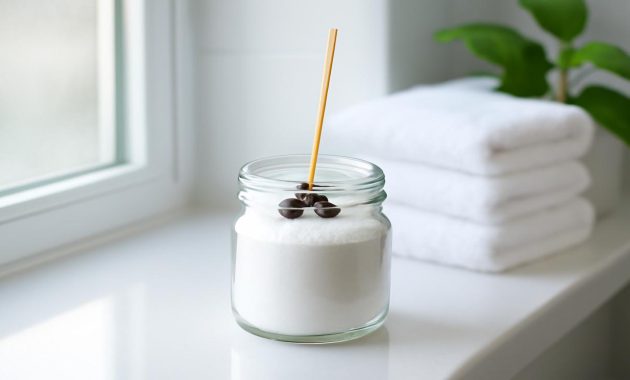
The first time I tried the glass trick, the bathroom smelled like a forest after rain. Not in that vague “fresh” way that cleaning products promise, but in a way that felt oddly alive—wet cedar, crushed mint, a whisper of orange peel. The fan hummed softly, the shower tiles were still damp from the morning, and in the far corner of the sink, it sat: one small, unremarkable glass, quietly rewriting the entire mood of the room.
It didn’t look like much. A clear tumbler, the kind you might fill with water beside your bed. Inside, a pale, shimmering pool and a small twist of something green. No plug-in diffuser humming with blue light. No ornate reed stems fanning dramatically out of a crystal vase. Just a glass. The sort of thing your eye glides past because it doesn’t seem to be doing anything at all.
And yet, when I opened the bathroom door that day, something had changed. The usual mix of laundry detergent, soap, and the faint ghost of last night’s toothpaste had been replaced by something close to luxurious. It slipped into the room before I did: a soft, layered scent that didn’t knock me over or sting my nose. It simply greeted me, like a polite host offering a freshly cut sprig of rosemary to smell.
The Curious Little Glass on the Sink
The trick began as one of those whispered household secrets that move from friend to friend, carried on the faith that small things can matter. “You only need a glass,” my friend had said, shrugging. “Trust me. A glass, a bit of this, a bit of that. Your bathroom will smell like you live above a perfumery.”
I was skeptical. We live in an age of complicated solutions: diffusers with app controls, subscription boxes of designer candles, sprays that promise “24-hour odor-lock technology.” So the idea that a single glass—still, silent, unconnected to anything but the room itself—could quietly scent a bathroom felt almost quaint. Here was something analog in a digital world, like choosing to write with a fountain pen when everyone else is tapping on screens.
But that’s part of the charm. The glass trick works because it leans into something bathrooms already do well: they hold water, they trap humidity, they gather warmth. It’s less of a hack and more of a gentle collaboration with the room itself. As the steam rises from showers and hot taps, as tiles hold a film of moisture, as the air thickens slightly behind a closed door, the glass responds. It breathes scent into that dampness and allows it to travel.
On that first day, I picked up the glass and held it under my nose. The surface shimmered with tiny bubbles clinging to the edges, and the smell came up in slow layers—brightness, like citrus; green, like herbs crushed between your fingers; a soft depth that I couldn’t name but felt like the heart of a forest. It didn’t smell like cleaning chemicals. It smelled like intention.
The Simple Science Behind the Scent
What makes this little glass so surprisingly powerful is not magic, but a quiet bit of everyday physics and chemistry. Bathrooms, by their very nature, are warm and damp for much of the day. These two qualities—heat and humidity—are exactly what help subtle fragrances wake up and move.
When you fill a glass with a mixture of water, a splash of something like natural vinegar or alcohol, and a few drops of essential oils or botanical extracts, you are creating a tiny pool of scent waiting to be carried. The liquid holds the fragrance; the warmth of the room coaxes it gently into the air. Each hot shower is a soft bellows, pushing the perfume out and around. Glass, with its cool, neutral surface, doesn’t interfere. It simply holds, reflects, contains.
Unlike plug-ins or intense sprays, the glass trick releases scent slowly. There is no sudden, fake-smelling blast to make your eyes water. Instead, the fragrance blooms gradually. The more the room is used, the more the scent stirs. The bathroom becomes a place in conversation with your rituals—every time water runs from the tap or the shower clouds up the mirror, the fragrance responds. It’s as if the room is exhaling alongside you.
Even the placement of the glass matters. Tucked into the corner of a vanity, slipped onto the back of the toilet tank, perched by a small window—the glass waits like a watchful companion. Over time, the liquid slowly evaporates, carrying molecules of scent into the air, hitching a ride on the invisible currents of warm, moist breath that move through the narrow space.
The Quiet Ritual of Making Your Scented Glass
There’s something deeply satisfying about mixing the contents of the glass yourself. It feels almost old-world, like making your own apothecary item. You stand at the kitchen counter or bathroom sink, assemble a few small ingredients, and in minutes you have crafted something that will change the feeling of your home.
You start with water—cool from the tap or filtered, still and unassuming. Then a splash of clear vinegar or a bit of high-proof alcohol, to help bind the fragrance and keep things fresh. Finally, the character: a few drops of essential oil, or a carefully chosen mix. Suddenly, the plain water is transformed. You stir it with a spoon and watch the oils swirl and cloud like tiny weather systems forming on the surface.
The first time I mixed mine, the scent rose instantly, like a memory surfacing. I had chosen citrus and herbs: a bright orange, a steady cedarwood, a sharp, green rosemary. The room around me shifted as though someone had opened a window onto a sunlit grove of trees. Yet when I lifted the glass and placed it in the bathroom, it seemed shy at first, almost too modest to be noticed.
And then, slowly, it wasn’t. Over the next hour, the smell lifted, stretched, and began to inhabit the corners. That’s part of the joy of this trick—it doesn’t demand attention; it discovers it. No one ever expects the bathroom to be the most beautiful-smelling room in the house. So when it is, it feels like a secret only you could have planted.
| Element | What It Does | Sensory Effect |
|---|---|---|
| Glass container | Holds and showcases the liquid without absorbing scent. | Clean, minimal, almost invisible in the room. |
| Water base | Acts as the carrier for fragrance; evaporates gradually. | Adds a feeling of freshness and clarity. |
| Vinegar or alcohol | Helps disperse scent and discourages stale odors. | Keeps the aroma crisp rather than heavy. |
| Essential oils | Provide the core fragrance profile. | Turns the room into a subtle, personal perfumery. |
| Bathroom humidity | Lifts scent into the air with each shower or hot tap. | Makes the aroma come alive when you most use the room. |
Listening to the Room: Choosing Your Bathroom’s “Signature” Scent
Every bathroom has its own atmosphere, even before you add fragrance. Some are tiny, windowless cocoons of tile and mirrors. Others are flooded with natural light, with plants that cling to shower corners and drink in the steam. Some sit right off a busy hallway; others hide at the far end of a quiet home. The trick to the glass method is less about copying someone else’s recipe and more about listening to what your particular room seems to want.
A small, enclosed bathroom might call for lighter, brisker scents—lemon, bergamot, eucalyptus—that cut clean lines through the space and keep it feeling open. A larger, softer room with a window and perhaps a curtain drifting in the breeze might welcome deeper notes—vanilla, cedar, patchouli, or soft florals that linger like the faint trace of good perfume on a scarf.
You can treat the mixing like composing music. Start with a top note that greets you at the door: perhaps a sharp lime, or a bright grapefruit. Then add a middle note that forms the character: lavender’s calm, rosemary’s clarity, geranium’s quiet bloom. Finally, a base note to ground it all: a woody resin, a drop of vetiver, that smoky whisper of something distant and comforting.
Over days, you’ll notice how the bathroom responds. Step into the room first thing in the morning, when the light is thin and the air still cool. The scent will be softer then, like a promise. After a shower, when steam fogs the glass and the tiles are slick, the perfume will swell. It will ride on the dampness and curl into corners, leaving a soft wake of fragrance long after the water stops running.
Why the Glass Trick Feels So Luxurious (Even Though It’s Incredibly Simple)
There’s an unexpected luxury in making an ordinary room smell extraordinary. A bathroom is usually the backstage of the home—the place of hurried mornings, late-night toothbrushing, quick check-ins with the mirror before a doorbell rings. It’s practical, functional, necessary. We expect little from it beyond cleanliness and warm water.
So when you open the door and the air is dressed as carefully as a good perfume, something inside you straightens and softens at the same time. The experience feels disproportionate to the effort. You spent a few coins and a few minutes, yet now each visit to that small tiled space carries a tiny sense of ceremony. It’s the same feeling as slipping into fresh sheets at the end of a long day: mundane, but with a touch of quiet magnificence.
Luxury doesn’t have to be extravagant to feel real. Here, it lives in the little pauses—the moment you inhale without thinking and realize the room smells like rain on citrus leaves, or like clean linen hung above a herb garden, or like a mountain cabin warmed after a snowstorm. The glass trick reframes the bathroom from a purely practical stop to a small sanctuary where the senses are gently invited in.
And because the glass stands there so modestly—no flashy label, no humming device, no glowing light—it creates an intimacy. This is scent as a kind of housekeeping poetry: unseen effort, quiet detail, invisible care that murmurs, Someone thought about this. Someone wanted this room to feel good.
Living with the Trick: Little Habits, Big Atmosphere
Once the glass becomes part of your bathroom, it slips into your routine almost like a living object. Every few days, you notice the level has dipped and the scent has thinned. It becomes a gentle reminder, as calming as watering a plant or folding a favorite towel. You empty the glass, give it a quick rinse under cool water, and mix a fresh batch. With each refill, you can tweak the recipe—more floral one week, more herbal the next, a touch of spice when the weather turns cold.
Guests will wander out of your bathroom with a slightly puzzled, pleased expression. “What is that smell?” they might ask, half expecting a designer brand name or an elaborate gadget. There’s a small delight in answering, “It’s just a glass on the counter,” and watching their surprise. In a world where everything seems to require a subscription or a complicated setup, the simplicity feels almost rebellious.
Over time, the scent of your bathroom becomes part of the identity of your home. People will remember it the way they remember the sound of your old floorboards or the way afternoon light falls across your kitchen table. The bathroom stops being a closed door and becomes a small, fragrant pause in the architecture of your days.
The glass itself may change. You might switch from a squat tumbler to a slender, elegant stemless wine glass, or to a vintage jar you found at a flea market. You might slide a sprig of fresh rosemary or thyme into the mixture purely for the pleasure of watching it drift in the liquid, leaves pressed up against the glass like something preserved in amber.
You start to notice the way scent and memory tie together. One winter, you fill the glass with orange, clove, and cinnamon, and the bathroom smells like a festive market every time the hot water runs. Years later, a whiff of that same blend will pull you back to those particular mornings—the muffled quiet of cold-weather showers, the way the mirror fogged up as radiators clicked to life.
FAQs About the Simple Glass Bathroom Scent Trick
How long does the scent from the glass usually last?
In most bathrooms, a single glass mixture can keep the room lightly perfumed for about one to two weeks, depending on how warm and humid the space is. More showers and higher temperatures will make the fragrance evaporate a bit faster, but they’ll also make it bloom more intensely while it lasts.
Is it safe to use essential oils in a bathroom like this?
When used in small, sensible amounts, essential oils are generally safe for creating ambient scent. Keep the glass out of reach of children and pets, don’t ingest the liquid, and avoid using oils you know you’re sensitive to. If you share the home with someone who is fragrance-sensitive, start with very small amounts and see how they respond.
Can I use fragrance oils instead of essential oils?
You can. Fragrance oils—whether natural-inspired or synthetic—can also work in the glass mixture. They may last longer and offer more complex “perfumery-style” blends. Just remember that a little goes a long way; it’s better for the bathroom to suggest a scent than to shout it.
Where should I place the glass for the best effect?
Set the glass somewhere stable and visible but out of the direct path of water splashes: a corner of the sink, the back of the toilet tank, a small shelf, or the edge of a windowsill. If you place it closer to where steam gathers—like near the shower—it will become more active whenever the room heats up.
Will the glass trick remove bad odors or just cover them?
It does a bit of both. The vinegar or alcohol in the mixture can help neutralize some lingering smells, while the fragrance layers a pleasant scent over the space. For best results, pair the glass trick with simple habits: regular cleaning, good ventilation, and dry towels.
Can I keep more than one scented glass in the same bathroom?
You can, though it’s usually best to keep the fragrances closely related so they don’t compete. Two small glasses on opposite sides of the room, both carrying complementary scents—say, citrus and herb, or wood and vanilla—can create a beautifully textured atmosphere without feeling overwhelming.
What if I want to change the scent completely?
Just empty the old mixture, wash the glass thoroughly with warm, soapy water, and let it dry. Then start fresh with a new blend. If the previous aroma lingers on the glass, a quick rinse with a bit of vinegar before refilling usually clears it away, giving you a clean slate for your next “bathroom perfumery” experiment.
Originally posted 2026-03-05 00:00:00.