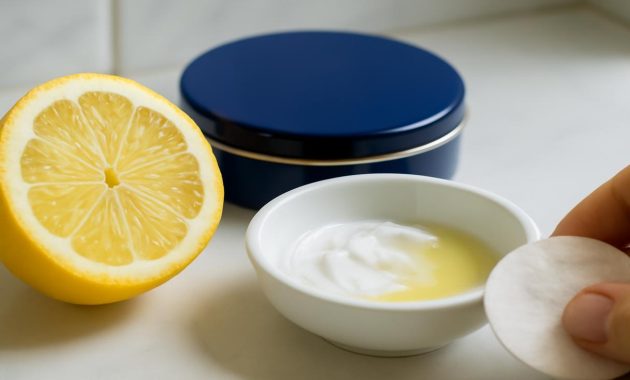
The first time I heard about the “lemon and Nivea cream trick,” I laughed out loud. It sounded like something a resourceful grandmother might whisper over the kitchen table, the kind of secret that lives halfway between folk magic and common sense. But then I started noticing it everywhere—whispered about in online forums, dropped into conversations at salons, tucked into comments beneath skincare posts. People weren’t just curious. They were swearing by it. So one evening, with a sliced lemon on the cutting board and that familiar blue tin of Nivea on the counter, I decided to find out what the fuss was really about.
The Night the Kitchen Became a Skincare Lab
Picture this: the hum of the refrigerator, the quiet tick of the clock, and on the counter a still life of very unglamorous items—a lemon, a spoon, a bowl, and a dented tin of Nivea cream. There’s a faint citrus scent drifting up as the lemon juice beads and glistens along the cut edge, bright and sharp. You dip a finger into the Nivea, feeling the dense, waxy cream give way like soft butter. This isn’t the glossy, featherlight gel of modern serums; it’s old-world, substantial, the kind of cream that feels like it means business.
When people talk about this “trick,” they usually describe it in late-night, bathroom-mirror terms: a dab of cream, a drop of lemon, a quiet promise that tomorrow’s reflection will tell a softer story. Some people smear it over the backs of their hands, chasing away sunspots and rough patches. Others dab it on knees, elbows, or heels. A few, a bit more daring, use it on their faces, usually at night, like a secret ritual.
There’s something beautifully ordinary about it—no luxe branding, no thirty-step routine. Just the sting of lemon, the cushion of cream, and a feeling that you’re taking matters into your own hands. It’s the kind of small, homemade intervention that feels both intimate and hopeful, like you’ve stepped into a quiet alliance with yourself.
The Strange Chemistry of Something So Simple
Part of the reason this odd pairing has captured so much attention is that, chemically speaking, it’s a little bit genius—though not without risk. Lemon is packed with citric acid and vitamin C. That bright, tart scent you notice as soon as you slice into it is a sensory clue: this fruit means exfoliation. The juice can help loosen dead skin cells clinging to the surface and can, for some people, lighten the look of dark spots over time.
Nivea cream, on the other hand, is a relic in the best possible sense. It’s thick, occlusive, and unapologetically heavy. It doesn’t pretend to be weightless or invisible. Instead, it sits on top of the skin like a protective blanket, trapping moisture, softening rough patches, and shielding delicate areas from the harsh outside world. People have used that iconic blue tin for decades on wind-chapped cheeks, cracked heels, and dry hands that have known too many winters.
Put the two together and you get an unlikely duo: lemon to nudge the skin into shedding the old, Nivea to cushion, soothe, and lock in the new. It’s no wonder people are experimenting with it on stubborn areas that never quite seem to catch up with the rest of their body—rough knuckles, patchy ankles, darkened underarms, or that one sun-freckled spot you keep noticing in photos.
But—and this is important—lemon isn’t a gentle guest. It’s strong, acidic, and can be downright hostile to sensitive or already-irritated skin. That’s why so many of the people quietly swearing by this trick also whisper another rule: “Test it first. Go slow. Listen to your skin.”
The Quiet Rise of Kitchen-Cabinet Skincare
Spend enough time in modern life and you’ll notice a tension most of us can feel but rarely name: a craving for simplicity in a world that keeps insisting we need more—more steps, more products, more promises in prettier bottles. The lemon and Nivea trick is, in many ways, a quiet rebellion against all of that.
Rather than hunting down an expensive brightening cream with twenty unpronounceable ingredients, people are opening their fridge, unscrewing an old tin, and making something with their own hands. It feels personal. It feels resourceful. It feels like stepping out of the slipstream of relentless marketing and back into a slower, more tactile world.
There’s also nostalgia attached to Nivea—memories of grandmothers smoothing it over elbows, of mothers rubbing it into your cheeks before you went out to play in the cold, of that unmistakable scent that lingers on scarves and coats. Pair that with the raw vividness of lemon—juicy, fragrant, sun-colored—and you’ve got more than a trick. You’ve got a mood: small, domestic magic that makes your bathroom feel like a sanctuary instead of a showroom.
Online, people trade stories about it with the same tone they reserve for campfire tales. One person swears their hands, once rough and perpetually dry, now feel almost new. Another says their knees, long darkened from years of kneeling, have softened and brightened. Someone else claims their cracked heels responded in a week, the hard skin slowly giving way to softness. Not everyone agrees, and not everyone has the same results, but the sharing itself feels like a return to something older than algorithms: humans swapping remedies, one experience at a time.
How People Are Actually Using the Lemon and Nivea Cream Trick
Behind the myth and the whispers, there’s the practical reality of what people are actually doing at their sinks and in their showers late at night. The methods vary, but certain patterns keep emerging in conversation.
Most people stick to small, resilient areas of the body first—hands, elbows, knees, ankles, or heels. They start with clean skin, often after a shower when everything is already softened and warm. A little lemon juice—sometimes fresh from the fruit, sometimes diluted with water—is dabbed or gently rubbed onto the area. There’s usually a faint tingle, a hint of sting, like the skin has suddenly become very aware of itself.
Then comes the Nivea: thick, cool, creamy, pressed into the skin like frosting spread over a still-warm cake. Some people mix a tiny bit of lemon juice directly into a dollop of cream in the palm of their hand, creating a pale, fragrant mixture. Others apply the lemon first and the Nivea after, like a two-step dance. The common theme is moderation: just enough lemon to feel like it’s doing something, not so much that your skin starts to complain.
The table below shows a simple snapshot of how people often describe using this trick, and where:
| Area | How It’s Commonly Used | Typical Frequency |
|---|---|---|
| Hands | Light rub of lemon juice, followed by a thick layer of Nivea, often left overnight. | 2–3 times per week |
| Elbows & Knees | Spot treatment on rough, darkened areas; massaged in thoroughly. | Every few nights, as needed |
| Heels | Lemon dabbed on clean feet, Nivea layered on, then socks to lock it in. | 1–2 times per week |
| Underarms & Inner Thighs | Very cautious, diluted lemon mixed with cream to reduce friction and potential irritation. | Occasionally, with patch tests first |
| Face (Dark Spots Only) | Tiny amount applied to specific spots only; many people skip this due to sensitivity. | 1–2 times per week, if tolerated |
The ritual often comes with a final rule: never do this before going out in the sun. Lemon on the skin can make it more reactive to light, and no one wants to trade a bit of brightness for a bigger problem. So the fans of this trick are almost always night owls, doing their experimenting under bathroom lights and trusting the darkness to keep their skin calm while it changes.
The Part No One Wants to Hear: Risks, Boundaries, and Listening to Your Skin
As charming as this trick sounds, the story wouldn’t be honest without the other side: the people who tried it and ended up with redness, itching, or a burning sensation that made them swear off citrus forever. Lemon juice is not a gentle, pH-balanced serum; it’s closer to a tiny chemical peel found in your produce drawer.
Dermatologists often raise an eyebrow at the idea of putting raw lemon directly on skin, especially the face. The risks include irritation, dryness, heightened sun sensitivity, and in rare cases, a reaction called phytophotodermatitis—where plant chemicals plus sunlight equal angry, inflamed skin. Those who do well with the lemon and Nivea trick usually follow unspoken safety rules, even if they don’t always put them into words.
They test a small area first, often on the inner arm or just one patch of skin, and wait 24 hours. They dilute the lemon juice with water if their skin leans sensitive. They use it sparingly, not as a daily ritual but as an occasional treatment. They keep it away from broken skin, shaving cuts, or areas already irritated by friction or razor burn. And they treat sunscreen not as an afterthought, but as a daily, non-negotiable companion.
What might look from the outside like a reckless experiment is, at its best, a nuanced conversation between you and your own skin. The trick isn’t just lemon plus cream; it’s lemon plus cream plus awareness—an understanding that if the skin protests with heat, itch, or angry redness, the wisest thing you can do is listen, stop, and give it time to calm down.
Why This Trick Feels So Irresistible Right Now
Beyond the chemistry and the caution, there’s a deeper question: why are so many people drawn to this particular blend of citrus and cream, in this particular moment? What about it makes strangers, thousands of miles apart, reach for the same two everyday items and hope they might change something about the way their skin looks and feels?
Part of the answer lies in control. In a world where so much feels uncertain and complex, there’s comfort in being able to pick up a lemon, open a tin, and create something with your own hands. No waiting for deliveries. No deciphering obscure ingredient lists. Just you, a fruit, a cream, and a quiet intention to care for yourself.
There’s also the appeal of slowness. This trick is unlikely to give an overnight miracle. Changes, if they come at all, tend to be gradual—a softening here, a lightening there, a subtle smoothing that reveals itself when you’re not quite paying attention. It invites patience. It rewards consistency. It asks you to keep showing up for yourself in small ways, without fanfare.
And then there’s the story element, the thing that makes this feel less like a hack and more like folklore. The lemon and Nivea trick doesn’t come in glossy packaging. It comes in anecdotes: in “my aunt swears by this,” in “I was skeptical, but…,” in “I tried it on one hand and compared it to the other.” It spreads not as an advertisement, but as a narrative, woven through conversations and comments and late-night chats between friends. It feels human. It feels shared.
Creating Your Own Gentle Version of the Ritual
If you’re curious—and many people are—it helps to think less in terms of copying an internet recipe and more in terms of creating a ritual that suits your particular skin. Maybe that means reducing the intensity, softening the edges of the experience so that your skin feels engaged but not attacked.
Some people start by diluting the lemon juice with an equal amount of water, cutting the acidity in half. Others mix a single drop or two into a small dollop of Nivea in their palm, creating a cream that smells faintly of lemon but doesn’t sting. A few pair the combination with a gentler exfoliating habit—a soft washcloth, a mild body scrub—so that the lemon’s job becomes more of a subtle boost than a full-blown peeling agent.
The real magic of the ritual often isn’t the lemon or the cream at all. It’s the act of pausing. Of massaging your own hands and noticing the way the skin has changed over the years. Of kneeling down to tend to your heels, your knees, your elbows—the parts of you that carry weight, that take the brunt of every day, but rarely get the same tender attention as your face.
In that sense, the lemon and Nivea trick is less about transformation and more about relationship—about how you relate to your own body, your own reflection, your own daily habits. Whether it works dramatically for you or not, it invites a kind of dialogue: What does my skin need? How does it respond? What feels nourishing, and what feels like too much? That conversation, more than any citrus-fragrant mixture, is where the real power quietly lives.
FAQs About the Lemon and Nivea Cream Trick
Can I use the lemon and Nivea cream mixture on my face?
You can, but it’s risky, especially if you have sensitive or reactive skin. If you decide to try, limit it to very small, specific dark spots, dilute the lemon heavily, patch test first, and only use it at night followed by sunscreen the next day. Many people choose to keep this trick off their face altogether.
How often is it safe to use this trick?
For most people, using it a few times a week on tougher areas like hands, elbows, knees, or heels is plenty. Daily use increases the risk of irritation or dryness, particularly if the lemon juice is not diluted.
Do I have to use fresh lemon, or can I use bottled lemon juice?
Fresh lemon is what people most commonly use, but both fresh and bottled lemon juice are acidic. Bottled versions may also contain preservatives. The key concern is the acidity, not the source—both can irritate skin if used too strongly or too often.
Will this trick permanently remove dark spots?
Results vary widely. Some people notice a gradual lightening or softening of dark patches, while others see little or no change. Even when improvement happens, it’s rarely permanent without sun protection and continued care. New spots can form if skin is exposed to UV without protection.
Is it normal for my skin to tingle when I use lemon with Nivea?
A mild tingle can be normal, but burning, sharp stinging, or visible redness are warning signs. If your skin feels hot, painful, or looks inflamed, rinse it off right away, skip the lemon, and let your skin recover. Discomfort is your skin’s way of saying “too much.”
Can I go in the sun after using the lemon and Nivea trick?
It’s best to avoid sun exposure right after using lemon on your skin. Always apply the mixture at night, rinse any residue in the morning if needed, and use a broad-spectrum sunscreen during the day. Lemon can increase your skin’s sensitivity to sunlight.
Is there anyone who should avoid this trick altogether?
Yes. If you have very sensitive skin, eczema, rosacea, open cuts, recent shaving, or a history of strong reactions to skincare products, it’s safer to skip raw lemon entirely. In such cases, gentler, professionally formulated brightening or moisturizing products are usually a better option.