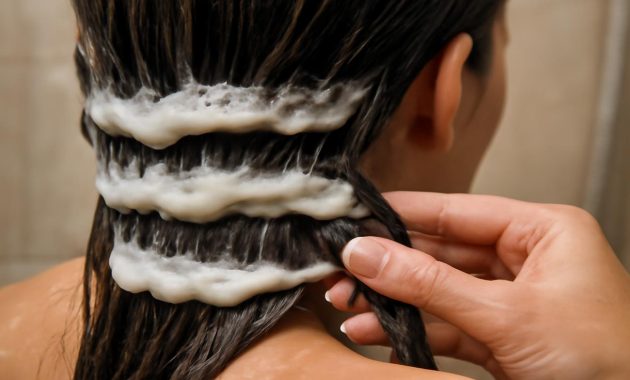
The first time I hear the words “shampoo sandwich,” I’m standing in a sunlit salon that smells faintly of eucalyptus and warm hair dryers. The air hums with the quiet buzz of conversation and the soft snap of foils. A stylist with ink-black curls and a silver comb tucked behind her ear leans in and says, in a conspiratorial almost-whisper, “You’re shampooing wrong, you know. You need a shampoo sandwich.” I laugh at the phrase—partly because it sounds like a joke, like something you’d see on a social media meme, and partly because somewhere deep down, I suspect she might be right.
The Moment You Realize You’ve Been Washing Wrong
Think about the way you usually wash your hair. You step into the shower, hot water fogging the glass, steam curling up to the ceiling. You flip your head back, soak your hair, squeeze a blob of shampoo into your palm—usually too much, if we’re being honest—and scrub until you’ve raised a respectable foam. Maybe you follow with conditioner, maybe you don’t if you’re in a hurry, and then you call it clean.
It’s simple. Fast. Familiar. And for most of us, it’s the way we were taught as kids. A single shampoo, quick rinse, a half-hearted massage if we remember, then out. Yet hairdressers—those quiet chemists of texture and shine—have been watching us walk in with hair that’s dull at the roots and dry at the ends, wondering how to break the news: the one-and-done shampoo routine is quietly working against you.
“You’re cleansing the surface,” the stylist tells me, fingers sifting through my hair like she’s paging through a book, “but you’re not really getting into the story.” And that’s where the “shampoo sandwich” comes in: a simple shift that doesn’t add thirty minutes to your shower, doesn’t require buying a suitcase of new products, but can fundamentally change how your hair feels and behaves.
What Exactly Is a “Shampoo Sandwich”?
The phrase sounds playful, almost silly—yet hairdressers say it with the seriousness of a well-tested trick. The idea is simple: instead of one quick shampoo and conditioner, you create a layered routine that cleanses, treats, and then lightly cleanses again, like a sandwich of care between two slices of shampoo.
Here’s the basic structure most pros describe:
| Step | What You Do | Why It Matters |
|---|---|---|
| 1. First Shampoo | Use a small amount of shampoo on wet hair, focus on scalp, rinse. | Lifts surface oil, sweat, pollution, and product buildup. |
| 2. Conditioner / Treatment | Apply conditioner or mask mid-lengths to ends, leave on briefly, rinse lightly or fully (depending on type). | Replenishes moisture and softness where hair is driest and most fragile. |
| 3. Second Shampoo (Gentle) | Use a small amount of gentle shampoo, again on scalp, then let the lather slide through lengths, rinse thoroughly. | Removes any leftover residue so hair feels light, clean, and not weighed down. |
Three steps. Not ten. No complicated charts or timing lights. Just a first cleanse, a nourishing center, and a final light cleanse to reset everything. It’s the hair-washing equivalent of washing your face, applying serum, then gently rinsing away the excess instead of leaving a sticky film behind.
The beauty of the shampoo sandwich is that it doesn’t fight your hair’s nature. Instead, it works with the reality of what your hair goes through: dry ends from styling and weather, oily roots from natural scalp oils, and a constant layering of environmental residue and product. The sandwich aims to respect all of those zones separately—and in sequence.
Inside the Salon: Why Hairdressers Swear by It
If you want to understand why this method has quietly become a favorite behind the chair, watch a stylist during a salon wash. Their movements are deliberate, almost meditative: fingertips circling the scalp, palms smoothing foam along the hair shaft, a pause at the ends where the hair is often rougher, more porous, more telling.
Most of them will tell you the same thing: the first shampoo is often wasted on dirt. “People come in with dry shampoo, hairspray, pollution, sweat from the gym—all layered up,” says one stylist, as if listing the strata of a geological core sample. “One shampoo is like rinsing a muddy pan once and expecting it to sparkle.”
The first shampoo, in their view, is about loosening the day (or days) from your scalp: the excess oil, the grit of city air, the residue from styling creams and sprays. They aren’t trying to nourish just yet; they’re making space. The second layer—the conditioner or treatment—is where they start to rebuild. Emollients, proteins, and oils can actually sink in, instead of battling their way through grime.
But it’s that third step, the closing shampoo, that hairdressers talk about with a kind of quiet satisfaction. Too much conditioner, especially on fine or low-density hair, leaves everything lank, flat, and heavy. It’s like wearing a winter coat in late spring—you’re technically protected, but you feel smothered. That final, gentle shampoo is their way of lifting off the excess, letting just enough goodness remain to keep the strands flexible and soft, not slippery and limp.
When clients return saying, “My hair felt so clean, but it still looked soft,” stylists know the sandwich worked. It’s not a miracle. It’s method.
The Science Under the Suds
Underneath the sensory pleasures of warm water and creamy foam, there’s some basic hair science at play. Hair isn’t a living organism past the root; it’s a structure, made of overlapping cuticle layers that open and close, swell and contract, depending on pH, moisture, and what you put on them.
When your hair is coated in oils and product, shampoos—especially the stronger ones—go to work like tiny solvents. They dissolve and lift, but they can also strip. That’s the constant tension in hair care: remove enough to feel clean, not so much that the hair becomes fragile and squeaky.
In a one-step routine, we often overdo it with detergent-heavy, “deep cleansing” shampoos because we’re trying to get everything off at once: sweat, sebum, styling products, hard water minerals. Hairdressers have watched this issue for years. Overuse of harsh cleansers can roughen the cuticle, making hair frizz-prone and thirsty—especially on naturally textured or colored hair.
The shampoo sandwich moves away from that all-or-nothing approach. The first shampoo doesn’t have to annihilate every trace of oil; it only has to break the surface tension and clear the way. Conditioners and masks then bring in moisture, slip, and ingredients that help fill in worn-down spots along the hair shaft. The second shampoo, ideally milder, doesn’t need to work as hard—it’s clearing leftovers, not battling the whole week.
There’s also something else: the scalp. For all our focus on strands, the scalp is the soil. Overloaded roots—whether from heavy conditioners applied too high, or from not rinsing properly—can make hair look dirty within a day. A shampoo sandwich respects that the scalp wants to be clean, while the ends want to be cushioned. By doing the conditioning in the center of the process and then lightly rinsing and cleansing again, you keep the scalp lighter and fresher without depriving the ends of what they need.
Turning Your Shower into a Shampoo Sandwich Ritual
So how do you actually do this without turning your shower into a choreography you’ll forget by Tuesday? You don’t need a new shelf of products. You can probably start with what you already own, then adjust as you go.
Step 1: The First Shampoo – “The Reset Wash”
Turn on the water and let it run over your hair longer than you usually do—twenty to thirty seconds of thorough soaking. Hair that’s properly wet allows shampoo to spread more evenly, which means you can actually use less.
Dispense a small amount of shampoo—about the size of a coin for short hair, a bit more for long—and focus it at the scalp. Use the pads of your fingers, not your nails, to massage in gentle, firm circles. You want to feel the skin move, not just your hair. Let the lather slide down the strands; don’t pile your hair on top of your head like a sudsy nest, which can encourage tangling.
Rinse thoroughly until the water runs clear and your hair feels free of slippery foam, even if it doesn’t feel “squeaky” (that squeak is often a sign of over-stripping).
Step 2: The Middle – Conditioner or Mask
Now, while your hair is still warm and wet, squeeze out a bit of extra water with your hands. Take your conditioner or treatment and apply it from the mid-lengths downward, paying extra attention to the last few inches if they’re drier or color-treated.
Comb it through with your fingers or a wide-tooth comb if you like that ritual. The product should glide, not cling. If your hair feels slimy and coated, you’ve probably used too much. If the hair drinks it instantly and still feels rough, you may need a richer formula—or more time.
Let it sit for a minute or two. You don’t have to stand there counting droplets on the tile, but giving the conditioner a moment while you wash your face or body lets it do more than just whisper across the surface. Then, depending on the product, rinse lightly or more thoroughly: some masks are meant to leave a hint of residue, others less so. If in doubt, a thorough rinse is safer—you can always add leave-in care later.
Step 3: The Final Shampoo – “The Polish Wash”
This is the step that feels most rebellious the first time you do it. Shampoo after conditioner? It sounds like undoing your hard work. But that’s where gentleness matters.
Take a small amount—less than you used the first time—and again, focus on the scalp. You’ll notice it lathers more easily now; the hair is cleaner, the surface less resistant. Massage as before, savor the creamy foam, but don’t overwork it on the ends. Let whatever lather is left simply slip down the lengths before you rinse.
Rinse thoroughly, until the hair feels light and fresh under your fingers. It shouldn’t feel coated or squeaky—just clean, flexible, and soft.
When you step out and towel-dry (gently, by blotting rather than rough rubbing), pay attention: roots that lift and move, mid-lengths that are smooth but not greasy, ends that don’t look like frayed rope. That’s what hairdressers notice most when clients adopt this method: a shift from “puffy yet flat” to “light and defined.”
Who Benefits Most—and Who Should Tweak It
Most hair types can adapt the shampoo sandwich, but the details matter. Hairdressers talk less about rigid rules and more about tuning the method like an instrument.
If your hair is fine and easily weighed down, the sandwich can be a quiet revelation. The middle conditioner keeps the ends from drying out, but the final shampoo keeps your roots from collapsing by mid-afternoon. You might choose a very light conditioner in the middle and a feather-soft shampoo at the end—a gentle, almost airy finish.
For thick, coarse, or curly hair, the structure might shift slightly. The first shampoo could be a sulfate-free or low-lather formula that respects the curl pattern, the conditioner or mask richer and more indulgent, the final shampoo extremely mild or even swapped for a cleansing conditioner on the roots only. The principle remains: cleanse, nourish, then refine the cleanse.
Those with very dry, damaged, or chemically processed hair may not need a shampoo sandwich every wash. Hairdressers might suggest using it weekly as a “reset” ritual, with gentler co-washing or single-shampoo routines in between. For oily scalps, though, the sandwich can be a steady ally: scalp impurities lifted twice without scrubbing the ends into straw.
The only real “no” comes from over-sensitivity: if your scalp reacts strongly to surfactants, doubling up with the wrong formulas could be too much. In that case, stylists would nudge you toward ultra-gentle, fragrance-minimal shampoos, or even a version of the sandwich that uses the same mild shampoo twice with a light conditioner in between.
Feeling the Difference Over Time
The day you first try a shampoo sandwich, the change might feel subtle. Your hair may air-dry a bit more gracefully, or your blow-dry might take on an easier swing. But the real story, hairdressers say, unfolds over weeks.
As you stop assaulting your hair with one harsh, everything-at-once wash, cuticles can stay smoother. Frizz calms. Your scalp, no longer stripped and then immediately suffocated by heavy conditioner at the root, can settle into a more balanced rhythm. Some people find they can go an extra day between washes. Others notice that their usual products—serums, creams, styling sprays—need to be used more sparingly because their hair no longer starts from a parched baseline.
There’s a psychological thread here too. The extra minute or two this routine adds becomes, for some, a ritual of attention. Instead of rushing through the shower on autopilot, you find yourself noticing: how the scalp feels under your fingers, how the ends respond to conditioner, whether the foam of the second shampoo feels silkier than the first.
Hairdressers are, in their own way, storytellers. They listen to what your hair has been through—sun, bleach, stress, neglect—and then try to guide it toward a gentler chapter. The shampoo sandwich is one of those quiet plot twists, a small change in routine that alters the ending: less breakage, more movement, less frustration standing in front of the mirror wondering why it never quite looks like it does when you leave the salon.
So the next time hot water drums on your shoulders and you reach blindly for the bottle, you might pause. You might remember the stylist’s hands at your temples, the way your scalp seemed to sigh under the warm water, the whispered suggestion of a sandwich made not of bread, but of bubbles and care. And you might decide, just for today, to try washing your hair like the people who touch hair for a living say you should: in layers, with intention, one gentle step at a time.
Frequently Asked Questions About the “Shampoo Sandwich”
How often should I use the shampoo sandwich method?
Most people can use it every time they wash, especially if they have oily roots and dry ends. If your hair is very dry or fragile, start with once a week and see how it feels before making it your default routine.
Do I need three different products to do this?
No. You can use the same shampoo for both washes at first and your usual conditioner in the middle. Over time, you might choose a slightly gentler shampoo for the second step, but it isn’t a requirement.
Won’t shampooing twice dry my hair out?
If you use very strong shampoos and rough washing techniques, yes, it could. But the method is designed around gentle formulas, small amounts of product, and conditioner in between. That balance usually prevents over-drying.
Can I put conditioner on my scalp in the middle step?
For most people, it’s better to keep conditioner on mid-lengths and ends only. Applying it directly to the scalp can cause buildup and make roots look greasy faster, which defeats the purpose of the second shampoo.
Is this method okay for curly or coily hair?
Yes, with adjustments. Use curl-friendly, sulfate-free shampoos, and choose a rich, curl-nourishing conditioner in the middle. Some people with curls prefer the second “shampoo” to be a very mild cleanser or cleansing conditioner, focused only on the scalp.
Do I still need a hair mask if I use the shampoo sandwich?
You can swap your regular conditioner for a mask in the middle step when your hair feels extra dry or damaged. You don’t need both at once; just choose the product that fits your hair’s current needs.
How long should I leave the conditioner or mask on?
Even one to three minutes can help, especially in a warm, steamy shower. If the product’s instructions suggest longer, you can follow that when you have extra time, but the sandwich structure still works with short contact time.