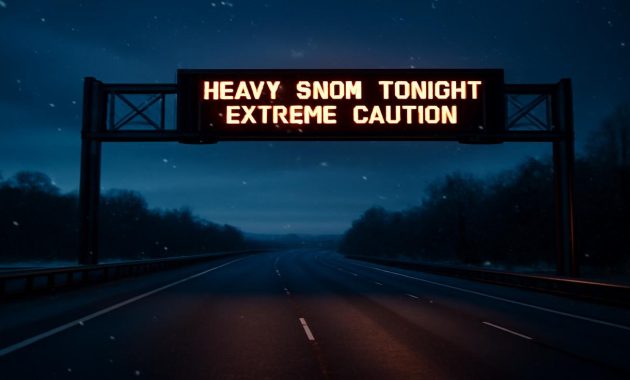
The news doesn’t arrive with a crack of thunder or a cinematic roll of drums. It arrives in the glow of a phone screen, in the offhand murmur of a late-evening radio bulletin: “It is now official that heavy snow will begin late tonight, as authorities urge extreme caution and prepare for dangerous conditions.” You pause, thumb hovering over the notification, and feel the room tilt slightly—not in fear exactly, but in the awareness that something is about to change. Outside, the sky is the hushed gray of held breath. The air feels oddly hollow, like the world is clearing its throat before speaking in the language of snow.
The Night Before Everything Turns White
Step outside and you can feel it, that subtle strangeness that slips in before a storm. The clouds hang low, thick and almost luminous in the dimming light. Streetlamps flicker on, halos of dull gold leaking into the early dark. A faint metallic taste lingers on your tongue, the quiet, electric flavor of coming weather.
Cars move a little more quickly than usual along the street, as if drivers are trying to outrun the clock. Grocery bags thump against coat sleeves. Someone hurries past with a snow shovel over their shoulder. Another drags a bag of rock salt that leaves a grayish trail of dust along the sidewalk. People don’t look up much; they have lists in their heads: batteries, candles, gas, bread, milk, snacks, phone chargers, pet food, generator fuel. The small, practical rituals of bracing for impact.
Inside, the hum of the house suddenly feels important. The refrigerator sighs. The heater clicks and exhales its soft breath along the baseboards. You notice the things that depend on electricity, on warmth, on a supply chain that usually seems invisible—until a forecast like this one makes that chain feel fragile and precarious.
On every channel, the words keep looping back: “late tonight,” “heavy accumulation,” “rapid deterioration in travel conditions,” “life-threatening if you become stranded.” The language is clinical, but the message lands like a stone in your chest. You think about your car tires. Your elderly neighbor. The bus routes. The friend who works the night shift across town. The city that, by morning, will move more slowly—if it moves at all.
When a Storm Becomes an Event
There’s a turning point when a snowstorm stops being “weather” and becomes an “event.” It happens in newsrooms and emergency management offices and police stations long before the first flake falls. Long before you adjust the thermostat or fill your bathtub, maps begin to glow in dimly lit rooms, colors deepening from pale blue to bruised violet, then to the alarming purples and fuchsias of severe conditions.
In one of those rooms, a meteorologist draws a careful arc with their finger along a satellite image, tracking a band of moisture rotating like a slow, lumbering galaxy. A public works director leans over a printed route map, tracing plow paths that must be cleared in a near-military choreography. A police commander reviews staffing rosters, imagines black ice and abandoned vehicles, jackknifed trucks and stranded commuters. The storm is still, for the moment, a theory—a set of numbers, probabilities, temperatures, altitudes—but it’s treated with the seriousness of something alive.
When the announcement goes out that it’s now official—that this isn’t a “possible dusting” or “chance of mixed precipitation,” but a full-bodied, heavy, stay-off-the-roads sort of snowstorm—every part of the city quietly shifts into a different gear.
Salt domes open their vast mouths. Plow trucks line up like a herd of steel animals waiting to be released. Ambulances are fueled and checked. Utility crews stock new coils of cable and throw extra blankets into their trucks. School administrators stare at the radar and weigh learning against safety, calendars against bus routes. Somewhere, someone prints out a list of emergency shelters and tapes it to a wall.
It’s logistics and planning, yes—but it’s also storytelling. Authorities are trying to persuade a million different private lives to bend toward caution, to see the invisible hazard approaching and believe in it enough to change behavior: to leave work early, cancel plans, stay home if they can, and prepare for a slower, quieter world by morning.
The Language of Warnings
Snow, as it falls, is silent. Our response to it is anything but. The hours leading up to a major storm unfold in a growing chorus of alerts and advisories: text messages, radio interruptions, scrolling banners on television, push notifications that make your phone vibrate with a sudden, insistent urgency.
The phrases begin to run together: “non-essential travel,” “whiteout conditions,” “reduced visibility,” “downed power lines.” They’re phrases we’ve heard so often they risk becoming background noise—yet each one is, in its own stark, bureaucratic way, a plea for survival. Authorities understand that their words must not only inform but also compete with human optimism, with that deeply rooted impulse that maybe it won’t be that bad, that we’ll be fine, that we’ve seen worse.
Behind the warnings lies data. In the language of meteorology, this storm is a pattern of colliding systems, pressure drops, jet streams, and frozen vapor. In practical terms, though, it’s much simpler and more intimate: It’s the moment your tires lose traction on an exit ramp. It’s the realization that your flashlight batteries are dead during a blackout. It’s the sound of a branch snapping outside your window under the weight of wet snow.
Yet warnings are more than simple instructions. They are invitations to imagine. When authorities say, “If you must travel, bring blankets, water, and food,” they’re asking you to quickly project yourself into a future moment of trouble. You alone in your car. The engine off to conserve gas. The world beyond your windshield erased in white. Your phone battery slipping toward zero. These aren’t the images we like to dwell on, but they’re the images that save lives.
And so, the message repeats: heavy snow, dangerous conditions, avoid unnecessary travel. It’s not melodrama. It’s a quiet, steady drumbeat that tries to cut through the comfortable distractions of everyday life and reach that part of your brain that recognizes risk and acts accordingly.
| Timeframe | What to Expect | How to Prepare |
|---|---|---|
| Afternoon & Early Evening | Clouds thicken, temperatures drop, wind increases slightly. | Finish errands, fuel vehicles, charge devices, check neighbors. |
| Late Evening | Light snow begins, roads start to slick over. | Stay off roads if possible, move cars off street if advised. |
| Overnight | Heavy snow, low visibility, drifts forming, power outages possible. | Keep phones charged, conserve heat, avoid going outside. |
| Morning Commute | Snow-covered roads, plows active, travel delays and closures. | Postpone travel, check official updates, dress in layers if you must go out. |
Inside the Machinery of Preparation
While most people are counting canned goods and candles, there’s an entirely different level of preparation happening out of sight. In those hours before the first heavy flakes appear in the lamplight, the city pivots around an invisible axis of readiness.
In a long, echoing garage, a mechanic walks slowly down a row of snowplows. He runs a gloved hand along a rusted steel blade, checking for cracks. Each plow is assigned a route, carved into neighborhoods and highway miles, school zones and hospital corridors. There is no glamour to this work, only the understanding that failure here can freeze an entire community in place.
In another building, someone in a windowless room watches a grid of screens. Live traffic cameras show highways that, for now, still move freely. A software dashboard plots the location of emergency vehicles in real time. Another display shows predicted snowfall intensities in shifting colors. The conversation is full of contingencies: if the storm shifts north, if the temperatures drop faster than expected, if the winds pick up and start building drifts along the exposed overpasses.
Hospitals review their surge plans. Staff are asked if they can sleep over between shifts. Cots are set up in empty conference rooms, extra linens stacked. Pharmacies double-check supplies of critical medications in case deliveries are delayed. Firefighters lay out chains for their truck tires, packs extra gear, and talk through what it looks like to fight a fire when hydrants are buried and hoses freeze on contact with the air.
This is what official preparation looks like: thousands of small, boring, vital decisions layered together into a kind of civic armor. When authorities urge “extreme caution,” they’re not just imagining the scene from a news helicopter. They’re thinking about the paramedic trying to reach a patient in labor on an unplowed side street at three in the morning. About the line worker inching along an icy pole in blinding snow to restore power to a half-frozen neighborhood. About the bus driver maneuvering a giant vehicle through a world that’s suddenly become soft, slippery, and unforgiving.
The Storm Arrives, Flake by Flake
The first flakes rarely feel dramatic. They drift down tentatively, melting on contact with still-warm pavement and impatient car hoods. For a brief hour or two, the snow and the city negotiate: will this be a gentle decoration or a hostile takeover? But the temperature keeps dropping. The melt slows. The snow begins to stick.
By midnight, the air feels thicker. Light from porches and living rooms throws itself out into a gauzy curtain of white. Each flake seems to fall more quickly, as if the sky has made up its mind and is finally getting on with it. The usual background noise of the city fades: less traffic, fewer voices, no music leaking out of open bar doors.
If you brave the back steps just for a moment, you can hear the storm working. Not as thunder or wind-roar, but as something gentler and somehow more absolute. There’s the soft patter of snow gathering on tree branches, the quiet hiss of flakes against your jacket. Occasionally, the deep, muffled scrape of a distant plow, like a giant dragging its foot across the earth. Your breath looks like smoke in the porch light.
The world begins to lose its sharp edges. Curbs dissolve. Parked cars turn into rounded, sleeping shapes. Street signs wear growing white hats. The ordinary geometry of your neighborhood takes on the surreal softness of a dream landscape. Somewhere, a plow passes with a grumbling, grinding growl, spraying a rooster tail of snow and salt that shatters the stillness for a moment—then vanishes back into the muffled dark.
When Roads Turn from Risky to Hostile
Out on the highways, everything changes much faster. What was merely slick an hour ago is now treacherous. Lanes disappear under a uniform white blanket, their faint shadows visible only in the brief flash of headlights. Tire tracks create deceptive ruts that pull at vehicles like invisible currents. Exit ramps become uncertain leaps of faith.
This is the stage of the storm authorities worry about most: that uneasy overlap between normal schedules and abnormal conditions, when people are still trying to get home, to a late shift, to an airport, convinced their need to move is worth the risk. No one ever plans to be the car stranded at an angle in the median, hazard lights blinking weakly against a wall of white. No one expects to step out to brush off a windshield and feel the wind tear at their coat as the snow stings their face like pins.
In this kind of weather, distance changes meaning. A few miles can stretch toward infinity. A ten-minute drive can become a long, tense crawl punctuated by the sudden appearance of blurred taillights and the looming shadows of trucks. The road is still there, logically, beneath the snow—but your body doesn’t quite believe it. Your hands tighten on the wheel, shoulders creeping toward your ears. Every curve feels steeper, every bridge higher, every brake light a potential disaster.
This is why the warnings come so early and so often. Because by the time it feels dangerous, it’s already too late.
The Strange Quiet of a City on Pause
By the time dawn limps in—muted, colorless, more suggestion than sunrise—the storm has become the whole world. The city wakes up slowly to the weight of it. Windows glow behind soft curtains of frost while the outdoors remains an almost monochrome painting: sky, trees, roofs, and streets all nearly the same shade of white-gray.
There is a particular hush after a heavy snowfall that feels almost sacred. Snow absorbs sound, swallowing the sharper edges of everyday life—the honk of a horn, the clatter of a trash can, the endless pulse of traffic. In its place comes a quieter soundtrack: the rhythmic scrape of shovels, the rumble of plows, the muffled thud of snow sliding off a burdened branch.
Text messages fly: “Did you lose power?” “Can you get your car out?” “Is your street plowed yet?” “School’s canceled.” People post photos from their porches: buried cars, transformed backyards, a familiar world made briefly unfamiliar. Children press their noses to windows, eyes wide, already mentally engineering sled runs and snow forts. Adults calculate: how many inches, how many hours to dig out, how many days until normal returns.
Yet for all its inconvenience and risk, the storm also offers something we rarely grant ourselves on purpose: a forced slowdown. Authorities have said, loudly and repeatedly, “Stay home. Be cautious. Don’t go unless you must.” For those lucky enough to be safe and warm, the heavy snow becomes permission to withdraw for a moment from the relentless forward motion of ordinary time.
You notice things you might have missed: the way a single bird’s footprints stitch a delicate path across the untouched yard; the crystalline fringe of ice along a mailbox; the faint, rosy blush of dawn trying to seep through the heavy sky. Inside, the smell of coffee is sharper, the warmth of a blanket more luxurious, the sound of a neighbor’s snow blower strangely reassuring. Somewhere beneath the inconvenience, there is a quiet kind of gratitude—for shelter, for heat, for the simple fact of being inside looking out.
What We Carry Through the Storm
By mid-morning or mid-afternoon, depending on the storm’s temperament, the worst will pass. Plows will carve their stubborn paths. Salt will begin its slow, gritty work. Life, stubborn and insistent, will reassert itself in the form of delivery trucks, dog walkers, and kids pelting each other with snowballs.
But even as the city stirs back to life, the memory of those official words lingers: heavy snow, dangerous conditions, extreme caution. We have been reminded, again, that for all our climate control and forecasting apps, we still live at the mercy of an atmosphere that can rearrange our plans with a single cold breath.
We come out of storms like this carrying small stories: of helping push a stranger’s car free; of a neighbor sharing an extension cord; of checking on the person at the end of the hall or down the block. Of finding out which flashlight still works and which skills we still remember: how to layer clothing properly, how to melt snow safely, how to keep pipes from freezing, how to be patient.
Authorities will tally their own stories: how many calls, how many rescues, how many outages, how many accidents that did—and did not—happen. They’ll revise their plans, update their maps, adjust their models. Next time, the warnings might come a little earlier, the message a little sharper.
But tonight, as the sky prepares its slow, silent onslaught, the most important stories are the ones we haven’t written yet—the ones in which we decide to take this seriously. To leave a little earlier. To drive a little slower, or not at all. To stock an extra blanket in the trunk. To knock on a neighbor’s door. To listen when that calm, official voice says: This will be heavy. This will be dangerous. Your choices matter now.
Because in the end, a snowstorm is both utterly impersonal and deeply personal. It doesn’t care who you are. It falls on asphalt and rooftops and bare branches without prejudice. Yet the way we meet it—the caution we practice, the care we offer, the respect we show for forces larger than ourselves—can turn a dangerous night into a hard, beautiful memory instead of a headline.
Frequently Asked Questions
How dangerous is it to drive during heavy snow?
Driving during heavy snow is risky because visibility drops, roads become slick or icy, and it’s difficult to see lane markings and hazards. Even experienced drivers can lose control, especially at higher speeds. Authorities advise avoiding travel unless absolutely necessary during the most intense parts of the storm.
What should I keep in my car if I must travel?
If you have to be on the road, carry blankets or a sleeping bag, water, non-perishable snacks, a flashlight, a phone charger, gloves, a hat, an ice scraper, and a small shovel. Sand or kitty litter can help with traction if you get stuck, and reflective triangles or flares make you more visible in poor conditions.
How can I prepare my home before the snow starts?
Charge all devices, check flashlights and batteries, and gather candles or lanterns for backup light. Stock up on food that doesn’t require cooking, drinking water, extra pet supplies, and any necessary medications. Make sure you have a way to stay warm—extra blankets, layered clothing, and, if safe and available, an alternative heat source.
What should I do during a power outage in a snowstorm?
Stay inside, dress in layers, close curtains to keep heat in, and avoid opening exterior doors frequently. Use flashlights instead of candles when possible to reduce fire risk. Never use outdoor grills or generators indoors or in enclosed spaces, as they can produce deadly carbon monoxide. Listen to battery-powered radio or check your phone periodically for official updates.
How can I help others safely during a major snow event?
Check on elderly neighbors, people with disabilities, and anyone who lives alone—by phone if possible, or in person if it’s safe to go outside. Offer to share supplies, help with shoveling if you’re physically able, and share reliable information from official sources. If you see someone in immediate danger or distress, contact emergency services.