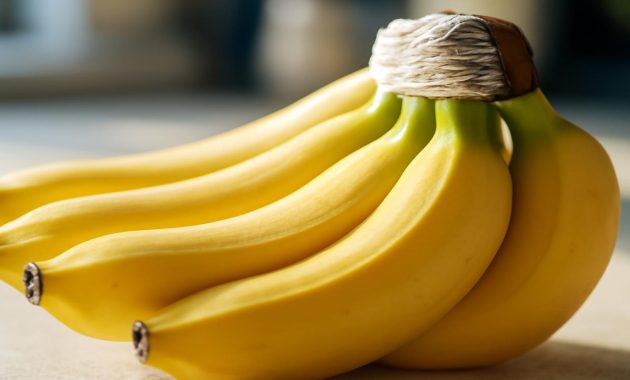
The bananas on your counter are doing that slow, dramatic transformation again. Yesterday they were the color of sunshine, smooth-skinned and hopeful. Today, freckled brown spots are creeping across the peel like someone dimmed the lights. You pick one up, thumb brushing a soft patch, and think, “Already?” If you’ve ever tossed a mushy, sugar-scented banana into the trash with a tiny sting of guilt, this story is for you—because there’s a way to keep those bananas fresh, yellow, and firm for up to two weeks, using something you probably already have in your kitchen drawer.
The Quiet Drama Happening on Your Counter
Bananas don’t look like much of a drama queen. Sitting quietly in a fruit bowl, they seem calm, low-maintenance, benign. But once they’re picked from the plant, they begin a slow internal storm—a delicate, invisible chemistry experiment in ripening.
Inside that smooth yellow peel, bananas produce something called ethylene gas. Think of ethylene as a whisper that turns into a shout: a plant hormone that tells fruit, “It’s time. Sweeten. Soften. Change.” It’s what transforms starchy, green bananas into sweet, fragrant, soft ones. Helpful, yes. But like a party that goes on a bit too long, it doesn’t know when to stop.
The more a banana ripens, the more ethylene it releases. And the more ethylene in the air around it, the faster every banana in that bunch races toward spotty brown. It’s like one overexcited guest at a party convincing everyone else to stay up way past midnight.
The tricky part? You can’t see ethylene. You can’t smell it. But you can definitely see what it does. Yellow gives way to speckled. Speckled slips into streaked. Eventually, the peel bruises, the fruit inside goes from creamy to mushy, and suddenly those bananas are only good for banana bread—if you catch them in time.
So the question isn’t just how to store bananas. It’s how to gently interrupt this invisible gas-driven frenzy without turning your kitchen into a science lab.
The One Simple Thing That Changes Everything
The secret isn’t a fancy gadget or some obscure kitchen hack buried in a dusty cookbook. It’s something so simple, you might not even think of it as a preservation tool: plastic wrap.
That’s it. Regular plastic wrap. The same clear cling film you use to cover leftovers or wrap up a half-cut onion. When it comes to bananas, that unassuming roll can stretch their bright-yellow life dramatically—sometimes up to two weeks—just by being placed in one strategic spot.
The magic isn’t in the plastic itself, but where you put it: around the stems. If you’ve ever seen bananas in a grocery store with their tops wrapped in plastic and wondered why, this is the reason. The stems are like tiny chimneys, where much of the ethylene escapes. Wrap those chimneys, and suddenly the storm slows down.
The method is disarmingly simple: cut the bananas from the bunch (or leave them together if you prefer), gather the stem ends, and wrap them snugly in plastic wrap. Not the whole banana—just the top. That’s it. No elaborate system. No complicated instructions. Just a gentle, nearly invisible pause button on the ripening process.
Imagine taking that bunch home from the market, their color a clear, full yellow with maybe a hint of green near the stem. You place them in a bowl, but before walking away, you reach for the roll of plastic wrap. The film clings with a soft crinkle as you wind it carefully around the crown of the bunch. A small act that, in a day or two, will feel like a tiny miracle when your bananas still look almost exactly the way they did when you brought them home.
The Science Wrapped Around the Stems
Underneath that simple household fix, something quietly thoughtful is happening. When you wrap the stems of your bananas, you’re not sealing them in some impenetrable vault. You’re just slowing the exit of ethylene where it’s most concentrated. Think of it like dimming a light instead of flipping it off.
Here’s the rhythm beneath the trick:
- Bananas produce ethylene mainly at the stem area. That’s the hub, the nerve center, where the fruit’s ripening signals are strongest.
- Ethylene spreads to the rest of the fruit—and to neighboring fruit. Bananas are social in that way; one ripening banana can nudge others along.
- When you wrap the stem, you partially trap and slow that movement. The ethylene doesn’t magically vanish—it just doesn’t race out as freely.
Temperature and airflow also play their part. Bananas don’t like the cold: the fridge turns their peels prematurely brown, even if the inside remains firm. That’s why this plastic-wrap trick works best at room temperature, in a spot that’s cool, dry, and out of direct sunlight. No window sill where afternoon light pools in warm rectangles. No spot next to the oven where heat fanfares up every evening.
There’s also the matter of neighbors. If you’ve been unconsciously stacking your fruit together in one cheerful bowl, you may unintentionally be creating a ripening hotspot. Apples, avocados, peaches—many fruits emit ethylene too. Together, they form a little cloud of ripening energy, turning the bowl into a fast-forward chamber.
So while your wrapped banana stems are quietly resisting the rush, they still appreciate a bit of social distance. Not isolation—just a small, respectful gap from their gassy neighbors.
How the Simple Method Compares to Other Common Tricks
Kitchen lore is full of banana-saving ideas, some helpful, some… creative. Here’s how this quiet plastic-wrapped-stem method stacks up against the others you may have heard about.
| Method | What You Do | Result |
|---|---|---|
| Wrapping stems with plastic wrap | Cover just the crown or each stem tightly with plastic wrap. | Slows ripening; bananas can stay yellow and firm up to about two weeks, depending on starting ripeness. |
| Putting bananas in the fridge | Move fully yellow bananas into the refrigerator. | Peels turn brown quickly, but inside stays firm longer. Visually less appealing. |
| Leaving bananas in a fruit bowl | Store them with apples, pears, or other fruit. | Faster ripening due to shared ethylene; good for quick-soft bananas, bad for longevity. |
| Hanging bananas | Use a banana hook or hanger to suspend the bunch. | Reduces bruising and improves airflow; slows spoilage slightly but doesn’t control ethylene. |
| Wrapping the whole banana | Cover the entire peel in plastic or foil. | Can trap moisture and lead to odd texture or mold; usually unnecessary. |
The wrapping-the-stems trick stands out because it strikes a balance: it doesn’t suffocate the fruit, doesn’t ruin the look of the peel, and doesn’t require special equipment. Just a small adjustment with a familiar, everyday item.
The Little Ritual of Keeping Bananas Yellow
There’s something almost meditative about turning a kitchen task into a small ritual. The next time you bring home bananas, you can give yourself thirty quiet seconds to do this:
- Set the bunch on the counter and feel for their firmness—solid, slightly springy beneath your fingers.
- Gently separate each banana from the cluster if you want them to ripen more evenly, or leave them attached if you prefer.
- Tear a small rectangle of plastic wrap. It should be wide enough to go around the crown of the bunch, or around each individual stem.
- Wrap the crown or stems snugly—just enough to seal without crushing. Press the plastic into itself so it clings.
- Place the bananas in a cool, shaded spot—on a counter away from the stove and oven, not pressed against other fruit.
Over the next several days, you’ll start to notice the difference. While unwrapped bananas usually sprint through their bright-yellow phase in two or three days, the wrapped ones linger there. Their color holds. Their sweetness develops more slowly. You can eat one on Monday and find its companion still pleasantly yellow the following weekend.
In a world used to quick fixes and instant solutions, there’s a quiet satisfaction in this nearly invisible tweak. It doesn’t demand your attention. It just works in the background, saving you from those soft, overripe disappointments and the guilt of wasted food.
Pairing the Trick with Simple Storage Wisdom
Like most good kitchen habits, this one becomes even more powerful when you layer it with a few others. Think of them as supporting characters to the star role played by wrapped stems:
- Buy with intention. If you know you eat one banana a day, buy a range: a couple fully yellow, a couple with green at the tips. Wrapped stems will help them all last longer, and the staggered ripeness ensures you always have one at its peak.
- Give them breathing room. A small bowl or plate is fine, but avoid crowding bananas next to apples, pears, or avocados. Let the air move around them.
- Use the fridge at just the right moment. If a banana hits your ideal shade of yellow and you can’t eat it right away, you can move it—still with the stem wrapped—into the refrigerator. The peel may darken faster, but the inside will linger in that sweet, firm stage.
- Check the stems now and then. If the plastic loosens or tears, just rewrap. A quick touch-up keeps the ethylene slowdown going.
None of this is complicated. It’s the opposite of complicated: a set of soft, conscious choices that let you stretch a small piece of fruit across more days with less waste.
Listening to What Your Bananas Are Telling You
It’s easy to think of bananas as all-or-nothing: either perfectly yellow or only good for baking. But when you slow down their rush through ripeness, you begin to notice the small stages in between—and how each one has its own personality.
A slightly green-tipped banana, stem wrapped, has a firmer bite, a starchier sweetness. It’s the kind you might slice into a bowl of oats, the edges holding their shape. A fully yellow banana, still fresh after a week thanks to that quiet barrier of plastic at the top, tastes softer, rounder, like the sugar has unfolded itself fully. By the time faint freckles appear, the flavor deepens into something almost dessert-like.
When you’re not chasing your bananas before they over-ripen, you have the luxury of using them more thoughtfully. One for a child’s lunchbox on Monday, still bright and cheerful by the time it’s unzipped at noon. Another for your smoothie on Thursday, mellow and sweet, a banana you didn’t have to rescue in a panic. A third on Sunday, part of an unhurried breakfast, your week’s quiet reward for the thirty seconds you spent with that roll of plastic wrap.
And when one still slips past you—as one always will, because life is busy and fruit has its own timetable—that banana doesn’t become a symbol of waste. It becomes banana bread, or pancakes, or a quick frozen slice for future smoothies. Even then, the fact that it took longer to reach that soft, brown-flecked stage is its own small victory.
A Tiny Change with an Outsized Impact
At first glance, this might sound like nothing more than a clever kitchen trick. But beneath it runs a quieter truth: the way we treat what we bring into our homes matters. Food waste doesn’t usually happen in grand gestures; it happens in small, everyday moments—another banana too soft, another piece of fruit overlooked, another quiet apology to the trash can.
By learning a simple, almost effortless way to keep bananas fresh and yellow longer, you’re doing more than saving a few pieces of fruit. You’re honoring the journey that banana made—from a plant in a humid grove under huge leaves, across land and water, into a store, and finally onto your counter. You’re refusing to let that journey end in disappointment three days later.
And it all starts with something so ordinary you might never look at it twice: the smooth, transparent length of plastic wrap waiting patiently in your drawer, ready to become the smallest, most effective tool in your fruit bowl.
Frequently Asked Questions
How exactly do I wrap the banana stems?
Tear a small piece of plastic wrap and press it tightly around the crown where all the stems meet, or around each individual stem if the bananas are separated. Make sure it’s snug so it clings to itself and covers the exposed stem area.
Do I need to wrap each banana separately?
No, not necessarily. Wrapping the crown of the bunch (where all the stems join) is usually enough. If you tend to separate bananas as soon as you get home, you can wrap each stem individually for a bit more control.
Will this work on very green bananas or very ripe bananas?
It works best on bananas that are just turning yellow or fully yellow with minimal spots. On very green bananas, it will still help, but they’ll naturally take longer to ripen anyway. On very ripe bananas already covered in spots, the effect is limited—they’re already near the end of their journey.
Can I still hang my bananas if the stems are wrapped?
Yes. You can absolutely hang them from a hook with the stems wrapped. Hanging simply reduces bruising and improves airflow; combining it with wrapped stems offers both physical and chemical protection.
Why not just keep bananas in the fridge from the start?
Refrigeration can darken the peels and sometimes affect texture if the bananas are still underripe. It’s better to let them reach your preferred ripeness at room temperature, with the stems wrapped, and then move them into the fridge if you want to stretch that perfect stage a little longer.
Is plastic wrap the only material that works?
Plastic wrap works especially well because it clings tightly, but a small piece of reusable beeswax wrap or another tight, flexible covering can help too. The key is creating a snug barrier around the stems to slow ethylene release.
How long can bananas really stay yellow using this trick?
Results vary with room temperature and how ripe they were to begin with, but many people find their bananas stay pleasantly yellow and firm for around 7–14 days—often about twice as long as unwrapped ones stored in the same conditions.