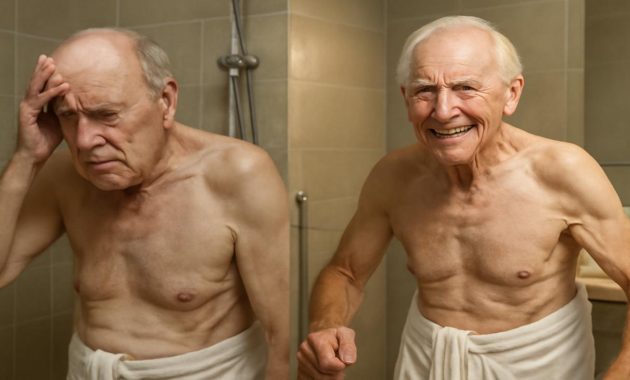
The morning she turned seventy-four, Maria discovered that the hardest part of her day was not climbing the stairs or opening stubborn jars. It was the shower. The tiled floor, once a place of steamy comfort, now felt like a slick sheet of ice. Her daughter had started to hover outside the bathroom door, pretending to tidy the hallway but really just listening—waiting for the sound of the water shutting off, a reassuring signal that everything was still okay.
“I’m fine,” Maria would call out. But she was tired—tired before she even stepped into the tub, tired after. The long, hot showers she used to love left her strangely drained now, as if the water were washing away her energy along with the soap. A neighbor had recently fallen in the bathroom and broken a hip, and that story sat like a stone in the back of her mind. So she did what many older adults quietly do: she started skipping showers.
When Cleanliness Meets Caution
If you ask most people how often we “should” shower, you’re likely to hear some version of: every day. It’s a habit baked into decades of advertisements, morning routines, and unspoken rules. Cleanliness equals responsibility, respectability, even dignity. But as the body ages, especially after 65, that neat daily rhythm starts to blur. What once felt automatic becomes a negotiation between comfort, energy, and safety.
Researchers and geriatric specialists are now paying attention to something many of us rarely question: not just how older adults bathe, but how often—and what that does to their bodies. The surprising twist? Shower frequency is being linked to two major challenges of later life: falls and fatigue.
The bathroom is already one of the most dangerous rooms in the house for older adults. Wet surfaces, bending and twisting, stepping over tub edges—these are athletic moves when you add joint stiffness, slower reflexes, and medications that may cause dizziness. Yet the subtle role of hygiene routines in this picture is just beginning to emerge. Too much bathing can sap energy and dry out fragile skin. Too little can lead to infections, odor, social withdrawal, and a sense of lost self-respect.
In the middle lies a delicate, deeply personal balance—and it isn’t the same “once daily” rule many of us grew up with.
What the Research Quietly Reveals
Geriatric care teams have long noticed a pattern in their clinics and home visits: older adults who reported “forcing themselves” to shower every day often also reported more fatigue and more near-falls, especially on shower days. Observational studies and home-care logs show a curious rhythm—on “bath days,” some people nap more, move less, or report feeling “wiped out” and unsteady.
It’s not just the water. It’s the work. The routine of undressing, adjusting water temperature, standing and turning in a small space, lifting arms to wash hair, bending to reach feet—all of this places demands on muscles, balance systems, and the heart. What feels like a small, automatic task at 40 can feel like a full-body workout at 80.
Care agencies and fall-prevention programs have begun tracking this. They note patterns like: a higher proportion of reported slips and near-falls happen on or just after shower days. Some physical therapists now consider “bathing day” a high-exertion day, recommending that no other major physical tasks—like heavy housework or long walks—be scheduled immediately before or after.
On the flip side, research in skin health and aging reveals that daily hot showers may strip older skin of its already fragile moisture barrier. Dry, itchy, cracked skin isn’t just uncomfortable; it can open the door to infection. Scratching can break the skin. Tiny infections can lead to systemic sickness in people with weaker immune systems or chronic health issues. Fatigue and low mood often follow.
So the stereotype that “cleaner is always safer” starts to wobble. Clean enough, comfortable enough, safe enough—that’s where the evidence is nudging us.
Is There a “Right” Number of Showers After 65?
There is no one-size-fits-all answer. Instead, professionals are starting to talk in terms of ranges, adaptations, and energy budgeting. Many geriatric teams find that, for relatively healthy older adults, bathing with water and soap two to three times a week—plus light daily freshening—strikes a good balance between hygiene, skin health, energy, and fall risk. But everything depends on a person’s health conditions, climate, activity level, and preferences.
To make this more concrete, imagine showering as you might imagine exercise: beneficial in the right dose, draining if overdone or done unsafely. For one person, a three-minute lukewarm shower on a sturdy shower chair might be perfect every other day. For another, a full shower twice a week with gentle assistance and daily sponge-cleaning may be safer and more sustainable.
Instead of asking, “Am I showering often enough to be clean?” a better question for older adults might be: “Am I bathing in a way that keeps me comfortable, preserves my skin, and doesn’t exhaust or endanger me?”
The Hidden Cost of “Fresh and Clean”
The cultural script about cleanliness runs deep. Many older adults feel ashamed to admit that they’ve cut back on showering. Sometimes, they don’t even tell their doctors. But the reasons they give, when asked with patience and respect, are hauntingly consistent:
- “I’m afraid I’ll slip.”
- “I get so tired afterward, I can barely get dressed.”
- “It hurts to lift my arms long enough to wash my hair.”
- “I get dizzy when I bend down.”
Showering can demand more balance than walking down a hallway. You’re often standing on one leg while lifting the other, twisting the spine as you reach, closing your eyes, and dealing with water flowing over your face—all while in a slick, echoing space where sound is distorted and vision is blurred. For an older adult with even mild balance issues, it’s like doing yoga on a slippery rock.
There’s also the warm-water trap. Hot showers dilate blood vessels. For some older adults, this can cause blood pressure to drop—with light-headedness or even fainting when they step out of the tub. The heart and circulation have to work harder to compensate. For a person with heart disease or taking certain medications, that soothing steam can come with a hidden cardiovascular price tag.
Energy is another quiet currency. Many people past 65 talk about having “one big thing” in them per day: one doctor’s visit, one grocery run, one social outing. For some, a full shower becomes that one big thing, leaving little left for a walk, conversation, or hobby. When bathing consumes the day’s energy budget, it can quietly shrink the rest of life.
Too Little, Too Much: Finding the Middle Ground
The picture, however, is not as simple as “shower less to be safe.” Going too far the other way carries its own cost. Infrequent bathing can lead to:
- Skin infections in skin folds, under breasts, in the groin, and between toes.
- Exacerbation of conditions like eczema or fungal infections.
- Body odor that may drive social withdrawal or embarrassment.
- Urinary tract infections related to poor perineal hygiene.
- A diminished sense of dignity and self-worth.
And there’s an emotional layer. For many people, bathing is not just about cleanliness but identity. The smell of a familiar soap, the ritual of washing hair, the feeling of warm water on skin—these are anchors to past routines, to independence. When hygiene slips, some older adults say they don’t quite feel like themselves anymore.
The goal, then, is not to convince older adults to abandon showers but to re-design them: to turn them from a hazard and energy drain into a safer, more tailored ritual that respects a changing body.
Designing a Safer, Less Exhausting Bathing Routine
Imagine stepping into a bathroom where everything has been quietly adjusted to meet you where you are now, not where you were at forty-five. The floor no longer gleams with treacherous slickness. A chair waits patiently under the showerhead. The water runs warm, not scalding. Towels hang within easy reach, thick and welcoming. Nothing about this room demands acrobatics from your joints.
That’s what fall-prevention specialists dream about when they talk about bathroom safety. And those small design shifts make frequent-enough bathing far more realistic.
| Shower Element | Higher Fall / Fatigue Risk | Safer, Energy-Saving Alternative |
| Standing in tub or stall | Balancing on one leg, turning, bending on a slippery surface | Use a sturdy shower chair or bench; keep both feet flat while seated |
| Very hot water | Blood pressure drops, dizziness, skin dryness | Lukewarm water; test with hand first; limit shower time |
| Reaching and twisting for soap | Overstretching, sudden loss of balance | Use wall caddies at arm level; pump dispensers instead of bar soap on floor |
| Stepping over high tub edge | Tripping, losing balance, grabbing unstable surfaces | Install grab bars; consider a transfer bench or low-threshold shower |
| Long daily showers | Energy drain, dry skin, added fatigue on busy days | Shorter showers 2–3 times weekly plus daily sponge clean-up |
Even small changes can radically alter the energy cost and risk level of a shower. Sitting instead of standing can conserve surprising amounts of effort. Grab bars turn a slippery wall into a handhold. Non-slip mats act like hiking boots for your bathroom floor.
Then there’s timing. Many older adults find that showering in the morning, after a light snack and medications, works better than late at night when they’re already worn out. Others prefer late afternoon, when joints are looser and they’re fully awake. The key is choosing a time when energy and balance are at their best—not when you’re rushing to “get it over with.”
Rethinking “Clean”: Hybrid Hygiene Routines
Modern hygiene doesn’t have to be all-or-nothing: full shower or nothing at all. In fact, some of the most practical fall-prevention strategies come from creating “hybrid” routines—combinations of full showers, quick sink washes, and targeted cleansing.
A typical balanced week for an older adult might look like this:
- Two or three full showers or baths, on days chosen for energy and safety (ideally with support equipment in place).
- Daily “top-and-tail” routines at the sink: washing face, armpits, groin, and feet with a washcloth, mild soap, and warm water.
- Gentle cleansing wipes used when energy is low or during illness, especially for intimate areas.
- Regular moisturizing right after bathing, to protect aging skin and reduce itch and irritation.
This approach respects both hygiene and human limits. It acknowledges that cleanliness is not a performance for others but a daily act of care for a body that has worked hard for many years and now asks, in return, for gentleness.
The Emotional Weather of Bath Days
The science of shower frequency is only half the story. The other half lives in feelings—fear, frustration, pride, and sometimes quiet grief.
For people who have spent their lives taking pride in being neat and well-groomed, needing help to bathe can feel like an unbearable loss of privacy and capability. Many older adults delay asking for assistance until their hygiene noticeably suffers or a fall forces the issue. Caregivers, on the other side of the door, may misinterpret resistance as stubbornness or “being difficult,” when what they are really seeing is a person trying to hold on to dignity.
Conversations about shower frequency and safety work best when they start with empathy rather than instruction. Instead of, “You need to shower more,” or, “You can’t bathe alone anymore,” try questions like:
- “What feels hardest about showering lately?”
- “Do you ever feel unsteady in the bathroom?”
- “What would make bath days less tiring for you?”
- “Would it help if we changed the timing or made it shorter?”
These gentle openings often reveal a lot: fear of falling, embarrassment about nudity, dislike of cold bathrooms, or fatigue that sets in before the water even warms up. Once these are voiced, they can be addressed—with space heaters, thicker towels, better grab bars, different routines, or a calm, trusted helper.
One home-care nurse described success with a patient who fiercely resisted showering. Together, they agreed on two shorter showers per week, with the bathroom pre-warmed and all supplies within easy reach. On other days, the patient cleaned up at the sink and used her favorite scented lotion. Within a month, her skin improved, her energy stabilized, and the argument over “bathing day” faded into the background.
Listening to the Body’s New Language
Aging is, in many ways, the process of learning a new language—the language of a changing body. Things that once felt effortless now require negotiation. Hygiene is one of the clearest areas where this new language speaks up, if we listen:
- Persistent exhaustion after showering may be the body saying: “Shorter, cooler, less often, and more support.”
- Dry, itchy, cracked skin may be saying: “Gentler soap, more moisturizer, fewer long hot showers.”
- Dread of the bathroom may be saying: “I don’t feel safe in there as it is.”
- Social withdrawal tied to feeling unclean may be saying: “My routine isn’t working; I need another way to feel fresh.”
Adjusting shower frequency and method is not a step away from good hygiene but a step toward a more realistic, compassionate form of it.
Redefining “Good Hygiene” After 65
If you return to Maria, listening to the shower behind her bathroom door, the story looks different in this new light. Instead of urging her to return to her old daily routine, her daughter sits down with her at the kitchen table. They make a new plan.
Two full showers a week, in the morning, with a non-slip mat and a shower chair they order together. Lukewarm water, not scalding. No shampoo marathons—just a gentle wash and rinse. On other days, a quiet ritual at the sink: a warm washcloth, a favorite mild soap, fresh underwear, a soft towel warmed in the dryer. A small fan to clear steam so Maria doesn’t feel dizzy afterward. A thick, fragrant lotion that makes her smile and say, “It smells like the beach we used to go to.”
Over the next months, she notices something subtle. She doesn’t dread the shower quite as much. She doesn’t feel as drained afterward. Her skin stops itching so fiercely. Her daughter stops hovering outside the door every time, because they’ve installed grab bars and a sturdy chair, and because they’ve agreed on a simple rule: if she ever feels light-headed, she will sit and call out, and they’ll take it from there.
The research on shower frequency and fall risk in older adults is still being refined, measured, and debated. But in living rooms and bathrooms and quiet home-care visits, a simple truth is taking shape: after 65, “good hygiene” is not about following a universal schedule. It’s about crafting a rhythm that honors a changing body, protects fragile balance, preserves energy, and maintains the deep human need to feel clean, comfortable, and fully oneself.
Not once daily. Not once weekly. Somewhere in between lies a small, steady ritual—the kind that keeps you safe on your feet and gently awake to the day ahead.
Frequently Asked Questions
How often should someone over 65 usually shower?
Many geriatric specialists find that two to three showers or baths per week, combined with daily “top-and-tail” washing at the sink (face, armpits, groin, feet), is enough for most older adults. The exact frequency should be adjusted based on health, activity level, climate, and personal comfort.
Can showering too often increase fall risk?
Indirectly, yes. Full showers can be physically demanding and may cause fatigue, dizziness, or blood-pressure drops, all of which increase the chance of slipping or losing balance, especially in a wet environment. Making showers shorter, safer, and slightly less frequent can reduce this risk.
What if an older adult refuses to shower?
Refusal often stems from fear, pain, embarrassment, or exhaustion rather than stubbornness. Start by asking what feels hardest about bathing. Then consider solutions: a shower chair, grab bars, warmer bathroom, shorter showers, assistance from a trusted person, or substituting some full showers with sponge baths.
Is a sponge bath as good as a shower?
For basic hygiene, a well-done sponge bath can be very effective, especially when focused on areas that sweat or soil easily. While showers may feel more refreshing, a combination of sponge baths on most days and full showers a couple of times a week often keeps older adults clean and comfortable.
How can older adults reduce fatigue after showering?
Several strategies help: sit on a shower chair instead of standing; keep water lukewarm; limit shower time; prepare towels and clothes in advance; shower at a time of day when energy is highest; avoid scheduling other strenuous tasks on the same day; and rest briefly after drying off and dressing.
Does dry skin mean someone is showering too often?
Not always, but frequent hot showers and harsh soaps are major causes of dry skin in older adults. If skin is itchy or flaky, try shorter, cooler showers; switch to mild, fragrance-free cleansers; and apply a gentle moisturizer immediately after bathing.
What bathroom changes make the biggest difference for safety?
Non-slip mats, a sturdy shower chair or bench, grab bars installed in the right places, good lighting, and keeping soap and shampoo within easy reach are among the most effective changes. These simple modifications can significantly reduce fall risk and make bathing less tiring and more confident.