The steam from the hot tub curled into the cold March air, rising like a slow, satisfied sigh. It was barely 6 a.m., the sky just beginning to fade from charcoal to lavender, and the birds hadn’t fully committed to their morning chorus yet. Out beyond the deck, the small lake was a sheet of pewter, thin ice still clinging in the shaded coves. And there I was—62 years old, retired for exactly three months—leaning back against a warm acrylic shell, listening to the quiet gurgle of jets and thinking, with a particular kind of fragile happiness: So this is what I worked for.
How I Ended Up Retiring into Bubbles
When you picture retirement, you might imagine plane tickets and golf clubs, or maybe a converted van and endless highway. For me, it was a hot tub.
Not just a luxury toy, but a sort of promise I made to myself in my mid-fifties. It was a deal I struck on a long commute home after another late night at the office, knuckles sore from gripping the steering wheel, brain buzzing with deadlines.
If I make it to 62 with my mortgage mostly paid off and a little cushion in the bank, I’m getting a hot tub. A real one. No blow-up kiddie pool nonsense. Something with jets that will make my spine crackle like bubble wrap.
So I planned. I ran the numbers like a cautious accountant: savings rate, health insurance, Social Security timing. I watched my spending, said no to a few tempting vacations, and yes to index funds and boring things like “dividend reinvestment.” And slowly, almost invisibly, the dream took shape.
When I finally turned in my office keycard, I celebrated with something small: I took a long walk along the river, came home, and made a pot of coffee. It wasn’t until a month later that I kept the second half of the promise. I found a solid mid-range, four-person hot tub, bought it in late winter when prices were softer, and set it up on the back deck that faces the lake. It was the single biggest “non-essential” purchase I’ve ever made.
Nobody tells you that when you retire, you don’t just inherit time—you inherit your own body. Every ache you’ve ignored, every habit you shrugged off as “later” shows up, knocks on the door, and steps into your days. My knees were a little stiffer, my lower back sometimes seized up like a rusted hinge. That hot tub wasn’t just a reward. It was a warm, humming agreement between me and my aging frame: I’ll take care of you, you take me out for sunrise once in a while.
The First Hint That Something Was Off
The first morning the hot tub didn’t sound quite right, I almost ignored it.
It was late April, a cool dawn with a breeze that carried the smell of last year’s leaves and distant wood smoke. I walked out, coffee in hand, robe tied in a sloppy knot, and lifted the cover. Steam rose, but it was thinner, hesitant. When I stepped in, the water was warm, but not the familiar enveloping heat I’d grown addicted to.
I pressed the jet button. Instead of the confident, soothing churn I’d come to expect, the tub made a noise that can only be described as a sickly whine. The jets gurgled unevenly, like they were trying to clear their throat.
“That doesn’t sound right,” I muttered, as if the tub and I were old friends and it owed me an explanation.
I gave it a day, hoping it was a fluke—maybe a bit of air in the lines, maybe the power had flickered overnight. But the next morning, it was worse. The motor hummed more loudly, but the jets were weak and the water temp had dropped another few degrees.
Retirement has given me plenty of time to pretend I understand things. I’ve watched enough home repair videos to think I can fix anything with a wrench and misplaced confidence. But after an hour of poking around the control panel, checking the breaker, and removing the service panel to stare helplessly at a mess of wires and plumbing, I admitted the obvious.
I needed a professional.
Pumps, Percentages, and the Cost of Warm Water
The repair technician who came out was the kind of person you instinctively trust around machinery—mid-forties, sunburned neck, worn baseball cap with a logo from a brand of power tools, and the calm patience of someone who has seen every possible way humans can break expensive equipment.
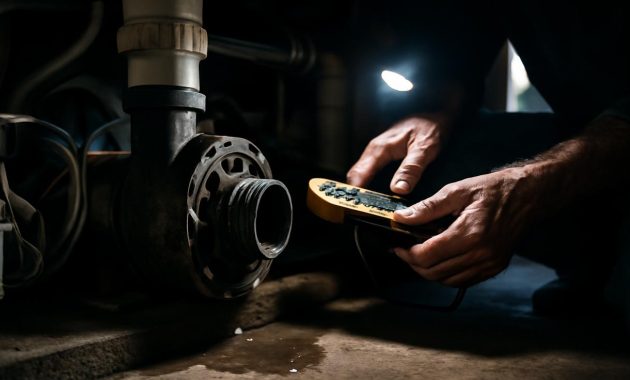
He crouched by the panel, listened for a while, then opened the housing with a practiced twist.
“Pump’s struggling,” he said, almost gently, as if delivering a minor medical diagnosis. “You’re lucky it’s still moving water at all.”
“It’s only been a couple of months,” I said. “I’ve been treating the water, cleaning the filters. Did I miss something?”
He shook his head. “Probably not. Pumps just fail. Sometimes it’s age, sometimes manufacturing quirks, sometimes power surges, sometimes running the tub with a clogged filter. But it’s not just you. In this business, pump failures represent about 40 percent of repair costs.”
He said it like a fact he’d repeated a hundred times, mildly apologetic but unarguable. Forty percent. Nearly half of all the money people spend keeping their hot tubs alive, funneled into these hidden, humming hearts.
The number rolled around in my mind like a marble in a bowl. Rationally, it made sense. Pumps are the muscles of the system. They move the water, push it through filters, send it blasting out through the jets that massage away the stubborn knots along my spine. They work hard. They get hot. They bear the brunt of our comforts.
But emotionally? I felt mildly betrayed. I’d retired with a plan. My budget spreadsheets were intricate, tucked into folders on my laptop: expected monthly spending, contingency fund, line items for home maintenance, medical costs, a small category labeled “fun & indulgences.” I had calculated for roof repairs, for the old furnace finally giving up, even for dental work. I had not, somehow, planned for the hot tub’s heart to falter within months.
He walked me through the options like a doctor outlining treatment plans. Replace the pump with an OEM part or a solid aftermarket equivalent. Labor plus part. Turnaround time. Warranty details. I watched his lips move, but my mind was swirling around that 40 percent figure. How many other retirees had learned that number the hard way, standing barefoot on their deck, clutching a half-finished cup of coffee?
The Quiet Arithmetic of Comfort
In the end, I said yes. Of course I said yes. When you have something that makes your mornings bearable, you don’t let it go lightly. I authorized the pump replacement, flinched slightly when he mentioned the total, and told myself it was still worth it.
Retirement has a way of turning every expense into a philosophical question. It’s not just, Can I afford this? It’s, Is this how I want to spend the finite money attached to my finite time?
When you’re working, there’s always the faint illusion of replenishment: one more project, one more raise, one more year. After 62, especially if you’re not picking up part-time income, you start to see money differently. It isn’t just numbers in an account. It’s the shape of your remaining years.
The pump repair forced me to sit down and revisit the plan. I pulled out my spreadsheet, added a new line under “Home & Utilities”: “Hot tub maintenance & repairs.” And then I did something I hadn’t expected: I planned for failure.
I projected a small annual amount, enough to cover occasional service calls, the probable replacement of parts over a 10-year window—pumps, heaters, control boards. And I built it into my retirement equation, not as an annoyance, but as part of the cost of the life I had chosen.
I wasn’t just budgeting for groceries and insurance anymore. I was budgeting for dawn steam and starlit soaks, for the way my back muscles sighed when hot jets worked their magic after I’d spent the afternoon raking leaves or hauling mulch. I was, in a very real sense, putting a price on peace.
What the Hot Tub Taught Me about Aging Infrastructure
While the technician swapped out the failing pump, I hovered nearby like an anxious relative in a hospital waiting room, asking more questions than he probably wanted to answer.
“So if pumps are 40 percent of repair costs, what’s the rest?” I asked.
He grinned. “Heaters, control boards, leaks. But pumps—there’s always a pump somewhere on the invoice. Sometimes it’s the main jet pump, sometimes the circulation pump. They do a lot of work. People run their tubs all year, barely think about it. Then one day, something changes in the sound, the feel of the jets, and they call me.”
I thought about that. How many parts of my own life had been quietly pumping away in the background, mostly unnoticed until they faltered? Knees, heart, memory. Work routines that once seemed eternal, now replaced with slow mornings, grocery lists, and birdwatching from the porch.
Retirement is a bit like lifting the access panel on your own life. You finally have the time to stare at all the components you never examined closely when you were rushing from one obligation to the next. You start noticing what’s humming along smoothly, what’s vibrating oddly, what might be close to burning out.
While the new pump slid into place, gleaming and a little too pristine compared to the weathered fittings around it, I realized that my hot tub wasn’t just a luxury. It was a microcosm of my new reality: everything I own—and everything I am—is aging. Some parts are more likely to fail. There are percentage odds, industry averages, actuarial tables, and medical statistics that quietly shape what happens next.
But there’s also this: you can plan. You can listen for early warning signs. You can set aside time and money, not in fear, but in steady, matter-of-fact acceptance.
Designing for Delight and Breakdown
By the time the technician finished, the sky had fully brightened. The lake reflected a stripe of soft blue. I pressed the button to start the jets, and the tub roared back to life—strong, even, almost joyful. I slid in that evening as the temperature dropped and a crescent moon hung over the treeline.
Retired at 62 with a hot tub. It sounded so simple when I’d imagined it. But reality was more nuanced. It meant watching my spending more closely, saying no to some other things so I could say yes to this one. It meant accepting that even pleasures come with maintenance schedules and failure rates.
And yet, sinking into that water, feeling the new pump push warmth around me with quiet confidence, I understood something: the goal was never to create a life free from repairs. It was to create a life where the things I choose to maintain are worth the effort.
What I Wish I’d Known Before Buying the Tub
For anyone thinking about something similar—a hot tub, a small boat, a garden pond, or any other water-filled dream—here’s what I would tell my younger self, sitting in that commuter traffic fantasizing about bubbles and relief:
Plan for the Pump Before It Fails
Build an annual maintenance reserve into your retirement budget from day one. Don’t just think about electricity and chemicals; think about hardware. Assume that somewhere in the next five to seven years, a pump will need replacing. If it doesn’t, celebrate. If it does, you’re ready.
Listen to the Sounds
Pumps rarely fail overnight. They start to sound different—rougher, louder, more strained. The jets feel weaker. The water doesn’t heat as efficiently. Those are your early warnings. Call someone then. Don’t wait until the tub is cold and silent.
Ask About Pump Quality and Access
When you’re shopping, ask specific questions: What brand of pumps does this model use? How long is the warranty? How easy is it to access and replace them? A well-designed tub makes servicing less painful—for you and the tech.
Balance Emotion with Arithmetic
Luxury in retirement is not inherently reckless. But it must be intentional. For me, the hot tub is more than a toy. It’s pain management for my back, a ritual that keeps me anchored to daily rhythms, a place where I pay attention to sky and weather and the passing of seasons.
When the repair bill came, it stung. But when I divided that cost by the number of evenings I soaked away stress and stiffness over the following year, the math shifted. Dollars turned into minutes of comfort, into mornings of watching mist rise off the water, into nighttime constellations reflected in the steam.
A Small Table of Reality and Reward
Here’s how the numbers roughly shake out for me now that I’ve lived with both the delight and the breakdown:
| Item | Estimated Annual Cost (USD) | How I Think About It |
|---|---|---|
| Electricity | $250–$350 | The quiet hum under every soak |
| Chemicals & Filters | $150–$200 | The cost of clean, clear water |
| Routine Service | $100–$150 | Insurance against surprise breakdowns |
| Pump & Major Parts Reserve | $200–$300 | Accepting that pumps may eat ~40% of repair dollars |
| Total Planned Annual Cost | $700–$1,000 | My price of admission to daily warmth and weightlessness |
Looking at that table on my laptop, I realized something oddly reassuring: the expenses that once felt like surprise emergencies could become expected guests. If pump failures really do represent about 40 percent of repair costs, then planning for them is not pessimism; it’s respect—for the machine, for the luxury it provides, and for my own limited resources.
Steam, Starlight, and the Sound of a Healthy Pump
These days, I’m more attuned to my hot tub than I ever was at the start. I can tell when the filters need cleaning from the slight change in the jet force. I know the subtle rhythm of the circulation pump kicking on at night. When the main pump runs, there’s a muscular steadiness to it that, oddly, makes me feel secure.
I’ve started thinking of that 40 percent figure the way old sailors think of storms: not as a reason to avoid the sea, but as a given, something baked into the deal. If you want the ocean, you sign up for weather. If you want daily heat and floating in your own backyard, you sign up for pumps that sometimes give out.
On clear winter nights, when the air is cold enough to sting my cheeks and the sky is a black bowl full of stars, I slip into the water and let my body go light. Steam rises around me, ghostly and silver. Somewhere beneath my heels, the pump is working steadily, pulling cold water in, sending warm water out, doing its invisible labor.
At 62, with more years behind me than ahead, I find comfort in that simple, dependable effort. It reminds me of all the unseen work I did for decades—the late nights, the quiet problem-solving, the uncelebrated diligence that eventually gave me this moment.
Things fail. Bodies, machines, plans. But for as long as I can, I’ll keep listening, adjusting, maintaining. I’ll keep setting aside a little money for the breakdowns, a little time for the repairs, and a lot of space for the rituals that make my days feel tender and alive.
Retired at 62 with a hot tub, I’ve learned this: the cost of comfort isn’t just measured in dollars. It’s measured in attention. In willingness to care for the things that care for you. In the humble acceptance that even in the gentlest, steamiest corners of life, something under the surface is always humming, always working, always wearing down—and that doesn’t make the experience less beautiful. It makes it precious.
Frequently Asked Questions
Is a hot tub really worth it in retirement?
It can be, if you value daily rituals of relaxation and pain relief and you plan realistically for ongoing costs. The key is to treat it as both a pleasure and a responsibility, not an impulse purchase.
How much should I budget yearly for hot tub upkeep?
Depending on your climate and electricity rates, plan roughly $700–$1,000 per year for power, chemicals, filters, periodic service, and a reserve for future repairs like pumps or heaters.
Why do pump failures represent such a large share of repair costs?
Pumps are mechanical workhorses. They run frequently, handle pressurized water, and are exposed to heat and chemical-laden water. That constant stress makes them statistically more likely to fail than more passive components.
Can I extend the life of my hot tub pump?
Yes. Keep filters clean, maintain proper water chemistry, avoid running the pump with clogged filters or low water levels, and have a professional check things if you notice odd noises or weaker jets.
What should I listen for as an early warning sign?
Changes in sound (louder, grinding, or whining), reduced jet pressure, or inconsistent heating are all red flags. Catching these early often means a simpler, less expensive fix.
How do I decide if a luxury like a hot tub fits my retirement plan?
Run the numbers honestly: purchase price, installation, yearly operating costs, and repair reserves. Then weigh that against how often you’ll use it and how much it adds to your physical comfort and daily joy.
Is it better to buy new or used to save money?
A used tub can be cheaper upfront but riskier in hidden issues, especially with pumps and heaters. If you go used, insist on a full wet test, ask for service history, and factor in the likelihood that major components may need replacing sooner.