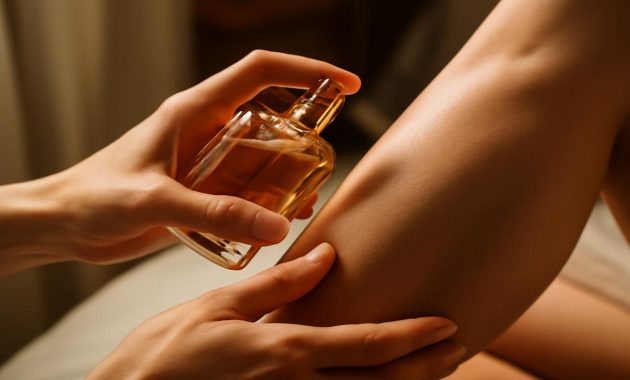
The woman on the train smelled like late summer in a Mediterranean garden. Not the loud, dizzy kind of scent that ambushes you from three seats away, but a soft ribbon of something—sun-warmed citrus, a brush of jasmine, a whisper of wood smoke—that drifted in and out of the air every time she reached for her coffee. Two hours into the journey, while everyone else smelled faintly of tired wool and takeaway sandwiches, she still carried that quiet, steady halo of perfume around her like weather she’d brought from somewhere else.
When the train slowed into the city, I finally leaned across the aisle and asked the question hundreds of noses had surely wondered before me: “How is your perfume still going strong?”
She smiled, the way people smile when they’ve been waiting for someone to notice something they love. “The trick,” she said, “is to stop putting it on your wrists and neck.”
The Myth of the Wrist-and-Neck Ritual
If you’ve ever watched a perfume ad—or your grandmother getting ready for dinner—you know the script. A graceful tilt of the chin, a mist to the neck, a delicate spray on the wrists, a gentle rub together. Maybe a dab behind the ears, too. That little ritual feels almost sacred, like a final brushstroke on the day’s version of you.
But here’s the quietly inconvenient truth: that beloved wrist-and-neck routine is one of the main reasons your perfume disappears by lunchtime.
Your neck and wrists are among the most exposed, most mobile parts of your body. They’re rarely protected from air, sunlight, and friction. They brush against scarves, collars, watchbands, keyboards, and soap. They catch the worst of weather and the most of your daily handwashing. If perfume were a shy creature, your neck and wrists would be a busy intersection where it keeps getting jostled until it gives up and leaves.
And then there’s the rubbing—those two quick, unconscious swipes of wrist against wrist that many of us learned by osmosis. You spray, you press, you slide. It feels satisfying, like you’re “setting” the fragrance the way you might set your makeup. But perfume does not appreciate being manhandled. That rubbing doesn’t blend anything, doesn’t lock anything in. Instead, it speeds up evaporation and bruises the fragile top notes, like smashing a bouquet of flowers in your hands and wondering why they wilt faster.
Perfume is chemistry and choreography: alcohol carrying oils, volatile molecules rising and settling in a slow dance on your skin. When you rub, you’re not helping the dance—you’re yanking the record from the player halfway through the song.
The Quiet Science of Why Scent Fades So Fast
To understand how to make perfume last, it helps to think like the scent itself for a moment. Imagine you’re a perfume molecule making landfall on human skin.
First, you meet heat. Warmth is not your enemy, but it does make you move faster. The warmer the surface, the quicker you lift off and disperse into the air. That’s why pulse points have always been recommended: they’re warmer, so they project scent more. But projection and longevity are not the same thing. Project too quickly, and you’re gone by noon.
Next, there’s air and light. On exposed areas like neck and wrists, you’re getting a constant stream of oxygen, movement, and UV light. Oxygen helps break you down; UV light alters your structure. You change, fade, quiet yourself. The scent that began as sparkling citrus and warm amber becomes, hour by hour, a ghost of itself.
Then comes friction and moisture. Hands washed a dozen times; wrists sliding against sleeves; neck brushed by hair, scarves, collars, bag straps. Soap and sanitizers strip away the top layer of skin oils—and the perfume clinging to them. Sweat dilutes and disturbs. Every touch shaves off another layer of scent.
And finally, there’s skin chemistry. Oily skin tends to hold perfume longer; dry skin lets it evaporate quickly. Harsh cleansers and very hot showers leave your skin thirsty, with fewer natural oils to clutch the perfume. Spraying directly onto that dry canvas is like painting watercolor on sand.
But shift the landing site—change the surface you land on, the microclimate you live in, the way you’re treated—and your staying power transforms.
The Simple Trick: Spray Where the Day Is Gentle
The woman on the train showed me, in the subtle movement of her hands, how she did it. No wrists. No bare neck. Instead, she misted her clothing and hair—carefully, deliberately—and let time do the rest.
The simple, unglamorous trick to making perfume last from morning to night is this:
Stop spraying and rubbing perfume directly onto your wrists and neck. Start applying it on fabric and low-friction, semi-covered areas of your body.
Here’s why it works so well—and how to do it without overwhelming a room or staining your favorite shirt.
1. Let Fabric Be Your Silent Fragrance Partner
Clothes are calmer landscapes than skin. They don’t sweat, they don’t produce oils, and they don’t regenerate. Perfume molecules can catch on the weave of a shirt or scarf and linger there, gradually releasing throughout the day like slow-burning incense.
Think of the gentle cloud of scent that rises when you open a suitcase packed with your favorite sweaters. That’s fabric memory: your fragrance caught and stored in the fibers, waiting patiently until air brushes past again.
When you spray perfume on clothing:
- The scent evaporates more slowly.
- You avoid much of the friction and moisture that scrubs it away.
- The fragrance radiates softly around you, rather than shouting from one hot spot.
Good targets: the chest area of a shirt or blouse, the inside of a blazer or cardigan, the edge of a scarf, even the lining of a coat. These areas stay close to your body, warmed gently, but hidden from harsh light and constant touching.
Just keep a little distance—10–20 cm from the fabric—and do a light mist rather than a concentrated blast. If you’re worried about delicate materials like silk, test on an inside seam first and avoid deeply colored or oily perfumes that might stain.
2. Choose Skin Real Estate That Doesn’t Work So Hard
Your body offers quieter, less turbulent territories than wrists and neck. Behind the knees, on the torso under clothing, the sides of your ribs, the back of your shoulders—these zones are relatively protected from sun, friction, and constant washing. They’re a bit like shady corners of a garden where flowers last longer.
Try this: after showering and moisturizing, spray your perfume on:
- Your lower chest or sternum, under a shirt
- The curve of your stomach or side of your ribs
- Behind the knees or along the upper thighs
- The back of your shoulders, just under where a T-shirt or dress rests
These areas still benefit from body heat that helps diffuse the fragrance, but they aren’t endlessly attacked by soap, sun, water, and fabric. The result is a quieter, longer burn. You may not smell your perfume constantly, but you’ll catch it in small, intimate waves throughout the day—when you bend, stretch, or change clothes—and so will those close enough to share your air.
3. Mist the Air, Let Your Hair Catch It
Hair is a surprisingly hospitable host for scent. It holds onto perfume beautifully, releasing it with every swish, every head turn, every hand you rake through it. But like everything good, it comes with a caveat: alcohol-based perfumes can dry out hair if sprayed directly and repeatedly onto the strands.
The workaround is simple and gentle:
- Spray your perfume into the air in front of you and walk through the mist.
- Or spray it lightly onto a hairbrush, let the alcohol flash off for a few seconds, then brush through your hair.
This way your hair catches the whisper of scent, not the full blast of alcohol. The fragrance settles softly, mixing with your shampoo and natural hair scent, becoming something a little more personal. You won’t have that harsh, one-note cloud hovering around your head—just a veil of aroma that lifts when you move.
Small Rituals That Stretch Your Scent’s Lifespan
Longevity isn’t just about where you spray—it’s everything that happens in the minutes before and after. A few small, nearly invisible habits can stretch your perfume from short story to novel-length experience.
4. Start With a Moist, Comfortable Canvas
Perfume clings best to slightly oily, well-hydrated skin. If your skin is desert-dry, fragrance molecules don’t have much to hold on to. They sit on the surface and rush off at the first hint of warmth or wind.
After you step out of the shower, your skin is a blank page—clean, a little warm, pores open. That’s the moment to lock in moisture first, scent second.
- Use an unscented or lightly scented body lotion, cream, or oil.
- Focus on the areas where you plan to apply perfume.
- Let it sink in for a minute, then spray your fragrance over those spots or on clothing that will cover them.
This thin layer of moisture acts almost like primer, giving the perfume something to grip. You don’t need heavy, greasy textures—just enough softness that your skin doesn’t pull fragrance molecules away as quickly.
5. Dab, Don’t Rub—And Accept the Mystery
If you can’t quite abandon your wrists and neck—and there is a kind of romance to scent resting against the hollow of the throat—shift how you use them. Spray gently, let the perfume fall, and then leave it alone.
No rubbing. No pressing. Let the droplets sit and warm and find your skin on their own time. Think of it less like applying paint and more like letting fog settle on a meadow.
There’s also a quiet mental shift that extends the pleasure of perfume: stop chasing your own sillage. Olfactory fatigue means your brain stops registering a constant smell after a while, to avoid sensory overload. That doesn’t mean your perfume is gone—it just means your mind has turned down the volume on it.
The trick is to trust the fragrance. Wear a little less. Place it wisely. Let yourself forget it. The most magical compliments tend to come on the days you aren’t obsessively lifting your wrist to your face.
Practical Guide: How Much, Where, and What to Expect
You don’t need a lab or a mountain of bottles to experiment. You just need your usual perfume, a bit of patience, and a willingness to break a habit. Here’s a simple comparison you can use as a reference.
| Application Style | Typical Result | Longevity (Approx.) |
|---|---|---|
| Spray on wrists + rub, spray on neck | Strong first hour, fades quickly, top notes “burn” off | 2–4 hours |
| Spray on neck and chest, no rubbing | Balanced projection, quicker fade on exposed areas | 4–6 hours |
| Spray on moisturized torso, under clothes | Subtle aura, closer-to-skin scent that lingers | 6–8 hours |
| Light mist on clothing + hair (indirect) | Soft, consistent trail throughout the day | 8–12 hours or more |
These are rough ranges, shaped by the concentration of your perfume (eau de toilette vs. eau de parfum vs. extrait), your environment, and your own skin. But notice how the longest-wearing approaches have something in common: they avoid the high-friction, high-exposure spots we were all taught to worship.
Learning to Wear Scent Like Weather, Not Armor
There’s something quietly radical about changing how you apply perfume. It shifts fragrance from decoration to atmosphere—from a badge you pin on to a climate you move within.
When you stop dousing your wrists and neck and start treating perfume as a soft field around you, a few things tend to happen:
- You stop overwhelming yourself and others in the first half hour.
- You notice your scent in small, unexpected moments—taking off your sweater at night, leaning into a hug, opening your wardrobe the next morning.
- You feel less pressure to reapply constantly, because the base notes have finally been given the time and shelter they need to stay.
The woman on the train told me her ritual as we slid past the last of the fields and into the outskirts of the city. Two sprays onto her shirt from arm’s length. One onto the inside of her blazer. A walk through a light mist in the air for her hair. An optional, respectful touch to the skin under her collarbone—no rubbing, ever.
“I want people to notice my perfume,” she said, “the way they notice a change in the light. Not like a door slamming.”
When she stood to leave, the air beside her seat held that same faint, steady trail—sun, blossom, and wood carried on the warmth she’d left behind. Not clinging. Not shouting. Just lingering in the space she’d occupied, like a memory.
FAQ: Making Your Perfume Last From Morning to Night
Is it really bad to put perfume on my wrists and neck?
Not “bad,” but not ideal for longevity. Those areas are exposed to sun, air, friction, and frequent washing, which all make perfume evaporate faster. If you love scent on your neck or wrists, you can still use them—just avoid rubbing and consider also applying to more protected areas or clothing for lasting power.
Why shouldn’t I rub my wrists together after spraying?
Rubbing creates heat and friction that break down delicate top notes and speed up evaporation. This can change the way the fragrance develops and make it fade faster. It’s better to spray and let the perfume settle and dry naturally.
Can I spray perfume directly on my hair?
Occasionally, yes—but do it gently. Most perfumes contain alcohol that can dry hair if applied heavily or daily. Safer options are walking through a light mist in the air or spraying a little on your brush, letting it sit a few seconds, and then brushing through your hair.
Will perfume stain my clothes?
Some perfumes, especially those that are dark, oil-heavy, or very concentrated, can leave marks on delicate or light-colored fabrics. To minimize risk, spray from a distance, aim for inner seams or lining, and test on an inconspicuous area first. Avoid direct spraying on silk or very fragile materials.
Does layering with lotions or oils really make perfume last longer?
Yes. Hydrated skin holds onto fragrance better than dry skin. Applying an unscented or lightly scented lotion or body oil before perfume gives the scent more to cling to, slowing evaporation and extending wear time.
How many sprays should I use if I’m applying to clothes and body?
It depends on the strength of your fragrance, but a good starting point is 2–4 sprays total: one or two on clothing (from a distance), one on the torso under clothes, and an optional light mist for hair. You can adjust after noticing how strong and how long it lasts on you.
Why can’t I smell my perfume after a few hours, but others still can?
Your brain filters out constant smells through a process called olfactory fatigue so you don’t stay overwhelmed. You may stop noticing your own perfume even though it’s still very present to others. Changing application areas, using a bit less, and trusting the scent can help you avoid overapplying.