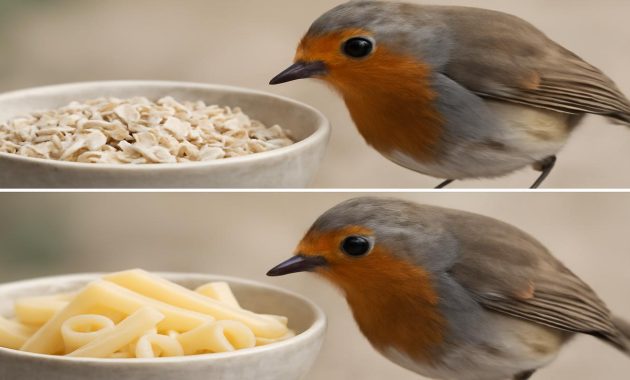
The first time you see a robin on a hard January morning, you notice the silence before anything else. The lawn is stiff with frost, each blade of grass edged in silver. Your breath ghosts in the air. Somewhere in the hedgerow, a blackbird rasps a few uncertain notes, but it’s the robin who steps forward, as if the garden is a stage and this tiny bird is the only one brave enough to rehearse. He hops, cocks his head, eyes sharp and bright. He is hungry. The ground is frozen; the worms are locked away. And there you are at the kitchen window, mug warming your hands, wondering what on earth you can do for something so small, so fragile—and, as it turns out, so dependent on the contents of your cupboards.
The RSPCA’s Quietly Brilliant Suggestion
In a world of complicated conservation plans and jargon-heavy advice, there’s something disarmingly simple about the RSPCA’s recent recommendation for helping garden birds, especially robins, through tough spells of weather: put out uncooked oats or cooked pasta.
No specialist feed. No expensive seed blends. No obscure, organic, artisan, hand-foraged pellets. Just the everyday starchy stuff sitting quietly in a jar on your shelf.
It sounds almost too low-key to be meaningful. But step outside on a cold morning with a handful of oats or a small bowl of cooled pasta, and you’ll see how quickly this suggestion turns into a lifeline. Robins in particular, with their fierce little hearts beating like drumrolls beneath that russet chest, need frequent, reliable energy boosts. During winter and cold snaps in spring or autumn, each day can become a tightrope act between enough calories and not quite enough.
This is where your kitchen becomes a tiny rescue centre. The RSPCA’s guidance isn’t about stocking up on exotic supplies; it is about recognising that you already have the capacity to help. And it begins with a single step onto the back doorstep and an open palm.
The Science Hidden in Your Cupboard
Robins are, in so many ways, the bird equivalent of a neighbour who always seems to be up and about. They’re among the first out at dawn, the last to give up at dusk, their song threading through the grey light like a strip of colour. But that constant activity comes at a cost. Their tiny bodies burn through energy at a staggering rate, especially in cold, damp conditions when they must generate extra heat just to stay alive.
Calories, for a robin, aren’t a luxury. They’re a countdown. Every icy night is a calculation: how long will their stored energy last before the cold wins?
That’s why food sources like uncooked oats and cooked pasta matter. They may seem plain to us, but to a robin trying to get through a night that drops below freezing, they’re as good as a hot meal by a fire.
Uncooked oats—the simple porridge kind you may stir into your breakfast—are rich in carbohydrates and have a pleasant, manageable texture for small beaks. Rolled oats, in particular, are easy to peck and swallow. They’re not an entire diet on their own, but as an energy top-up, they’re excellent.
Cooked pasta (plain, soft, completely cooled, and cut into small pieces) acts like an instant fuel pack. Think of it as a neutral, bird-safe carbohydrate source. It won’t replace insects, worms, or berries, but it can shore up a robin’s reserves when those natural foods are scarce or locked beneath ice and snow.
It’s the kind of advice that works because it’s grounded in bird biology: fast metabolisms, high energy use, and an urgent need for accessible, digestible calories. And unlike some foods that are harmful (like salty, seasoned leftovers or certain processed items), these simple staples are safe when offered correctly.
What’s Safe and What’s Not? A Quick-glance Table
To keep things simple when you’re standing in the kitchen, wondering what to take outside, here’s an at-a-glance guide to common items and how they sit with the RSPCA’s advice for garden birds like robins.
| Kitchen Item | Safe for Robins? | How to Offer | Notes |
|---|---|---|---|
| Uncooked plain rolled oats | Yes | Small handful scattered on a tray or ground | Avoid instant sachets with flavourings or sugar. |
| Cooked plain pasta | Yes | Soft, fully cooled, chopped into tiny pieces | No sauce, salt, oil, cheese, or seasoning. |
| Leftover sauced pasta | No | Do not offer | Salt, garlic, onion, and fats can harm birds. |
| Whole nuts (e.g. peanuts) | With care | Only in proper feeders, unsalted | Whole nuts can be choking hazards for small birds. |
| Bread | In moderation | Small amounts, mixed with more nutritious food | Fills them up without many nutrients; not ideal. |
| Raw meat, salty snacks, or seasoned leftovers | No | Do not offer | Can cause illness or attract pests and predators. |
How to Turn Oats and Pasta into a Robin’s Feast
Imagine walking outside with a small ramekin dish in one hand and a scattering of oats in the other, the cold patio stone seeping through your slippers. The robin is already nearby—you can feel his presence more than see it, a flicker of movement in the corner of your eye. This is the part where simple theory turns into lived, feathered reality.
The RSPCA’s recommendation is straightforward, but a few details make all the difference to how helpful (and safe) your offering becomes.
For uncooked oats:
- Use plain rolled or porridge oats, not instant flavoured sachets.
- Put out a small amount at a time—just enough for a day—to avoid waste and reduce the risk of attracting rats.
- Scatter them on a low table, ground feeder, or a flat stone where robins feel safe to hop and peck.
For cooked pasta:
- Cook it plain, without salt, oil, or sauce.
- Allow it to cool fully—lukewarm or cold is fine.
- Chop it into tiny pieces roughly the size of small insects or seeds.
- Offer only modest portions; this is a supplement, not their whole diet.
Place your offerings somewhere quiet, with a bit of cover nearby—a shrub, a pot, a bush—so the robin can dart away if startled. Robins are brave, but they are also prey. A feeding spot that feels exposed might stay eerily empty.
Within a day or two, word gets out in the local bird community. Robins are territorial, especially in winter, but other species will likely appear too: maybe a dunnock, shuffling along like a feathered mouse, or a wren, buzzing past in a blur of nervous energy. You are no longer just the person who lives in the house; you are the keeper of the breakfast table.
The Emotional Alchemy of Feeding Garden Robins
There’s a quiet magic in watching a robin step closer because of something you did. It starts with cautious hops at the edge of the patio, then bolder raids on the food tray, and, eventually, that moment when the bird looks up between pecks and you realise you’re both part of the same small story.
On paper, you’re offering carbohydrates and keeping in line with animal welfare guidance. But in practice, you’re participating in a relationship. Each time you top up the oats or chop a little extra pasta, you’re carrying out a tiny act of care that ripples far beyond your back garden.
You notice the robin’s routines: the early appearance just as the sky lightens; the mid-afternoon visit when the sun, if it’s even out, slopes along the fence; the way he fluffs up his feathers on a wet day so he looks almost spherical. You begin to tell the days by his comings and goings. And on mornings when you don’t see him right away, you find yourself lingering at the window, scanning the shrubs with unreasoned hope.
Feeding robins this way—simply, quietly, carefully—pulls you closer to the seasons, too. You feel the difference between a harsh frost and a mild one, not because of the weather report, but because of how ferociously the birds descend on the food. You notice when the first insects reappear in spring and your robin spends a little less time at the pasta dish, a little more hopping among the leaf litter.
This is the subtle alchemy of backyard conservation. You offer a few humble scraps; in return, the robin teaches you to see, to wait, to attend.
Seasonal Timing: Why “Right Now” Matters
The phrase “right now” is important in the RSPCA’s advice. There are times in the year when supplementary feeding is helpful, and times when it becomes absolutely critical. Harsh weather—cold snaps, extended frosts, snow cover, or even prolonged, dreary rain—can wipe out a robin’s usual options almost overnight.
When the soil freezes, earthworms retreat deeper, beyond the reach of a probing beak. When snow blankets the garden, fallen seeds and berries are hidden. Even insects, those staple snacks of warmer months, disappear from sight. The robin may still sing, may still look jaunty on your fence post, but it is doing so on a tighter and tighter energy budget.
That’s when your kitchen staples transform into emergency rations. By putting out oats or cooked pasta in these conditions, you’re not just being kind—you’re literally improving the odds that a bird survives the next 24 hours.
And while winter is the obvious danger period, sharp cold snaps in early spring can also be lethal. Robins that have just begun the exhausting process of breeding—defending territory, pairing up, building nests—are particularly vulnerable to sudden shortages of food. Your handful of oats on a blustery March morning might be the reason a clutch of eggs gets laid, or a parent bird has the strength to keep incubating through a chill night.
The beauty of this approach is that it’s flexible. You can ramp up the offerings during harsh spells and taper them off when natural food is more abundant, all while staying within a simple, easy-to-remember framework: safe, plain staples, offered with care.
Doing It Right: Hygiene, Balance, and Respect
There is a responsibility that comes with helping wildlife, even in small ways. The RSPCA’s recommendation isn’t just “put out food and hope”; it’s “put out the right food, in the right way.”
Some guiding principles make sure your good intentions stay genuinely good:
- Keep feeding areas clean. Rinse dishes or trays regularly and brush away old, damp food. Dirty feeding spots can spread disease among birds.
- Avoid overfeeding. It’s tempting to heap on the oats, but small, regular servings are better. They reduce waste and the risk of attracting unwanted visitors like rats.
- Don’t rely on just one food. Oats and pasta are brilliant as emergency energy sources, but birds also need fats, proteins, and a variety of textures. If possible, complement your “kitchen staples” with shop-bought bird seed, suet, or mealworms, and, above all, with a garden rich in plants and hiding spots.
- Always offer fresh water. In winter, this may mean gently breaking ice each morning. Water is as essential as food, and robins will use shallow dishes for both drinking and bathing.
- Respect their wildness. It’s charming when a robin grows bold enough to feed at your feet, or even from your hand, but they remain wild beings with their own boundaries. Enjoy the closeness, but let them make the first, and last, move.
Behind all of this is a simple ethic: we are not trying to tame or trap nature, just to ease its hardest days so that it can continue in all its vivid, untidy glory around us.
From Kitchen Habit to Everyday Conservation
It’s easy to think of conservation as something that happens far away: in dense forests, wide wetlands, or on remote islands inhabited by birds we’ll never see. But in many ways, the front line is your garden, balcony, courtyard, or shared green patch. The decisions you make about what to leave, what to plant, and what to offer from the kitchen can ripple out far beyond one robin’s breakfast.
By responding to the RSPCA’s simple suggestion—reaching into your cupboard for oats, draining a portion of pasta and setting some aside for the birds—you are making a quiet but potent statement: that the small lives flitting around your home matter, that they belong, and that you are willing to fold a bit of care into your daily routine.
Over time, that routine might grow. Perhaps you leave a corner of the lawn unmown, or let a bramble tangle a little instead of cutting it back to nothing. Maybe you plant a few berry-bearing shrubs or let autumn leaves lie where they fall, creating a banquet for invertebrates and, therefore, for the birds that feed on them.
But it can start, very simply, with a kettle boiling, a saucepan on the stove, and the knowledge that as you stir your own dinner, you can set aside a small, plain portion that could mean everything to a robin watching from the fence.
When you next see that flash of red breast against the dull green of winter ivy, or hear that liquid phrase of song piercing the drizzle of an early spring evening, you’ll know that your kitchen isn’t just a place for human meals. It’s part of a much larger web of survival, woven quietly every day, with uncooked oats, cooked pasta, and the decision to care.
Frequently Asked Questions
Can I feed robins oats every day?
Yes, you can offer plain, uncooked rolled oats regularly, especially in cold weather. Keep portions small and fresh, and ideally combine them with other bird foods such as seeds, suet, or mealworms so robins get a more balanced diet.
Is cooked pasta really safe for birds?
Plain cooked pasta is safe when offered correctly: no salt, oil, or sauce, fully cooled, and chopped into tiny pieces. It should be a supplement rather than the only food available. Avoid giving heavily processed or flavoured pasta dishes.
Are instant flavoured oats okay to use?
No. Flavoured or instant oats usually contain sugar, salt, and other additives that are not suitable for birds. Stick to simple, plain rolled or porridge oats without any flavourings.
What time of day is best to put food out for robins?
Early morning and late afternoon are especially helpful. Morning feeding helps birds recover from the long, foodless night, while an afternoon top-up helps them build energy reserves before the next one.
Will feeding robins make them dependent on me?
If you offer sensible amounts and avoid overfeeding, robins will continue to forage naturally and treat your offerings as a valuable bonus, especially in harsh weather. They may grow familiar with your presence, but they won’t stop being wild or lose their natural instincts.
Can I put food directly on the ground?
Yes, robins are comfortable feeding at ground level, but it’s safer to use a low tray or flat stone to keep food a little cleaner. Avoid leaving large amounts on bare soil, which can quickly become muddy or attract rodents.
Should I still feed birds in warmer months?
You can, but in spring and summer it’s wise to offer smaller quantities and a wider variety of foods. Natural prey like insects will form the bulk of a robin’s diet then. The most crucial time for oats and pasta is during very cold weather or sudden cold snaps when natural food becomes scarce.