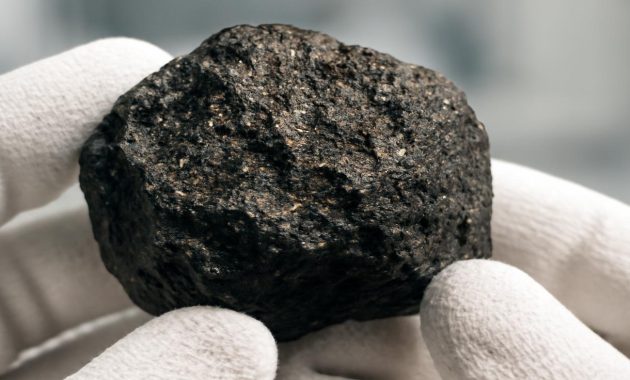
The rock was small enough to cradle in two hands, dark and utterly ordinary-looking, like something you might kick aside on a winter walk. Yet when it fell from the February sky over rural France, it carried with it a secret that would bend time itself: dust older than the Sun, older than Earth, older than the planets and the oceans and the forests and us. In that plain, blackened stone lay grains forged in the dying breaths of long‑gone stars, a cosmic memory nearly 7 billion years in the making, wrapped in snow and silence on a French field.
A winter night, a streak of fire
It began not in a laboratory, but under a cold sky. In February 2021, people across parts of France, Italy, and neighboring countries looked up and saw a white‑green fireball scrawling itself across the stars. Security cameras, dashcams, and doorbells caught it too: a streak, a flare, then darkness again. The kind of thing that appears in a thousand social media posts and vanishes into the scroll.
But this time, scientists were watching as well. A network of cameras, scattered across Europe like mechanical night watchmen, traced the fireball’s path and calculated its likely landing zone. In the space of hours, an invisible grid mapped itself onto the French countryside, narrowing down where fragments of this visitor from space might have fallen.
Snow lay on the fields, muffling sound, sharpening light. In that crisp stillness, a group of volunteers and researchers fanned out, boots crunching over frosted soil, breath fogging in front of them as they searched. It wasn’t glamorous work—more like a treasure hunt organized by the cosmos, with no guarantee of a prize. Then someone’s gaze snagged on a small, dark stone lying on the white surface, different from the others. It was matte, slightly fusion‑crusted, as though it had been licked by fire and left to cool.
They knelt. They brushed away the powdery snow. This was it: a piece of rock that, hours earlier, had been racing through space at tens of thousands of kilometers per hour—and, for billions of years before that, had been circling the Sun in the quiet darkness of the asteroid belt.
The rock that time forgot
The meteorite was officially classified as a chondrite, a type of stony meteorite that is, in many ways, a time capsule from the early Solar System. It was dubbed simply by the name of the nearby commune—but its true identity was stranger than any place name could capture.
Most rocks on Earth are storytellers with missing pages. They have been melted, crushed, reformed, bent and folded by tectonics and weather and chemistry. Even many meteorites are altered by the heat and impacts that sculpt asteroids over billions of years. But this particular rock, as early tests would show, had avoided most of that cosmic turbulence. It was as if someone had taken a small, dusty piece of the primordial solar nebula, sealed it in a vault, and hurled it toward Earth with a note that read: Do not disturb for 4.5 billion years.
In the lab, scientists sliced into the meteorite, polishing wafer‑thin sections and examining them under microscopes. What appeared was a mosaic of tiny, rounded droplets of once‑molten rock—chondrules—frozen in place like ancient sparks. Between them, and sometimes nestled inside them, lay even smaller fragments: specks of dust less than a thousandth of a millimeter across.
Some of those specks turned out to be extraordinary. Their chemistry and isotopic signatures were so wildly different from anything formed in our Solar System that there was only one explanation: they predated it. These were presolar grains—tiny crystals of silicon carbide, graphite, and other minerals that had grown in the winds of dying stars long before our Sun ignited.
Stardust in your hand
Imagine holding a pinch of sand. Now imagine knowing that a few of those grains had once floated in the outer layers of a red giant star, or condensed in the explosive outflow of a supernova. That is what this meteorite offered—a literal handful of stardust, preserved like pollen from another universe of time.
Presolar grains are rare survivors. The birth of a solar system is violent: clouds collapse, temperatures soar, shock waves slam through gas and dust. In that furnace, most of the older material melts, evaporates, or chemically resets—its past erased. Only the toughest grains, locked away inside larger clumps of dust and ice, make it through unscathed.
To find so many of them in a single meteorite, and in such pristine condition, was like finding a library of intact manuscripts in a city that had otherwise burned down. Within each grain was a different story: a different star, a different temperature and pressure, a different pathway of nuclear reactions ticking away at the heart of some long‑extinguished sun.
Scientists studied their isotopes—different versions of elements like carbon, oxygen, silicon, and nitrogen. The exact ratios of those isotopes act like stellar fingerprints. Some matched the signatures of red giants swollen at the ends of their lives; others bore the chaotic imprint of supernova explosions. A few might trace back to rare types of stars we still don’t fully understand.
These grains wrote a new chapter in the story of how our Solar System formed. They whispered that our Sun was not born alone, but in the recycled remains of many stars before it. The hydrogen in your coffee, the calcium in your bones, the iron in your blood—these are all children of those same long‑gone stars. The meteorite was simply honest enough not to hide that ancestry.
A race against Earthly time
One reason this French meteorite yielded such riches is that it was collected astonishingly fast. Most space rocks fall, lie unnoticed for years, and gradually soak up our world—water seeps in, bacteria explore every pore, oxygen rusts their metal and alters their minerals. That contamination makes it difficult to read their original story.
This stone, though, was recovered within hours of its arrival. It landed on a cold, dry, snow‑covered field, and was lifted carefully into scientific custody before thaw and rain and microbes could start their slow editing of its interior. In meteorite science, that speed is priceless.
Consider how different discoveries can be depending on how quickly we meet these visitors:
| Meteorite Feature | Freshly Recovered (Hours–Days) | Weathered on Earth (Years) |
|---|---|---|
| Organic molecules | Often preserved; easier to detect | Broken down or contaminated |
| Water‑sensitive minerals | Close to original extraterrestrial state | Altered by rain and humidity |
| Presolar grains | Better preserved, easier to isolate | Can dissolve or become harder to recognize |
| Magnetic metals | Mostly unoxidized, original texture intact | Rust forms, obscuring clues |
Because this meteorite arrived like a special‑delivery package straight from space, it preserved not only ancient grains but also delicate organic molecules and water‑bearing minerals. Together, these traces help scientists work out what the early Solar System was like as planets were assembling, oceans were condensing, and the building blocks of life were beginning to stir.
Listening to the birth of the Solar System
When we hear “older than the Sun,” it’s tempting to imagine a kind of hard border in time: before the Sun, after the Sun. But the truth is more like a slow blending of eras. Long before our star lit up, a cold cloud of gas and dust wandered the Milky Way, shaped by shock waves from supernovae, twisted by passing stars, tugged by gravity’s patient hand. Within that cloud, presolar grains drifted like tiny seeds waiting for a garden.
Eventually, part of that cloud began to collapse, its own gravity pulling it inward into a spinning disk: the infant Solar System. Temperatures rose near the center, where the Sun would ignite, while the outer regions remained cool and shadowy. Dust clumped and collided, sticking into larger and larger aggregates. Some melted and formed the chondrules we see in meteorites; others stayed cool and fragile, preserving their older structure.
The French meteorite is a snapshot of that messy, in‑between time. In a single thin slice of rock, you can read the contrast: glassy beads of once‑molten material, right next to grains that never felt the Sun’s fire. It is like finding an ancient city wall built partly from freshly fired bricks and partly from stones scavenged from even older ruins.
By measuring the composition and isotopic ratios of the meteorite’s minerals, scientists can reconstruct temperatures, chemical environments, and timescales. They can estimate how long dust floated in the protoplanetary disk before it coalesced into the rock you could hold in your hand today. They can compare it to samples from other meteorites and to the tiny fragments brought back by missions like Japan’s Hayabusa2 and NASA’s OSIRIS‑REx.
Piece by piece, a picture emerges: the Sun’s nursery was not a simple, uniform cloud, but a collage of cosmic leftovers. It contained fresh material and ancient star‑ashes, mixed together in ways that still surprise us. And from that mixture came everything we know.
France’s quiet cosmic museum
If you imagine meteorite science happening only in dust‑coated back rooms or glossy space agencies, the story of this stone offers a different image: a living landscape as part of the lab. The French countryside where the meteorite landed is now stitched into the story of planetary science, as significant in its way as any telescope dome or cleanroom.
France, like many places, is sprinkled with hidden cosmic artifacts. Some lie in museum drawers, some in university collections, some in private hands. But this particular fall brought the country unexpectedly into the limelight. Because of the rapid recovery and the remarkable purity of the sample, the meteorite quickly became a reference point—a kind of standard candle for what a truly pristine, carbon‑rich, presolar‑grain‑bearing rock can look like.
It also highlighted the quiet heroism of the people who search for these objects. Volunteers in reflective vests trudging across frozen fields, carefully flagging anything unusual. Students waking before dawn to plan search grids. Local residents welcoming strangers with clipboards, then following their progress online as “their” rock became world‑famous. No single person can claim ownership of a meteorite’s story; it is written by many hands and many eyes, human and electronic.
For France, this is more than a curiosity. Each meteorite fall—and particularly one so well documented—adds to a long‑term archive that will outlive us. Future scientists may re‑examine these rocks with tools we can’t yet imagine, reading new stories in old dust.
What an ancient stone says about us
Stand outside on a clear night and tilt your head back. The stars look timeless, but their light is a parade of endings and beginnings. Some are just now settling into steady adulthood, some are swelling and cooling toward red‑gianthood, and some have already exploded, their remnants spread like a fine powder throughout the galaxy.
The French meteorite is, in a sense, a souvenier from those vanished stars—proof that their endings became our beginnings. A few of its grains predate our Sun by billions of years, yet they survived to land, intact, in a snowy field and eventually beneath the bright, artificial lights of a laboratory.
There is a quiet humility in that journey. We tend to think of ourselves as living at the center of the story, but this rock reminds us that we are latecomers. We arrived after the script had been in development for eons, our planet built from recycled pages of earlier drafts. The calcium in your teeth, the silicon in your phone, the gold in your ring: all once belonged to other stars, other times.
And yet, in a way, that makes our presence here even more astonishing. Those long‑gone suns could not know that their final acts would one day be studied by soft‑voiced researchers in white lab coats, or read about by someone scrolling on a small glowing screen. They could not predict that their ashes—found in a meteorite in France—would help a species on a blue planet understand where it came from.
Every time a meteor streaks across the sky, the world keeps turning. Most people glance up, smile, and forget. But once in a while, when we are watching carefully, when snow lies on the fields and cameras are aimed at the stars, we catch a piece of that falling light and ask it to tell us a story. The answer, as this cosmic treasure in France shows, can stretch far beyond the Sun, and deep into the long, dark, glittering history of the galaxy.
FAQ
How old are the grains inside this meteorite?
The presolar grains inside the meteorite are estimated to be up to around 7 billion years old. That’s significantly older than our Solar System, which formed about 4.6 billion years ago, and older than our Sun itself.
What exactly are presolar grains?
Presolar grains are tiny mineral crystals that formed in the atmospheres and outflows of stars that lived and died before our Solar System existed. They survived the collapse of the gas cloud that formed the Sun and planets, becoming embedded in primitive meteorites where we can still find them today.
Why was this French meteorite so important to scientists?
It was recovered very quickly after its fall, which meant it was exceptionally fresh and uncontaminated. Its primitive composition, rich in carbon and presolar grains, provided a rare, clear snapshot of the early Solar System and the stardust that helped build it.
How do scientists know the grains are older than the Sun?
They analyze the isotopic compositions of the grains—ratios of different forms of elements like carbon, oxygen, and silicon. These patterns don’t match anything produced in our Solar System but do match what we expect from specific types of older stars, showing the grains formed long before the Sun existed.
Can ordinary people find meteorites like this?
Yes, though it’s rare to find one this scientifically valuable. Meteorites often look like dark, dense rocks with a thin, melted outer layer. Organized searches, like the one for this French meteorite, greatly increase the chances of finding fresh falls. Anyone who believes they’ve found a meteorite can contact local universities or natural history museums for help with identification.