The night my kitchen island proved it had to go, I was standing in the one place I always seemed to end up: stuck. Guests squeezed past me to reach the sink; someone backed into a barstool; the oven door couldn’t open all the way because someone else had settled right where it swung out. The room looked modern in that catalog kind of way—sleek slab of stone in the center, pendant lights, the whole dream—but it didn’t feel good. It felt like a traffic jam with a marble centerpiece.
The Silent Problem with Kitchen Islands
For decades, the kitchen island has been the unquestioned hero of home renovations. It promised everything: more storage, extra seating, a showpiece surface to roll dough or stage charcuterie boards. If you didn’t have the square footage, you were supposed to want it. If you did, you were supposed to make it bigger.
But somewhere between sourdough booms and endless home tours on social media, reality began to push back. People started to notice how often they walked all the way around that bulky rectangle just to grab a forgotten spatula. How the dishwasher door clashed with the island edge. How the family member stationed on the “island stool” became both audience and obstacle, blocking drawers and turning every cooking session into a choreography of “excuse me” and “can you move your chair in?”
Islands are dramatic, yes. But they’re also rigid. Immovable. They assume that life in the kitchen will always orbit a single heavy object in the middle of the room. Our lives, however, are changing. We work at home more. We cook differently. Our gatherings look less like events and more like slow, shifting evenings where people drift, snack, help, wander away, and wander back.
And that’s where the new trend quietly steps in—lighter, more flexible, and unexpectedly elegant.
The 2026 Shift: Enter the Kitchen Worktable & Flow Concept
When designers talk about the next wave after kitchen islands, they’re not replacing one buzzword with another. They’re replacing a mindset—fixed and centered—with one that is dynamic and fluid. At the heart of this change is a reimagined version of something old: the kitchen worktable.
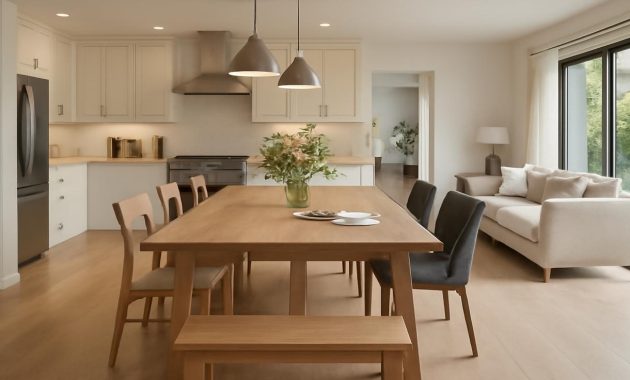
Think less “chunk of cabinetry in the middle of the room” and more “beautiful, purposeful piece of furniture that just happens to live in the kitchen.” The new worktable trend is about slimmer profiles, open legs, movable bases, and pieces that support different modes of living throughout the day. It’s a return to the timeless prep table, but tailored for 2026 homes: part workstation, part social magnet, part design statement.
Unlike an island rooted to the floor with utilities and weighty construction, a modern worktable might stand on tall slender legs, hide locking casters, or be anchored at one end to a wall or support column, leaving the rest floating gently into the room. It might host a single small sink or induction hob, but it resists becoming the utility monster that tries to do everything at once. It’s more honest and more human: a place to chop, gather, and sit without swallowing half the square footage.
And perhaps the most radical part? It puts the idea of “flow” back into the center of kitchen design. The room is no longer organized around a block; it’s organized around how you actually move.
A Table That Moves with You
Picture a bright morning. Sunlight grazes the floor. Instead of a hulking island casting a permanent shadow, you have a graceful worktable: wood top, slim legs, maybe a soft radius at the corners so hips and toddlers’ heads are spared harsh encounters. Coffee cups sit next to a laptop. A bowl of pears glows in the light. The whole piece floats—visually and physically—free enough that air and bodies can slip easily around it.
Later in the afternoon, you pull the table six inches closer to the stove for a big cooking session, or rotate it slightly so two people can prep side by side. In the evening, a few stools slide under the overhang, turning it into a casual dining spot. When you host a party, the table becomes a serving station pushed a bit toward the wall, clearing a path right through the center of the room so guests can circulate naturally from kitchen to living room and back again.
Instead of asking the room to obey the furniture, you’re asking the furniture to serve the room—and your life in it.
How This New Trend Changes Daily Life
Trends can sound abstract until you feel them in your body. The 2026 replacement for the kitchen island isn’t just about aesthetics; it’s about the way your day actually moves.
There’s a moment, for example, when you’re cooking alone on a weeknight. Music playing. Onions hitting hot oil, releasing that sweet, sharp scent that fills the whole space. With a worktable, your prep space is drawn closer to the sink and stove, narrowing your steps but opening your sightlines. You can look straight through the room rather than around a bulky core. Your shoulders drop a little. You’re not circling; you’re gliding.
On Saturday mornings, a child spreads homework across one side of the table while you roll out pizza dough on the other. You’re sharing more than a surface; you’re sharing proximity. In a world where so much togetherness happens through screens, there’s something powerful about a long, narrow table that brings people side by side, elbows nearly touching, instead of everyone fanning out around the perimeter of a massive block.
Cleanup, too, feels different. Open bases and raised legs make it surprisingly easy to sweep, mop, and even let light pass beneath. There’s nowhere for dust bunnies to hide, and the room feels taller because your eye can see the floor stretching unbroken beneath the furniture. The kitchen stops being a stone obstacle course and starts feeling like a living, breathing space.
The Subtle Luxury of Breathing Room
In design, luxury isn’t always about materials or size; it’s often about space and ease. A smaller kitchen with clear circulation and a slender worktable can feel more generous than a big kitchen dominated by a center island. You notice it in the way you can cross the room without turning sideways, in how two people can pass each other without an awkward swivel or apology.
This new trend leans heavily into negative space: visual pauses, glimpses of floor, the rhythm of legs and light instead of solid cabinets wall-to-wall. Even in apartments and townhouses, the effect is striking. Removing a bulky island in favor of a lithe worktable tends to reveal more of the room’s bones—windows, textures, unexpected sightlines you didn’t realize were blocked.
Functionally, that breathing room makes everything feel more possible. A spontaneous baking project doesn’t turn the kitchen into a construction zone. A visiting friend can perch at the table without sitting smack in the middle of your work triangle. The table can serve as buffet, homework desk, bar, or craft station on demand. Your kitchen no longer insists on a single identity; it flexes with you.
Design Details: What Makes the New Worktable Different?
The new kitchen worktable isn’t just a regular dining table dragged into the kitchen. It’s a hybrid creature, tuned slowly by designers to hit a very specific balance: part furniture, part tool.
Proportions, Materials, and Movement
Most of these pieces hover in a sweet spot: slimmer than an island, but more substantial than a typical table. They tend to be longer and narrower, so people can reach across comfortably. The legs are intentional—tapered wood, powder-coated metal, or a subtle trestle design that feels crafted, not constructed.
Materials are tactile and inviting: oak with a soft matte finish that begs to be touched, stone in lighter profiles, or even durable composite surfaces that look elegant but can handle hot pans and knife marks. Occasional integrated rails or low shelves offer storage for baskets or everyday tools, but the undercarriage remains mostly open—breathing space first, storage second.
Mobility is quiet but critical. Some tables feature barely noticeable locking casters; others have glides that make them easy to shift along a smooth floor. You don’t necessarily roll them around every day, but knowing you can reorient them gives you a psychological sense of freedom. It’s no longer “the island is here forever”; it’s “this table will grow with us.”
Lighting also changes the picture. Instead of three pendant lights rigidly aligned over a bulky island, designers are experimenting with softer linear fixtures or a pair of sculptural lamps that echo the table’s shape without locking the room into one configuration. The whole composition—table, light, flooring—feels more like a well-curated living space and less like a permanent kitchen installation.
| Feature | Traditional Kitchen Island | 2026 Kitchen Worktable Trend |
|---|---|---|
| Mobility | Fixed, built-in, rarely moved | Semi-movable, can be shifted or repositioned |
| Visual Weight | Bulky, blocks floor and sightlines | Light, open legs, more visible floor space |
| Function | All-in-one block: storage, appliances, seating | Focused: prep, serving, flexible social hub |
| Feel | Imposing, static, can feel cramped | Airy, adaptable, encourages free movement |
| Design Language | Built-in cabinetry look | Freestanding furniture aesthetic |
Real Homes, Real Shifts
Trends can sound theoretical until you step into a home that’s already made the leap. Imagine a compact city apartment, for instance, where the old island once pinched the room into thirds: narrow entry, tight cooking zone, lonely corner for a small table. The new layout replaces that static block with a leggy worktable that stretches from near the window toward the stove, leaving a generous diagonal path. Instantly, the kitchen feels less like a corridor and more like a studio—multiple activities overlapping without chaos.
Or consider a suburban family home built in the 2000s with the classic oversized island that everyone once envied. The countertops were generous, yes, but reaching anything on the far side felt like leaning across a conference table. When the family swapped the island for a long, narrow worktable, something surprising happened: they started using the entire room. Kids did art projects at one end while a parent prepped dinner at the other, with enough in-between space for someone to drift through with a laundry basket or laptop without bumping into anyone.
From Showpiece to Living Piece
Islands were often designed to impress from a distance—a big, glossy surface that photographed well. The new worktable trend is more about how things feel up close and over time. The nicks in the wood from a dropped mug, the faint heat mark from an overenthusiastic casserole, the wax from a candle that dripped during a long conversation that stretched past midnight—these become part of the table’s story.
In this way, the worktable echoes old farmhouse kitchens, where a single sturdy table anchored the entire room’s activity. There’s a comfort in knowing your main piece can age with you, potentially even move with you from house to house, instead of being ripped out and replaced when fads change.
Planning Your Own Island Goodbye
If you’re staring at your own kitchen island right now, wondering whether it has overstayed its welcome, you’re not alone. Across design studios and renovation plans, the questions are shifting from “How big can we make the island?” to “Do we even need one at all?”
Before grabbing the sledgehammer, though, it helps to think through how you actually live. Are you constantly bumping into corners, or do you genuinely use every inch of your existing island? Do your gatherings tend to center on a single spot, or do people naturally want to spread out and move? Does your kitchen need more storage, or does it need more space to breathe?
Simple Ways to Experiment First
You don’t need a full renovation to test the new trend’s logic. Try clearing your island completely for a week—no decor, no appliances—and paying attention to how you walk around it. Then, imagine the same footprint occupied by something slimmer and open underneath. Or, if your layout allows it, temporarily move in a narrow table or even a folding workbench and see how the room’s energy changes.
Notice where the sunlight falls during the day. Notice where you naturally stand when you’re chopping or stirring. Notice if you feel more relaxed with a clear center to the room, or if you prefer a table pulled slightly off to one side, leaving a broader path from sink to window or from fridge to stove.
These small experiments can reveal whether the 2026 worktable-and-flow trend is just a pretty idea or a practical match for the way you live. For many people, once they feel the difference in their own bodies, going back to a static island stops making sense.
FAQs
Is this new worktable trend only for large kitchens?
No. In fact, smaller kitchens often benefit the most. A slimmer, leggy worktable can open up circulation and sightlines, making a compact room feel bigger and more comfortable than a bulky island ever could.
Can a worktable replace the storage of a traditional island?
Not always one-to-one, but often you don’t need as much concealed storage as you think. Many designs add shallow drawers, rails, or low shelves, and then shift bulkier storage to tall pantries or wall units. The tradeoff is better flow and a more open feel.
What about seating—can I still have stools?
Yes. Many modern worktables include an overhang on one or two sides for stools. Because the piece is slimmer, seating tends to feel more like sitting at a café table and less like perching at a bar, which is often more comfortable for longer conversations.
Are utilities like sinks and cooktops still going into these tables?
Sometimes, but more sparingly. The new trend favors keeping heavy utilities on perimeter counters and allowing the worktable to stay flexible. A small prep sink or portable induction unit can work, but the magic lies in keeping the table as mobile and light as possible.
Is this just a passing style, or will it age well?
Because the worktable draws from timeless furniture forms—simple wood, classic proportions, honest materials—it tends to age more gracefully than hyper-specific built-in cabinetry. It’s less about fashion and more about function and feel, which gives it staying power well beyond 2026.