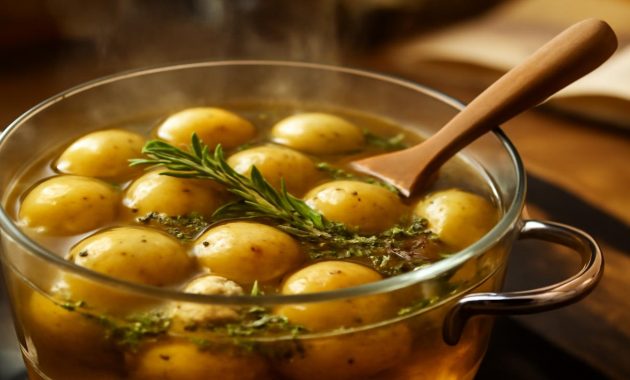
The last time I boiled potatoes in plain water, I remember staring into the pot and thinking: this smells like…nothing. A silent, steaming nothingness. The potatoes bobbed in their flavorless bath, slowly softening into bland, obedient cubes. It was fine, technically. Edible. Safe. But it felt like a missed opportunity—like hiking a mountain and stopping just before the summit. Somewhere between the clink of the lid and the hiss of the burner, a tiny, stubborn thought settled in: there has to be a better way to do this.
The Moment I Broke Up with Plain Water
It happened on a gray Sunday afternoon, the kind of day where the sky feels low and you move a little slower, almost out of respect for the weather. I had a bag of potatoes on the counter—earthy, still dusted with soil—and a pot already pulled from the cupboard by habit. My hand hovered over the tap, ready to fill the pot as I’d done a thousand times before.
Then I opened the fridge and caught the scent of something else: a jar of homemade vegetable broth I’d made from scraps—onion ends, carrot peels, celery leaves, parsley stems, a bay leaf or two. It was the color of late afternoon sunlight, slightly cloudy, smelling faintly of roasted garlic and thyme. I had planned to use it for soup later in the week, but as I lifted the lid, the aroma curled up into the kitchen like an invitation.
Why, I wondered, do we treat potatoes like they’re a blank canvas that should stay blank until the very last second? We fuss over them with butter and herbs and salt only after they’re cooked, as if flavor is a hat you toss on at the door. What if the potatoes could soak in flavor from the inside out, from the very first simmer?
So I did something small but quietly radical: I put the pot under the tap, but only to give it a quick rinse. Then I set it on the stove, poured in the golden broth, and dropped in the potatoes. No plain water. No turning back.
The Broth That Changed Everything
The first time the broth started to warm, the kitchen shifted. Instead of that neutral, slightly metallic steam of boiling water, there was an unfolding perfume: sweet onion, mellow garlic, a whisper of bay leaf, peppercorns humming along in the background. It smelled like comfort, like the beginning of a real meal rather than a side dish afterthought.
And the sound was different too. It was still a boil, still that rolling murmur under the lid—but I swear it sounded thicker, heavier, as if tiny molecules of flavor were knocking on the potatoes’ doors, asking to be let in.
When I finally fished out a piece with a fork and pressed it gently against the side of the pot, it yielded with a soft sigh. I let it cool for a second on my tongue, already expecting the same old story. But the inside tasted…alive. The flesh was creamy and tender, but more than that: it tasted seasoned all the way through, as if it had swapped its starchy soul for something deeper and more complex.
There was a subtle sweetness from carrots, a savory backbone from onions and celery, and a quiet, herbal echo from thyme and parsley. The potato wasn’t just a vehicle for flavor; it was carrying its own. For the first time, a simple boiled potato felt complete, even before I’d added a single pinch of salt.
What Actually Happens When You Use Broth Instead of Water
On paper, it’s simple: potatoes simmer in liquid until tender. But swapping water for an aromatic broth changes the entire internal landscape of those potatoes. As the starches swell and soften, they’re not just absorbing heat—they’re taking in the dissolved flavors suspended in the broth.
Salt, herbs, and aromatics ride in on the simmering liquid, easing their way into the tiny spaces between the potato’s cells. Instead of a bland interior waiting to be rescued at the end, the flavor is built in, layered from the first bubble.
The result is not aggressive or overwhelming. It’s more like the difference between a photo in black and white and the same image in soft, natural color. The potato still tastes like itself—it’s just more itself, more dimensional, more interesting.
Building an Aromatic Broth: A Gentle Ritual
The beautiful part is, you don’t need anything fancy to make a broth that transforms potatoes. In fact, the most compelling broths often begin with the bits and ends of everyday cooking—the parts that usually get thrown away.
Simple Vegetable Broth for Potatoes
Here’s the basic rhythm I’ve settled into, one that you can adapt to whatever you have on hand:
- A base of sweetness: Carrot peels, carrot ends, or a chopped carrot.
- Depth and backbone: Onion skins and ends, or a halved onion—yellow or sweet works best.
- Green brightness: Celery ribs and leaves, or even the pale inner heart.
- Herbal whispers: A few stems of parsley, thyme, or rosemary.
- Aromatics: Crushed garlic cloves (skins and all), a bay leaf, whole peppercorns.
Toss everything into a pot, cover with water, and let it barely simmer for 45–60 minutes. Strain, and you’ve got a fragrant, light broth that’s more a suggestion of flavors than a loud statement. Perfect for potatoes.
If you prefer, you can use a good-quality store-bought vegetable or chicken broth, then tame it with a bit of extra water so it doesn’t overpower the potatoes. I often go half broth, half water—just enough to keep things interesting.
The Potato–Broth Ratio (In Real Life Terms)
This doesn’t need to be scientific, but to roughly guide you, here’s an easy reference I keep coming back to:
| Potatoes | Broth + Water | Ideal Use |
|---|---|---|
| 500 g (about 3 medium) | 1–1.25 L (enough to just cover) | Side dish for 2–3 people |
| 1 kg (about 6–7 medium) | 2–2.25 L | Mashed potatoes or salad for 4–6 |
| 1.5 kg (large pot) | 3–3.25 L | Meal prep, gatherings, big batch cooking |
The real key: the potatoes should be just barely submerged in the liquid, not swimming laps in a huge, watery pool. Less liquid means more concentrated flavor.
How the Broth Changes What You Do Next
The first time you taste a potato cooked in aromatic broth, you’ll notice something subtle but important: you don’t reach for the salt as quickly. You don’t feel the urge to drown it in butter or smother it with toppings to make it interesting. The potato stands up for itself.
Mashed Potatoes, But Grown Up
Turn those broth-simmered potatoes into mash, and the difference is almost shocking. Instead of unseasoned fluff waiting to be fixed, you start with something already layered and savory. A splash of the warm broth in place of some of the milk or cream creates a mash that’s lighter, silkier, and somehow more honest.
I like to:
- Mash the potatoes while they’re still hot.
- Add a knob of butter and a small ladle of the cooking broth.
- Taste before adding salt—it almost always needs less than I expect.
- Finish with a drizzle of good olive oil and a crack of black pepper.
What you get is not the buttery bomb of a holiday table, but something gentler, with a kind of countryside simplicity. Warm, savory, quietly complex.
Potato Salad with a Secret
Broth-cooked potatoes also transform potato salad. Because they’re seasoned from the inside, every bite tastes intentional—even if the dressing is modest. A vinaigrette clings more willingly to a potato that already hums with flavor.
I’ve started making a simple version that feels like it belongs somewhere between a picnic and a farmhouse kitchen:
- Still-warm broth-boiled potatoes
- A splash of the cooled broth
- Olive oil, Dijon mustard, and a spoonful of vinegar
- Finely chopped shallot or scallion
- Fresh dill or parsley
You toss, taste, and suddenly the salad doesn’t need much else. The dressing lifts what’s already there instead of trying to resuscitate a bland base.
Little Tweaks, Big Shifts in Flavor
Once you start boiling potatoes in broth, it’s hard not to tinker. The broth becomes a canvas of its own, a place where you can nudge the mood of a meal before you even reach for a pan or a roasting tray.
If You Want Cozy and Rustic
For cold evenings, I lean into deeper, woodsy flavors:
- Vegetable or light chicken broth
- One smashed garlic clove
- A small sprig of rosemary or thyme
- One bay leaf
The potatoes come out tasting like they spent the afternoon near a fireplace. Serve them with roasted mushrooms, a simple green, maybe a spoonful of mustard, and the whole plate feels like a wool blanket.
If You Want Bright and Lemony
When the air gets warmer and the markets fill with greens and fresh herbs, I shift:
- Vegetable broth lightened with water
- A strip or two of lemon peel (just the yellow, no white pith)
- A few parsley stalks
- Crushed coriander seeds, if you have them
The potatoes emerge with a faint citrus perfume, springlike and clean, ready to share a plate with grilled fish or a big salad. You don’t taste “lemon potatoes” so much as potatoes that feel awake.
A Slower, More Intentional Way to Cook the Ordinary
What surprised me most wasn’t just the flavor—it was how this small change altered the way I moved in my kitchen. Making or choosing a good broth asks you to think a step ahead. To look at the humble potato and treat it with the same respect you might give a good cut of bread or a ripe tomato.
Instead of flinging potatoes into a pot of anonymous water, you’re choosing the kind of story you want them to tell. Should they be rustic and smoky alongside roasted root vegetables? Or bright and herbal, nestled beside grilled vegetables and a simple sauce? The broth you build guides you.
It also turns leftover odds and ends—onion skins, carrot tops, celery leaves—into quiet contributors to dinner. The broth becomes a soft-spoken record of earlier meals, and the potatoes, in turn, become a bridge to the next one. Yesterday’s scraps become today’s depth of flavor.
And then there’s the ritual: the soft clatter of vegetable trimmings in a pot, the first rising tendrils of steam scented with garlic and herbs, the warmth that creeps out of the kitchen and into the rest of your home. You don’t just end up with better potatoes. You end up with a slower, gentler rhythm to your cooking life.
Why I Haven’t Gone Back
You could say this is a minor tweak in the large map of cooking—just a simple substitution of water for broth. But minor doesn’t mean trivial. Small choices add up, especially in the kitchen, where repetition is the rule. You’ll probably cook potatoes hundreds of times in your life. Imagine if each one of those quiet, routine pots held more aroma, more intention, more pleasure.
I haven’t boiled potatoes in plain water since that gray Sunday. Not because I’ve sworn off simplicity, but because this new version feels like a better kind of simple. It’s not more complicated or more precious. It’s just more alive.
Now, when I pour broth over potatoes and set the pot on the heat, I know what’s coming: the slow build of fragrance, the steam fogging the nearby window, the gentle bubbling that says everything inside is changing in ways I can’t see but will absolutely taste. When I lift the lid, I’m not greeted by silence. I’m met by a quiet chorus of the things I put there on purpose—herbs, vegetables, time.
A pot of potatoes has become something to look forward to, not just something to get done. And once you taste the difference, it’s hard to go back to that pot of steaming nothingness, to that old assumption that water is “good enough.”
If you have a bag of potatoes on your counter and a few lonely scraps of vegetables in your fridge, you already have what you need to find out for yourself. Fill the pot with something aromatic, something you’ve coaxed or chosen, and let the potatoes drink it in. Watch how the air in your kitchen changes. Taste how the simple, familiar bite of potato softens, expands, and suddenly feels like more.
I don’t boil potatoes in water anymore. I simmer them in broth—aromatic, gentle, quietly generous broth—and in that small, daily act, dinner becomes less of a task and more of a moment. One pot. One change. A hundred better meals.
Frequently Asked Questions
Can I use store-bought broth instead of homemade?
Yes. Store-bought broth works well. Choose a low-sodium version so you can control the salt, and if it tastes very strong, dilute it with some water (half broth, half water is a good starting point).
Will the potatoes taste too salty if I boil them in broth?
Not if you’re careful. Use low-sodium broth and avoid adding extra salt to the pot at first. Taste a piece of potato near the end of cooking before seasoning further.
What kind of potatoes work best with broth?
Waxy or all-purpose potatoes (like Yukon Gold, red, or new potatoes) hold their shape well and absorb flavor beautifully. Floury potatoes (like Russets) also work, especially for mashed potatoes, but may break down more.
Can I reuse the leftover broth after boiling potatoes?
Yes, as long as it still tastes good. It will be slightly thickened and starchy, which can be wonderful in soups, gravies, or for cooking grains like rice or barley. Cool it quickly and store in the fridge for up to a few days.
How long should I cook the potatoes in broth?
Timing depends on the size of the pieces. Cubed potatoes usually take 10–15 minutes at a gentle simmer; whole small potatoes can take 20–25 minutes. They’re done when a knife or fork slides in easily without resistance.
Can I add spices directly to the broth when cooking potatoes?
Absolutely. Whole spices (peppercorns, coriander seeds), bay leaves, herb sprigs, garlic, or strips of citrus peel all work well. Just avoid adding too many strong spices at once so the potatoes don’t get overwhelmed.
Is this method suitable for people watching their fat intake?
Yes. Boiling potatoes in broth adds flavor without relying on butter, cream, or oil. You can keep them very light or add richness afterward in controlled amounts, depending on your needs.