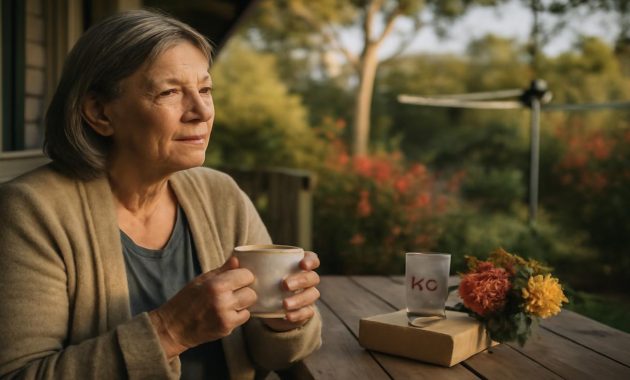
It crept up on me quietly, sometime between the ache in my right knee and the first time a stranger called me “darl.” Sixty. I didn’t wake to trumpets or a crisis, just a kookaburra laughing outside the bedroom window and the smell of eucalyptus drifting in from the gum tree I’d been “meaning to prune” for three years. There were no dramatic revelations, no cinematic mid-life plot twist. Just one simple, unsettling thought: if I keep living like I did at 40, I won’t be able to live at all at 80.
That’s the part nobody told me about turning 60. You don’t suddenly become “old” overnight. You simply realise that the lifestyle you’ve been promising yourself you’ll change “one day” needed to be changed ten years ago. Maybe twenty. And yet, oddly, it’s also the first age where you feel strangely free enough to finally do it.
The day the mirror started telling the truth
It happened on an ordinary Tuesday. Humid Sydney morning, sky that washed the whole street in that pale, salt-bleached light. I leaned toward the bathroom mirror to put on my glasses and caught a version of myself I usually only half-noticed: the fine map of lines between my brows, the softening jaw, the way my shoulders curled forward like they’d been slowly apologising to gravity for years.
In the kitchen, the kettle hissed and rattled. I reached for the usual — white toast, lashings of butter, quick instant coffee — and then stopped, hand on the bread bag. My GP’s voice from my last check-up floated back with surgical clarity: “You’re not sick, but you’re not exactly well either. Think of this as the maintenance phase. What you do in the next ten years writes your 80s.”
At the time, I’d shrugged it off. I walked a bit, didn’t smoke, only drank “socially” (a word that had started doing a lot of quiet heavy lifting). But that particular Tuesday, with the mirror still clinging to my mind like fogged glass, his words shifted from background noise to alarm bell.
I buttered just one slice of toast instead of two and, almost ceremonially, sliced an apple I’d been ignoring in the fruit bowl. It wasn’t a diet decision. It felt more like a truce with time. A quiet, stubborn declaration: I am not done yet.
Nobody told me: 60 is not an ending, it’s a re-write
The biggest myth about turning 60 — especially in Australia, where the cultural script still whispers that life’s “real” adventure belongs to the young — is that you step onto some invisible on-ramp to decline. Your job is to drift gracefully out of the way, keep your world small, and not cause trouble.
What nobody told me is that 60 can feel more like a second adolescence, minus the acne and existential terror. There’s a new kind of rebellion that comes with it. You’ve proven whatever you needed to prove. You know what a “good job” did and didn’t give you. You’ve ticked the boxes: the mortgage, the kids, the career, the caring for other people’s emergencies. Suddenly, you’re left with a strange, spacious question: now what?
I started asking that question out loud, over coffee with my friends, most of them hovering around my age. The answers came hesitantly at first.
“I wish I’d started walking earlier,” one said, fingers wrapped around her mug like it was a lifebuoy. “My hips hate me.”
“Should’ve ditched night shifts ten years ago,” another admitted. “I’m permanently tired. Like, down to the bones tired.”
“I wish I’d learned how to have fun that wasn’t wine,” someone else whispered, almost embarrassed.
There it was: a quiet chorus of regrets that all pointed in the same direction. It wasn’t about looks or status or bucket-list trips to Europe. It was about the lifestyle we’d normalised in our 30s and 40s — busy, overcommitted, fuelled by stress and quick fixes — now showing up in our bodies like unpaid bills.
And yet, threaded through those confessions was something else: possibility. We weren’t bedridden. We weren’t done. We just needed a different script.
The lifestyle shift nobody sells you at 40
When you’re 40 in Australia, you’re marketed gym memberships, miracle diets, and travel experiences designed for Instagram. The message is: stay young, stay hot, stay busy. Nobody tells you that what matters most at 60 is much less glamorous, and far more radical: it’s about designing a life you can actually sustain — physically, mentally, and financially — for the long haul.
This is the shift many Aussies at 60 quietly admit they wish they’d made earlier:
- Moving every day like it’s medicine, not punishment.
- Choosing food that loves you back in twenty years, not just for five minutes.
- Building friendships as deliberately as you built your career.
- Spending money with 80-year-old you in mind.
- Letting go of roles and identities that no longer fit.
If that sounds big, it is. But it doesn’t look big from the outside. It often looks like small, almost boring decisions stacked over time.
Take mornings, for example. Mine used to be a frantic scramble: alarm, snooze three times, scroll the news, rush through a shower, drive to work half-awake, already late, already guilty. Movement didn’t exist unless I was chasing a bus.
Now, my mornings are slower, but oddly more charged. I wake up earlier, not because I’m virtuous but because my body seems to have reset its internal clock. I stretch in bed for a full minute, feel my joints complain, then ease. I pull on my runners, slip out into the cool air, and walk. Some days it’s 10 minutes around the block, other days a full 40 along the river track, watching lorikeets stage their noisy morning disagreements.
It is not heroic. I’m not “smashing workouts.” I am, to be honest, just shuffling some days. But that’s the secret: the shift isn’t from nothing to marathon. It’s from ignoring your body to checking in with it every single day.
The body’s quiet negotiation with time
At 60, your body doesn’t politely request your attention. It demands it. Knees swell after a long car trip. Back muscles seize if you sit too long. Sleep becomes finicky, like a cat that’s changed its mind about its favourite spot on the couch.
I used to treat these things as annoying glitches. A bad night here, a stiff neck there. Now I understand them as messages. Not catastrophes, not moral failures — just information.
So I began a quiet experiment: treat my body like an ally instead of an enemy.
I swapped the heavy late dinners for something lighter and earlier, and noticed I woke less in the middle of the night. I stretched my calves before bed and my feet stopped cramping at 3 am. I strengthened the muscles around my knees using a wobbly old resistance band, and suddenly stairs stopped feeling like a negotiation with the devil.
None of this makes for impressive before-and-after photos. But the internal before-and-after? That’s monumental. The fear that my body was “falling apart” softened into a kind of partnership: you do a little for me, I’ll do what I can for you.
When I spoke to friends around the country — from a retired nurse in Perth to a semi-retired tradie in Brisbane — I heard the same thing: “I wish I’d started respecting my body earlier. Not trying to sculpt it, not trying to starve it, just… respecting it.”
That’s the lifestyle shift so many now wish they’d made at 45 instead of 60: not chasing youth, but cultivating future comfort.
Redrawing the map of your days
For most of us, the first 40 years are about fitting ourselves into other people’s schedules: workplaces, school runs, elderly parents, social expectations. We wear “busy” like a badge. Then, around 60, some of that scaffolding falls away. Retirement whispers. The kids have their own lives. The phone is, for once, not always ringing with demands.
What nobody told me is how disorienting that freedom can be. Entire mornings with no one expecting you. Weeks with no urgent deadlines. At first, it can feel… empty. Lonely, even. Like the entire world is rushing past you on the freeway and you’ve pulled over at a roadside rest stop with bad coffee and too-bright lighting.
Here’s the turning point: that empty space can be terrifying, or it can be the most powerful tool you’ve ever had. It depends what you do with it.
I started by looking, quite literally, at how my days were shaped. If my life was a week on a page, what did it actually look like? Work, appointments, screen time, naps, errands… and where did the things that actually nourished me fit?
To make sense of it, I gave myself a little exercise — a kind of lifestyle snapshot.
| Life Area | How It Looked at 45 | How I’m Shifting It at 60 |
|---|---|---|
| Movement | Gym memberships I never used, long hours at a desk. | Daily walks, light strength work at home, stretching before bed. |
| Food | Skipping meals, late-night snacks, takeaway on busy nights. | Regular meals, more plants and fibre, enjoying treats without guilt. |
| Social Life | Kids’ activities, work functions, rushed catch-ups. | Fewer people, deeper connections, scheduled coffees and walks. |
| Work & Purpose | Chasing promotions, saying yes to everything. | Part-time or flexible work, volunteering, creative projects. |
| Money | Impulse buys, vague retirement savings, “I’ll sort it later.” | Clear budget, realistic retirement plan, spending aligned with values. |
What stood out wasn’t how “bad” I’d been at 45. It was how reactive. My time was a response to other people’s needs. At 60, the shift is choosing to be deliberate.
That might look like blocking out Tuesday mornings for a swim at the local pool, no matter what. Or joining the community garden because Saturday mornings feel too quiet. Or simply deciding that every afternoon at 3 you’ll make a cup of tea, sit outside, and listen to the magpies instead of the news.
These aren’t grand gestures. They’re small, stubborn acts of self-respect. And when I ask people what they wish they’d done earlier, this comes up again and again: “I wish I’d learned to protect my time sooner. To say no. To say ‘this hour is mine.’”
The courage to shrink your circle and deepen your roots
There’s a social myth floating around that you should have a huge group of friends, always be out, always be “connected.” But at 60, something unexpected happens: your appetite for shallow connection dwindles. Small talk feels… smaller. Parties where you shout over loud music feel like endurance sports.
Nobody told me how liberating it would be to let my social circle shrink — on purpose.
I stopped forcing myself to attend every birthday dinner, every work drinks, every extended-family gathering that left me drained. I started choosing instead: one friend for a long walk by the bay. A neighbour for a cup of tea and a chat about nothing urgent. A weekly phone call with my cousin in the country, just to hear about her veggie patch and the stubborn calf that keeps escaping.
The quality of my connections deepened as the quantity decreased. The performative side of my life — the one that was always trying to prove I was “fun” and “social” and “up for anything” — loosened its grip.
What I hear from others my age, over and over, is this: “I wish I’d realised sooner I didn’t owe everyone my energy.” Turning 60 gives you a socially acceptable excuse to start saying no. The secret? You don’t actually need the excuse. You just need the practice.
Money, time, and the ghost of your future self
There’s one topic that still makes most of us wince at 60: money. For years, it’s been a background hum — the mortgage, school fees, rent, credit cards, the occasional splurge that we justified as “we’ve earned it.” Retirement was this hazy mirage on the horizon, something the superannuation ads would take care of for us.
And then, suddenly, it isn’t abstract anymore. You start doing mental mathematics in the middle of the night. How many years could I live if I stopped working now? What happens if my body taps out before my bank account is ready?
So many Australians I speak to say the same line, almost word for word: “I wish I’d taken my future self more seriously in my 40s.” Not in a grim, joyless way — just in a practical, kind way. Less “I’ll sort it later,” more “I’ll give 70-year-old me a softer landing.”
The lifestyle shift here isn’t about deprivation. It’s about alignment. Spending on the things that actually matter to you now and will still matter later: health, experiences with people you love, a home that feels safe, small comforts that light up your days. Letting go of the status purchases you don’t even remember in six months.
For me, that meant fewer impulse “treats” at big shopping centres and more intentional choices: a second-hand bike so I could ride along the foreshore, a decent pair of sneakers to ease my knees, a short local trip with my sister instead of another piece of tech I didn’t really need.
It also meant finally sitting down with a notebook (and, yes, a professional) to look honestly at my savings, my super, and my expectations. It was confronting, but it was also deeply calming. There is relief in knowing where you stand, even if it’s not perfect. Especially if it’s not perfect.
If I could send one message back to my 45-year-old self, it would be this: don’t wait until 60 to befriend your future. Every small act of planning is an act of kindness to the you who will wake up one day, knees aching, kookaburra laughing outside the window, wondering what comes next.
Reclaiming joy that isn’t performative
Here’s the most surprising thing about turning 60: the kind of joy that rises to the top is rarely the kind you post about. It’s quieter, more rooted in the senses, less concerned with applause.
There is a particular joy in standing barefoot on cool kitchen tiles on a summer morning, slicing ripe mango for breakfast and letting the juice run down your wrist. In hanging the washing on the line and feeling the sun-warmed pegs between your fingers. In the first chill of ocean water against your ankles in May, when the tourists have gone and the beach is mostly dog walkers and retirees with thermoses.
I used to race past these moments on my way to “more important” things. Now, they feel like the point. The lifestyle shift at 60 isn’t just about health metrics or financial plans. It’s about allowing your senses to come back online after decades of numbing them with busyness and distraction.
When I walk now, I notice colours more than I ever did at 30: the almost-electric green of new gum leaves, the deep rust of old bricks heating under the sun, the silver flash of a fish just beneath the surface of the river. I listen to the layered sounds: traffic humming in the distance, kids yelling at the park, a lone crow making its cranky pronouncements from a lamp post.
It all feels, somehow, like bonus time. Not in a morbid way — just in a richly aware one. The awareness that nothing is guaranteed makes everything feel like a small, unexpected gift.
And this, more than anything, is the shift I wish I hadn’t waited until 60 to embrace: treating ordinary days as if they were already the “good old days” I’ll miss one day. Because they are.
Nobody told me this, but I’ll tell you
Nobody told me that turning 60 isn’t about “giving up” or “slowing down” in the way we’re taught to fear. It’s about a different kind of pace, one that’s aligned with who you are now, not who you were or who you think you’re supposed to be.
It’s trading the frantic chase for a careful tending. It’s swapping the question “How do I stay young?” for “How do I stay well, stay curious, stay myself?”
The lifestyle shift many Aussies wish they’d made earlier isn’t a single dramatic decision. It’s a thousand small ones:
- Choosing a walk over another hour scrolling.
- Calling a friend instead of pouring a third glass of wine.
- Eating something green not because you “should” but because it helps you sleep better.
- Saying no to the obligation that drains you and yes to the quiet hour that fills you.
- Putting a little extra into savings, not from fear, but from loyalty to your future self.
If you’re not 60 yet, this is your early notice. You don’t have to wait until a kookaburra laughs you awake on your birthday to start renegotiating your life. Your body, your time, your money, your joy — they’re all in quiet conversation with your future. You get to decide what they’ll say.
And if you’re already here — already stiff in the mornings, already wondering how the decades slipped by so fast — know this: it isn’t too late. It is, in fact, exactly the right time. The only time you ever truly have.
Step outside. Feel the air on your face. Notice one small thing — a cloud, a leaf, a stranger’s laugh. Then take one small action in honour of the person you’re still becoming. Sixty isn’t the end of the story. It’s the moment you realise you’re finally free to write it the way you always meant to.
Frequently Asked Questions
Is it really possible to make meaningful lifestyle changes at 60?
Yes. You may not reverse every effect of the last few decades, but research — and lived experience — shows that improvements in movement, diet, sleep, and social connection can boost energy, mood, mobility, and even independence well into your 70s and 80s. The key is consistency and starting gently.
What kind of exercise is best for Australians over 60?
A mix of low-impact activities is ideal: walking, swimming, cycling, light strength training, balance exercises, and stretching. Many local councils and community centres offer seniors-friendly classes. Always check with your GP before starting something new, especially if you have health conditions.
How do I build a social life if I feel isolated at 60?
Start small and local. Join a walking group, community garden, Men’s Shed, book club, or hobby class. Volunteering is also a powerful way to meet people while contributing to something meaningful. One or two deeper friendships are worth more than a wide network of acquaintances.
What if I don’t have much savings and feel I’ve left it too late?
It’s common to feel anxious about money at this stage, but it’s rarely “too late” to improve your situation. Getting clear on your current finances, reducing unnecessary expenses, seeking professional advice, and exploring part-time or flexible work options can all help. Even modest changes can make your later years more stable.
I’m scared of feeling “old.” How do I cope with that fear?
Feeling apprehensive is normal. It can help to focus less on the label “old” and more on what you can influence: how you move, eat, rest, connect, and spend your time. Surround yourself with people who model vibrant, grounded living at 60 and beyond, and allow yourself to grieve what’s passed while also being curious about what’s still possible.