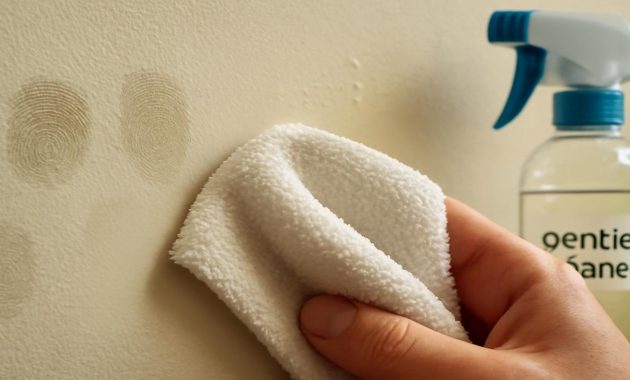
The first time you really see them, it’s always at the worst possible moment. Maybe it’s a Sunday afternoon, the light slanting low and golden through the living room window, when you step back with a cup of coffee and suddenly notice the wall. Not the color. Not the framed print you picked out with painstaking care. The fingerprints. A whole constellation of them orbiting the light switch, gathered in a smudgy halo on the stairwell, blooming like ghostly petals around the door frame at kid-height. You move closer and realize they’re not just marks; they’re little stories—chocolate from last week’s movie night, the shadow of last summer’s sunscreen, the echo of a hurried hand steadying itself on the corner when the dog bolted by. You love the life that made them. You do not love the way they look.
The Wall That Told Too Many Stories
Fingerprints on walls are intimate in a way other messes aren’t. Dishes can be stacked, laundry can be folded, crumbs can be brushed away in one brave swoop. But the walls? They feel permanent, like your house is quietly confessing how lived-in it really is. They hang back, just subtle enough to ignore—until the afternoon sun hits at the right angle and suddenly your carefully painted hallway looks like the backdrop of a forensic drama.
For a long time, you might do what most people do: grab the nearest sponge, a bit of dish soap, and have a go at it. And that’s when you find out the hard way that walls, unlike kitchen counters, have opinions about how they’re treated. Scrub too hard and the paint dulls, or lifts in patchy spots. Use the wrong cleaner and you end up with shiny blotches glowing like watermarks after a storm. Magic erasers sometimes work, sometimes scorch a faint, telltale patch that’s almost more noticeable than the smudge you were trying to erase.
There’s a quiet panic in that moment—the sense that cleaning might make it worse, that your only real option is to repaint the entire wall just because a pair of small, sticky hands used it as a rail. So you do what grown, responsible people do in the face of an unreasonable problem: you pretend not to see it. You rearrange furniture. You turn off the overhead light when guests come by. You cultivate a reputation for “intimate mood lighting.”
But the fingerprints don’t go away. They collect, slowly, like whispers. And one day, standing in that slim river of late afternoon light, you decide you’re done ignoring them.
The Trick Hiding in Plain Sight
The solution, when you finally encounter it, feels almost suspiciously simple. No harsh chemicals, no repainting, no elaborate masking tricks. Just a soft cloth, a little bit of patience, and one underestimated, near-forgotten hero: a small bowl of warm water with a drop—only a drop—of mild, plain dish soap, backed up by something even gentler: clean water and a dry microfiber cloth.
But this isn’t really about the ingredients. It’s about the way you use them.
Imagine approaching your wall the way you might approach a fragile page in an old botanical field guide. You don’t scrub an antique illustration; you coax it clean. Walls, especially painted ones with eggshell or matte finishes, ask for that same kind of care.
The quiet trick that removes fingerprints without leaving a trace is this: instead of attacking the mark, you feather it away from the outside in, with nearly no pressure at all, using barely-damp softness in stages—first to loosen, then to lift, then to erase the evidence that anything was ever there.
The Gentle Ritual of Making the Cloth “Barely Damp”
It begins in the kitchen or bathroom, with two bowls. In one, you add warm water and a single drop of mild dish soap. Not the fancy scented kind, not the degreaser that smells like a citrus explosion—just the kind you’d trust to wash your hands with if you had to. In the second bowl, you pour clean, plain warm water.
You fold a microfiber cloth—this matters—into a soft square that fits comfortably in your hand. Microfiber is important not because it’s trendy, but because its tiny, almost invisible fibers trap oils instead of just shoving them around. You dip one corner of the cloth into the soapy water, then press it tightly between your palms or against the side of the sink, squeezing out every possible drop until it feels almost dry.
This is where most people go wrong: a wet cloth can leave water streaks or cause the paint to absorb too much moisture, creating a change in texture or sheen. What you want is a cloth that feels cool, not wet. Barely damp. Like breath on a window, not rain on a windshield.
How to Touch a Wall Without Leaving a Trace
When you bring that cloth to the wall, something in you might naturally reach for the scrubbing motion you use on countertops or stovetops. Resist that urge. Cleaning fingerprints is more like erasing charcoaled lines from good paper than polishing a metal sink.
You start just outside the fingerprint, not dead center. With your fingertips light on the cloth, you draw the fabric in small, soft circles, easing your way toward the mark. The goal is not to rub the fingerprint away in one stroke, but to slowly loosen the oils where they meet the clean paint, almost like thinning paint in watercolor art. The smudge begins to soften, its edges losing definition, its once-sharp shape dissolving gently.
After a few passes—never enough to fully wet the paint—you pause. You turn to your second bowl, the one with plain warm water. You dip a fresh part of your cloth, or better yet, reach for a second clean microfiber reserved just for rinsing. Again, you wring it out to the point of almost-dry, then repeat the same tender circling motion over the softened fingerprint, this time removing the faint soap residue and the last shadow of oils.
Finally, you take a completely dry microfiber cloth and glide it over the area with a whisper-light touch, not to scrub, but to pick up lingering moisture and buff the wall back to its native finish.
When you step back, the wall doesn’t look “cleaned.” It looks untouched—like nothing ever happened. No shiny patch. No darker tide line. Just the same steady color as the rest of the room, steady as breath.
Why This Works Better Than Scrubbing
The secret behind this trick isn’t mystical; it’s technical. Fingerprints are mostly skin oils mixed with whatever micro-debris your hands have been living through that day—dust, food, ink, sometimes a little mystery. Paint and these oils have an uneasy relationship. Too much water can drive oils deeper or create rings. Too strong a cleaner can break down the paint’s binder or alter its sheen. Too much pressure can burnish a flat or eggshell surface, leaving a “polished” spot that catches light differently.
What you’re doing with the barely damp method is balancing on a narrow, deliberate line: enough moisture to soften and transport oil, not enough to soak the wall; enough mild soap to release the fingerprint’s grip, not enough to strip the paint’s character. The microfiber cloth completes the partnership, gently trapping and lifting oils instead of grinding them into the surface.
The Quiet Science of Fingerprints and Paint
No one hangs a framed swatch of wall paint in a gallery, but in its own way, your wall is a delicate surface, carefully balanced between pigment, binder, and finish. The type of paint matters, and you can feel it with your fingertips even before you see it. Matte or flat walls feel like paper; they glow with a soft, velvety hush but show every touch. Eggshell and satin finishes are a bit more forgiving, with a subtle sheen that reflects light and resists dirt. Semi-gloss and gloss, often used on trim or in kitchens, stand up bravely to more enthusiastic cleaning.
If you run your hand across a flat-painted hallway, the wall holds the warmth of your skin for a moment like a secret. That tenderness comes at a cost: flat paint is easily scarred by aggressive cleaning. This is the canvas where the barely damp method really shines. On eggshell or satin, the same technique still matters—but you get a slightly wider margin for error.
The fingerprints themselves behave differently, too. Fresh ones are clearer, more sharply defined. A new chocolate smudge almost sculptural, ridgeline-clear. Older prints blur, oxidize, fade as dust settles over them. They become ghosts—no longer wet, but still gently greasy, clinging. The warm, soapy water loosens the oil’s bond; the microfiber gathers it up; the rinse and dry reset the surface to its natural quiet.
Used carefully, this simple ritual can be repeated over and over on the same wall without harming the paint. The trick lies in always returning to restraint—light pressure, low moisture, minimal soap, and patience.
A Pocket Guide for Different Wall Types
Because no two walls are exactly alike, here’s a simple cheat sheet you can carry in your mind as you move through your home, bowl and cloth in hand:
| Wall Type | How It Feels | Cleaning Pressure | Special Notes |
|---|---|---|---|
| Flat / Matte Paint | Soft, paper-like, no shine | Feather-light only | Test in an unseen corner first; avoid any scrubbing motion. |
| Eggshell / Satin | Slight sheen, smooth | Light to moderate | Still go barely damp; can handle a few extra passes if needed. |
| Semi-Gloss / Gloss | Shiny, slicker | Moderate | More forgiving, but avoid abrasive pads to keep shine even. |
| Wallpaper (Washable) | Smooth, sealed feel | Very light | Always test a hidden area; keep cloth extra dry to prevent lifting seams. |
Learning to Live With (and Still Erase) the Evidence of Life
Once you know this trick, you start to see your walls differently. The smudged patch on the stairwell stops looking like a failure of housekeeping and starts feeling like a chapter break—a part of a story you can edit whenever you’re ready. Fingerprints appear after phone calls taken while pacing. After late-night fridge raids. After tearful conversations slumped against the coolness of the wall. They’re evidence of your life spilling out of you, right up to the edges of the paint.
On some days, you might leave a few of them for a while. The faint outline where a toddler steadied themself climbing the stairs. The smudge from where someone leaned, laughing, by the doorway. You let them linger like notes tacked on a bulletin board, reminders that people are moving through this place, not just hovering in it.
On other days—those reset days, when you open the windows and let the outside air pour in—you gather your bowl, your cloths, and you walk the hallways like a quiet curator. You pause at each mark, each browned halo around a switch plate, and you erase them gently, leaving no sign behind. It feels less like scrubbing and more like tending. Like brushing the dust from the leaves of a houseplant. Like smoothing the wrinkles from a favorite shirt.
And as you do, you begin to understand something small but true: keeping a home doesn’t have to mean fighting a constant, losing war against entropy. Sometimes, it just means knowing the right way to touch the surfaces you live with. Not too hard. Not too wet. Just enough.
What If the Fingerprint Won’t Budge?
Every so often, you’ll meet a stubborn mark—a fingerprint that’s not just oil, but tinted with something darker: pen ink, old cooking grease, or the mysterious residue of a thousand doorknob touches in a busy hallway. The barely damp ritual still applies, but with even more patience.
First, try one more round with fresh cloths and newly warmed water. Gently expand the cleaned area an inch or two around the fingerprint, feathering the touch outward so the wall’s finish blends evenly. If the print lightens but doesn’t vanish, accept the partial victory and step away for a few hours. Let the spot dry completely. Some stains look darker when wet but disappear into the paint once fully dry.
If, after drying, the mark still lingers, you’re standing at a crossroads: live with a faint shadow, or eventually touch up with matching paint. The important thing is to recognize when to stop. A faint, softened print is often less visible than the damage that over-cleaning can create. The real magic in this trick isn’t the promise of erasing every single blemish, but in knowing how to leave the wall’s dignity intact.
Letting Light Back Onto the Walls
The next time the afternoon sun angles through your favorite window, you might find yourself standing in that familiar place, cup in hand, looking at the walls again. Only now, something’s changed. The halos around the switches are gone. The grubby arc on the stairwell has dissolved back into the painted grain of the surface. The doorframe looks quietly new, not in a “fresh from the hardware store” way, but in a “well-kept, well-loved” way.
You might even notice how the light itself seems less accusing. It doesn’t highlight your house’s cluttered humanity; it just settles there, soft and kind. You haven’t sterilized the life out of your rooms—you’ve simply learned how to gently erase the evidence when it begins to crowd your eyes.
The trick that takes fingerprints off walls without a trace isn’t about chasing perfection. It’s about partnership—with your paint, with your cloth, with the everyday movement of hands through space. It’s about remembering that care doesn’t always have to be dramatic or punishing. Sometimes, it’s a bowl of warm water, a folded square of microfiber, and a few slow circles drawn so lightly you can barely feel your own touch.
In the quiet of that small ritual, your home becomes a little lighter. The stories it tells are no longer shouted in greasy smears and shadowy outlines, but whispered instead in the things you choose to keep—and the gentle, invisible ways you let the rest of it go.
Frequently Asked Questions
Does this method work on every type of paint?
It works on most modern interior paints—flat, matte, eggshell, satin, semi-gloss, and gloss—provided you keep the cloth barely damp and pressure very light. With flat or matte finishes, always test in an inconspicuous corner first and use the softest possible touch.
Can I use this trick on colored or dark walls?
Yes. The key is still minimal moisture and light pressure. Dark or richly colored walls may show water marks more easily if the cloth is too wet, so wring it out thoroughly and always follow up with a dry microfiber buff.
What kind of dish soap should I use?
Use a mild, unscented or lightly scented dish soap without extra degreasers, bleach, or abrasive particles. You only need a single drop in a bowl of warm water, just enough to break the surface tension and help loosen oils.
How often can I clean the same area without damaging the paint?
When done gently—barely damp cloth, light circular motion, and no harsh chemicals—you can clean the same area many times without harming the paint. If you notice any change in sheen or texture, pause and allow the wall to fully dry before deciding whether to clean it again.
Will this remove older, set-in fingerprints?
In many cases, yes, especially if they’re just built-up skin oils and dust. Very old or deeply stained marks may lighten but not fully disappear. The method will still improve their appearance without creating obvious “clean spots” or damage.
Can I use a magic eraser instead?
Magic erasers are mildly abrasive and can sometimes change the sheen of your paint, especially on flat or matte finishes. If you use one, test in a hidden area first and use the softest possible touch. The barely damp microfiber method is gentler and less likely to leave visible cleaning marks.
What if I accidentally create a shiny patch?
Shiny patches usually come from rubbing too hard or using an abrasive product. Unfortunately, they can’t always be reversed. If the difference is noticeable, your best long-term fix is touching up the area with matching paint. To prevent this, always clean with minimal pressure and avoid scrubbing motions.
Is this method safe for rental walls?
Yes—as long as you test first in a hidden corner, stay with mild soap, use barely damp cloths, and keep your touch gentle. This approach is ideal for rentals because it helps keep walls looking fresh without creating obvious cleaning spots that might draw a landlord’s eye.