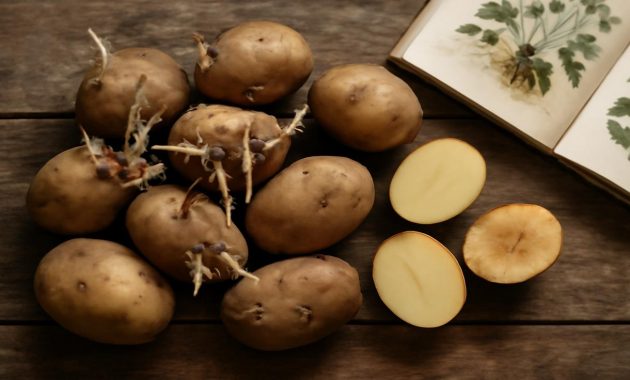
The potato in your palm looks innocent enough—mud-brown, familiar, a quiet veteran of countless dinners. But today it’s different. Tiny pale horns push through its skin, curling like ghostly roots reaching for a patch of forgotten earth. You hesitate at the cutting board. The kitchen is quiet. A question rises, as sharp as the knife in your hand: Can I still eat this?
When Your Potatoes Start to Wake Up
There’s something oddly alive about a sprouted potato. It feels like you’ve caught it in motion, mid-transformation—a pantry staple slipping back toward the field it once knew. In the dim cool of a cupboard or a paper bag, this potato has quietly decided that storage time is over and life is beginning again.
Most of us meet this moment the same way: a mix of guilt, confusion, and stubborn thrift. We remember the meal plan, the tight budget, the avoid-waste mindset. We eye those sprouts and think, Surely I can just cut them off…right?
To answer that, you have to zoom in closer than the naked eye can manage. Because tucked inside that sprouting spud is a chemistry story that decides whether it belongs on your dinner plate—or in the compost.
The Science Hidden Under the Skin
Every potato is more than starch and comfort. Beneath its skin it carries a quiet defense system, a natural chemical shield against insects, fungi, and hungry animals. The key players in that defense are compounds called glycoalkaloids—mainly solanine and chaconine.
These are not additives. They’re not pesticides sprayed from outside. They’re part of the potato’s own biology. And in small amounts, they’re always there, even in perfectly fresh tubers.
But when a potato starts to sprout, that inner chemistry shifts. The potato wakes up. It’s no longer saying, “Store me.” It’s saying, “Grow me.” Energy starts moving out of the flesh and into the bud tips. The plant ramps up those glycoalkaloids, especially around its high-risk areas—sprouts, eyes, and the upper layer of skin. Bitter taste, green tint, and sharp, unpleasant notes are the body’s early warning signals: Something’s off here.
Green Patches, Bitter Bites, and Other Warning Signs
Sprouts alone don’t tell the whole story. It’s how the potato looks, smells, and tastes that decides its fate.
Picture yourself turning that sprouted potato in your hand beneath the kitchen light. You notice a faint green blush under the skin, like the first wash of color on an unripe tomato. That green hue isn’t the toxin itself—it’s chlorophyll, forming when potatoes get too much light. But in potatoes, green is often a red flag, because the same sunlight that encourages chlorophyll can also trigger more glycoalkaloid production.
Your senses are better chemists than you think. A suspicious potato may shout its condition in small, simple ways:
- Color: Patches of green under or on the skin.
- Texture: Wrinkled, soft, rubbery, or shriveled flesh.
- Smell: Musty, earthy in a bad way, or slightly off—like a damp basement.
- Taste: Unpleasantly bitter or burning on the tongue (never keep eating “just to check”).
These are not just visual quirks; they’re quiet warnings. You don’t need a lab. If a potato looks tired, smells strange, and tastes wrong, the safest answer is simple: let it go.
So…Can You Eat Sprouted Potatoes at All?
Here’s where nuance matters. Not every sprouted potato is automatically a poison pill, but there is a clear line between “probably fine” and “please don’t risk it.” What you do next depends on how far that potato has traveled from its original form.
| Condition of Potato | What You See | Is It Safe to Eat? | Recommended Action |
|---|---|---|---|
| Small fresh sprouts, firm potato | Short white or pale sprouts, no green, flesh still firm | Usually considered safe if prepared properly | Cut off sprouts and eyes deeply, peel and discard any odd areas |
| Sprouts + green patches | Visible green color on skin or just under it | Questionable | If green is extensive, throw it away; if minor, remove thickly around green and sprouts |
| Long sprouts, shriveled potato | Wrinkled, soft, light in weight, long or many sprouts | Not recommended | Discard or compost; do not eat |
| Strongly bitter taste | Bitter, burning, or metallic flavor when cooked | Unsafe | Stop eating immediately and discard the remaining potato |
If your potato has just started to sprout, is still firm, shows no green, and smells like a normal potato, many food safety experts consider it acceptable to eat—with conditions:
- Snap or cut off the sprouts completely, including the little “eye” they grow from.
- Peel the potato, removing a thick enough layer to discard any surface where toxins could concentrate.
- Inspect the flesh underneath. If it’s discolored, grayish, or oddly translucent, skip it.
However, this is not a license to salvage every tired tuber. The moment the potato becomes soft, heavily sprouted, or visibly green—especially in several spots—it’s cheap insurance to drop it in the trash or compost, no guilt necessary.
What Happens If You Eat a Bad One?
The danger with sprouted or green potatoes isn’t some exotic poison—it’s a serious, very real syndrome called glycoalkaloid poisoning. It’s rare, but when it happens, it reminds you that even humble foods have sharp edges.
Imagine a meal of pan-fried potatoes that taste a little bitter, but you’re hungry and you push past it. Later, the symptoms creep in:
- Nausea and stomach cramps that twist and refuse to let up.
- Vomiting and diarrhea that feel more violent than a typical stomach bug.
- Dizziness, headache, maybe even confusion in more severe cases.
That’s your nervous system reacting. Glycoalkaloids interfere with the way nerve cells function and with how the gut lining behaves. In very high doses, they can depress breathing and heart function. Most people will never come close to that level; the body rebels early with strong digestive distress to force the toxins out. But children, pregnant people, and anyone frail or ill are more vulnerable. For them, “better safe than sorry” isn’t just a saying—it’s policy.
And here’s a point many people misunderstand: cooking does not solve this problem. Boiling, roasting, frying—none of these reliably destroy solanine or chaconine. They’re quite heat-stable. If a potato is unsafe raw, heat won’t rescue it.
How to Store Potatoes So They Don’t Turn Against You
The easiest way to avoid the sprouted-potato dilemma is to make it harder for your potatoes to wake up in the first place. They are, at heart, underground creatures. Keep them somewhere that feels like home, and they’ll stay quiet longer.
Think of three things: light, temperature, and neighbors.
Light: Potatoes hate brightness. Light triggers chlorophyll formation and can encourage higher toxin levels. A dark cupboard, pantry drawer, or opaque paper bag is far better than a clear bowl on the counter.
Temperature: They like it cool, but not icy. Aim for somewhere between “mild basement” and “comfortable cellar”—generally around 7–10°C (45–50°F) if you have that luxury. The fridge is tempting, but very cold temperatures can mess with flavor and turn starches into sugars, affecting color and taste when you cook them.
Neighbors: Apples and some other fruits give off ethylene gas, a natural plant hormone that speeds ripening and sprouting. Keeping potatoes in the same bowl as fruit is like turning up the volume on their wake-up call. Keep them separate when you can.
And then there’s time. Potatoes are generous, but not eternal. Buy what you’ll realistically use in a week or two. Rotate your stock like a small grocery store: older ones in front, newer ones behind. The less time they sit, the fewer quiet nights they have to grow those eerie little horns.
Using Your Senses Like an Expert
There’s no home test kit for solanine sitting in your utensil drawer, but your senses are better tools than they get credit for. With a bit of practice, you can read a potato like a story.
Start with your hands. A safe potato feels firm, pleasantly heavy for its size, almost solid with stored energy. When it starts to age, that energy has been spent on sprouts. You’ll feel it in the sag of the skin, the saggy give under your fingers. If squeezing it feels like pressing a leathery balloon, it has given most of itself away.
Your eyes go next. Sprouts shorter than your smallest fingernail on an otherwise healthy, unwrinkled potato are more a sign of time passing than outright danger. Long, knobby sprouts emerging from a shriveled body tell a different tale: the plant has been feeding those shoots from its own flesh, concentrating defenses near the surface as it goes. That’s your cue to thank it for its efforts—and let it rest in the compost.
Then smell. Fresh potatoes barely smell at all: faintly earthy, like rain on dry soil. Rot sends up a different signal: sweet and sour together, musty, or even sickly. If your nose wrinkles, trust it.
Taste is the final line of defense—not the first. If you take a bite of cooked potato and a bitter, burning, or metallic taste spreads across your tongue, spit it out. Don’t power through because “it’s probably fine.” That bitterness is your nervous system’s way of waving a bright red flag.
From Kitchen Guilt to Kitchen Wisdom
There is a particular kind of guilt that surfaces when you throw away food you once meant to cook. Sprouted potatoes can trigger it like a reflex. You might hear the inner voice: You’re being wasteful. You should salvage this.
But there’s another truth worth holding beside that one. Not everything is meant to be saved at every stage. Sometimes, letting a potato go is not waste—it’s respect. Respect for your body, for the quiet wild chemistry of plants, for the fact that not every calorie in your kitchen is worth chasing.
If the potato is barely sprouted, still firm and unblemished, and you trim and peel it with care, you’re making a measured, reasonable decision. If it’s green, bitter, or looks like it’s halfway to becoming a tangle of roots, you’re not throwing away food—you’re ending a story that has already moved on from your plate to the next chapter of the soil.
In the end, the rule is simple enough to carry with you: a potato should look like food, smell like food, and taste like food. The moment it looks more like a science project or a small plant with ambitions, you can let it go without regret. Nature can take it from there.
Frequently Asked Questions
Can I just cut the sprouts off and eat the rest?
If the sprouts are small, the potato is firm, and there’s no green or bad smell, many experts consider it acceptable to eat after you remove the sprouts and their “eyes” deeply and peel the potato. If the sprouts are long, the potato is wrinkled or soft, or there’s green flesh, it’s safer to discard it.
Are the sprouts themselves poisonous?
Yes, the sprouts contain higher concentrations of glycoalkaloids than the rest of the potato. They should always be removed and discarded, not eaten.
Does cooking destroy solanine and other toxins?
No. Solanine and related glycoalkaloids are heat-stable. Normal cooking temperatures—boiling, baking, frying—do not reliably eliminate them. If a potato is unsafe raw, cooking will not make it safe.
Is it safe to eat green potatoes if I peel them?
Peeling does remove some of the glycoalkaloids, because they concentrate near the skin, but if the greening is extensive or the potato tastes bitter, it’s not worth the risk. If only a very small area is green, you can cut it away generously; anything more than that should be discarded.
What should I do if I think I have potato poisoning?
If you’ve eaten sprouted or green potatoes and develop symptoms like nausea, vomiting, stomach cramps, or diarrhea—especially within a few hours—stop eating immediately and seek medical advice. If symptoms are severe (trouble breathing, confusion, or chest pain), seek urgent medical care.
Are some types of potatoes safer than others?
Different varieties naturally have different baseline levels of glycoalkaloids, but all common edible potatoes are regulated to stay within safe limits when fresh and properly stored. Once a potato turns green or heavily sprouts, variety matters less than condition—at that point, it’s better to discard it.
Can I plant sprouted potatoes instead of eating them?
Yes, many gardeners do exactly that. If the potato has heavy sprouts but no signs of rot, mold, or disease, you can plant it instead of eating it. Just remember that planting sprouted potatoes is a gardening choice, not a food safety solution; sprouting doesn’t make them safer to eat.