The blue tin sat on my bathroom shelf like it always had—dented, familiar, costing less than a bus ticket. Next to it, in almost theatrical contrast, gleamed a frosted glass jar with a chrome lid that caught every scrap of light. That one had arrived in a velvet-lined box with a handwritten card, wrapped in tissue that smelled faintly of white flowers and money. One cost €1. The other cost €490. Both promised, in their own way, to be kind to my aging skin. One of them also promised miracles.
The Day I Decided to Put a Price Tag on My Face
This started, as so many things do, with a mirror and a particularly unforgiving morning. You know those mornings: the ones where sleep lines cling to your face an hour after you’ve left the pillow, and the fun little “eye crinkles” you used to get from laughing now seem to have taken up full-time residence.
I was standing there, squinting at my reflection in the hazy bathroom light, thinking about all the serums and creams and elixirs I’d tried over the years. The high-end stuff that arrived like small pieces of jewelry, cradled in packaging so beautiful it made you hesitate before throwing it away. The cheap pharmacy staples in no-nonsense jars that simply turned up, quiet and unassuming, and almost always did what they said on the tin.
And then I noticed it: my old Nivea Creme. The little blue tin I’d grown up with—my mother used it, and her mother before that. It was the smell of winter knuckles saved from cracking, the sheen on my cheeks in primary school photos, the film my grandmother’s hands wore like armor when she worked in the garden.
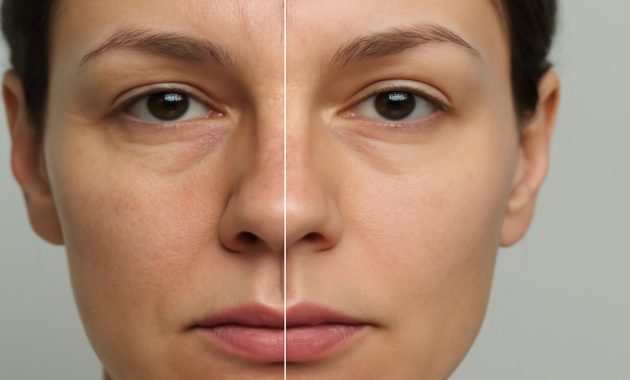
My eyes drifted from the blue tin to the luxurious jar that had just cost me more than a weekend away. “What if,” I thought, “I just… split the difference?” Literally. One cream on one side, the other on the other. One month. No filters, no special lighting tricks, no wishful thinking. Just my skin and time.
The Rules of the €1 vs €490 Face-Off
To make this as fair as possible, I decided on a kind of personal science experiment—homegrown and far from clinical, but still structured enough to feel like more than a whim.
Setting Up My Little Skincare Lab
I made some rules:
- The €1 cream—classic Nivea Creme in the blue tin—would go on the left side of my face.
- The €490 luxury cream would go on the right side of my face.
- Both sides would get the same cleanser, the same sunscreen, the same makeup. No special treatment.
- I’d apply each cream twice daily: once in the morning, once at night.
- No extra serums or oils—just a basic toner and sunscreen to keep things simple.
- I’d take photos every few days in the same window light, no makeup, no filters.
My target? Wrinkles and fine lines, especially around my eyes, forehead, and smile lines. Texture. Plumpness. That elusive glow brands talk about like it’s bottled starlight.
Before I started, I took a long, honest look at my face. Forehead lines: definitely there. Faint vertical lines between my brows: also there, souvenirs from years of concentrating at screens. Crow’s feet: soft but visible. Smile lines: settling in comfortably like old friends.
“Alright,” I told my reflection. “Let’s see what money can really do.”
Week One: Two Creams, One Face
The Texture Test
The first thing I noticed wasn’t what I saw. It was what I felt.
The Nivea side was instantly recognizable. That thick, almost stubborn texture that needs warming between your fingers. It has that distinctive, powdery-clean smell with a tiny whisper of something almost nostalgic. When I pressed it into my left cheek, it felt like drawing a protective curtain across my skin—occlusive, comforting, like a winter coat zipped up to the chin.
The luxury cream on the right side behaved differently from the very first touch. It was lighter, almost whipped, with a faintly botanical scent that smelled expensive without smelling like much at all. It melted as soon as it met my skin, spreading in a quick, slippery glide that made my fingers skitter over my cheekbone. It sank in quickly, leaving the barest sheen.
Five minutes later, I did the touch test.
- Left (Nivea): dewy, slightly tacky, still a little creamy. Like my skin was wrapped.
- Right (Luxury): satin, soft, almost matte—like there was nothing there but better texture.
Visually, after just a few days, both sides started to look… hydrated. That’s what any decent cream will do: it draws water into the skin or keeps it from escaping. My fine lines softened a touch equally on both sides, especially under the eyes where dryness is merciless. But if I leaned very close, the luxury side looked a fraction smoother, like someone had gently run a soft-focus tool over it.
Week Two: Where Things Got Interesting
The Wrinkle Watch
By the second week, I’d settled into the ritual. Scoop, pat, press. Left. Right. Twice a day. I began to forget, during the day, which side was which—until I looked closely.
Something subtle began happening around my right eye, the luxury side. The crow’s feet didn’t vanish (no cream, at any price, erases your life from your skin), but they seemed less etched, more… blurred at the edges. The under-eye area on both sides looked more hydrated, but the right had that faint “bounce back” feeling when I gently pressed the skin. The left was plump, but in a slightly heavier, cushioned way.
On my forehead, the difference was trickier to read. The horizontal lines softened on both sides, particularly in the late morning when the creams had done their best work and my face wasn’t fully claimed by the day’s expressions yet. But when I frowned slightly, the lines on the right popped up a bit softer and didn’t linger quite as long.
At night, under unforgiving bathroom lighting, I started tracing my fingers along my smile lines. The Nivea side felt incredibly moisturized, almost treated like a balm. The skin there seemed more supple than at the start—less papery. On the luxury side, the effect was more refined: slightly smoother, slightly firmer. Not a transformation, but a difference you’d notice if it was your face you were living in.
When Price Meets Performance: What I Actually Saw
Side-by-Side Reality
By the end of four weeks, I had a small folder of no-makeup photos. Morning light. Same spot by the window. Same resigned expression. I lined them up like crime scene evidence and did what we’re all terrified of doing: zoomed in hard.
Here’s what became clear:
- Hydration & Glow: Both creams delivered. My skin, overall, looked more alive—less dull, more even. The Nivea side had that juicy, slightly dewy radiance. The luxury side glowed more quietly, almost like it was lit from a shallower, more even depth.
- Fine Lines: On the right (luxury), the fine lines, especially the faint creases under the eyes and around my outer eye, looked just a touch shallower. Not gone; just softened in a slightly more refined way.
- Deeper Wrinkles: Forehead lines and smile lines were very similar on both sides. Realistically, no cream was reversing years of expression and time.
- Texture: If you ran your finger lightly over my cheeks, the luxury side did feel smoother—almost as if the surface texture had been polished a fraction. The Nivea side felt plump, well-fed, but with a slightly heavier finish.
It wasn’t a story of “one side of my face looks ten years younger.” It was more subtle. More human. Both sides had improved. One had just… refined the improvements a little more.
| Feature | Nivea (€1) | Luxury Cream (€490) |
|---|---|---|
| Immediate hydration | Strong, deep-feeling moisture | Strong, but lighter feel |
| Finish on skin | Dewy, slightly heavy | Satin, almost weightless |
| Fine line softening | Noticeable with consistent use | Slightly more noticeable |
| Deeper wrinkles | Small, gradual improvement | Similar, not dramatically better |
| Comfort for dry skin | Very high, “cushioned” feeling | High, but more airy |
| Value for money | Outstanding | Depends on your budget & priorities |
What the Science Quietly Whispers Under the Marketing
Why Both Sides Looked Better
When you strip away the marketing poetry, moisturizers—whether €1 or €490—mostly work on a few basic principles: they hydrate, they help hold that hydration in, and sometimes they add extras that nudge the skin’s own repair mechanisms along.
Nivea Creme leans heavily on occlusive and emollient ingredients. It’s like putting up good insulation in a house: it doesn’t generate heat, but it keeps what’s there from slipping away. For dry or dehydrated skin, that alone can make wrinkles look smaller because plump, well-hydrated skin reflects light differently and doesn’t crease as sharply.
Luxury creams often throw in a whole cast of characters: peptides, antioxidants, plant extracts, designer molecules with long, lyrical names. Some of these have decent science behind them—peptides that may signal the skin to produce more collagen, antioxidants that help fend off free radical damage, soothing ingredients that calm inflammation you might not even see.
In my little experiment, it felt like this: Nivea did a wonderful job of keeping my skin cocooned, cushioned, and moisturized. The luxury cream seemed to do that and also smooth out the skin’s surface a notch more, particularly where the lines were finer and younger. But the magnitude of that difference? Not 490 times more.
The Emotional Price of a Jar
What surprised me most wasn’t just what I saw in the mirror. It was how I felt using each cream.
With Nivea, there was a kind of groundedness, a sense of continuity. It smelled like home, like old bathrooms and hand-me-down rituals. It didn’t pretend to be anything other than what it was. When I massaged it in, I felt practical, no-nonsense, a person who understood that sometimes the simplest tools had the longest track records.
With the €490 cream, there was undeniably a thrill. It felt like a small nightly ceremony in luxury—unscrewing the heavy lid, the soft glide of product, the faint perfume. There’s psychology at play here: when something costs that much, part of you really wants to see magic. Every tiny improvement feels magnified by the investment.
And that’s the thing: skincare isn’t just chemistry. It’s also ritual, self-care, identity. The jar on your shelf can whisper something to you about who you are, what you deserve, what you’re willing—or able—to spend on yourself.
So… Was the €490 Cream Worth It?
When I stepped back from the whole experiment, put the photos away, and just looked at my face in a regular, casual bathroom encounter, the differences between the two sides were no longer dramatic. They were there, but they were the kind of thing you notice only when you’re searching for them.
What I learned was this:
- You can get to very good, healthy, plump-looking skin with affordable products, especially if your main concerns are dryness and early fine lines.
- High-end creams can give you incremental improvements—especially in feel, finish, and sometimes in how refined the skin texture looks. But they are not time machines.
- There is a point at which you are paying not just for the ingredients, but for things like texture, scent, brand story, packaging—and how all of that makes you feel when you stand in front of the mirror.
I didn’t run to the shop to buy another €490 cream when it ran low. I also didn’t throw it away; I continued to use it, but more mindfully, savoring it like a special occasion dessert rather than plain daily bread. Meanwhile, the blue Nivea tin stayed. It still lives on my shelf, slightly more dented, a quiet little reminder that you don’t have to spend a month’s rent to be kind to your skin.
My wrinkles are still there. They catch the morning light, hold the shadows of every laugh and frown and squint. They did not disappear for €1, and they did not disappear for €490. But both creams, in their own ways, made the skin around those lines softer, more cared for, more alive. And maybe that’s the real win.
FAQ
Did the €490 cream completely remove your wrinkles?
No. It softened some fine lines and slightly improved texture, especially around the eyes, but deeper wrinkles remained. The change was subtle, not dramatic.
Did the Nivea Creme make any difference to your wrinkles?
Yes. By keeping my skin very well hydrated and cushioned, Nivea Creme made fine lines look less harsh and my skin generally plumper and more comfortable.
Could you clearly tell which side was which after a month?
Up close and in good light, I could see that the luxury side was a bit smoother and more refined. From a normal distance, both sides just looked like well-moisturized, cared-for skin.
Is a very expensive cream ever “worth it”?
It depends on what “worth it” means to you. If you value texture, scent, packaging, and a small daily luxury ritual, you might feel it is. If you’re evaluating strictly on wrinkle reduction per euro, probably not.
Can a €1 cream really compete with luxury skincare?
In basic hydration and comfort, absolutely. For more advanced claims—like subtle texture refinement or certain targeted ingredients—luxury skincare can sometimes offer a slight edge, but usually not one proportional to the price jump.
What actually makes the biggest difference to wrinkles?
Consistent sun protection, not smoking, a generally healthy lifestyle, and daily use of a good moisturizer. Ingredients like retinoids and certain acids (used wisely) can help more than any single fancy cream alone.
Will you keep using Nivea after this experiment?
Yes. It’s dependable, affordable, and comforting. I might mix it with other targeted products, but the blue tin has definitely earned its permanent spot on my shelf.